
Dogs that pull on the leash are a common challenge for pet owners, especially in urban environments or during high-distraction walks. While both collars and harnesses are widely used, the decision between them significantly impacts your dog’s physical health, behavior, and your ability to maintain control. For dogs prone to pulling, choosing the right tool isn’t just about convenience—it’s about preventing injury, promoting training progress, and ensuring long-term comfort. This article compares harnesses and collars specifically in the context of controlling strong-pulling dogs without causing choking or tracheal damage.
Understanding the Risks of Pulling on a Collar
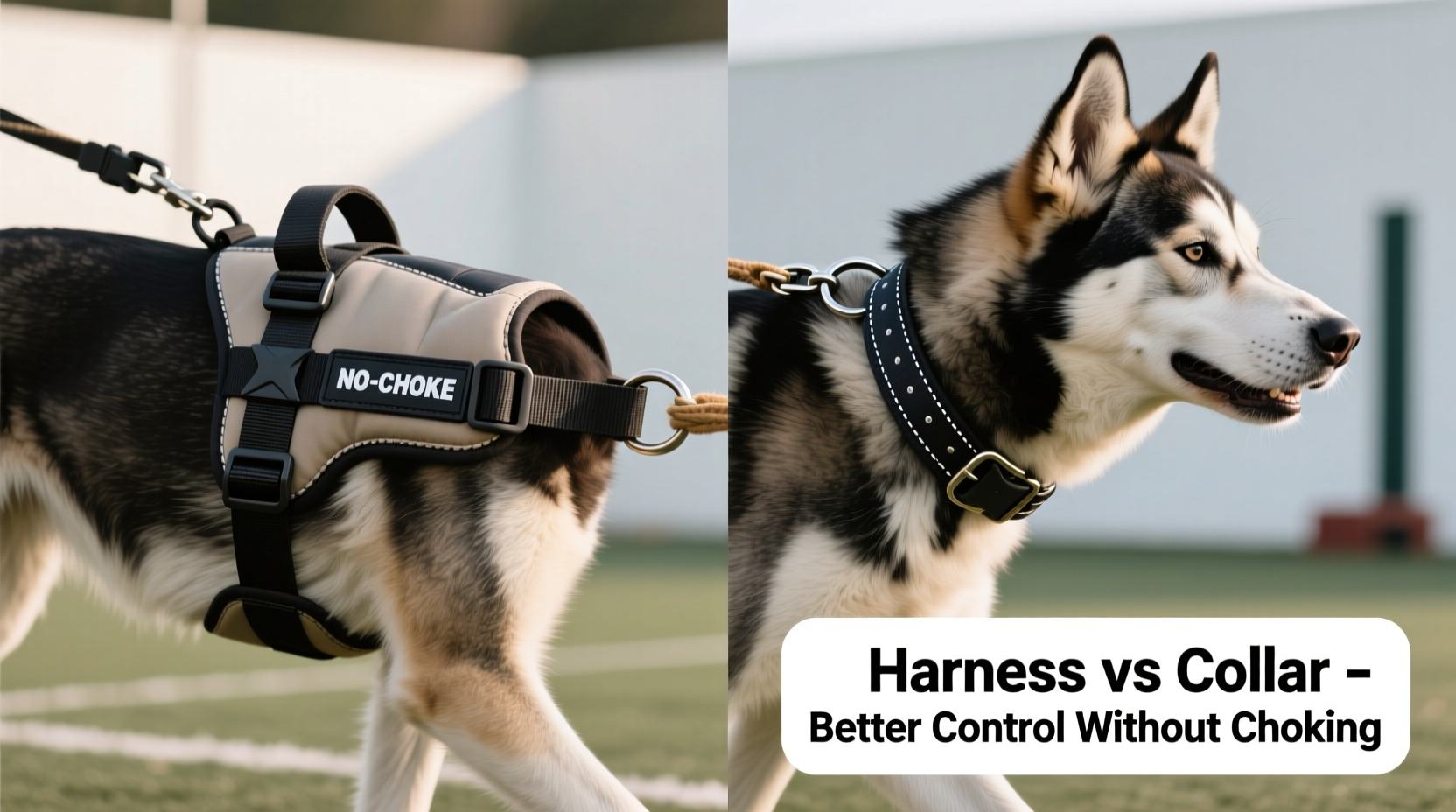
Traditional neck collars—especially flat buckle collars—are designed primarily for ID tags and light restraint. When a dog pulls against a collar, significant pressure is exerted on the delicate structures of the neck. This includes the trachea, cervical spine, thyroid gland, and nerves running through the throat area.
A 2006 study published in the *Journal of Small Animal Practice* found that even brief episodes of forceful pulling can lead to tracheal collapse, laryngeal paralysis, and ocular damage due to increased intraocular pressure. These risks are particularly high in small breeds like Pomeranians, Chihuahuas, and Yorkshire Terriers, but large, powerful breeds like Huskies or Labradors can also suffer spinal strain over time.
“Repeated pressure on the neck from pulling can cause chronic issues ranging from coughing and breathing difficulties to neurological deficits.” — Dr. Karen Benitez, Veterinary Behaviorist
Moreover, when a dog feels restricted or uncomfortable at the neck, it may respond with increased resistance—a phenomenon known as opposition reflex. The harder you pull back, the more they pull forward, creating a cycle that undermines training efforts.
Tip: If your dog coughs, gags, or turns red in the face during walks, this is a clear sign that neck pressure is too high—switch to a no-pull harness immediately.How Harnesses Reduce Risk and Improve Control
Harnesses distribute force across the dog’s torso rather than concentrating it on the neck. This fundamental difference makes them inherently safer for dogs that pull. There are several types of harnesses, each offering different levels of control and comfort:
- Front-clip harnesses: The leash attaches at the chest, redirecting the dog toward you when they pull. This design discourages pulling through gentle steering.
- Back-clip harnesses: Leash attaches between the shoulders. Offers good support but less anti-pull effectiveness unless combined with training.
- No-pull harnesses: Often feature dual clips (front and back) or tightening mechanisms that gently discourage forward motion without pain.
- Head halters (not traditional harnesses): Fit around the muzzle and neck, giving precise directional control. Require gradual acclimation.
Front-clip harnesses, such as the Sensible or Freedom Harness, have been shown in behavioral studies to reduce pulling by up to 85% when used consistently with positive reinforcement training. Because the dog cannot leverage their full strength against the leash, handlers experience less strain and greater responsiveness.
The Science Behind Force Distribution
Biomechanical research shows that a dog pulling with 30 pounds of force on a collar concentrates nearly all of that pressure within a narrow band around the trachea. In contrast, the same force applied via a well-fitted harness spreads across the ribcage, sternum, and shoulder muscles—areas better equipped to handle load.
This redistribution not only prevents injury but also allows for clearer communication. Instead of reacting to discomfort, the dog learns to associate loose-leash walking with forward movement and rewards.
When Collars Might Still Be Appropriate
Despite the advantages of harnesses, collars still have a place in responsible dog ownership—but not for managing pullers.
Collars are ideal for:
- Holding ID and vaccination tags
- Daily wear when not walking
- Dogs already trained to walk politely on a loose leash
- Situations where a quick grab is needed (e.g., emergency recall)
However, if your dog pulls, lunges, or reacts strongly to stimuli, relying solely on a collar increases the risk of both acute injury and long-term health complications. Even martingale collars, which tighten slightly under tension, are not recommended for constant pulling—they still apply pressure to the neck.
“We see too many cases of tracheal damage in otherwise healthy dogs simply because owners didn’t realize how harmful constant collar pressure could be.” — Dr. Elena Torres, Canine Rehabilitation Specialist
Choosing the Right Harness: A Step-by-Step Guide
Selecting an effective harness involves more than just picking one off the shelf. Fit, function, and compatibility with your dog’s body type and behavior are critical. Follow these steps to make the best choice:
- Assess your dog’s pulling behavior: Is it occasional excitement or constant forward drive? Strong pullers need front-clip designs.
- Measure accurately: Use a soft tape measure around the deepest part of the chest (behind the front legs) and the neck base.
- Prioritize adjustability: Look for multiple points of adjustment to ensure a snug, non-restrictive fit.
- Check mobility: The harness should not rub the armpits or restrict shoulder movement. Allow two fingers to fit beneath any strap.
- Introduce gradually: Let your dog wear the harness indoors with treats and praise before attaching a leash.
- Train with consistency: Pair the harness with reward-based training. Reward slack-leash walking every few steps initially.
- Monitor for wear and fit changes: Puppies grow quickly; adult dogs gain or lose weight. Reassess fit monthly.
Comparison Table: Harness vs Collar for Pulling Dogs
| Feature | Neck Collar | Front-Clip Harness | Back-Clip Harness |
|---|---|---|---|
| Pressure Location | Neck (trachea, spine) | Chest and shoulders | Back and torso |
| Risk of Choking | High | Very Low | Low |
| Control During Pulling | Poor – encourages opposition reflex | Excellent – redirects dog naturally | Fair – allows some pulling leverage |
| Suitability for Training | Not recommended for pullers | Ideal for teaching loose-leash walking | Moderate – requires additional techniques |
| Comfort Over Long Walks | Can cause irritation or injury | High – if properly fitted | High – but may encourage pulling |
| Best For | Tag attachment, trained dogs | Dogs that pull, reactive dogs | General use, mild pullers |
Real Example: Transforming a Strong-Pulling Rescue Dog
Max, a two-year-old German Shepherd mix adopted from a rural shelter, exhibited intense pulling behavior during walks. His previous owner used a standard nylon collar, resulting in frequent coughing and reluctance to walk after short distances. His new family consulted a certified dog trainer who recommended switching to a front-clip harness combined with clicker training.
Within three weeks of consistent use—starting with low-distraction environments and high-value treats—Max began walking with a loose leash 70% of the time. The harness allowed his handler to gently guide him without yanking, and Max stopped associating walks with discomfort. After six weeks, he walked calmly past squirrels and other dogs, something previously impossible.
This case illustrates how equipment change alone isn’t enough—but when paired with positive training, the right harness can break the cycle of pulling and create a more enjoyable walking experience for both dog and owner.
Common Mistakes to Avoid
- Using a harness that’s too loose: A wobbly harness can slip, twist, or allow escape—especially in slim-bodied dogs like Greyhounds.
- Attaching the leash to the wrong ring: Back clips defeat the purpose of a front-clip harness.
- Skipping the fitting process: One size does not fit all. Measure every time, especially for growing puppies.
- Expecting instant results: Even the best harness requires training reinforcement to teach desired behavior.
- Ignoring chafing or hair loss: Redness under straps indicates poor fit or material irritation—adjust or replace immediately.
Expert Recommendations and Industry Trends
Veterinary associations and professional dog trainers increasingly advocate for harness use in dogs that pull. The American College of Veterinary Surgeons (ACVS) advises against the routine use of neck collars for exercise, especially in brachycephalic breeds (like Bulldogs or Pugs), which are already at higher risk for respiratory issues.
Modern training philosophies emphasize force-free methods, and tools that minimize physical strain align with this approach. As Sarah Hartman, a certified professional dog trainer with over 15 years of experience, explains:
“The goal isn’t just to stop pulling—it’s to build confidence and trust. A well-designed harness supports that goal by removing pain from the equation and allowing the dog to focus on learning.” — Sarah Hartman, CPDT-KA
Additionally, many cities and public parks now require harnesses for dogs on trails or in crowded areas, recognizing their role in public safety and animal welfare.
FAQ: Harness vs Collar for Pulling Dogs
Can I use both a harness and a collar at the same time?
Yes—and it’s often recommended. Use the harness for walking and keep a lightweight collar on for ID tags. Just ensure both fit properly and don’t rub or restrict movement.
Do harnesses make dogs pull more?
Some back-clip harnesses can inadvertently encourage pulling because they allow dogs to lean into the harness like a sled dog. However, front-clip or no-pull harnesses are specifically designed to discourage pulling through redirection.
Are head halters cruel?
No, when introduced properly. Head halters like the Gentle Leader or Halti give excellent control without pain. They work similarly to a horse halter. Most dogs adapt within a week using positive reinforcement. Never punish a dog for resisting a head halter—this creates fear and setbacks.
Final Checklist Before You Choose
- ✅ Measure your dog’s chest and neck
- Use a soft tape measure for accuracy.
- ✅ Decide on clip position
- Front-clip for strong pullers, back-clip for mild cases or general use.
- ✅ Check adjustability
- Look for straps that can be tightened at shoulder, chest, and belly.
- ✅ Prioritize breathable materials
- Nylon with mesh lining reduces sweating and chafing.
- ✅ Test indoors first
- Lets your dog get used to the feel before adding leash pressure.
- ✅ Combine with training
- Use treats, praise, and short sessions to reinforce good walking.
Conclusion: Prioritize Safety, Control, and Comfort
When it comes to managing a dog that pulls, the choice between a harness and a collar isn’t just about preference—it’s a matter of health and humane handling. Collars concentrate dangerous pressure on the neck, risking injury and reinforcing unwanted behaviors. Harnesses, particularly front-clip models, offer superior control without choking, making them the smarter, safer choice for most dogs that pull.
The transition may take time, and proper fit is essential, but the benefits are immediate: reduced strain on your arms, fewer coughing episodes, and a calmer, more focused dog. By combining the right equipment with consistent, reward-based training, you can transform stressful walks into peaceful, bonding experiences.
🚀 Ready to stop the tug-of-war? Try a front-clip harness this week and start building better walks—one step at a time. Share your progress or questions in the comments below!








