Dogs rely on their owners to make thoughtful choices about their daily gear, especially when it comes to walking equipment. One of the most common yet consequential decisions pet parents face is whether to use a collar or a harness. While both have long been standard tools in dog ownership, mounting veterinary evidence and behavioral research suggest that this choice can significantly affect a dog’s tracheal health, spinal alignment, and overall comfort—especially if the dog pulls during walks. Understanding the physiological impact of each option helps ensure your dog stays safe, comfortable, and free from preventable injury.
Anatomy and Risks: How Neck Pressure Affects Dogs
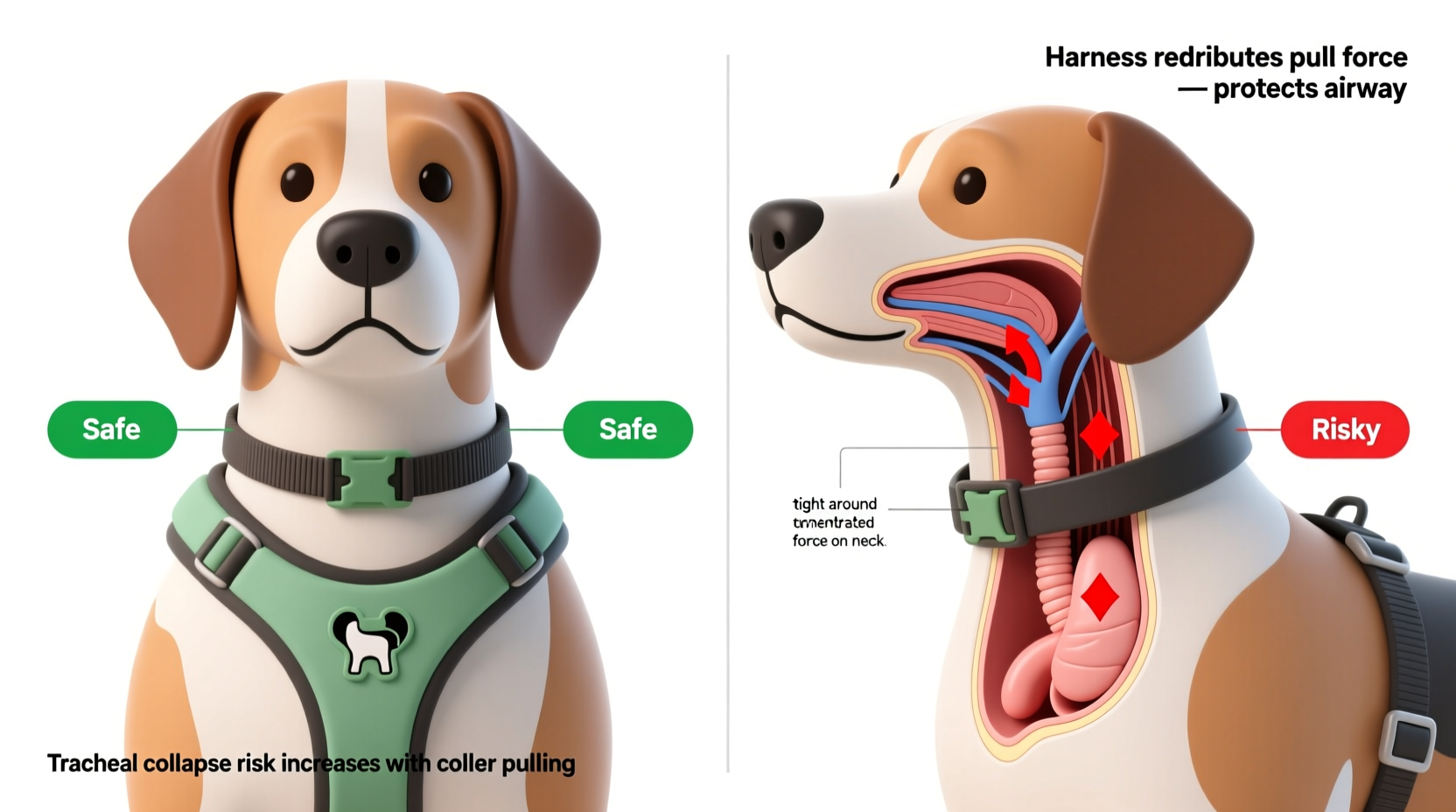
A dog's neck contains vital structures including the trachea (windpipe), esophagus, thyroid glands, blood vessels, and cervical vertebrae. When pressure is applied via a traditional neck collar, particularly during pulling, these structures can suffer acute or cumulative damage.
The trachea, composed of cartilaginous rings, is designed to remain open for airflow but is vulnerable to compression. Chronic pressure from collars—even brief tugs—can lead to inflammation, collapse, or weakening of tracheal walls. This is especially concerning in small breeds like Yorkshire Terriers, Pomeranians, and Chihuahuas, which are predisposed to tracheal collapse. However, larger breeds aren’t immune; forceful pulling over time can strain connective tissues and irritate sensitive nerve pathways along the spine.
“Repeated trauma to the neck from collar use, especially in dogs that pull, can contribute to chronic respiratory issues and even neurological symptoms due to vagus nerve irritation.” — Dr. Karen Bennett, DVM, Veterinary Behaviorist
Additionally, sudden jerks on a collar can trigger coughing, gagging, or even fainting in extreme cases. These reactions aren't merely discomfort—they’re warning signs of underlying stress on critical systems.
Collars: Traditional Use and Hidden Drawbacks
Neck collars have been the default for identification, licensing, and leash attachment for decades. They're convenient, easy to put on, and necessary for holding ID tags. However, their role as the primary attachment point for leashes is increasingly questioned by veterinarians and canine rehabilitation specialists.
When a dog pulls against a collar, force concentrates directly on the front of the neck. Even moderate tension—such as that generated by a 40-pound dog lunging after a squirrel—can exert several times the dog’s body weight in pressure on delicate tissues. Over time, this may lead to:
- Tracheal inflammation or collapse
- Irritation of the larynx and coughing disorders
- Thyroid gland dysfunction due to vascular compression
- Cervical spine misalignment or disc issues
- Increased intraocular pressure (a concern for dogs with glaucoma)
While flat collars distribute pressure slightly better than choke or prong styles, they still focus load on a narrow anatomical region. For dogs that walk calmly beside their handlers, the risk remains low. But for the vast majority of dogs—especially puppies learning leash manners or excitable breeds—the collar becomes a source of unintended harm.
Tip: Use a collar for ID tags only. Attach the leash to a properly fitted harness during walks to reduce neck strain.Harnesses: Design, Types, and Tracheal Protection Benefits
Harnesses shift the point of control from the neck to the torso, distributing force across the chest, shoulders, and back—areas better equipped to handle mechanical stress. Modern harness designs vary widely in fit and function, but all aim to minimize strain on vulnerable anatomy.
There are three primary types of harnesses relevant to tracheal health:
- Front-Clip Harnesses: The leash attaches at the dog’s chest, just behind the shoulders. This design encourages gentle redirection when the dog pulls, turning them back toward the handler without neck pressure. Ideal for training and reducing pulling behavior.
- Rear-Clip Harnesses: Leash attaches over the shoulders, similar to a backpack. Offers good control but doesn’t inherently discourage pulling. Best for well-trained dogs or those who don’t pull.
- No-Pull or Dual-Clip Harnesses: Combine front and rear attachment points. Allow flexibility in training phases—start with front-clip for correction, transition to rear for maintenance.
Studies show that front-clip harnesses reduce forward momentum by up to 70% compared to collars, making them highly effective for managing strong pullers while protecting airways. Because force is redirected laterally rather than linearly down the neck, tracheal compression is virtually eliminated.
Proper fit is essential. A poorly fitted harness can cause chafing, restrict shoulder movement, or slip off. Look for wide, padded straps, adjustable points at the neck and chest, and a secure loop around the ribcage—not the belly.
Comparative Safety: Collar vs Harness for Tracheal Health
| Feature | Traditional Collar | Front-Clip Harness | Rear-Clip Harness |
|---|---|---|---|
| Tracheal Pressure During Pulling | High – direct compression | Minimal – force redirected | Low – no neck load |
| Suitability for Pullers | Poor – risks injury | Excellent – reduces pulling | Fair – controls but doesn’t correct |
| Impact on Spinal Alignment | High risk of strain | Low risk | Low risk |
| Comfort for Long Walks | Moderate – may cause coughing | High – even weight distribution | High – if well-fitted |
| Training Effectiveness | Limited – reinforces pulling | High – promotes attention | Moderate |
| Breed Suitability | Not recommended for small or brachycephalic breeds | Safe for all sizes | Generally safe, avoid tight fits |
This comparison underscores why veterinary professionals increasingly recommend harnesses—particularly front-clip models—for routine walks. While collars remain useful for identification, relying on them for restraint contradicts modern understanding of canine biomechanics.
Real-World Example: Managing Pulling in a Reactive Dog
Consider Max, a two-year-old Australian Shepherd adopted from a shelter. Energetic and alert, Max would lunge at other dogs and cyclists during walks, often yanking so hard his owner feared he’d injure himself. Initially using a standard nylon collar, Max developed a persistent honking cough. His veterinarian diagnosed early signs of tracheal irritation and recommended switching to a front-clip harness alongside positive reinforcement training.
Within three weeks of using a well-fitted harness and reward-based techniques, Max’s pulling decreased by over 60%. More importantly, his cough resolved completely. His owner reported that Max seemed more relaxed on walks, likely because he wasn’t experiencing the choking sensation that previously triggered reactivity. This case illustrates how equipment change alone isn’t a fix—but combined with training, it creates a safer, more effective foundation for behavior modification.
Step-by-Step Guide to Transitioning from Collar to Harness
If you're considering switching your dog to a harness for tracheal protection and better control, follow this gradual process:
- Evaluate Your Dog’s Needs: Consider breed, size, pulling tendency, and any existing health conditions (e.g., tracheal collapse, arthritis).
- Select the Right Harness Type: Choose a front-clip model if your dog pulls. Ensure adjustability and breathable materials.
- Introduce the Harness Gradually: Let your dog sniff and inspect it. Offer treats near it to build positive associations.
- Familiarization at Home: Put the harness on for short periods indoors without attaching a leash. Reward calm behavior.
- Practice Indoors: Attach a leash and guide your dog through simple commands (sit, turn, follow) to get used to the feel.
- Begin Short Outdoor Walks: Start with five-minute walks in low-distraction areas. Use treats to reinforce walking beside you.
- Monitor Fit and Comfort: Check for rubbing, slipping, or restricted movement. Adjust straps as needed.
- Phase Out Collar for Walking: Keep the collar on for ID tags, but clip the leash to the harness during walks.
This approach minimizes stress and builds confidence, ensuring a smooth transition that supports both physical health and behavioral learning.
Common Misconceptions About Harnesses
Despite growing support for harnesses, several myths persist:
- Myth: Harnesses encourage pulling. In reality, poorly fitted or rear-clip-only harnesses may allow pulling, but front-clip designs actively discourage it by redirecting the dog.
- Myth: Harnesses are only for small dogs. All dogs benefit from reduced neck strain. Large, powerful breeds often need harnesses most to prevent injury during walks.
- Myth: Collars are more “natural.” Wild canines don’t wear collars or harnesses. The question isn’t what’s natural, but what’s safest and most humane in domestic life.
- Myth: Vets don’t care about walking gear. Increasingly, veterinarians screen for tracheal issues related to collar use and proactively recommend harnesses.
Frequently Asked Questions
Can I use both a collar and a harness at the same time?
Yes—and it’s actually recommended. Keep the collar on for ID tags and licensing, but attach the leash to the harness during walks. This ensures visibility of identification while protecting your dog’s neck from strain.
Are harnesses safe for puppies?
Absolutely. Puppies are still developing physically, and their tracheas are especially delicate. Using a soft, adjustable harness during early leash training protects their airways and sets the stage for lifelong good habits.
Do harnesses interfere with a dog’s movement?
A well-designed, properly fitted harness does not restrict movement. Look for models with Y-shaped chest straps that sit in front of the shoulders, allowing full range of motion. Avoid harnesses that ride up under the armpits or press on the spine.
Action Plan: Protecting Your Dog’s Tracheal Health
Checklist: Choosing Safer Walking Gear- ✔ Use a collar only for ID tags, not for leash attachment
- ✔ Choose a front-clip harness if your dog pulls
- ✔ Ensure the harness fits snugly but allows two fingers under straps
- ✔ Avoid tight neck collars, especially for small or brachycephalic breeds
- ✔ Monitor for coughing, gagging, or reluctance to walk
- ✔ Consult your vet if your dog has existing respiratory or spinal conditions
Conclusion
The debate between harnesses and collars isn’t about preference—it’s about prevention. Every tug on a collar carries a physiological cost, especially for dogs prone to pulling or those with preexisting vulnerabilities. Harnesses, particularly front-clip designs, offer a scientifically supported alternative that protects tracheal integrity, supports proper posture, and enhances training outcomes. Making the switch is a simple change with profound long-term benefits for your dog’s health and well-being.
💬 Your dog deserves a walk that’s safe, comfortable, and enjoyable. Evaluate your current gear today—your veterinarian might just thank you, and your dog certainly will.








