
Walking your dog should be a peaceful ritual—a chance to bond, exercise, and explore. But when your dog lunges forward at every scent or squirrel, the experience can turn into a battle of strength. For owners of strong or excitable dogs, the question isn’t just about control—it’s about safety. The equipment you choose plays a critical role in protecting your dog’s physical well-being, especially when pulling becomes routine.
For decades, collars were the default choice. Yet growing awareness of canine anatomy and biomechanics has shifted the conversation toward harnesses—particularly for dogs that pull. The debate isn’t merely preference; it centers on long-term health implications. Tracheal damage, spinal strain, eye pressure spikes, and behavioral issues are all potential consequences of improper walking gear. So, when your dog pulls, which option truly safeguards their body and mind?
Anatomy of Canine Pulling: Why It Matters
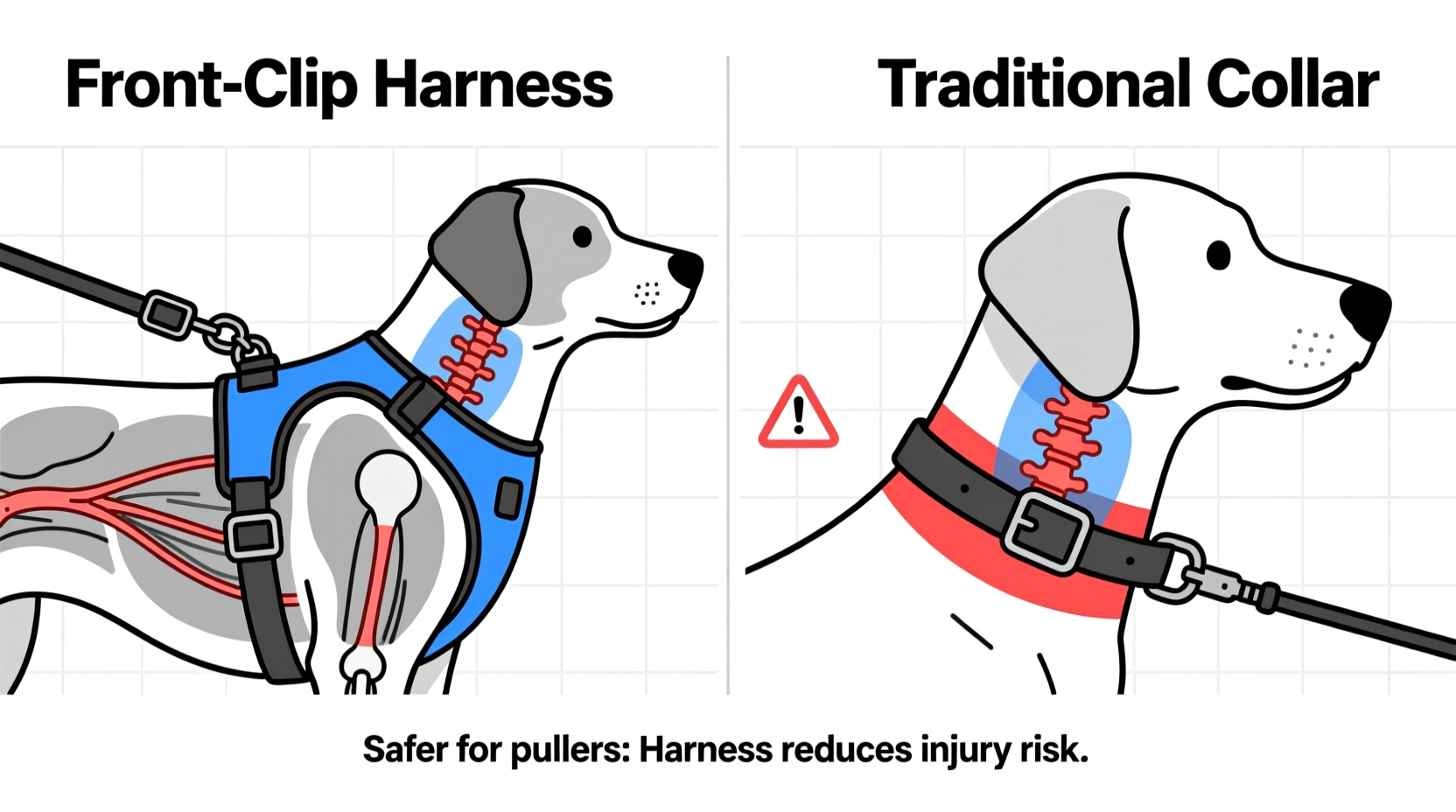
Dogs weren’t built to walk upright like humans. Their skeletal structure, particularly the neck and spine, evolved for quadrupedal movement. When a dog pulls against a traditional neck collar, force concentrates directly on the trachea, cervical vertebrae, and surrounding soft tissues. Even brief tugs can cause discomfort; chronic pulling may lead to lasting harm.
The trachea—the windpipe—is vulnerable. Repeated pressure from a collar can result in inflammation, collapse, or chronic coughing. In extreme cases, veterinarians have documented cases of tracheal rupture in small breeds subjected to constant leash tension. Larger, powerful breeds aren’t immune either. Force transmitted up the neck can affect the spine, potentially contributing to disc issues over time.
Additionally, sudden jerks on a collar can increase intraocular pressure—dangerous for dogs predisposed to glaucoma or other eye conditions. A 2006 study published in *The Veterinary Record* found that pressure on the neck during pulling could elevate eye pressure by up to 40%, posing risks even for healthy dogs.
“Applying force to a dog’s neck is like asking a human to carry weight by their throat. It’s not just uncomfortable—it can be harmful.” — Dr. Sophia Yin, DVM, Applied Animal Behaviorist
Collars: When They Work—and When They Don’t
Collars serve important purposes: ID tags, quick leashing, and everyday identification. For well-trained dogs that walk calmly beside their owners, a standard flat collar is often sufficient. However, for dogs with a pulling habit, collars present significant drawbacks.
Choke chains, prong collars, and electronic collars are sometimes used to manage pulling behavior. While these may offer short-term control, they rely on aversive stimuli. Prong collars distribute pressure across multiple points but still apply force to the neck. Choke chains tighten unpredictably and can cause injury if misused. Shock collars introduce pain-based correction, which many veterinary behaviorists discourage due to risks of fear-based aggression and anxiety.
Even fabric collars, while gentler, don’t solve the fundamental issue: force focused on the neck. If your dog routinely pulls with more than gentle tension, a collar—even a padded one—is unlikely to be the safest long-term solution.
Tip: Use a collar for ID and light use only. Never rely on a neck collar as the primary walking tool for a dog that pulls.Harnesses: Design, Types, and Safety Benefits
A well-designed harness distributes pressure across the dog’s torso—specifically the chest and shoulders—away from the delicate neck area. This shift in load distribution significantly reduces the risk of injury. Not all harnesses are created equal, however. Understanding the types and their mechanics is key to making a safe choice.
Front-Clip Harnesses: These attach the leash to a ring located on the dog’s chest, between the front legs. When the dog pulls, the harness gently turns them back toward the handler, discouraging forward momentum. Front-clip designs promote better posture and reduce strain on joints. Ideal for training and managing strong pullers.
Back-Clip Harnesses: The leash connects at the top of the shoulders, similar to a backpack. While comfortable and easy to put on, they allow dogs to lean into the pull, potentially reinforcing undesirable behavior. Best suited for dogs with mild pulling tendencies or those using the harness only for ID or light walks.
No-Pull Harnesses: A category that includes both front-clip models and hybrid designs with dual attachment points (front and back). Some feature adjustable straps that limit reach or redirect motion. Look for models with wide, padded sections to prevent chafing.
Step-In and Vest Harnesses: These wrap around the body and fasten at the back, offering stability and comfort. Often used for service dogs or long-duration wear. Ensure proper fit—too tight restricts movement; too loose allows slipping.
| Type | Best For | Safety Rating | Pulling Control |
|---|---|---|---|
| Front-Clip Harness | Dogs that pull strongly | ★★★★★ | Excellent |
| Back-Clip Harness | Calm dogs, light use | ★★★☆☆ | Fair |
| No-Pull (Dual Clip) | Training + daily walks | ★★★★☆ | Very Good |
| Vest/Step-In | Extended wear, sensitive skin | ★★★★☆ | Good |
| Standard Collar | ID, obedience-trained dogs | ★★☆☆☆ | Poor |
Real-World Example: Transforming a Puller with the Right Gear
Max, a two-year-old Siberian Husky, was adopted by Sarah after spending months in a high-energy shelter environment. From day one, walks were chaotic. Max would lunge at bikes, bark at other dogs, and drag Sarah down sidewalks. She started with a basic collar, then tried a prong collar on her trainer’s recommendation. While it reduced pulling slightly, Max began showing signs of discomfort—coughing after walks and reluctance to move when the collar touched his neck.
Concerned, Sarah consulted a veterinary behaviorist who recommended switching to a front-clip harness and beginning positive reinforcement training. She chose a padded no-pull harness with a chest lead attachment and started rewarding Max for walking within a two-foot radius of her side.
Within six weeks, Max’s pulling decreased by over 70%. More importantly, his coughing stopped, and he seemed more relaxed on walks. The harness didn’t just protect his body—it became part of a broader strategy that improved his mental state. “I wasn’t just managing behavior,” Sarah said. “I was building trust.”
Choosing the Right Fit: A Step-by-Step Guide
Selecting the right harness involves more than picking a popular brand. Proper fit ensures comfort, safety, and effectiveness. Follow this process:
- Measure Your Dog: Use a soft tape measure around the widest part of the chest (behind the front legs) and the neck base. Compare these numbers to the manufacturer’s sizing chart.
- Try It On: Allow room for two fingers to fit under any strap. The harness should not ride up over the shoulders or restrict leg movement.
- Check Mobility: Let your dog walk, sit, and stretch. Watch for rubbing, pinching, or slipping.
- Test the Leash Connection: Attach the leash and gently simulate pulling. With a front-clip harness, the dog should pivot inward, not strain forward.
- Monitor Early Use: After the first few walks, inspect the skin under the harness for redness or irritation. Adjust fit or try a different model if needed.
Common Mistakes to Avoid
- Using a harness as a substitute for training: Equipment helps, but consistent positive reinforcement is essential for lasting change.
- Choosing fashion over function: Decorative harnesses may look appealing but lack structural support or proper fit.
- Ignoring fit changes: Puppies grow quickly; adult dogs gain or lose weight. Reassess fit every few months.
- Over-tightening straps: This can restrict breathing and cause sores, especially under the armpits.
- Using back-clip harnesses for strong pullers: These can encourage pulling rather than deter it.
Expert Checklist: Selecting Safe Walking Gear
Before purchasing any harness or collar, ask yourself these questions:
- ✅ Does it distribute pressure away from the neck?
- If yes, it’s likely safer than a standard collar.
- ✅ Is it adjustable in multiple areas?
- Look for chest, neck, and shoulder adjustments for a customized fit.
- ✅ Does it allow full range of motion?
- Your dog should be able to trot, sit, and stretch without restriction.
- ✅ Is it made from breathable, durable materials?
- Nylon and mesh are common; avoid thin straps that dig into the skin.
- ✅ Can I easily attach the leash and secure my dog?
- Quick snaps and clear labeling help prevent fumbling during walks.
Frequently Asked Questions
Can a harness hurt my dog if it doesn’t fit properly?
Yes. An ill-fitting harness can cause chafing, restricted movement, or even nerve damage from constant rubbing under the armpits. Always check fit regularly and adjust as needed.
Will a harness stop my dog from pulling completely?
Not on its own. A front-clip harness reduces pulling by redirecting force, but combining it with training—such as teaching loose-leash walking—yields the best results.
Is it okay to use both a harness and a collar?
Absolutely. Many owners use a harness for walking and keep a separate collar for ID tags. Just ensure the collar is loose enough not to pinch when the dog is in the harness.
Conclusion: Prioritizing Long-Term Health Over Short-Term Control
The choice between a harness and a collar isn’t just about convenience—it’s a decision that affects your dog’s physical health and emotional well-being. For dogs that pull, harnesses—especially front-clip or no-pull designs—are overwhelmingly safer than traditional collars. They protect vital structures, reduce injury risk, and support humane training methods.
That said, equipment alone isn’t a fix. Pair your harness with patience, consistency, and reward-based training to create lasting change. Your dog isn’t misbehaving out of defiance; they’re responding to excitement, fear, or lack of guidance. By choosing tools that respect their body and mind, you lay the foundation for calmer, more enjoyable walks—for both of you.
🚀 Ready to make the switch? Measure your dog today, research reputable harness brands, and take the first step toward safer, stress-free walks. Share your experience in the comments—your journey could help another dog owner do the same.








