Choosing between a harness and a collar isn’t just about style or convenience—it’s a decision that directly affects your dog’s comfort, breathing, and long-term health. Many pet owners assume collars are standard and sufficient, but when it comes to preventing choking and maintaining effective control during walks, harnesses often outperform traditional neck collars. Understanding the mechanics of both options, along with your dog’s breed, size, and behavior, is key to making an informed choice.
How Collars Work—and Where They Fall Short
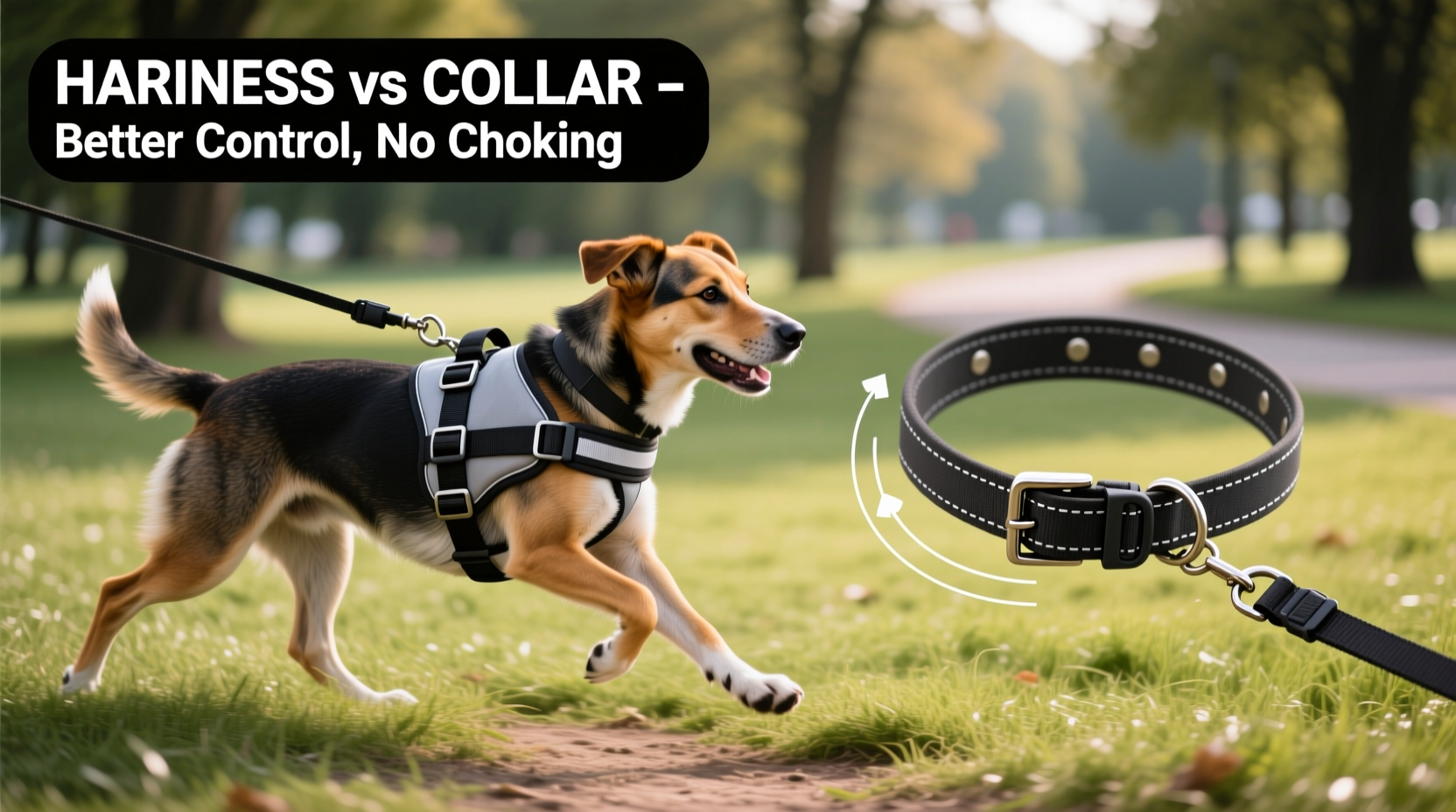
A traditional collar wraps around the dog’s neck and serves multiple purposes: holding ID tags, attaching a leash, and acting as a quick point of control. However, when used for walking or managing pulling behavior, collars concentrate force on a small area—specifically the trachea, cervical spine, and surrounding soft tissues.
Dogs that pull on-leash experience repeated pressure on their windpipe. Over time, this can lead to chronic coughing, collapsed trachea (especially in small breeds), eye strain from increased intraocular pressure, and even nerve damage. Veterinarians and canine rehabilitation specialists consistently warn against using neck collars as primary walking tools for dogs prone to pulling.
“Repeated pressure on a dog’s neck—even moderate tugging—can cause long-term structural damage. For dogs that pull, we strongly recommend switching to a well-fitted front-clip harness.” — Dr. Laura Chen, DVM, Canine Rehabilitation SpecialistTip: If you must use a collar, reserve it for ID tags and vet visits. Use a harness for all walks and outdoor activities.
The Science Behind Harnesses: Distributed Force, Better Control
Harnesses distribute leash tension across the dog’s chest, shoulders, and back rather than focusing it on the neck. This design significantly reduces the risk of airway compression and spinal injury. Modern harnesses come in various styles, but two types stand out for control and safety: front-clip and back-clip harnesses.
- Front-clip harnesses attach the leash to a ring located on the dog’s chest. When the dog pulls forward, the harness gently turns them back toward the handler—a natural redirection that discourages pulling.
- Back-clip harnesses connect behind the shoulders, similar to a backpack. While more comfortable for calm dogs, they offer less control and may even encourage pulling in strong or excitable breeds.
Studies have shown that front-clip harnesses reduce pulling force by up to 50% compared to collars. The redirection effect teaches dogs to walk beside their owner without constant verbal correction, making them ideal for training.
Real Example: Transforming a Puller into a Polite Walker
Milo, a two-year-old Australian Shepherd, would lunge at every squirrel, cyclist, and passing dog during walks. His owner, Sarah, tried choke chains and prong collars, but Milo developed a honking cough and seemed anxious. After consulting a certified dog trainer, she switched to a front-clip harness. Within three weeks of consistent use and positive reinforcement, Milo walked calmly beside her. “It wasn’t just about stopping the pull,” Sarah said. “He seemed more relaxed, like he wasn’t fighting for breath anymore.”
Comparing Safety, Comfort, and Training Outcomes
To help clarify the differences, here’s a side-by-side comparison of collars and harnesses based on key factors:
| Feature | Neck Collar | Front-Clip Harness | Back-Clip Harness |
|---|---|---|---|
| Pressure on Neck | High – direct tracheal pressure | Low – force redirected to chest | Low – minimal neck strain |
| Pulling Control | Poor – encourages forward motion | Excellent – redirects dog inward | Fair – allows forward momentum |
| Safety for Breeds with Respiratory Issues | Poor – risky for pugs, bulldogs, etc. | Excellent – recommended by vets | Good – avoids neck pressure |
| Ease of Use | Easy – quick to put on | Moderate – requires proper fit | Moderate – simple adjustment |
| Breathing Interference | High – especially under tension | Negligible – no throat pressure | Low – depends on fit |
| Best For | ID tags, short-handled guidance | Training, reactive dogs, pullers | Calm dogs, light leashed walks |
When a Collar Might Still Be Appropriate
While harnesses win in most walking scenarios, collars aren’t obsolete. They serve important roles in specific contexts:
- Identification: A collar with ID tags ensures your dog can be returned if lost, even if the harness slips off.
- Veterinary identification: Some medical alerts or rabies tags are legally required to be on a collar.
- Short-distance control: In secure areas, a collar may suffice for quick exits or indoor handling.
That said, never rely on a collar for long walks, training sessions, or dogs with known respiratory conditions. Brachycephalic breeds (like Pugs, French Bulldogs, and Boston Terriers) are especially vulnerable to neck pressure due to their shortened airways.
Step-by-Step Guide to Transitioning from Collar to Harness
If you’re switching from a collar to a harness for better control and safety, follow this gradual process:
- Choose the right harness type: Opt for a front-clip model if your dog pulls or gets overexcited. Ensure it has adjustable straps and a padded chest plate.
- Introduce it at home: Let your dog wear the harness indoors for short periods with treats and praise. This builds positive association.
- Check the fit: You should be able to fit two fingers snugly under any strap. The harness shouldn’t shift excessively or rub under the armpits.
- Practice leash manners indoors: Use a lightweight leash to guide your dog through basic commands while wearing the harness.
- Start with short outdoor walks: Begin in low-distraction areas. Reward your dog for walking beside you.
- Phase out the collar for walking: Keep the collar for ID only. Use the harness as the primary walking tool.
- Monitor for chafing or discomfort: Check under the straps daily for redness or irritation, especially during the first few weeks.
Common Misconceptions About Harnesses
Despite growing evidence supporting harness use, several myths persist:
- Myth: Harnesses encourage pulling. This applies only to poorly designed or back-clip models. Front-clip harnesses actually discourage pulling through gentle redirection.
- Myth: Harnesses are only for small dogs. Large, powerful breeds benefit even more from reduced neck strain and improved control.
- Myth: Harnesses cause shoulder injury. No peer-reviewed studies support this claim. Properly fitted harnesses do not restrict natural gait. Poorly fitted ones might, which underscores the importance of correct sizing.
Canine physiotherapists emphasize that movement restriction comes from improper fit—not the harness concept itself. A well-designed harness supports natural posture and alignment.
Expert Insight: Why Vets Recommend Harnesses
“For dogs with existing neck or spinal issues, or those predisposed to tracheal collapse, we don’t just recommend harnesses—we prescribe them. It’s a matter of preventive care.” — Dr. Alan Reyes, Veterinary Neurologist
FAQ: Common Questions About Harnesses and Collars
Can I use both a harness and a collar at the same time?
Yes, and it’s actually the best practice. Keep the collar on for ID tags and licensing, and use the harness for walking. Just ensure both are properly adjusted and don’t rub against each other.
Are no-pull collars a good alternative?
No-pull collars (like head halters or martingales) apply pressure differently but still act on the neck. Head halters, such as the Gentle Leader, guide the dog by the muzzle and can be effective, but some dogs find them aversive. They require careful fitting and acclimation. For most owners, a front-clip harness is a safer, more humane option.
How do I know if my harness fits correctly?
A proper fit means: the chest clip sits centered on the breastbone, shoulder straps don’t ride up into the armpits, and leg loops are snug but allow full range of motion. The harness should not twist or slide excessively during movement.
Checklist: Choosing the Right Walking Gear
- ✅ Assess your dog’s pulling behavior: frequent puller? Choose a front-clip harness.
- ✅ Measure your dog’s girth (behind front legs) and neck for accurate sizing.
- ✅ Look for padded straps and breathable materials, especially for thick-coated breeds.
- ✅ Avoid slip-on harnesses without buckles—they’re harder to adjust and escape-prone.
- ✅ Test the harness in a low-stress environment before long walks.
- ✅ Keep the collar on for ID, but disconnect the leash from it during walks.
- ✅ Replace worn or stretched harnesses—frayed stitching compromises safety.
Conclusion: Prioritizing Safety Without Sacrificing Control
The debate between harness and collar isn’t about tradition versus trend—it’s about aligning equipment with canine anatomy and behavioral needs. For most dogs, especially those that pull, react to stimuli, or belong to brachycephalic breeds, a front-clip harness offers superior control without the risks of choking. It transforms walks from a battle of strength into a cooperative experience grounded in comfort and trust.
You don’t need to choose between safety and obedience. With the right harness, you can have both. Your dog breathes easier, moves freely, and learns to walk politely—all while you maintain reliable control. Make the switch today, and feel the difference in every step you take together.
💬 Have you made the switch from collar to harness? Share your experience, challenges, and tips in the comments below—your story could help another dog owner make a healthier choice.








