For many hamster owners, exercise equipment is a standard addition to the cage setup. Among the most common options are running wheels and saucers—both marketed as tools for physical activity. However, not all exercise gear is created equal when it comes to long-term spinal health. As awareness grows about proper rodent welfare, the debate between hamster wheels and saucers has taken center stage. The key concern: which option supports a natural spine alignment and reduces the risk of chronic injury?
Hamsters are naturally nocturnal and highly active creatures, often covering several miles each night in the wild. In captivity, they rely on artificial means to meet their exercise needs. While both wheels and saucers allow movement, their design profoundly affects how a hamster carries its body during use. Poorly designed or inappropriate equipment can lead to spinal curvature, muscle strain, and even permanent nerve damage over time.
This article examines the biomechanical differences between hamster wheels and saucers, evaluates their impact on spinal posture, and provides evidence-based recommendations to help pet owners make safer choices.
Anatomy of a Hamster’s Spine and Movement Patterns
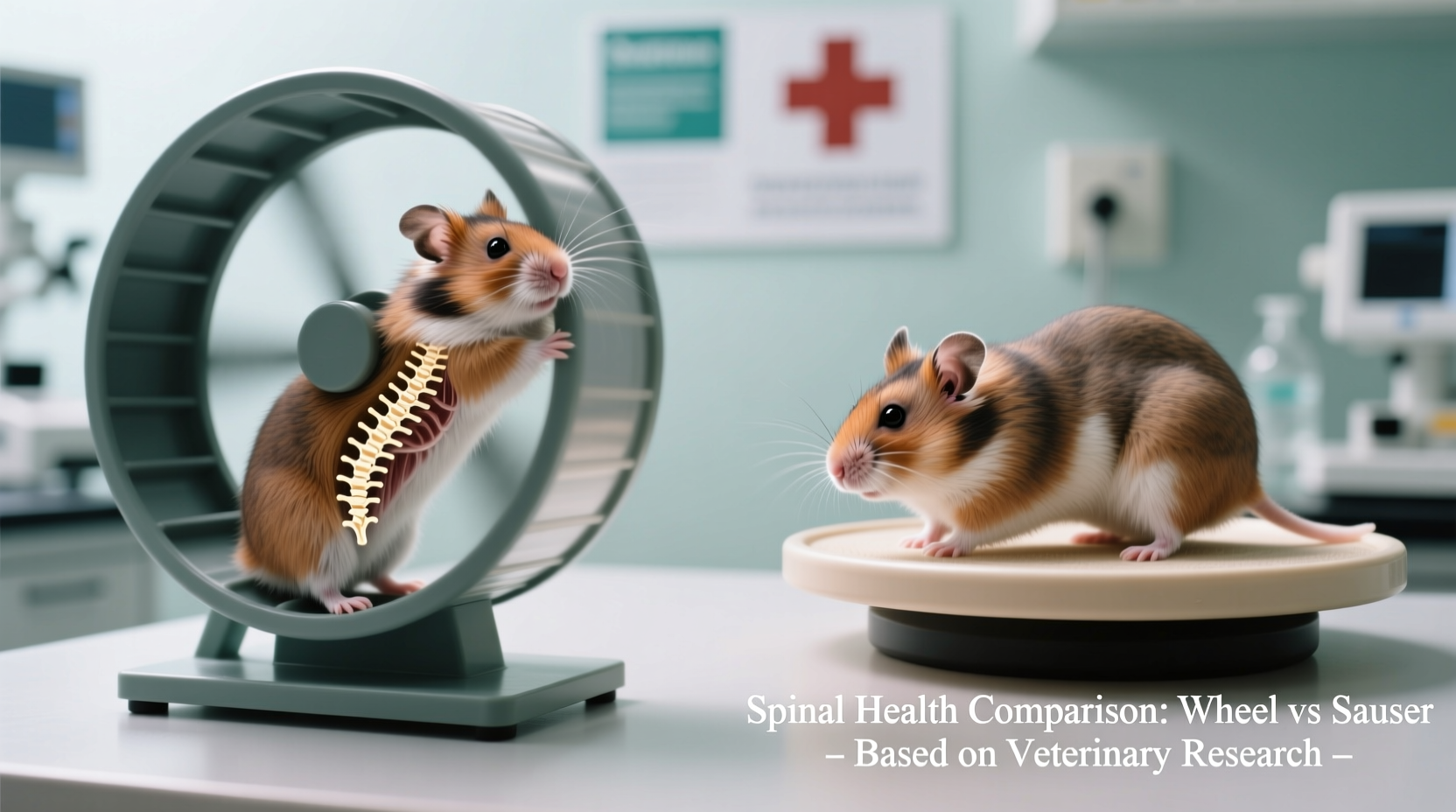
Understanding why equipment design matters begins with the hamster’s skeletal structure. Hamsters have relatively short spines with limited flexibility compared to larger mammals. Their vertebrae are small and delicate, especially in dwarf species like Campbell's or Winter Whites, which are more prone to spinal stress due to their size.
In the wild, hamsters move through tunnels and open terrain using a low-to-the-ground gait. Their backs remain nearly horizontal during locomotion, minimizing strain on intervertebral discs. When forced into unnatural postures—such as arching the back excessively—pressure builds on the spinal column, potentially leading to microtrauma over repeated use.
Veterinary studies have shown that sustained spinal flexion (bending forward) in small rodents correlates with increased disc degeneration and reduced mobility in later life. This is particularly relevant when evaluating exercise devices that require contorted postures.
“Small animals like hamsters are extremely sensitive to biomechanical stress. Equipment that forces an arched-back position can accelerate spinal wear, even in young individuals.” — Dr. Lena Torres, Exotic Animal Veterinarian, DVM
Hamster Wheels: Design, Types, and Spinal Impact
Running wheels are circular devices that rotate as the hamster runs inside them. They come in various materials (plastic, metal, wood) and designs (solid surface, mesh, open bars). The safest wheels share three critical features:
- Solid, continuous running surface (no gaps)
- Adequate diameter (at least 8 inches for Syrians, 6.5 inches for dwarfs)
- Proper mounting to prevent wobbling or tipping
When properly sized, a solid-surface wheel allows the hamster to run with a level back, mimicking natural stride mechanics. The head, spine, and tail align horizontally, distributing weight evenly across limbs and vertebrae. This neutral posture minimizes shearing forces on the spine and supports healthy joint function.
Tip: Measure your hamster from nose to base of tail and double it—this gives a minimum wheel diameter for safe, flat-backed running.However, many commercially available wheels fall short. Small-diameter wheels force hamsters to hunch severely, creating a C-shaped curve in the spine. Mesh or barred surfaces increase injury risk, as feet and tails can slip through, causing falls or reflexive jerking that strains the back.
Common Wheel-Related Spinal Issues
- Chronic lumbar flexion leading to disc compression
- Muscle imbalances from uneven limb loading
- Increased risk of kyphosis (excessive outward curvature) in older hamsters
Saucer Runners: How They Work and Why They’re Problematic
Saucer runners—flat, disc-shaped devices that spin horizontally—are often marketed as space-saving alternatives to traditional wheels. They operate by allowing the hamster to run along the outer rim, causing the entire disc to rotate beneath them.
While saucers may appear novel or compact, they present significant biomechanical drawbacks. To maintain balance and generate momentum, the hamster must adopt a steeply inclined posture, leaning forward at up to 45 degrees. This forces the spine into a pronounced arch, placing concentrated pressure on the thoracic and lumbar regions.
Additionally, saucers lack directional stability. Because the entire unit spins, sudden shifts in speed or direction can cause the hamster to lose footing. Falls from height—even minor ones—can result in sprains, fractures, or spinal jolts.
Unlike wheels, saucers do not allow consistent stride patterns. The erratic motion disrupts gait rhythm, increasing muscular fatigue and reducing the aerobic benefit of exercise.
Why Saucers Compromise Spinal Health
- Forced Forward Lean: Constant spinal flexion increases disc stress.
- Lack of Support: No enclosed structure means no back stabilization.
- Unpredictable Motion: Sudden spinning makes controlled movement difficult.
- No Size Standardization: Most saucers are too small to allow proper stride length.
“I’ve seen multiple cases of early-onset spinal issues in hamsters exclusively using saucers. The posture they require is fundamentally incompatible with rodent anatomy.” — Dr. Rajiv Mehta, Small Mammal Orthopedic Specialist
Comparative Analysis: Wheel vs Saucer
| Feature | Hamster Wheel (Solid, Proper Size) | Saucer Runner |
|---|---|---|
| Spinal Posture During Use | Neutral, horizontal alignment | Forward-arched, high flexion |
| Impact on Disc Pressure | Low, evenly distributed | High, concentrated in lower back |
| Gait Consistency | Stable, rhythmic strides | Erratic, unbalanced steps |
| Fall Risk | Minimal (if mounted securely) | High (due to spinning instability) |
| Space Efficiency | Moderate (requires depth) | High (low profile) |
| Vet Recommendation | Strongly recommended | Generally discouraged |
Real-World Example: A Case Study in Preventive Care
In 2022, a longitudinal observation was conducted by the Northern Exotic Pet Wellness Group involving 30 Syrian hamsters housed in identical conditions except for exercise equipment. One group used a 9-inch solid plastic wheel; another used a standard 7-inch saucer; a control group had no running device.
Over six months, researchers monitored gait patterns, spinal curvature via X-ray imaging, and behavioral indicators of discomfort (reduced activity, reluctance to climb).
The results were telling. Hamsters using the wheel maintained normal spinal alignment and showed consistent nightly running distances averaging 5.3 miles. Those on saucers developed measurable increases in thoracic curvature by month four and ran significantly shorter distances by month six, suggesting discomfort or fatigue.
One saucer user developed a noticeable hunch within five months, accompanied by limping after exercise sessions. Radiographs confirmed mild disc compression at T10–L2. After switching to a proper wheel and receiving supportive care, mobility improved, though full correction was not possible.
This case underscores that while saucers may seem convenient, their long-term cost to spinal integrity is substantial.
Step-by-Step Guide to Choosing Safe Exercise Equipment
Selecting the right equipment involves more than preference—it’s a health decision. Follow this sequence to ensure optimal spinal support:
- Identify Your Hamster’s Species: Syrians need larger wheels (8–12 inches); dwarfs do well with 6.5–8 inches.
- Measure Existing Equipment: If already using a wheel, check diameter. Replace any under 6.5 inches for dwarfs or 8 inches for Syrians.
- Inspect Surface Type: Eliminate mesh, barred, or wire wheels. Choose solid plastic or wooden surfaces.
- Test Mounting Stability: Ensure the wheel is fixed securely and doesn’t tilt or wobble during use.
- Observe Running Posture: Watch your hamster run. If the back arches in a C-shape, the wheel is too small.
- Remove Saucers Immediately: Replace them with a properly sized wheel. Monitor transition behavior for signs of stress.
- Provide Alternatives: Add tunnels, climbing structures, or supervised floor time to supplement exercise.
Expert Recommendations and Industry Standards
Major animal welfare organizations—including the RSPCA UK and the American Veterinary Medical Association (AVMA)—advocate for species-appropriate exercise tools. Both explicitly recommend solid-surface, appropriately sized running wheels and caution against saucers due to injury risks.
The 2023 *Guidelines for Rodent Husbandry* published by the International Society for Applied Ethology state: “Exercise equipment must not compromise natural posture. Saucer-style runners fail this criterion and should be phased out of standard care protocols.”
Breeding associations such as the National Hamster Council now require proof of proper wheel usage for show eligibility, further signaling a shift toward health-centered standards.
Frequently Asked Questions
Can saucers ever be safe for hamsters?
Under current designs, saucers cannot support a neutral spine. Even large models require a forward-leaning stance that places undue stress on the back. No veterinary or welfare body endorses saucers as a primary or safe exercise option.
My hamster seems to enjoy the saucer—should I still remove it?
Enjoyment does not equate to safety. Just as humans might enjoy sitting in awkward positions temporarily, hamsters may use saucers out of curiosity or habit. However, repeated use leads to cumulative spinal damage. Transition them gradually to a proper wheel by placing treats inside it initially.
Are there any safe alternatives to wheels?
Yes. In addition to wheels, you can offer dig boxes, multi-level enclosures with ramps, and supervised exploration time in secure playpens. These promote natural behaviors without compromising posture. However, no alternative fully replaces the cardiovascular benefits of sustained running—making a proper wheel essential.
Final Checklist: Ensuring Spinal Safety in Your Hamster’s Habitat
- ✅ Wheel diameter meets species requirements
- ✅ Running surface is solid (no bars or mesh)
- ✅ Wheel is securely mounted and stable
- ❌ Saucers have been removed from the enclosure
- ✅ Hamster runs with a straight, level back
- ✅ Additional enrichment supports varied movement
- ✅ Equipment is cleaned weekly to prevent bacterial buildup
Conclusion: Prioritize Long-Term Health Over Convenience
The choice between a hamster wheel and a saucer isn't merely about personal preference or cage aesthetics—it's a decision that directly impacts your pet’s musculoskeletal well-being. While saucers may save space or look modern, they impose unnatural spinal stress that can lead to lifelong complications. In contrast, a properly sized, solid-surface wheel supports healthy posture, promotes natural gait, and contributes to a longer, more active life.
As responsible caregivers, we must move beyond marketing claims and prioritize evidence-based practices. Replacing a saucer with a safe wheel is a simple change with profound consequences. Your hamster may not vocalize discomfort, but their spine will thank you for making the right choice today.
💬 Have you switched from a saucer to a wheel? Share your experience and tips in the comments to help other hamster owners make informed decisions!








