For small pets like hamsters, gerbils, and dwarf rats, regular physical activity is essential for both physical health and mental well-being. Without adequate stimulation, these naturally active animals can develop obesity, anxiety, and even self-harming behaviors such as bar-chewing or over-grooming. Two of the most common tools pet owners use to encourage movement are exercise wheels and exercise balls. While both have their proponents, understanding the risks and benefits of each is crucial to ensuring your pet stays safe and healthy.
This article examines the safety, effectiveness, and practicality of hamster wheels versus exercise balls, drawing on veterinary recommendations, behavioral science, and real-world pet care experience. The goal is not to declare a universal winner, but to help you make an informed decision based on your pet’s species, temperament, and living environment.
Understanding Exercise Needs in Small Pets
Hamsters and similar rodents are naturally nocturnal and highly active during the night. In the wild, they may travel up to 5 miles per night in search of food and nesting materials. Confinement in a cage drastically limits this natural behavior, making supplemental exercise critical.
Exercise supports cardiovascular health, prevents obesity, reduces stress, and helps regulate sleep cycles. However, not all forms of exercise are equally beneficial—or safe. While both wheels and balls offer opportunities for movement, they differ significantly in how they support natural behaviors and what risks they introduce.
The Case for the Hamster Wheel
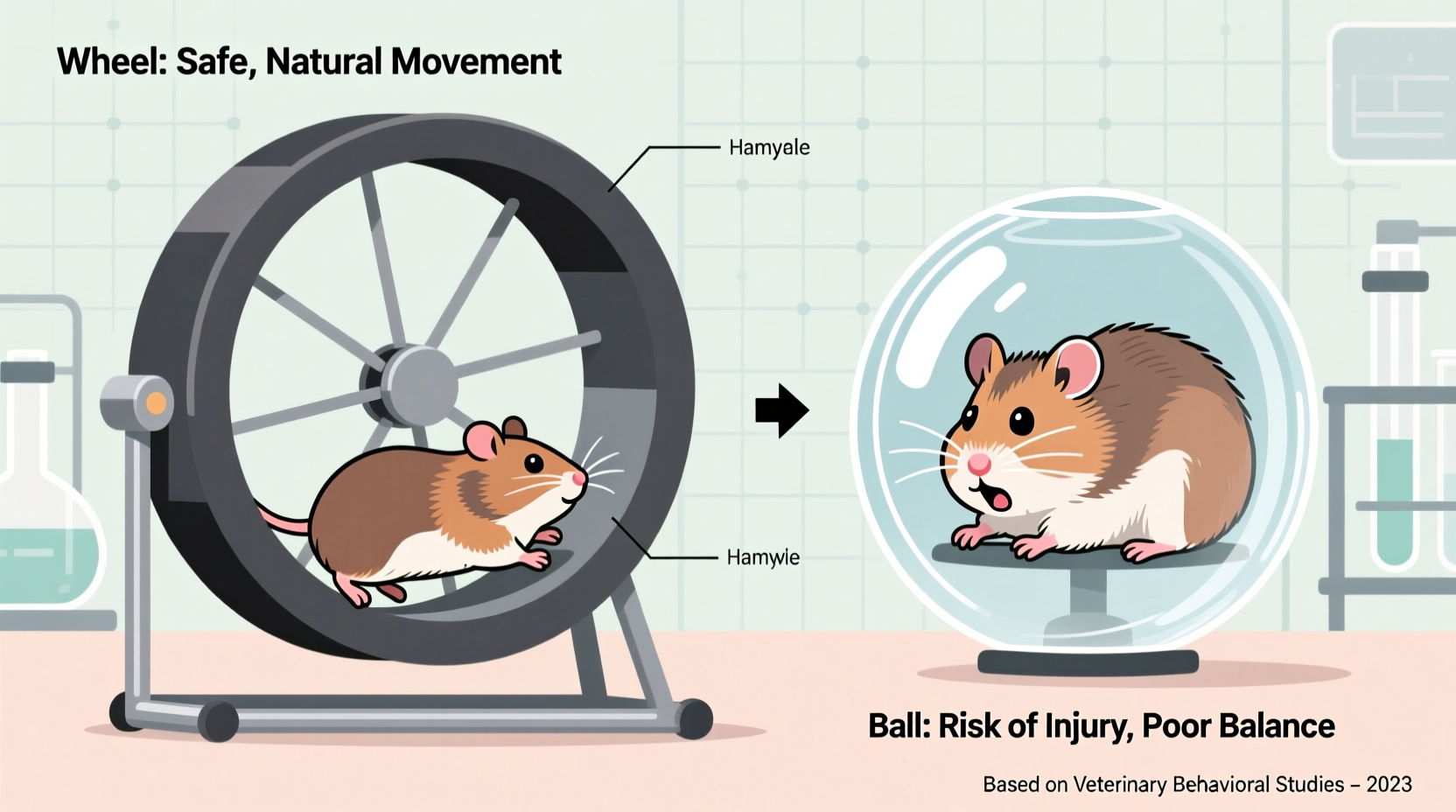
A properly designed hamster wheel allows continuous running in a controlled, predictable environment. When sized and positioned correctly, it aligns with the animal’s instinct to run long distances and provides a reliable outlet for energy.
Modern wheels come in various designs: solid-surface models (preferred), wire-run models (discouraged), and silent spin types with ball bearings. The best wheels are at least 8 inches in diameter for Syrian hamsters and 6.5 inches for dwarfs to prevent spinal arching during use.
Tip: Always choose a solid, continuous-running surface on your wheel—never one with gaps or rungs that could trap feet or tails.The Risks of Exercise Balls
Exercise balls—plastic spheres that allow pets to roll freely across floors—are often marketed as a way to provide “exploration” and “freedom.” While they do allow movement outside the cage, they present several serious concerns.
First, they restrict natural behaviors. Inside a ball, a hamster cannot stop to sniff, dig, mark territory, or interact with its surroundings—all activities vital to rodent well-being. The sensory deprivation inside the enclosed sphere can be stressful, especially for prey animals hardwired to detect threats.
Second, balls pose physical dangers. Overheating is a major risk; poor ventilation means body heat builds quickly. A study published in the *Journal of Applied Animal Welfare Science* found that hamsters in exercise balls experienced elevated heart rates and signs of distress within 15 minutes of use.
“Exercise balls may seem fun, but they often cause stress, disorientation, and overheating. For most small pets, a high-quality wheel is a far safer choice.” — Dr. Lena Peterson, DVM, Exotic Animal Specialist
Safety Comparison: Key Factors Evaluated
To assess which option offers safer exercise, we examine five critical dimensions: injury risk, stress levels, supervision needs, environmental control, and suitability for species.
| Factor | Hamster Wheel | Exercise Ball |
|---|---|---|
| Injury Risk | Low when wheel is properly sized and solid-surfaced | High—risk of falls, burns from hot surfaces, foot entrapment |
| Stress Level | Low—predictable, self-paced activity | High—disorientation, lack of escape routes, sensory overload |
| Supervision Required | Minimal—can be used overnight unsupervised | Constant—must be monitored every second |
| Environmental Hazards | Negligible—contained within cage | Significant—stairs, furniture, other pets, temperature extremes |
| Species Suitability | Excellent for most small rodents | Poor—especially dangerous for hamsters and gerbils |
The data clearly favors the wheel as the safer, lower-risk option. While some owners report their pets enjoying balls, enjoyment is difficult to interpret in animals that freeze or become passive due to fear. What looks like calm exploration may actually be learned helplessness.
Best Practices for Safe and Effective Exercise
Regardless of which tool you choose, how you implement it matters just as much as the tool itself. Below is a step-by-step guide to maximizing safety and engagement.
Step-by-Step Guide to Providing Safe Exercise
- Assess your pet’s species and size. Syrians need larger wheels than Roborovskis. Never use a wheel smaller than 6.5 inches for any hamster.
- Select a solid-surface wheel with no central gap. Avoid flying saucer-style wheels unless specifically designed for dwarf breeds.
- Mount the wheel securely so it doesn’t wobble or pinch limbs. Floor-mounted wheels should have protective guards.
- Place the wheel in a quiet part of the cage where your pet feels secure while running—away from direct light or drafts.
- If using an exercise ball, limit sessions to 10–15 minutes on a flat, enclosed surface, away from stairs and pets. Monitor continuously.
- Never force your pet into a ball. If they resist, stop immediately—this is a sign of stress.
- Provide alternative enrichment such as tunnels, chew toys, and climbing structures to round out physical and mental exercise.
Real-World Example: A Cautionary Tale
Sarah, a first-time hamster owner, bought a clear exercise ball after seeing viral videos of “happy” hamsters rolling around homes. Excited to give her Syrian hamster, Milo, more freedom, she placed him in the ball for 20 minutes one afternoon.
Milo initially moved forward but soon began freezing in place, trembling slightly. Sarah thought he was tired, so she returned him to his cage. Over the next two days, Milo became lethargic, stopped eating, and developed diarrhea. A vet visit revealed dehydration and elevated stress markers—likely caused by overheating and panic during the ball session.
After removing the ball and installing a large, silent solid-wheel, Milo gradually recovered. His activity levels normalized, and he began running consistently at night. Sarah now advocates against exercise balls in online pet forums, urging others to consider the hidden risks behind seemingly innocent playtime.
Expert Recommendations and Veterinary Consensus
Major animal welfare organizations—including the RSPCA (UK) and the American Veterinary Medical Association (AVMA)—advise against the routine use of exercise balls for small pets. Their guidelines emphasize environmental enrichment that respects natural behaviors rather than forcing unnatural locomotion.
Dr. Karen Lee, a veterinarian specializing in exotic pets, explains: “Wheels mimic the sustained running hamsters do in the wild. Balls disrupt their ability to navigate, hide, and sense danger. Even short exposures can trigger chronic stress responses.”
Instead of balls, experts recommend expanding the cage footprint, adding multi-level platforms, and offering supervised floor time in a secure, enclosed playpen—where pets can explore, dig, and retreat at will.
“Freedom isn’t just about movement—it’s about choice. A hamster choosing to run on a wheel is exercising autonomy. One trapped in a plastic ball is not.” — Dr. Alan Zhou, Animal Behavior Researcher
FAQ: Common Questions About Hamster Exercise
Can I use an exercise ball if I supervise my hamster closely?
You can, but it’s not recommended. Even with supervision, risks like overheating, falls, and stress remain high. Safer alternatives include supervised playpens with tunnels and hiding spots.
How long should my hamster run on a wheel each night?
There’s no set duration. Healthy hamsters may run 4–8 miles per night, spread across multiple sessions. As long as the wheel is appropriately sized and your pet shows no signs of soreness or overuse, nightly running is normal and beneficial.
Are there any small pets that benefit from exercise balls?
Rats and some mice may tolerate balls better due to higher cognitive flexibility and socialization with humans. However, even for these species, free-play in a safe room or pen is superior. Exercise balls should never replace proper environmental enrichment.
Checklist: Choosing the Safest Exercise Option
- ✅ Choose a solid-surface wheel with a minimum diameter of 6.5 inches (8+ for Syrians)
- ✅ Ensure the wheel spins smoothly without wobbling or squeaking
- ✅ Avoid wire or mesh wheels that can trap limbs
- ✅ Do not use exercise balls regularly—or eliminate them entirely
- ✅ Provide alternative enrichment: tunnels, dig boxes, chew toys
- ✅ Monitor your pet’s behavior—signs of stress include freezing, excessive grooming, or refusal to eat
- ✅ Prioritize floor time in a secure, pet-safe area over ball use
Conclusion: Prioritizing Safety and Natural Behavior
When comparing hamster wheels and exercise balls, the evidence overwhelmingly supports wheels as the safer, more species-appropriate option. They allow natural, self-directed exercise without exposing pets to avoidable risks. Exercise balls, while visually appealing to humans, often compromise animal welfare through stress, disorientation, and physical danger.
The best care comes not from novelty gadgets, but from understanding your pet’s instincts and creating an environment that supports them. A high-quality wheel, combined with a spacious cage and daily mental stimulation, forms the foundation of a healthy routine.
🚀 Take action today: Inspect your pet’s wheel for safety, remove any exercise balls from rotation, and design a richer habitat that promotes natural behaviors. Your small companion will thank you with brighter eyes, smoother fur, and a longer, happier life.








