
Choosing the right dog breed for a household with young children is more than just about size or coat type—it's about temperament. Two of the most popular hybrid breeds in North America, Goldendoodles and Labradoodles, are both praised for their intelligence, affection, and low-shedding coats. But when it comes to raising a pet alongside toddlers or preschoolers, subtle yet meaningful differences in temperament can make one a better fit than the other.
Both breeds originate from crossing a Poodle with a retriever—Golden Retriever in the case of the Goldendoodle, Labrador Retriever for the Labradoodle. While they share many traits, their foundational breeds influence how they interact with children, respond to chaos, and handle emotional shifts in a busy home. Understanding these nuances helps parents make an informed decision that supports harmony, safety, and long-term companionship.
Core Temperament Traits: A Comparative Overview
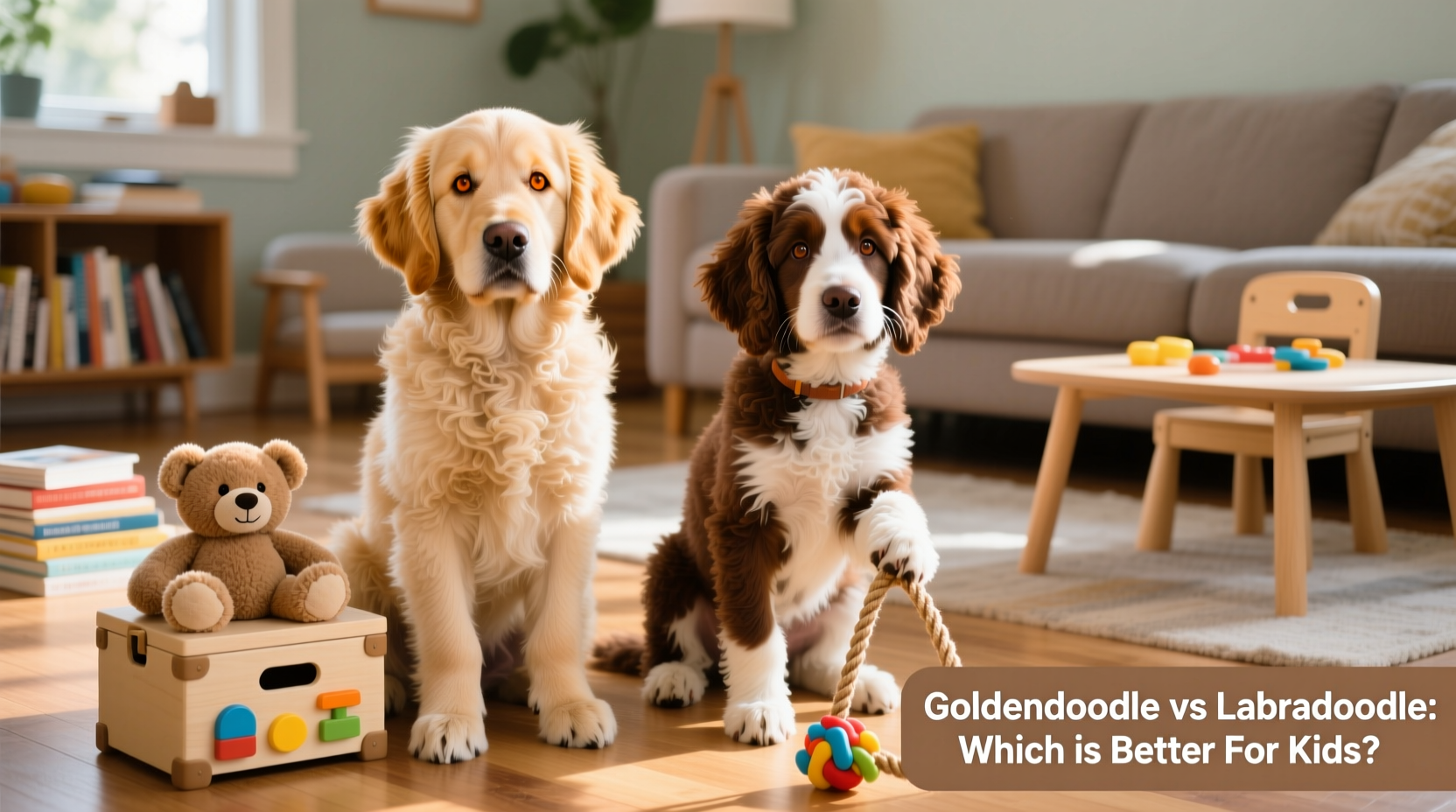
The foundation of any dog’s behavior lies in its genetic lineage. Though both parent breeds are known for being family-friendly, Golden Retrievers and Labrador Retrievers express their sociability in slightly different ways. These distinctions carry over into their doodle offspring.
Goldendoodles tend to inherit the calm, gentle, and consistently affectionate nature of Golden Retrievers. They often display a softness in demeanor, seeking connection and approval from all family members. This makes them highly attuned to emotional cues, especially those of young children who may not communicate clearly.
Labradoodles, on the other hand, reflect the energetic and playful spirit of the Labrador. While equally intelligent and eager to please, they often exhibit higher drive and enthusiasm. This can translate into boisterous play, which may be overwhelming for very young or timid kids if not properly managed through training and socialization.
Tip: Observe how a puppy interacts with children during visits. Does it retreat when overwhelmed or lean in for affection? These early behaviors are strong indicators of long-term temperament.Socialization Needs and Sensitivity Levels
One of the most critical factors for families is how well a dog handles unpredictable environments. Homes with small children are inherently dynamic—sudden noises, fast movements, and unintentional pulling or poking are daily occurrences.
Goldendoodles typically show lower reactivity to sudden stimuli. They are less likely to startle at loud toddler laughter or a toy being dropped nearby. Their emotional resilience makes them forgiving of accidental bumps or ear tugs, provided they’ve been raised with consistent boundaries.
Labradoodles, while generally friendly, can be more sensitive to overstimulation. Some lines, particularly those bred from working-line Labradors, possess higher energy and alertness. Without proper early exposure to childlike behavior, they may react impulsively—jumping, barking, or nipping during moments of excitement.
“Doodles are not automatically ‘kid-proof’ just because they’re mixed with Poodles. Temperament is influenced by genetics, early handling, and ongoing training. Families must assess individual puppies, not just breed reputation.” — Dr. Karen Hartman, Veterinary Behavior Specialist
Energy Levels and Play Style Compatibility
Children thrive on play, but not all dogs enjoy the same kind of interaction. Matching a dog’s natural play style with a child’s developmental stage reduces friction and prevents accidents.
Goldendoodles usually prefer moderate, interactive play. They enjoy fetch, gentle tug-of-war, and lounging beside kids during quiet time. Their balanced energy makes them suitable for homes where downtime is as common as activity. They adapt easily to routines involving naps, reading, or indoor play.
Labradoodles often bring higher stamina and a stronger desire for physical engagement. Many love water, running, and games that involve chasing or retrieving. While this can be a great outlet for active families, it may lead to accidental knocks or overexcitement around toddlers who aren’t able to regulate pace.
| Attribute | Goldendoodle | Labradoodle |
|---|---|---|
| Average Energy Level | Moderate | High |
| Play Style | Gentle, interactive | Boisterous, physical |
| Tolerance for Noise | High | Moderate to High (varies) |
| Cuddling Preference | Strong | Variable |
| Training Responsiveness | Excellent | Excellent |
Real-Life Scenario: The Thompson Family’s Experience
The Thompsons, a family of four with twin 3-year-olds, initially considered a Labradoodle for their active lifestyle. They brought home a male puppy named Scout, full of energy and charm. Within weeks, however, they noticed challenges: Scout would bark excitedly when the kids ran, jump up during diaper changes, and occasionally nip at moving feet during playtime.
Despite consistent training, his high arousal threshold made interactions tense. After consulting a canine behaviorist, they realized Scout’s working-line genetics amplified his responsiveness to motion—great for agility, less ideal for a chaotic nursery environment.
They eventually adopted a Goldendoodle rescue, Bella. Calm, observant, and naturally inclined to lie beside the children during storytime, she integrated seamlessly. “Bella doesn’t react to spills or screams,” said mother Maria Thompson. “She just looks up, wags once, and goes back to resting. That peace made all the difference.”
Trainability and Consistency with Young Children
Both doodle breeds rank among the most trainable due to Poodle intelligence. However, consistency in learning and impulse control varies subtly between the two.
Goldendoodles often excel in obedience because they are highly motivated by praise and emotional connection. They respond exceptionally well to positive reinforcement and tend to internalize rules quickly. This predictability benefits families where routines are essential—meal times, bedtime, and transitions between activities.
Labradoodles are equally smart but may require firmer structure. Some individuals exhibit a “problem-solving” mindset, testing boundaries to see what works. Without clear leadership, this curiosity can manifest as food stealing, door dashing, or selective listening—behaviors that become safety concerns around small kids.
Tip: Start basic commands like \"sit,\" \"stay,\" and \"leave it\" before bringing your puppy home. Practice with older children so they can participate in training under supervision.Step-by-Step Guide: Preparing Your Doodle for Life with Kids
Regardless of breed choice, preparation determines success. Follow this timeline to ensure a smooth integration:
- Weeks 1–2: Controlled Introduction
Limit direct interaction between puppy and children. Let the dog observe family rhythms from a safe space. Use baby gates to create quiet zones. - Weeks 3–6: Structured Interactions
Supervised 5–10 minute sessions where kids offer treats (under guidance) and practice calm behavior. Reward the dog for relaxed responses. - Weeks 7–12: Skill Building
Teach “gentle” command using touch desensitization. Practice walking on leash near moving children. Begin crate training for downtime. - Months 4–6: Real-World Testing
Simulate noisy scenarios (e.g., clapping, dropping toys) to build confidence. Enroll in a family-inclusive puppy class. - Ongoing: Maintenance & Boundaries
Ensure children understand not to disturb the dog while eating or sleeping. Rotate toys and provide mental stimulation to prevent boredom-related behaviors.
Health, Coat Care, and Indirect Impact on Family Life
While temperament is primary, maintenance demands indirectly affect family dynamics. A dog requiring frequent grooming or suffering from anxiety-related shedding can add stress to already busy households.
Both breeds have curly or wavy coats that need brushing 2–3 times weekly to prevent mats. Goldendoodles often have softer, silkier fur, while Labradoodles may have denser, woollier coats—especially F1b generations. The latter may trap more dirt and require more frequent bathing, which can be challenging with young helpers involved.
Allergies are a common reason families choose doodles. Neither breed is fully hypoallergenic, but Goldendoodles statistically produce fewer allergens due to stronger Golden Retriever influence in skin cell production. Families with mild allergies may find Goldendoodles more tolerable.
- Goldendoodle: Lower dander, moderate shedding (in some lines), easier detangling
- Labradoodle: Potentially higher dander, variable coat types, may need professional grooming every 6–8 weeks
Checklist: Choosing the Right Doodle for Your Family
Use this checklist to evaluate which breed aligns best with your household’s needs:
- ☐ Are your children under 5 and prone to loud or sudden movements? → Lean toward Goldendoodle
- ☐ Do you have a yard or enjoy outdoor adventures? → Labradoodle may match your pace
- ☐ Is calm companionship more important than high-energy play? → Goldendoodle preferred
- ☐ Can you commit to daily training and structured routines? → Both breeds benefit, but Labradoodles require stricter consistency
- ☐ Does anyone in the home have allergies? → Consider F1b Goldendoodles for maximum hypoallergenic potential
- ☐ Are you prepared for grooming costs and time? → Budget $80–$150 monthly for professional care if needed
Frequently Asked Questions
Which doodle is better for first-time dog owners with kids?
Goldendoodles are generally recommended for first-time owners due to their even-tempered nature and ease of bonding. They tend to be more forgiving of beginner mistakes in training and socialization.
Can either breed be left alone with young children unsupervised?
No dog, regardless of breed or temperament, should ever be left alone with small children without adult supervision. Even the most patient dog can react unpredictably to pain, fear, or overstimulation. Always supervise interactions.
Do Goldendoodles and Labradoodles get along with other pets?
Yes, both typically do well with cats and other dogs, especially when introduced early. Goldendoodles may form closer bonds with multiple family members, while Labradoodles sometimes attach more strongly to one person.
Conclusion: Making the Best Choice for Your Family’s Future
Selecting between a Goldendoodle and a Labradoodle isn’t about which dog is “better”—it’s about which one fits your family’s rhythm, energy level, and parenting style. For homes with small children, especially those under five, the Goldendoodle’s steady, affectionate demeanor often proves more compatible with the unpredictable nature of early childhood.
That said, a well-bred, properly socialized Labradoodle can also thrive in a family setting—particularly if the household embraces structure, exercise, and consistent training. Ultimately, the dog’s upbringing, breeder selection, and early experiences matter more than broad breed generalizations.
Take time to meet multiple puppies, ask breeders about parental temperaments, and prioritize health testing. Observe how each pup responds to noise, movement, and gentle touch. With thoughtful selection and committed care, either doodle can become a beloved, lifelong companion for your children.
💬 Have experience with Goldendoodles or Labradoodles in a family setting? Share your story in the comments to help other parents make informed decisions.








