In the early 2000s, as Hollywood flirted with reviving giant monster cinema, Playmates Toys—best known for the Teenage Mutant Ninja Turtles—stepped into the kaiju arena with a bold line of action figures based on the 2005 *King Kong* remake and the broader Godzilla franchise. Though never officially branded as “Godzilla vs Kong” at the time, these figures have since become cult favorites among collectors, especially after Legendary Pictures’ official crossover in 2021 reignited interest. Today, vintage Playmates Godzilla and Kong figures often surface in online marketplaces with eye-popping price tags. But is this surge driven by genuine collectible merit, or is it purely nostalgia capitalizing on renewed pop culture momentum?
The Rise and Fall of Playmates’ Monster Line
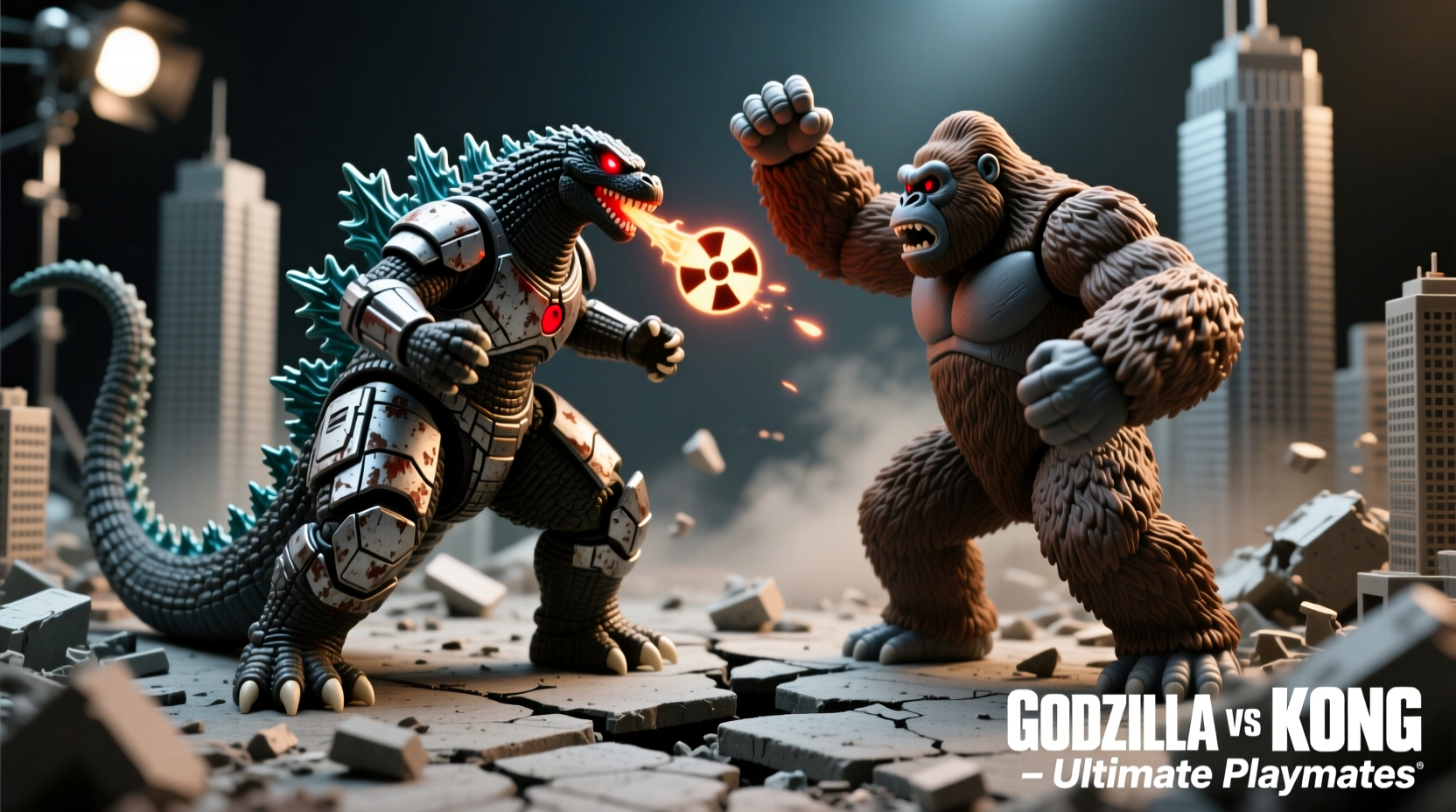
Between 2004 and 2006, Playmates launched two distinct but thematically linked toy lines: one tied to Peter Jackson’s *King Kong*, and another drawing from Toho’s Godzilla legacy. The Kong series featured highly detailed sculpts of Skull Island creatures, while the Godzilla line included incarnations from various eras—Showa, Heisei, and Millennium—with articulated battle damage and glowing eyes. Despite strong sculpting and paintwork for the time, the lines were short-lived. Poor marketing, limited retail presence, and lukewarm box office returns for non-Godzilla films led to their quick discontinuation.
Yet, within niche collector circles, these figures gained quiet reverence. Their intricate design, use of translucent plastics, and dynamic poses stood out against the simpler fare dominating shelves. Over time, as kaiju media experienced a renaissance, demand for these relics grew—not because they were widely played with as children’s toys, but because they represented a rare, ambitious attempt to translate cinematic monsters into premium collectibles before it became mainstream.
Design and Articulation: Ahead of Their Time?
One reason the Playmates figures still resonate is their thoughtful engineering. Most figures featured 15–20 points of articulation, including double-jointed knees and swivel wrists—uncommon in monster toys at the time. The King Kong figure itself stood over 10 inches tall, with individually rooted hair and a fabric loincloth, giving it a lifelike texture rare in plastic figures.
The Godzilla variants, particularly the 2004 Heisei Mechagodzilla and the Millennium Destroyah, showcased layered armor pieces, LED light-up eyes (powered by coin batteries), and interchangeable parts like tails and heads. These weren’t just toys; they were display pieces meant to evoke the grandeur of the films.
Tip: When buying vintage Playmates figures, check for battery corrosion—especially in light-up models. Even if unused, old batteries can leak and damage internal wiring.Market Value: Hype or Justified Pricing?
Today, sealed, mint-condition Playmates Godzilla and Kong figures routinely sell for $150–$400, with rare variants like the translucent “Glow-in-the-Dark” Biollante reaching over $600. But does rarity alone justify such prices?
Consider context: only limited runs were produced, and many figures were opened and played with, reducing the pool of pristine specimens. Additionally, Playmates used delicate plastics that yellow over time, especially when exposed to UV light. A truly mint-in-box (MIB) figure from 2005 is now a statistical rarity.
“Playmates took a risk treating kaiju figures like art pieces instead of kids’ toys. That foresight gave them staying power.” — Daniel Reyes, Curator at the Pacific Rim Toy Archive
Collector Demand vs. Play Value
It’s critical to distinguish between a toy’s original purpose and its current status. These figures were marketed to children, but few kids in 2005 had the patience for fragile, high-articulation kaiju models. Most ended up broken or discarded. The surviving inventory now caters almost entirely to adult collectors who value presentation over playability.
This shift explains why unopened boxes command premiums. For modern buyers, the packaging is part of the artwork—the backdrop to a nostalgic diorama of early 2000s monster fandom.
A Comparative Look: Playmates vs. Modern Kaiju Figures
| Feature | Playmates (2004–2006) | Mezco (Toylines, 2010s) | Legendary Scale Series (2020s) |
|---|---|---|---|
| Height Range | 6–12 inches | 14–18 inches | 12–24 inches |
| Articulation | 15–20 points | 8–12 points | Limited (display focus) |
| Light-Up Features | Yes (select models) | No | Rare |
| Average Resale Value (MIB) | $150–$600 | $80–$200 | $100–$300 |
| Production Run | Small, inconsistent | Moderate | Large, ongoing |
While modern lines offer greater scale and brand consistency, Playmates stand out for innovation during an era when kaiju merchandising was considered commercially risky. Their blend of functionality and theatrical flair remains influential.
Real-World Example: The Case of Collector Mark Tran
Mark Tran, a 38-year-old graphic designer from Seattle, began collecting Playmates Godzilla figures in 2018 after rediscovering his childhood Kong toy in his parents’ attic. “It wasn’t in great shape—missing a toe, paint worn off the chest—but it sparked something,” he said. Over three years, Mark invested $2,300 in tracking down MIB versions of the entire 2005 lineup. He now displays them in a climate-controlled cabinet, lit with UV-filtered LEDs.
In 2023, he sold his complete set at auction for $6,700. “I didn’t do it for profit,” Mark noted. “But it proved these aren’t just forgotten toys. They’re cultural artifacts from a time when monster movies weren’t taken seriously.” His story reflects a broader trend: emotional resonance combined with scarcity fuels value more than condition alone.
How to Evaluate a Genuine Investment Piece
Not every Playmates figure is a hidden gem. Here’s how to separate speculative hype from lasting worth:
- Rarity: Check production numbers. Limited edition chase variants (e.g., clear Biollante, red-eyed Mecha-Kong) are most valuable.
- Film Tie-In Strength: Figures from well-known entries (e.g., 1998 Godzilla, 2005 Kong) hold better than obscure ones.
- Condition: Sealed boxes should have no crushed corners, fading, or sticker residue. Internal plastic should be free of stress cracks.
- Accessories: Original dioramas, extra hands, or energy effect pieces increase completeness and desirability.
Essential Checklist for Buyers
- Verify authenticity via serial number and mold marks (Playmates used distinct stamping).
- Inspect for yellowing, especially in white or translucent parts.
- Confirm all accessories are original and present.
- Check box integrity: sealed flaps, no tape repairs, minimal shelf wear.
- Research recent sold listings on eBay or Heritage Auctions for price benchmarks.
- Avoid figures with glued joints or repaired limbs—these drastically reduce value.
Frequently Asked Questions
Are Playmates Godzilla figures officially licensed by Toho?
Yes. Playmates secured licensing directly from Toho Co., Ltd., making these some of the few Western-produced Godzilla toys approved for global distribution during that period.
Can I still find these figures new in box?
Genuinely new-in-box specimens are extremely rare. Most available today have been stored for nearly two decades. Be wary of “new old stock” claims without provenance.
Do these figures appeal only to older collectors?
Primarily, yes. While younger fans may appreciate the designs, the high cost and fragility make them impractical as playthings. Their audience is largely 30+ collectors with disposable income and nostalgia for mid-2000s genre cinema.
Final Verdict: Nostalgia with Substance
The Playmates Godzilla and Kong figures are more than just nostalgia bait. They represent a brief but significant moment when a mainstream toy company treated kaiju mythology with artistic seriousness. Their engineering, aesthetic ambition, and licensing credibility give them a legitimacy that transcends mere sentimentality.
That said, their investment value hinges on condition and rarity. Buying one because “it was cool when I was a kid” is valid—but doing so expecting guaranteed returns is risky. Like any collectible, the market can shift. However, as long as kaiju culture continues to grow—fueled by films, games, and anime—these figures will remain symbolic milestones in the evolution of monster merchandising.
💬 Have you collected Playmates’ Godzilla or Kong figures? Share your experiences, finds, or valuation tips in the comments—your insight could help preserve this unique corner of toy history.








