Choosing the right protection for your iPhone isn’t just about style—it’s about safeguarding a device that handles communication, finances, photos, and daily productivity. While glitter iPhone cases dazzle on social media and add personality to your device, waterproof pouches quietly promise survival in rain, pools, or accidental drops in puddles. But when push comes to shove, which option actually keeps your phone safer? The answer depends on what kind of threats you’re guarding against.
This comparison dives into materials, structural design, environmental resistance, and real-world performance to determine which solution wins when it comes to true protection—not just aesthetics.
Durability and Impact Protection
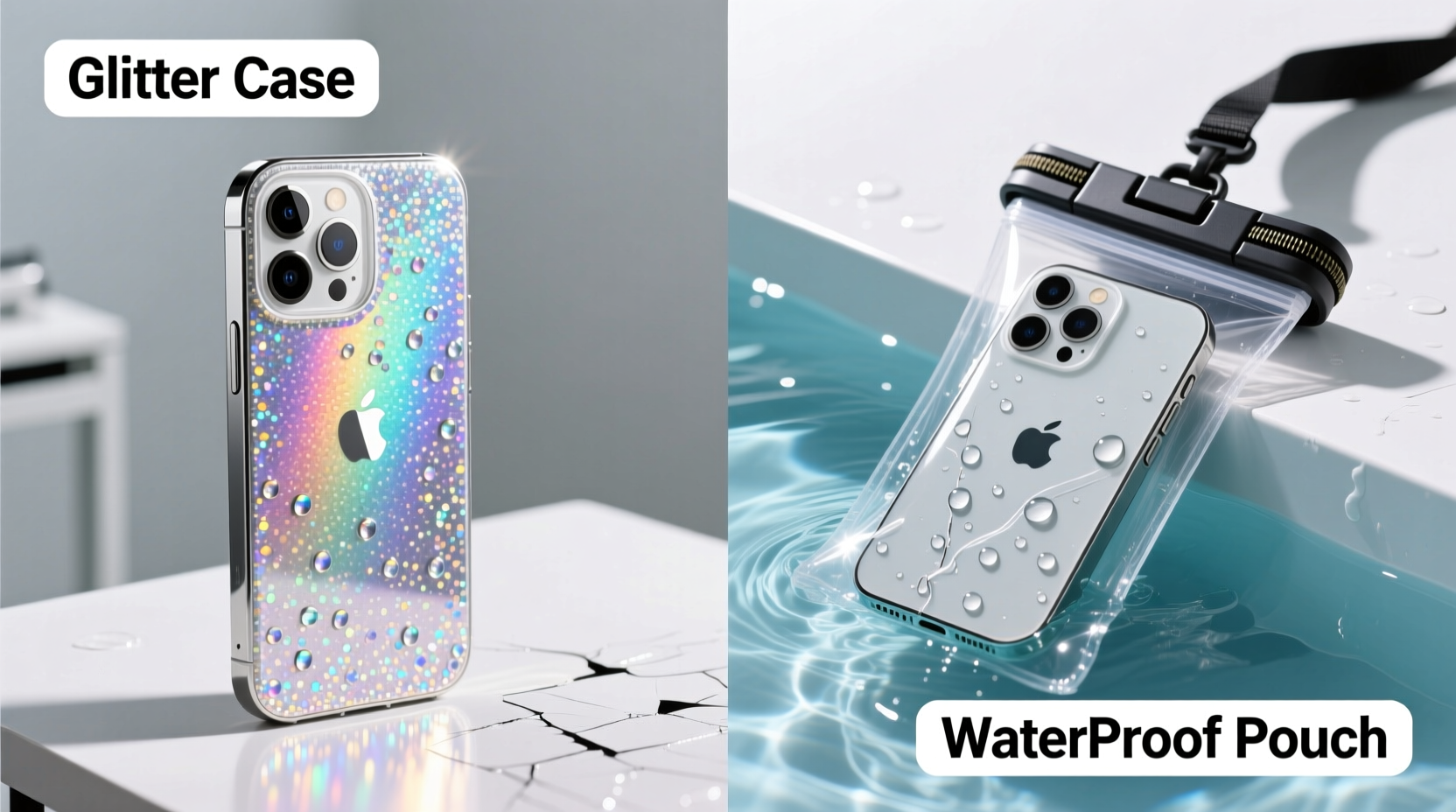
One of the most common causes of iPhone damage is dropping it on hard surfaces. Glitter cases are typically made from flexible TPU (thermoplastic polyurethane) with a rigid polycarbonate outer shell. These dual-layer designs absorb shock reasonably well, especially around corners where phones tend to land. Many glitter cases also feature raised edges to protect screens and cameras during face-down drops.
However, not all glitter cases are created equal. Budget versions often skimp on padding thickness or use brittle plastics that crack after repeated impacts. High-end models may pass military-grade drop tests (MIL-STD-810G), but most decorative variants prioritize appearance over rigorous engineering.
In contrast, waterproof pouches are usually constructed from thick, flexible TPU or PVC with sealed zipper closures. Their primary function is barrier protection, not impact absorption. While some include foam padding or shock-absorbing frames inside, the majority offer minimal cushioning. If you drop a phone in a standard waterproof pouch onto concrete, the seal might hold—but internal components can still suffer damage from the force of impact.
Tip: For maximum drop protection, pair a rugged waterproof pouch with a slim silicone inner case to reduce shock transmission.Water and Environmental Resistance
When it comes to moisture, there's no contest. A glitter iPhone case offers zero water protection. Even if it fits snugly, gaps around ports, buttons, and speakers allow liquid ingress. Spills, sweat, rain, or hand-washing accidents can short-circuit internal electronics within seconds.
Waterproof pouches, on the other hand, are designed specifically to block liquids. Most are rated IPX8, meaning they can withstand submersion in up to 2 meters of water for 30 minutes. They create an airtight seal using double-lock zippers or roll-top closures, making them ideal for beach trips, kayaking, or hiking through wet conditions.
Beyond water, these pouches also shield against sand, dust, snow, and mud—elements that degrade phone performance over time. Some even provide UV protection, reducing screen glare and preventing heat buildup in direct sunlight.
“Phones fail more often from moisture and particulate exposure than from drops alone. A waterproof barrier is one of the most underrated forms of long-term protection.” — Dr. Alan Zhou, Electronics Reliability Engineer at MobileShield Labs
Functionality and Usability Comparison
A major trade-off with waterproof pouches is usability. Touch sensitivity through thick plastic can be inconsistent, especially with older models or lower-quality membranes. Charging and audio require removing the phone unless the pouch has pass-through connectors—a feature found only in premium versions.
Glitter cases maintain full access to all features. You can charge wirelessly, use Face ID seamlessly, press physical buttons easily, and attach accessories like magnetic mounts. However, their glossy finishes attract fingerprints and smudges, and loose glitter particles can interfere with charging ports over time.
| Feature | Glitter Case | Waterproof Pouch |
|---|---|---|
| Drop Protection | Moderate to Good | Poor to Fair |
| Water Resistance | None | Excellent (IPX8) |
| Dust/Sand Protection | None | Excellent |
| Touchscreen Sensitivity | Full | Reduced (varies by model) |
| Wireless Charging | Supported | Rarely Supported |
| Style & Customization | High | Low |
Real-World Scenario: Beach Day Gone Wrong
Sophia took her iPhone to the beach. She opted for a rose-gold glitter case because it matched her tote and looked great in photos. Halfway through the day, a wave knocked over her bag. Her phone landed in shallow surf and was submerged for nearly a minute before she retrieved it.
Despite drying it off immediately, the speaker crackled and the microphone failed within hours. Moisture had entered through the charging port and damaged internal circuitry. A week later, the phone wouldn’t power on.
Her friend Maya, who used a waterproof pouch, dunked her phone twice trying to capture underwater shots. Both times, she pulled it out dry and fully functional. Though her pouch lacked aesthetic flair, it prevented costly repair or replacement.
This scenario underscores a key truth: aesthetic appeal means little when functionality fails under pressure.
Which Should You Choose? A Practical Checklist
Your lifestyle determines the best choice. Use this checklist to decide:
- Choose a glitter iPhone case if:
- You primarily carry your phone indoors or in dry environments
- Style and personal expression matter to you
- You rely heavily on wireless charging and seamless button access
- Your biggest risk is occasional drops on carpet or tile
- Choose a waterproof pouch if:
- You frequently engage in outdoor activities (swimming, boating, hiking)
- You live in a humid climate or travel often near water
- You work in environments prone to spills, dust, or extreme weather
- You want maximum defense against liquid and particulate damage
Frequently Asked Questions
Can I use my phone normally inside a waterproof pouch?
Most functions work, but with limitations. Touch response may be delayed, especially with wet fingers. Cameras generally perform well, though image quality can degrade slightly due to the plastic lens cover. Audio output is muffled unless the pouch has acoustic amplifiers. Always test before relying on it in critical situations.
Do glitter cases cause overheating?
Not significantly. While dark-colored or metallic finishes can absorb more heat in direct sunlight, modern iPhones regulate temperature effectively. However, combining a glitter case with prolonged GPS or gaming use in hot conditions may accelerate thermal throttling.
How do I know if my waterproof pouch is still sealed properly?
Perform a simple dry test: place a small piece of tissue paper inside, seal the pouch, and submerge it in water for 30 seconds. If the paper stays dry, the seal is intact. Check monthly, especially after folding or dropping the pouch.
Final Verdict: Protection Wins Over Sparkle
If your priority is genuine protection—especially against water, dust, and environmental hazards—the waterproof pouch is objectively superior. It acts as a barrier against multiple failure points beyond just drops. Glitter cases, while stylish and decent at absorbing minor impacts, offer no meaningful defense against moisture, which remains a leading cause of iPhone failure.
That said, neither option is perfect in isolation. The smartest approach is layered protection: use a durable, shock-absorbing case underneath a high-quality waterproof pouch when venturing into risky environments. At other times, express yourself with glitter—just know its limits.
Ultimately, protecting your phone isn’t about choosing between beauty and utility. It’s about matching your gear to your life. Recognize where your phone faces the greatest risks, and equip it accordingly.
🚀 Ready to upgrade your phone’s defense? Assess your last three incidents—was it a drop, a spill, or something else? Choose your next protector based on reality, not just looks.








