
Leash training a fearful dog is not about control—it’s about connection. For dogs who flinch at leashes, freeze at doorways, or tremble at the sight of a collar, traditional methods can deepen anxiety rather than resolve it. These dogs aren’t being stubborn; they’re reacting to real fear, often rooted in past trauma, lack of socialization, or genetic sensitivity. A compassionate approach honors their emotional reality while gently guiding them toward confidence. This guide walks you through proven, humane strategies that prioritize safety, trust, and small victories.
Understanding Fear-Based Behavior
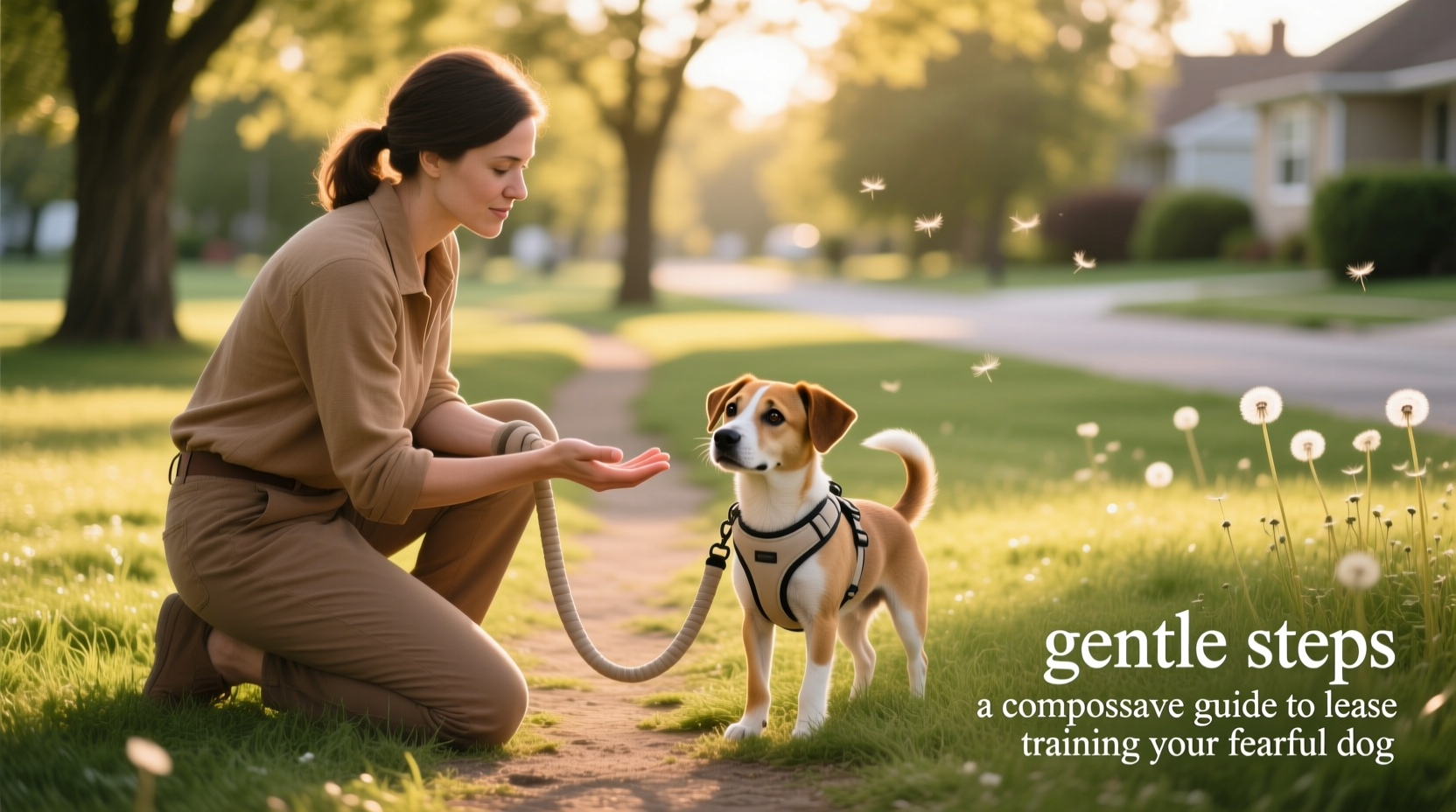
Fear in dogs manifests in many ways: cowering, trembling, lip licking, whale eye (showing the whites), tucked tail, or even growling when cornered. These are not defiance—they’re communication. When a dog resists the leash, it may associate it with restraint, unpredictability, or past negative experiences like being dragged, startled, or punished.
Before any training begins, recognize that progress will be nonlinear. Some days your dog may take three steps forward; others, two steps back. That’s normal. The goal isn’t speed—it’s emotional safety. As Dr. Karen Overall, a leading veterinary behaviorist, emphasizes:
“Behavior is communication. When a dog shows fear, we must ask not ‘How do I fix this?’ but ‘What is this dog trying to tell me?’” — Dr. Karen Overall, Diplomate ACVB
Respecting this mindset shifts the entire dynamic from correction to collaboration.
The Foundation: Building Trust Before the Leash
You cannot skip ahead to walking if your dog hasn’t accepted the leash as neutral—or even positive—equipment. Begin indoors, in a quiet space free from distractions.
- Introduce the leash gradually. Drape it over a chair, let your dog sniff it, and toss treats near it. No pressure. Repeat over several days.
- Pair the leash with good things. Every time the leash appears, something pleasant follows: a treat, playtime, or affection—only if your dog enjoys it.
- Let your dog investigate the collar or harness. Place it on the floor, reward curiosity. Never force it on during early stages.
- Practice touch desensitization. Gently touch your dog’s neck, shoulders, and sides while offering treats. This reduces discomfort when gear is eventually worn.
A Step-by-Step Timeline to Leash Confidence
Below is a realistic, flexible timeline based on observed behavioral thresholds. Adjust according to your dog’s comfort level—some dogs need weeks per stage.
| Stage | Goal | Duration | Key Actions |
|---|---|---|---|
| 1 | Leash as neutral object | 3–7 days | Leave leash visible, pair with treats, no contact |
| 2 | Wearing harness briefly | 5–10 days | Put on for 30 seconds, remove, reward. Increase duration slowly. |
| 3 | Leash attached, no tension | 1 week | Attach leash indoors, let drag (supervised), reward calmness. |
| 4 | Following the leash | 1–2 weeks | Hold leash loosely, lure with treats, reward movement toward you. |
| 5 | Walking indoors | 1–2 weeks | Short circuits around room, frequent breaks, high-value rewards. |
| 6 | Threshold training | Variable | Approach door, pause, retreat, reward. Build tolerance before exiting. |
| 7 | Outdoor steps | Ongoing | Start on porch or driveway. One step out, then back. Celebrate courage. |
This progression ensures your dog never feels trapped or overwhelmed. Rushing leads to setbacks; patience builds resilience.
Real Example: Helping Luna Overcome Her Fear
Luna, a two-year-old mixed breed rescued from a hoarding situation, would freeze and pant heavily whenever her owner reached for the leash. She had never been walked and associated the harness with being grabbed and moved abruptly.
Her owner began by placing the harness near her food bowl for five days. Then, they clipped it on for just 10 seconds during mealtime—no walking, no pressure. After two weeks, Luna started looking at the harness expectantly when she saw it.
The breakthrough came during Stage 4, when her owner sat on the floor with the leash dragging, tossing chicken bits whenever Luna took a step toward her. Within three weeks, Luna was following the leash across the living room. By week eight, she took her first outdoor step onto the front porch—and licked her owner’s hand afterward, a sign of growing trust.
Luna’s journey wasn’t fast, but it was sustainable. Today, she walks calmly for ten minutes each evening, choosing to stay close without tension.
Do’s and Don’ts During Leash Training
To prevent accidental setbacks, follow these guidelines. Small missteps—like pulling or forcing—can undo days of progress.
| Do | Don't |
|---|---|
| Use high-value treats (cooked chicken, cheese, freeze-dried liver) | Use punishment or scolding for hesitation |
| End sessions on a positive note, even if brief | Force your dog forward when frozen |
| Move at your dog’s pace—literally and emotionally | Rush the process to “get it over with” |
| Practice frequently in short bursts (3–5 minutes) | Train when your dog is already stressed or tired |
| Stay calm and predictable in your movements | Suddenly lunge or grab the leash |
Essential Checklist for Compassionate Leash Training
- ✅ Choose a comfortable, well-fitted harness (e.g., front-clip for gentle guidance)
- ✅ Stock up on high-value, soft treats
- ✅ Pick a quiet indoor space for initial training
- ✅ Schedule short, frequent sessions (2–3 times daily)
- ✅ Observe body language closely—stop if signs of stress increase
- ✅ Keep the leash loose at all times during early stages
- ✅ Celebrate micro-progresses: a sniff, a step, a relaxed blink
- ✅ Avoid busy streets, loud noises, or off-leash dogs during early outdoor attempts
Frequently Asked Questions
What if my dog lies down and refuses to move?
This is a common freeze response. Do not pull. Instead, create space, speak softly, and wait. Toss treats a few inches ahead to encourage movement. If unresponsive after a minute, detach the leash and end the session calmly. Try again later.
Can I use a retractable leash with a fearful dog?
No. Retractable leashes provide inconsistent feedback and can startle sensitive dogs with sudden snaps or jerks. Use a standard 4–6 foot nylon or biothane leash for better control and predictability.
How long does leash training take for a fearful dog?
There’s no fixed timeline. Some dogs make progress in weeks; others need months. Success isn’t measured in distance walked, but in reduced anxiety and increased willingness to engage. Focus on emotional comfort, not milestones.
Conclusion: Walking Together, One Step at a Time
Leash training a fearful dog is one of the most rewarding challenges a caregiver can undertake. It demands patience, empathy, and the humility to move slowly. But every quivering step your dog takes toward confidence is a testament to the trust you’ve nurtured. You’re not just teaching leash manners—you’re rebuilding a sense of safety in a world that once felt threatening.
Progress may seem small, but it matters deeply. That first voluntary step outside, the moment your dog looks up at you instead of at the ground, the quiet walk where tension fades—these are victories written in courage, not speed.
💬 Your journey matters. Share your story or tip in the comments—your experience could inspire another dog parent walking the same path.








