In recent years, the toy market has seen a surge in soft, tactile playthings designed to engage children’s senses and spark imaginative play. Two standout categories—fruit plush toys and squishies—have captured the attention of kids, parents, and educators alike. While both offer comfort and sensory stimulation, they differ significantly in design, function, and developmental benefits. Understanding these differences reveals not only which toy is currently more popular but also why it resonates with today’s children.
The Rise of Sensory Play in Modern Toy Design
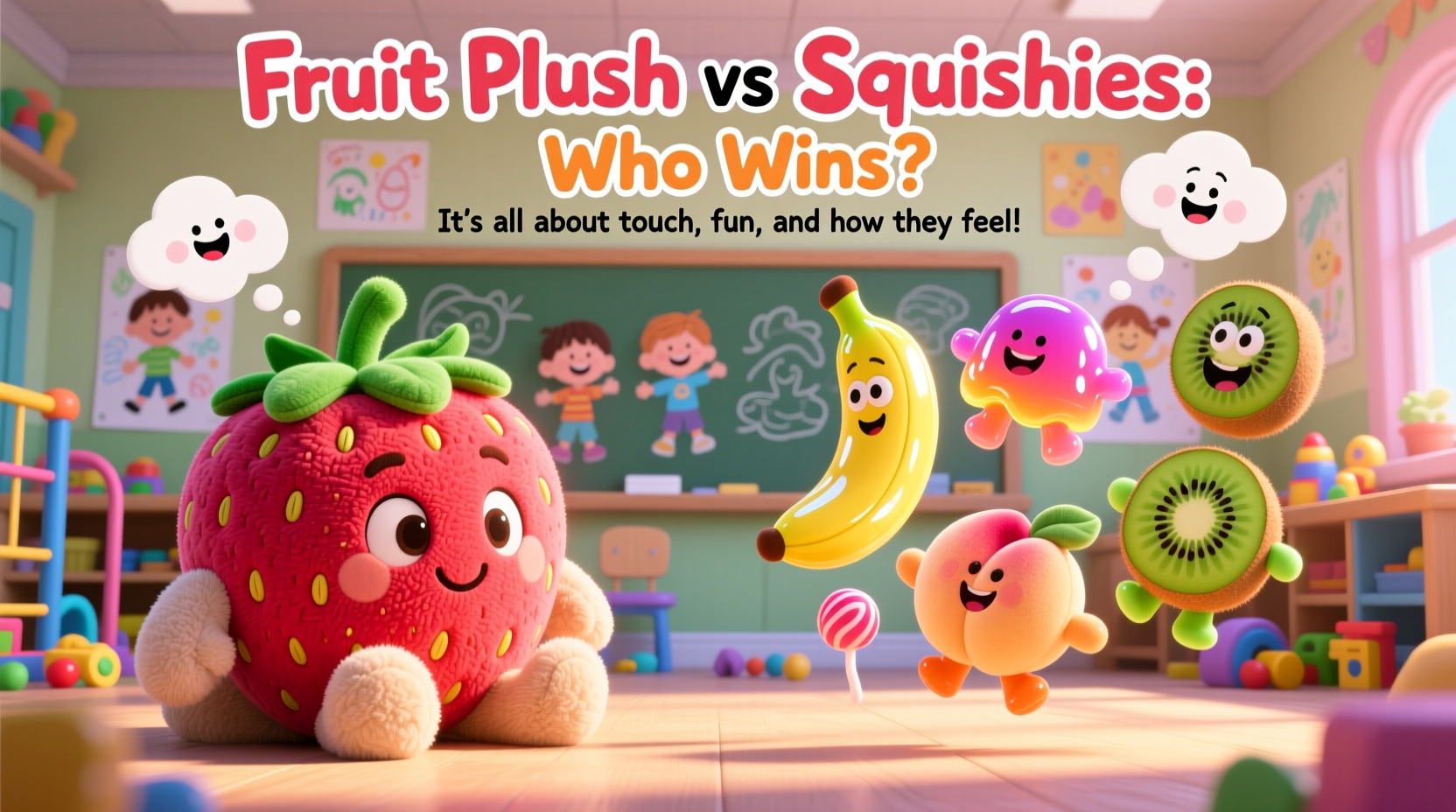
Sensory play has become a cornerstone of early childhood development. Experts agree that tactile experiences help children build fine motor skills, emotional regulation, and cognitive connections. Both fruit plush toys and squishies fall under this umbrella, offering hands-on engagement that appeals across age groups.
Fruit plush toys are typically made from soft polyester or cotton fabric, stuffed with polyester fiberfill. They resemble real fruits like strawberries, bananas, or watermelons, often featuring embroidered details and bright colors. These toys emphasize visual recognition, storytelling, and role-playing—ideal for pretend kitchens or grocery store games.
Squishies, on the other hand, are crafted from slow-rising polyurethane foam or thermoplastic materials. When squeezed, they compress slowly and return to their original shape over several seconds. Their satisfying “squish” sound and texture make them popular stress-relief tools as much as toys.
“Sensory feedback plays a critical role in how children process emotions and focus. Squishies provide immediate tactile reward, while plush toys foster narrative thinking.” — Dr. Lila Tran, Child Development Psychologist
Design and Material Comparison
The core distinction between fruit plush toys and squishies lies in their construction and intended interaction.
| Feature | Fruit Plush Toys | Squishies |
|---|---|---|
| Material | Fabric (polyester, cotton) with fiberfill stuffing | Polyurethane foam, silicone, or EVA foam |
| Texture | Soft, fuzzy, warm to touch | Dense, bouncy, slightly sticky |
| Shape Retention | High – maintains form after use | Variable – slowly rebounds after compression |
| Sound | Silent or crinkle layers (in some models) | Distinctive squishing or popping noise |
| Ages Recommended | 2+ years | 3+ years (small parts risk) |
| Cleaning Method | Machine washable (usually) | Surface wipe only |
This comparison shows that while plush toys prioritize safety and washability for younger children, squishies cater to older kids seeking sensory feedback and novelty.
Tip: For toddlers, choose fruit plush toys without small detachable parts. For school-aged kids exploring sensory tools, opt for non-toxic, phthalate-free squishies.Why Kids Are Drawn to Each Type
Kids don’t just play with toys—they form attachments based on emotion, utility, and social influence. Social media trends, peer interactions, and classroom dynamics heavily influence what becomes popular.
Fruit plush toys thrive in environments where imaginative play is encouraged. A child might assign personalities to each fruit, create stories about a \"banana family,\" or use them in cooperative play settings. Their familiarity—based on real-world objects—helps bridge learning and fantasy.
Squishies, however, have gained viral momentum through platforms like TikTok and YouTube. Videos showing extreme squeezes, ASMR-like sounds, and collection displays have turned certain squishy designs into must-have items. Limited editions, glow-in-the-dark variants, and themed sets (like food-shaped squishies) amplify their collectible appeal.
Mini Case Study: The Classroom Squishy Craze
In a third-grade classroom in Portland, Oregon, teachers noticed an uptick in students bringing squishies to school during independent work time. Initially banned due to distractions, the teacher decided to test their impact on focus. She introduced a “focus station” where students could use approved squishies during reading tasks.
After four weeks, off-task behavior dropped by 35%. Students reported feeling calmer and more engaged. Meanwhile, fruit plush toys remained popular during recess and free play, often used in dramatic scenarios like running a fruit stand. This example illustrates a key insight: squishies excel in concentration-supporting roles, while plush toys dominate creative expression.
Developmental Benefits: Learning Through Touch
Both toys support child development—but in different ways.
- Fruit plush toys enhance language and social skills. Children use them to act out daily routines, expanding vocabulary (“peel,” “slice,” “serve”) and practicing turn-taking.
- Squishies improve fine motor control and emotional regulation. The repetitive squeezing motion strengthens hand muscles and can serve as a calming tool for anxious or hyperactive children.
- Both promote object recognition and color learning. Bright hues and realistic shapes help young minds categorize and name items.
Occupational therapists increasingly incorporate squishies into sensory integration therapy. Their resistance provides proprioceptive input—feedback to the joints and muscles—that helps children modulate sensory responses.
Fruit plush toys, meanwhile, are staples in Montessori and preschool classrooms. Teachers use them to teach healthy eating habits, sorting (by color or size), and even basic math concepts like counting seeds in a strawberry plush.
Checklist: Choosing the Right Toy for Your Child
- Consider your child’s age and developmental stage.
- Determine if they need a calming tool (choose squishy) or a storytelling companion (choose plush).
- Check material safety—look for ASTM F963 or CE certification.
- Evaluate durability and ease of cleaning.
- Assess interest: Has your child shown preference for soft cuddly toys or fidget-style items?
- Think about educational potential—will it be used in play-based learning?
- Avoid squishies with strong chemical odors, which may indicate low-quality foam.
Market Trends and Popularity in 2024
Retail data from NPD Group and Amazon’s toy sales rankings show that squishies have outsold traditional plush toys in the 6–12 age bracket since 2022. In particular, kawaii-style food squishies—like smiling avocados or winking cherries—have dominated search trends.
However, fruit plush toys remain top sellers in the baby and toddler category. Brands like Jellycat and Melissa & Doug continue to innovate with textured fabrics, crinkle sounds, and organic materials, maintaining strong parental trust.
Social media influence is a major driver. Unboxing videos, squishy challenges, and “collection hauls” generate millions of views, making squishies feel exclusive and trendy. Plush toys, while less viral, benefit from timeless appeal and gifting culture—often found in birthday baskets and holiday stockings.
Frequently Asked Questions
Are squishies safe for young children?
Squishies are generally recommended for ages 3 and up due to small parts and choking hazards. Always supervise play and avoid squishies with loose beads or brittle components. Look for non-toxic, latex-free labels.
Can fruit plush toys be washed?
Most fruit plush toys are machine washable on a gentle cycle. Remove any electronic components (like sound chips) first. Air dry to preserve shape and fabric integrity.
Do squishies last a long time?
High-quality squishies can last months to years with proper care. Avoid exposing them to heat, direct sunlight, or moisture, which can cause cracking or deformation. Lower-end versions may degrade within weeks.
Conclusion: Which Toy Is Winning?
Currently, squishies hold the edge in popularity among school-aged children, driven by sensory satisfaction, social media virality, and therapeutic utility. They’ve evolved from simple fads into recognized tools for focus and emotional regulation.
Yet fruit plush toys maintain enduring relevance, especially for younger kids and in educational contexts. Their warmth, washability, and role in imaginative play ensure they won’t disappear from nurseries anytime soon.
The winner depends on context: for calming and concentration, squishies lead. For nurturing creativity and comfort, fruit plush toys still reign. The smart choice isn’t picking one over the other—it’s understanding how each supports different aspects of a child’s growth.
🚀 Ready to explore what works best for your child? Try introducing both types in different settings—storytime with plush toys, homework time with a squishy—and observe what sparks joy and engagement. Share your findings with other parents and help build smarter playtime choices!








