
Choosing between a freshwater and saltwater aquarium as a beginner can feel like standing at a crossroads with two very different paths ahead. One leads through a lush jungle of green plants and colorful fish; the other dives into a vibrant coral reef teeming with exotic life. Both are captivating, but they come with vastly different demands. While many assume saltwater tanks are inherently more difficult, the reality isn’t so black and white. The true answer depends on your goals, patience, budget, and willingness to learn.
This guide breaks down the practical differences between freshwater and saltwater aquariums, comparing setup complexity, water chemistry, equipment needs, livestock options, and long-term maintenance. By the end, you’ll understand not just which is harder—but why—and how to choose the right path for your first tank.
Understanding the Core Differences
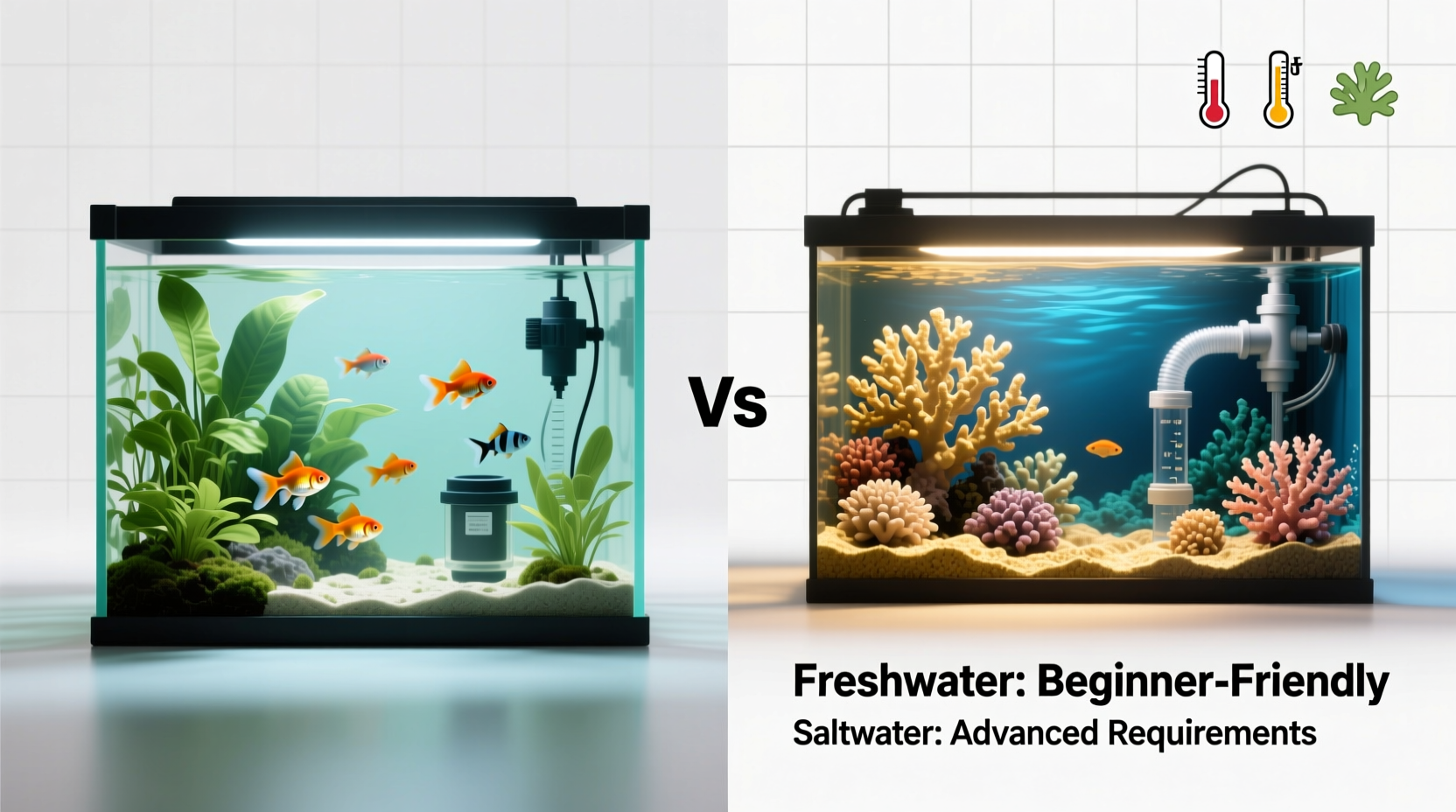
The most fundamental distinction lies in water composition. Freshwater aquariums use dechlorinated tap water and mimic rivers, lakes, or streams. Saltwater tanks replicate ocean conditions, requiring precise salinity levels (typically 1.023–1.025 specific gravity) and stable parameters that closely mirror tropical marine environments.
Freshwater systems are generally more forgiving. Small fluctuations in pH, ammonia, or nitrite are less likely to cause immediate harm due to the broader tolerance range of most freshwater species. In contrast, saltwater inhabitants—especially corals and invertebrates—are highly sensitive. Even minor deviations in alkalinity, calcium, or magnesium can stress or kill delicate organisms over time.
That said, difficulty isn’t solely about sensitivity. It’s also about consistency, knowledge, and routine. A poorly maintained freshwater tank can still crash dramatically, while a well-managed saltwater system can thrive for years. The key is understanding what each environment demands from the start.
Setup Complexity: Equipment and Initial Investment
At first glance, freshwater tanks appear simpler. A basic kit includes a filter, heater, light, substrate, and decorations—all relatively affordable and widely available. Most freshwater fish don’t require intense lighting or advanced filtration beyond mechanical and biological media.
Saltwater tanks, however, often demand additional components:
- Protein skimmer – removes organic waste before it breaks down.
- Reef-safe lighting – essential if keeping corals that rely on photosynthesis.
- Live rock – acts as biological filtration and provides habitat.
- Refugium or macroalgae – helps stabilize nutrients.
- Hydrometer or refractometer – to measure salinity accurately.
- Dosing pumps or supplements – for calcium, alkalinity, and trace elements in reef tanks.
This expanded list increases both cost and complexity. A starter saltwater tank can easily cost two to three times more than an equivalent freshwater setup. However, some beginners opt for “fish-only” saltwater tanks (FOWLR), which eliminate the need for high-end lighting and chemical dosing, making them significantly more approachable.
Tip: Start with a fish-only saltwater tank if you're drawn to marine life but want to ease into the hobby without coral care.Maintenance Demands Compared
Daily and weekly tasks may seem similar across both types: feeding, checking equipment, observing fish behavior. But deeper maintenance reveals key contrasts.
Freshwater tanks typically require partial water changes (25% every 2–4 weeks), gravel vacuuming, and occasional algae scraping. Water testing focuses on ammonia, nitrite, nitrate, and pH—all standard test kits are inexpensive and easy to use.
Saltwater tanks, especially reef setups, demand stricter routines:
- Water changes (10–20%) every 1–2 weeks to maintain trace elements.
- Top-off with fresh water daily to compensate for evaporation (since only water evaporates, not salt).
- Regular testing of salinity, calcium, alkalinity, magnesium, and phosphate.
- Skimmer cup cleaning and pump maintenance.
Because marine environments lack natural buffers found in large bodies of water, stability must be artificially maintained. This requires vigilance and often automated solutions like auto-top-off systems or controllers.
“Saltwater aquariums aren’t necessarily harder—they’re just less forgiving. Success comes from consistency, not complexity.” — Dr. Mark Reynolds, Marine Aquarist and Educator
Water Chemistry: Stability vs. Forgiveness
This is where the biggest myth gets debunked. Many believe saltwater is harder because the chemistry is “more complex.” In truth, seawater is remarkably stable in nature. The challenge for aquarists is replicating that stability in a closed system.
Freshwater parameters fluctuate more naturally. Tap water varies by region, and many beginner-friendly species (like tetras, guppies, or cichlids) adapt well to a range of conditions. Cycling a freshwater tank usually takes 4–6 weeks using fishless cycling methods, after which most community fish can be introduced gradually.
Saltwater tanks also require cycling, but the process involves establishing beneficial bacteria and stabilizing salinity and alkalinity. Live rock accelerates this by introducing existing microbial colonies. However, during the curing phase, ammonia spikes are common and must be monitored closely.
Once established, a mature saltwater tank can be incredibly stable—if maintained properly. The issue arises when beginners underestimate the importance of consistency. For example, topping off with tap water instead of RO/DI water introduces phosphates and silicates, leading to nuisance algae. Or failing to calibrate a refractometer results in inaccurate salinity readings, stressing livestock.
| Parameter | Freshwater (Typical Range) | Saltwater (Typical Range) | Beginner-Friendliness |
|---|---|---|---|
| pH | 6.5–7.8 | 8.1–8.4 | Freshwater more forgiving |
| Ammonia | 0 ppm | 0 ppm | Equal criticality |
| Nitrite | 0 ppm | 0 ppm | Equal criticality |
| Nitrate | Under 40 ppm | Under 10 ppm (reef), under 50 ppm (FOWLR) | Saltwater stricter |
| Salinity / Specific Gravity | N/A | 1.023–1.025 | Saltwater adds complexity |
| Alkalinity | Not routinely tested | 8–12 dKH (reef tanks) | Saltwater requires monitoring |
The table shows that while both systems require zero ammonia and nitrite, saltwater—particularly reef tanks—demands tighter control over secondary parameters. This doesn’t make it impossible, but it does raise the learning curve.
Common Beginner Mistakes and How to Avoid Them
Both types of aquariums are vulnerable to rookie errors. Here are the most frequent missteps and how they differ:
Freshwater Pitfalls
- Overstocking: Adding too many fish too soon overwhelms the nitrogen cycle.
- Overfeeding: Leads to poor water quality and algae blooms.
- Ignoring water changes: Allows nitrates to build up, stressing fish.
- Mixing aggressive species: Causes fighting and fatalities.
Saltwater Traps
- Rushing the cycle: Adding fish before live rock is cured causes ammonia spikes.
- Improper mixing of salt: Using incorrect salinity or un-mixed saltwater shocks livestock.
- Adding incompatible species: Some fish eat corals or invertebrates.
- Skipping quarantine: Introducing sick fish can wipe out an entire tank.
Real-World Example: Two Beginners, Two Choices
Consider two new hobbyists: Jamie and Taylor.
Jamie chose a 30-gallon freshwater planted tank. After researching, they set up the aquarium with a hang-on-back filter, LED light, and soft substrate. They cycled the tank with pure ammonia, waited six weeks, and slowly added neon tetras, Corydoras, and cherry shrimp. Weekly 25% water changes kept nitrates low. Within four months, the tank was lush with Java fern and Amazon sword, and all livestock thrived. Total startup cost: $280.
Taylor opted for a 29-gallon FOWLR saltwater tank. They invested in a protein skimmer, sump-ready glass tank, return pump, live rock, and a refractometer. The cycle took eight weeks due to slow-curing live rock. They added a clownfish, firefish, and turbo snails after confirming stable parameters. Daily top-offs and biweekly water changes became routine. At month five, a salinity error caused by a miscalibrated hydrometer led to lethargic fish—corrected only after purchasing a digital refractometer. Startup cost: $620.
Jamie’s experience was smoother, but Taylor succeeded with extra diligence. Neither failed; their outcomes reflected preparation and commitment.
Step-by-Step Guide to Starting Your First Aquarium
Whether you choose freshwater or saltwater, follow this universal sequence:
- Research your desired ecosystem: Know the needs of fish, plants, or corals before buying anything.
- Select the right tank size: Larger volumes are more stable. Start with at least 20 gallons.
- Set up equipment and cycle the tank: Run the filter, heater, and lights. Begin fishless cycling with an ammonia source.
- Test water regularly: Monitor ammonia, nitrite, nitrate, and pH (or salinity for saltwater).
- Add livestock slowly: Wait until the cycle is complete (ammonia and nitrite at 0), then introduce one or two fish at a time.
- Establish a maintenance routine: Schedule water changes, filter cleanings, and equipment checks.
- Keep a log: Track water parameters, feeding, and observations to catch issues early.
This process applies equally to both systems. The difference lies in the tools and precision required—not the underlying principles.
Frequently Asked Questions
Is a saltwater tank harder to maintain than freshwater?
It depends on the type. A fish-only saltwater tank is comparable in difficulty to a freshwater community tank once cycled. However, reef tanks with corals require more attention to water chemistry, lighting, and flow, making them significantly more demanding.
Can I convert a freshwater tank to saltwater later?
Technically yes, but it’s not recommended. Residue from freshwater treatments, algae, or silicone can affect saltwater chemistry. Plus, equipment like filters may harbor freshwater-specific bacteria. It’s better to start fresh with marine-grade gear.
What’s easier: freshwater plants or saltwater corals?
Freshwater plants are far easier for beginners. Many thrive under moderate lighting and don’t require CO₂ injection. In contrast, even “easy” corals need stable alkalinity, calcium, and strong lighting. Soft corals like zoas or mushrooms are entry-level, but still more involved than java moss or anubias.
Final Verdict: Which Is Actually Harder?
For most beginners, **freshwater aquariums are easier**—but not because saltwater is inherently complex. The advantage lies in accessibility, lower startup costs, greater forgiveness, and fewer variables to manage. You can recover from small mistakes in a freshwater tank; in saltwater, those same errors may be fatal.
However, if you’re passionate about marine life and willing to invest time in learning, a fish-only saltwater tank is entirely achievable for a dedicated beginner. The real barrier isn’t technical skill—it’s mindset. Are you prepared to test water twice as often? To research every new addition? To spend more upfront and stay consistent?
The hardest part of any aquarium isn’t the water type—it’s building the habits that prevent problems before they happen.
💬 Ready to take the plunge? Start with a clear goal, a reliable water test kit, and one small step today. Whether you choose freshwater or saltwater, your journey begins with knowledge—and now you’ve got it.








