
Choosing between a freshwater and a saltwater aquarium is often the first major decision a beginner faces in fishkeeping. While both offer beauty, tranquility, and a rewarding hands-on experience with aquatic life, they differ significantly in complexity, cost, and long-term care. The common assumption is that saltwater tanks are inherently more difficult—but is that always true? For beginners, the answer isn't just about water chemistry; it's about stability, learning curves, available resources, and personal goals.
This article breaks down the real-world differences between freshwater and saltwater aquariums, focusing on what matters most to someone starting out: ease of setup, consistency of maintenance, troubleshooting challenges, and overall sustainability. By the end, you’ll have a clearer picture of which system aligns better with your time, budget, and confidence level.
Understanding the Core Differences
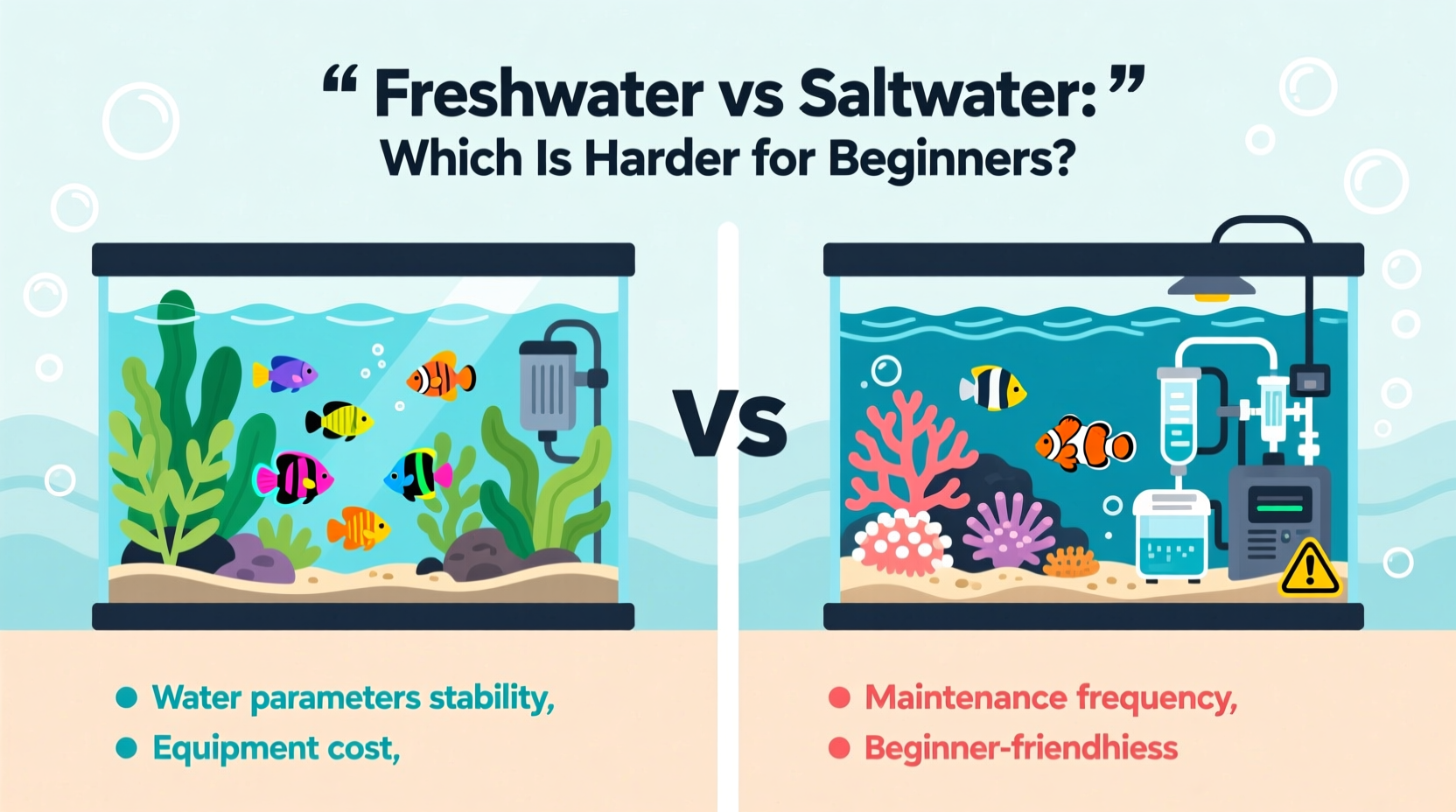
The most fundamental distinction lies in water composition. Freshwater aquariums use dechlorinated tap water, while saltwater systems require precise mixing of marine salt with purified water (typically RO/DI) to mimic ocean conditions. This difference affects nearly every aspect of tank management—from initial setup to daily monitoring.
Freshwater environments are generally more forgiving. Fish like tetras, guppies, and corydoras tolerate minor fluctuations in pH, temperature, and nutrient levels. In contrast, saltwater inhabitants—especially corals and reef-dwelling fish—are adapted to stable, narrow chemical ranges. Even slight deviations in salinity or alkalinity can cause stress, disease, or death.
That said, difficulty isn’t solely determined by sensitivity. It’s also shaped by accessibility. Equipment, knowledge, and replacement livestock for freshwater systems are widely available and affordable. Saltwater supplies, while increasingly common, still carry higher price tags and may require online sourcing in some regions.
Tip: Start with a 20-gallon or larger tank—larger water volumes stabilize temperature and chemistry better than small setups, making them easier for beginners to manage.Setup Complexity: Initial Investment and Learning Curve
Setting up a freshwater aquarium is straightforward. You need a tank, filter, heater, substrate, lighting, and dechlorinator. Most of these components are plug-and-play, with clear instructions and wide compatibility. Cycling the tank (establishing beneficial bacteria) typically takes 3–6 weeks using fish food or pure ammonia, after which hardy species can be introduced gradually.
Saltwater tanks demand more precision from day one. Beyond the basics, they require a protein skimmer, refractometer (to measure salinity), stronger lighting (especially for corals), and often a sump or additional filtration media. The cycling process is similar but more delicate—salinity must remain stable (1.023–1.025 specific gravity), and trace elements like calcium and magnesium need monitoring even before adding livestock.
Beginners often underestimate how much time goes into research alone. A freshwater starter might spend a few hours reading forums before setting up. A responsible saltwater hobbyist may invest dozens of hours understanding nitrogen cycles, calcium reactors, and coral fragging—all before filling the tank.
“Saltwater aquariums aren’t harder because they’re ‘advanced’—they’re harder because they reward preparation and punish assumptions.” — Dr. Alan Rivera, Marine Biologist and Aquarium Consultant
Maintenance Demands: Daily, Weekly, and Monthly Tasks
Both types of aquariums require regular upkeep, but the nature and consequences of neglect differ.
Freshwater Maintenance Routine
- Daily: Feed fish, check temperature, observe behavior for signs of illness.
- Weekly: Perform 10–25% water changes, clean algae from glass, test ammonia, nitrite, and nitrate.
- Monthly: Rinse filter media in old tank water, vacuum substrate, trim live plants if present.
Saltwater Maintenance Routine
- Daily: Check salinity, inspect corals for retraction or bleaching, monitor skimmer output.
- Weekly: Conduct 10–20% water changes with pre-mixed saltwater, test pH, alkalinity, calcium, and phosphate.
- Monthly: Clean pump intakes, replace filter socks, top off evaporated water with freshwater (not saltwater), calibrate equipment.
In practice, saltwater maintenance involves more tools, more testing, and stricter consistency. Evaporation, for example, raises salinity—a problem easily corrected with automatic top-off systems, but one that can go unnoticed in manual setups. Freshwater tanks don’t face this issue as critically since evaporation doesn’t alter mineral concentration as dramatically.
Comparative Challenges: Stability, Livestock Survival, and Problem Solving
One of the biggest hurdles for beginners is diagnosing and fixing problems. Here, freshwater systems hold a distinct advantage: issues develop slowly, and treatment options are well-documented and accessible.
A spike in ammonia due to overfeeding? Common. Treatable with water changes and bacterial supplements. Fungal infection on a betta? Standard medications like methylene blue or antifungals work reliably. Many freshwater fish recover well from short-term stress thanks to their adaptability.
In saltwater tanks, problems escalate faster. A malfunctioning heater in a tropical reef tank can raise temperatures beyond coral tolerance in hours. A single dead snail left undetected can release enough ammonia to crash the entire system. Corals don’t respond to traditional medications—they require environmental correction, not pills.
Moreover, saltwater livestock is far less forgiving of mistakes. Clownfish may survive suboptimal conditions, but mandarins, angelfish, and zoanthids demand pristine water. Beginners who rush into keeping such species often face high mortality rates, leading to frustration and early burnout.
Real Example: A Beginner’s Journey
Consider Mark, a first-time aquarist excited to create a vibrant underwater world. He starts with a 37-gallon saltwater tank, inspired by YouTube videos of glowing reefs. Within two months, he loses three damselfish to ich, his torch coral detaches due to low calcium, and his protein skimmer overflows at night. After spending $600 and countless hours troubleshooting, he switches to a 29-gallon freshwater planted tank. Within six weeks, he has thriving neon tetras, healthy plants, and confidence in his abilities. “I didn’t lack passion,” he says. “I lacked realistic expectations.”
This scenario is not uncommon. Passion drives many toward saltwater, but experience builds in freshwater.
Cost Comparison: What to Expect Financially
Budget plays a crucial role in determining feasibility. Below is a breakdown of typical startup and ongoing costs for a mid-sized beginner tank (approximately 30 gallons).
| Item | Freshwater (Est. Cost) | Saltwater (Est. Cost) |
|---|---|---|
| Tank & Stand | $120 | $150 |
| Filter | $40 | $80 (with sump option) |
| Heater | $25 | $30 |
| Lighting | $30 (basic LED) | $120 (reef-grade) |
| Protein Skimmer | N/A | $150 |
| Test Kits | $30 (ammonia, pH, nitrate) | $100+ (includes calcium, alkalinity, phosphate) |
| Substrate & Decor | $40 (gravel + fake plants) | $100 (live rock + sand) |
| Marine Salt Mix | N/A | $25 per batch (~monthly) |
| Livestock | $80 (tetras, corys, etc.) | $200+ (clownfish, cleaner shrimp, soft corals) |
| Total Startup Cost | $365 | $955+ |
Ongoing monthly costs for saltwater tanks also run higher due to salt mix, additives, and potential equipment replacements. While freshwater tanks can operate for years with minimal added expense, reef tanks often require recurring investments in supplements and upgrades.
Tip: Buy used equipment from local hobbyist groups. Many experienced saltwater keepers sell gently used skimmers, lights, and controllers at steep discounts.Step-by-Step Guide: Starting Smart as a Beginner
Regardless of which path you choose, following a structured approach increases your chances of long-term success. Here’s a timeline designed for first-time aquarists:
- Week 1–2: Research & Planning
Select tank size and location. Study basic nitrogen cycle principles. Decide between freshwater community, planted, or saltwater fish-only (avoid reef initially). - Week 3: Purchase & Setup
Buy all necessary equipment. Assemble tank, add substrate, fill with water, and start filtration. Begin cycling process using pure ammonia or commercial starter. - Week 4–7: Cycle the Tank
Test water parameters 2–3 times weekly. Wait until ammonia and nitrite read zero, and nitrates appear. This indicates a matured biological filter. - Week 8: Add First Livestock
Introduce 2–3 hardy fish (e.g., zebra danios for freshwater, clownfish for saltwater). Observe for stress or aggression. - Month 3: Gradual Stocking
Add more fish slowly—one every 2–3 weeks. Continue regular water changes and testing. - Month 4+: Ongoing Care
Establish routine maintenance. Join online communities for support. Consider upgrading skills (e.g., planting techniques or coral fragging) only after mastering basics.
FAQ: Common Questions Answered
Can I convert a freshwater tank to saltwater later?
Yes, but with caveats. You’ll need to drain and thoroughly clean the tank, replace silicone seals if corroded, and upgrade equipment (skimmer, lighting, filtration). Some materials, like certain rocks or decorations, may leach minerals and should be replaced. It’s usually more efficient to start fresh.
Are there easy saltwater setups for beginners?
Yes—consider a \"Fish Only with Live Rock\" (FOWLR) tank instead of a full reef. These exclude sensitive corals and rely on natural biological filtration from cured live rock. Species like clownfish, gobies, and blennies are hardy and colorful without demanding extreme water stability.
Which type has fewer algae problems?
Neither is immune, but causes differ. Freshwater algae (green spot, hair algae) stem from excess light or nutrients. Saltwater algae (cyanobacteria, bubble algae) often result from imbalanced trace elements or poor flow. Both can be managed with proper lighting schedules, water changes, and cleanup crews (e.g., nerite snails or emerald crabs).
Conclusion: Which Is Actually Harder?
The evidence points clearly: saltwater aquariums are harder for beginners—not because they’re inherently flawed, but because they offer less margin for error. They require greater financial investment, more technical knowledge, and stricter adherence to maintenance routines. Mistakes that would be minor setbacks in freshwater systems can become catastrophic in saltwater environments.
That doesn’t mean beginners should avoid saltwater altogether. It means they should start with informed expectations. Many successful marine aquarists began with freshwater tanks, learned the fundamentals of water chemistry and biological balance, then transitioned upward. That progression builds competence and confidence.
If your goal is to enjoy fishkeeping quickly, minimize stress, and learn through success rather than repeated failure, a freshwater aquarium is the smarter starting point. If you're drawn to the challenge of replicating a coral reef and are willing to invest significant time and money upfront, a saltwater setup can be deeply fulfilling—but only with patience and discipline.
🚀 Ready to begin your aquarium journey? Start small, prioritize learning over aesthetics, and remember: every expert was once a beginner. Share your first tank story or ask questions in the comments—our community is here to help!








