
Cat collars are more than just fashion accessories—they serve functional roles in identification, safety, and even behavior management. With an ever-growing market offering everything from minimalist black bands to vibrant floral prints, pet owners often wonder: does the pattern on a cat collar actually matter to the cat? Specifically, when comparing floral versus plain designs, is there any real difference in how cats perceive or react to them? The answer involves understanding feline vision, behavioral psychology, and practical safety considerations.
Understanding How Cats See Color and Pattern
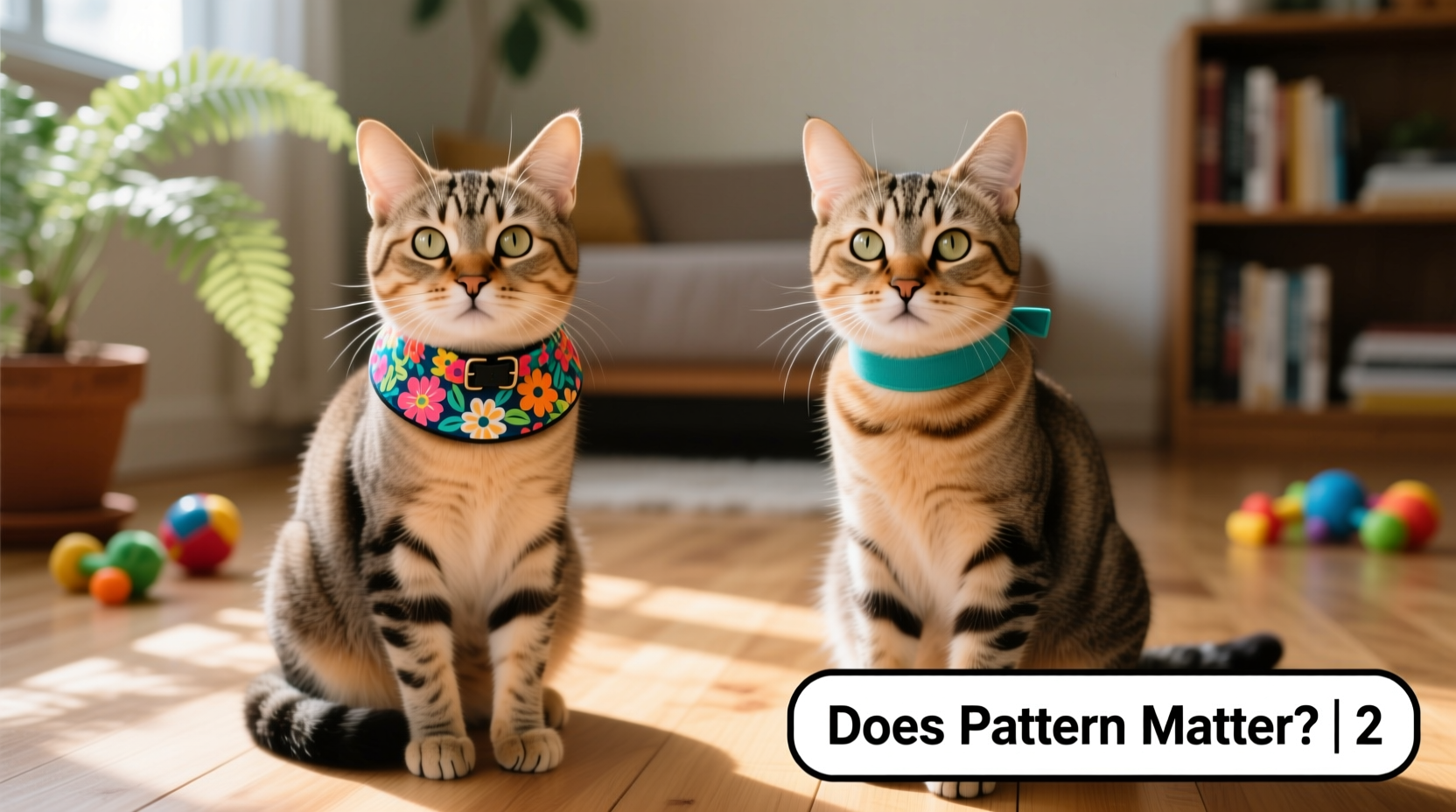
Cats do not perceive the world the same way humans do. Their visual system is optimized for low-light hunting rather than appreciating intricate design details. While humans have three types of color receptors (cones), cats only have two, making them partially colorblind—particularly to reds and greens. This means that a bright pink floral print may appear as a dull grayish-yellow to a cat.
Patterns like florals rely heavily on color contrast and fine detail, both of which are difficult for cats to distinguish. In fact, studies suggest that cats recognize objects more by movement, brightness contrast, and scent than by static visual patterns. A bold, high-contrast plain collar—such as black or bright orange—may be more visually detectable to another animal (or human) than a softly printed floral one, but the cat wearing it likely doesn’t notice the difference.
“Cats live in a world dominated by motion and contrast, not decorative aesthetics. The visual impact of a collar pattern is almost entirely human-centered.” — Dr. Lena Reyes, Feline Behavior Specialist
Safety First: Why Function Trumps Fashion
No matter the pattern, the most important features of a cat collar are safety mechanisms. Breakaway clasps, proper fit, and durable materials should always take precedence over design. A collar that gets caught on branches or furniture can be life-threatening if it doesn’t release under pressure.
Floral collars are not inherently less safe than plain ones, but their popularity among fashion-conscious owners sometimes leads to compromises. For example:
- Thicker fabric trims on decorative collars may increase snag risk.
- Printed dyes could irritate sensitive skin if low-quality materials are used.
- Overly wide or stiff collars might restrict natural neck movement.
Plain collars, especially those made from smooth nylon or biothane, tend to be simpler in construction and thus more predictable in performance. However, many modern floral designs now meet the same safety standards, provided they include breakaway buckles and are sized correctly.
Tip: Always check that the collar has a certified breakaway clasp and fits snugly—two fingers should fit between the collar and your cat’s neck.Comparing Floral and Plain Collars: A Practical Breakdown
| Feature | Floral Collars | Plain Collars |
|---|---|---|
| Visual Appeal (to humans) | High – trendy, expressive | Low to moderate – subtle |
| Visibility (for spotting cat) | Moderate – depends on color contrast | High – especially in solid bright colors |
| Durability | Varies – some prints fade or crack | Generally high – uniform material |
| Allergy Risk | Slightly higher – due to dyes or fabric layers | Lower – fewer additives |
| Safety Features | Depends on brand – verify breakaway | Commonly standard |
The table shows that while floral collars win in aesthetic appeal, plain options often perform better in visibility and consistency. That said, choosing either type isn’t about dismissing one for the other—it’s about selecting based on quality, fit, and intended use.
Real-World Example: Luna the Indoor-Outdoor Cat
Luna, a 3-year-old tabby who spends time in a secure garden, originally wore a delicate lavender floral collar because her owner loved the whimsical look. After two weeks, the print began fading, and Luna scratched at her neck more frequently. A vet visit revealed mild contact irritation, possibly from the dye or textured fabric backing.
Her owner switched to a plain neon green breakaway collar with reflective threading. Though less “cute,” it was more visible during dusk hours, didn’t irritate Luna’s skin, and survived rain and bush encounters without fraying. Interestingly, Luna showed no behavioral change between collars—she adjusted within hours each time.
This case illustrates that while humans may form emotional attachments to certain designs, cats adapt quickly and prioritize comfort over appearance.
Step-by-Step Guide to Choosing the Right Collar
- Assess your cat’s lifestyle: Indoor-only cats need ID tags; outdoor-access cats require breakaway collars with high visibility.
- Check for safety certifications: Look for collars labeled “breakaway” or “quick-release.”
- Evaluate material quality: Nylon, polyester, and biothane are durable and easy to clean.
- Test the fit: Slide two fingers under the collar. It should be snug but not tight.
- Monitor initial wear: Watch for scratching, rubbing, or avoidance behaviors in the first 48 hours.
- Rotate collars if needed: Giving the neck a break prevents sores, especially with frequent wear.
Expert Insight: What Veterinarians Recommend
Many veterinarians emphasize that collar design is secondary to function. Dr. Alan Meeks, a small animal practitioner with over 15 years of experience, advises pet owners:
“The safest collar is the one that stays on when it should and comes off when it gets caught. I don’t care if it’s polka dots or plaid—as long as it has a reliable breakaway mechanism and holds an ID tag, it serves its purpose.” — Dr. Alan Meeks, DVM
He also notes that microchipping is essential regardless of collar use, since collars can fall off. But for daily identification and peace of mind, a well-fitted, functional collar remains invaluable.
Frequently Asked Questions
Can cats tell the difference between floral and plain collars?
No meaningful evidence suggests cats can distinguish or care about collar patterns. Their vision limits their ability to perceive fine details and certain colors, so a floral print looks little different from a plain one.
Are floral collars more likely to cause allergies?
Potentially, yes. Some cats may react to chemical dyes used in printing or layered fabrics common in decorative collars. If your cat has sensitive skin, opt for hypoallergenic materials and avoid heavily treated textiles.
Should I avoid patterns altogether?
Not necessarily. Many floral collars are made with safe, non-toxic dyes and high-quality materials. The key is prioritizing safety features and monitoring your cat’s reaction after putting it on.
Final Thoughts and Call to Action
In the debate between floral and plain cat collars, the pattern matters far more to people than to cats. While floral designs offer charm and personality, they don’t enhance function—and in some cases, may introduce unnecessary risks. Plain collars, especially those in bright or reflective finishes, often provide better visibility and reliability.
Ultimately, the best collar is one that’s safe, comfortable, and suited to your cat’s lifestyle. Whether you choose a daisy-print band or a sleek black strap, make sure it meets safety standards and fits properly. Your cat won’t judge your taste in patterns—but they’ll definitely benefit from your attention to detail.
💬 Have a favorite collar brand or story about your cat’s reaction to a new collar? Share your experience in the comments below and help fellow cat owners make informed choices!








