
For indoor cat owners, protecting pets from fleas without exposing them to unnecessary chemicals is a top priority. While indoor cats have lower exposure to parasites than outdoor ones, they’re not immune—fleas can enter homes on clothing, shoes, or even other pets. When choosing between flea collars and topical drops, many pet owners face uncertainty about which option is truly safer and more effective. Both treatments have benefits and drawbacks, but the right choice depends on your cat’s health, lifestyle, and sensitivity to ingredients.
This article compares flea collars and topical flea treatments in depth, focusing on safety, active ingredients, duration of protection, and real-world considerations for indoor cats. By understanding how each method works and what risks they may carry, you can make a confident, informed decision that prioritizes your cat’s well-being.
How Flea Collars Work for Indoor Cats
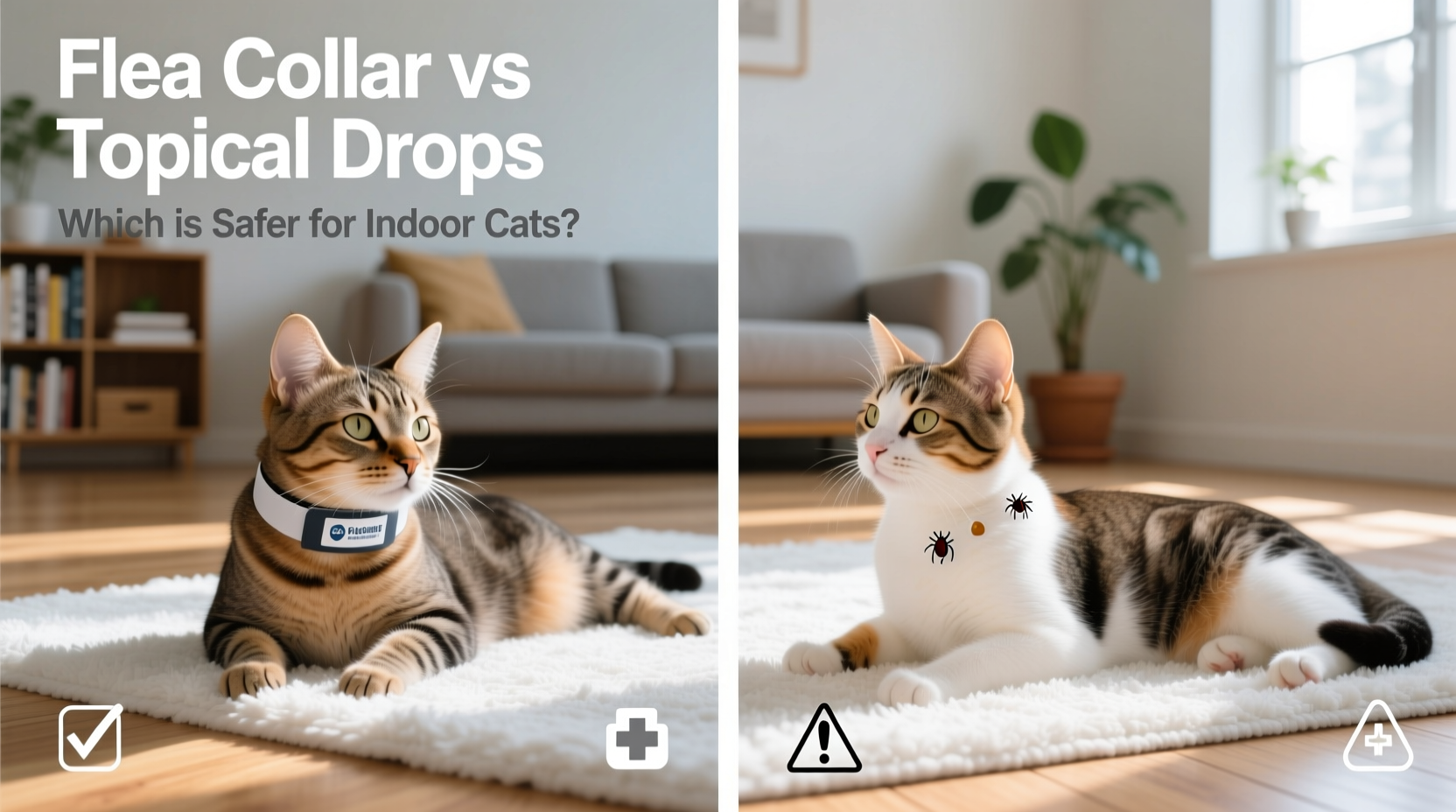
Flea collars are designed to release active ingredients slowly over time, either through vapor diffusion or skin contact. Modern versions often use advanced polymer technology to distribute insecticides around the cat’s neck area, with some claiming full-body coverage. For indoor cats, collars offer continuous protection with minimal daily effort.
The most common active ingredients in flea collars include imidacloprid, flumethrin, and tetrachlorvinphos. Some newer models use natural essential oils like citronella or geraniol, though these are generally less effective against established infestations.
One advantage of flea collars is their long-lasting nature—some brands promise up to 8 months of protection. This makes them appealing for owners who prefer infrequent dosing. However, effectiveness varies widely by brand, and not all collars provide uniform distribution across the body, especially in cats with thick fur or those who groom frequently.
Tip: Always check that the flea collar is specifically labeled safe for cats—many dog collars contain permethrin, which is highly toxic to felines.Topical Flea Treatments: Mechanism and Safety Profile
Topical flea treatments, also known as spot-on solutions, are applied directly to the skin, usually between the shoulder blades or at the base of the skull. These liquids absorb into the cat’s oil glands and spread across the skin surface via natural sebum movement. Most products begin killing fleas within 12–24 hours and remain effective for about 30 days.
Common active ingredients in topical treatments include selamectin, fipronil, imidacloprid, and moxidectin. Many of these compounds target both adult fleas and their life stages (eggs and larvae), offering broader protection than collars. Prescription-grade options like Revolution (selamectin) also protect against heartworm, ear mites, and certain intestinal parasites.
Because the medication is absorbed systemically or semi-systemically, topical treatments tend to provide more consistent whole-body coverage. This is particularly beneficial for indoor cats that groom themselves thoroughly or sleep close to their owners, where localized protection might be insufficient.
“Topical treatments offer predictable dosing and broad-spectrum efficacy, making them a preferred first-line defense in veterinary clinics.” — Dr. Laura Henderson, DVM, Feline Health Specialist
Comparative Safety: Flea Collar vs Topical Drops
Safety is paramount when treating indoor cats, especially because they spend significant time in close contact with humans and may be more sensitive to chemical exposure. Below is a detailed comparison of key safety factors:
| Factor | Flea Collar | Topical Drops |
|---|---|---|
| Skin Irritation Risk | Moderate (localized redness, itching at neck) | Low to moderate (site irritation possible) |
| Toxicity if Ingested | High (if chewed or licked during grooming) | Low (once dried; higher risk pre-application) |
| Residue Transfer to Humans | Low (vapors may affect sensitive individuals) | Moderate (oil-based residue until dry) |
| Allergic Reactions | More common due to prolonged skin contact | Rare, usually mild |
| Kitten & Senior Cat Suitability | Limited (many not approved under 12 weeks) | Broad (many vet-approved for young/old cats) |
| Chemical Exposure Duration | Continuous (months) | Monthly, short-term |
The data suggests that while flea collars offer convenience, they pose a higher risk of adverse reactions, particularly if the cat chews the collar or has sensitive skin. Topicals, despite requiring monthly application, allow for better dose control and are easier to discontinue if side effects occur.
Real-World Example: Managing Fleas in a Multi-Cat Apartment
Sophie, a cat owner in Chicago, noticed her two indoor cats scratching more than usual one summer. Despite no outdoor access, she suspected fleas after finding tiny black specks in their bedding. She initially tried a popular flea collar on her older cat, Luna, but within days, Luna developed redness and hair loss around the neck. Concerned, Sophie consulted her veterinarian, who advised removing the collar and switching to a prescription topical treatment.
She applied selamectin to both cats on the same night. Within 24 hours, flea activity decreased significantly. Over the next month, she vacuumed daily, washed bedding weekly, and monitored for reinfestation. No further issues arose, and both cats tolerated the topical treatment well. The vet explained that the original collar likely caused a contact reaction and didn’t distribute evenly, leaving parts of the body unprotected.
This case highlights two important points: first, even indoor cats can acquire fleas; second, individual tolerance varies, and immediate alternatives should be available if a product causes irritation.
Step-by-Step Guide to Choosing the Right Flea Treatment
Selecting between a flea collar and topical drops shouldn't be arbitrary. Follow this step-by-step process to ensure you choose the safest, most effective option for your indoor cat:
- Assess your cat’s age, weight, and health status. Kittens, seniors, or cats with liver/kidney conditions may not tolerate certain chemicals.
- Check for existing sensitivities. If your cat has had skin reactions before, avoid prolonged-contact products like collars.
- Review household dynamics. Do you have children or immunocompromised individuals? Consider residue transfer risks with topicals.
- Consult your veterinarian. Get personalized recommendations based on your cat’s medical history.
- Evaluate ease of use. Can you remember monthly applications? Or do you prefer set-it-and-forget-it solutions?
- Start with a small trial. Apply a partial dose or use a single product first to monitor for adverse reactions.
- Monitor and adjust. Watch for excessive scratching, lethargy, or vomiting in the first 72 hours after application.
Common Misconceptions About Indoor Cat Flea Prevention
Many indoor cat owners believe their pets don’t need flea prevention. This misconception leads to delayed treatment and unexpected infestations. Here are three myths debunked:
- Myth: “Indoor cats can’t get fleas.”
Reality: Fleas can hitchhike indoors via clothing, shoes, or visitors’ pets. Even high-rise apartments aren’t immune. - Myth: “Natural collars are always safer.”
Reality: Essential oils like tea tree or citrus can be toxic to cats, even in small amounts. - Myth: “Once-a-year treatment is enough.”
Reality: Fleas thrive year-round in climate-controlled homes. Continuous protection is recommended.
Veterinarians increasingly advocate for year-round flea prevention, even for strictly indoor cats. The cost and effort of prevention are far lower than dealing with a full-blown infestation or secondary infections from flea bites.
FAQ: Your Top Questions Answered
Can I use both a flea collar and topical drops together?
Generally, this is not recommended unless directed by a veterinarian. Combining treatments increases the risk of chemical overload and toxicity. Use one method consistently and switch only if it proves ineffective or causes side effects.
Are there non-chemical alternatives for flea control?
While combing with a flea comb and frequent vacuuming help manage minor cases, they’re not sufficient for prevention. Food additives or herbal sprays lack scientific backing and may delay effective treatment. For reliable protection, vet-approved products are still the gold standard.
What should I do if my cat licks the topical treatment?
If ingestion occurs shortly after application, contact your vet immediately. Symptoms may include drooling, vomiting, or tremors. Most reactions are mild if treated early. To prevent licking, apply the product when you can supervise, or use a cone temporarily.
Final Recommendations and Action Plan
When comparing flea collars and topical drops for indoor cats, the balance of safety, efficacy, and practicality leans strongly toward topical treatments. They offer controlled dosing, broader parasite protection, and fewer long-term exposure risks. Flea collars may suit specific situations—such as owners who struggle with monthly routines—but require careful monitoring for skin reactions and accidental ingestion.
No flea prevention method is entirely risk-free, but informed choices reduce danger significantly. Prioritize veterinarian-recommended products, avoid over-the-counter generics with unverified ingredients, and always read labels carefully.
“The safest flea treatment is the one tailored to the individual cat—not the most convenient or cheapest option.” — Dr. Rajiv Mehta, Veterinary Dermatologist📋 Quick Checklist Before Starting Any Flea Treatment:
- ✔ Confirmed diagnosis or suspicion of fleas
- ✔ Cat’s weight and age verified
- ✔ Product labeled specifically for cats
- ✔ No concurrent medications or health issues
- ✔ Consultation with veterinarian completed
- ✔ Plan for monthly application or collar monitoring in place
Conclusion
Protecting your indoor cat from fleas doesn’t mean compromising their safety. While flea collars offer extended coverage, topical drops generally provide a safer, more reliable, and vet-preferred solution. By understanding ingredient profiles, application methods, and potential risks, you can choose a treatment that aligns with your cat’s needs and your peace of mind.
💬 Have experience with flea collars or topical treatments? Share your story in the comments to help fellow cat owners make informed decisions!








