
In classrooms across the country, small handheld gadgets—squeezable cubes, spinning rings, textured chains—are making quiet revolutions. These fidget toys, once dismissed as novelty trinkets, have sparked intense debate among teachers, parents, and psychologists. Are they tools that enhance concentration for students with attention challenges, or are they merely modern-day stress balls disguised as learning aids, diverting focus instead of improving it?
The truth lies somewhere in between. While some students benefit significantly from tactile stimulation during lessons, others use fidget devices as covert entertainment, undermining classroom discipline. Understanding when and how fidget toys support learning—and when they become disruptive—is essential for informed decision-making in educational environments.
Understanding the Science Behind Fidgeting
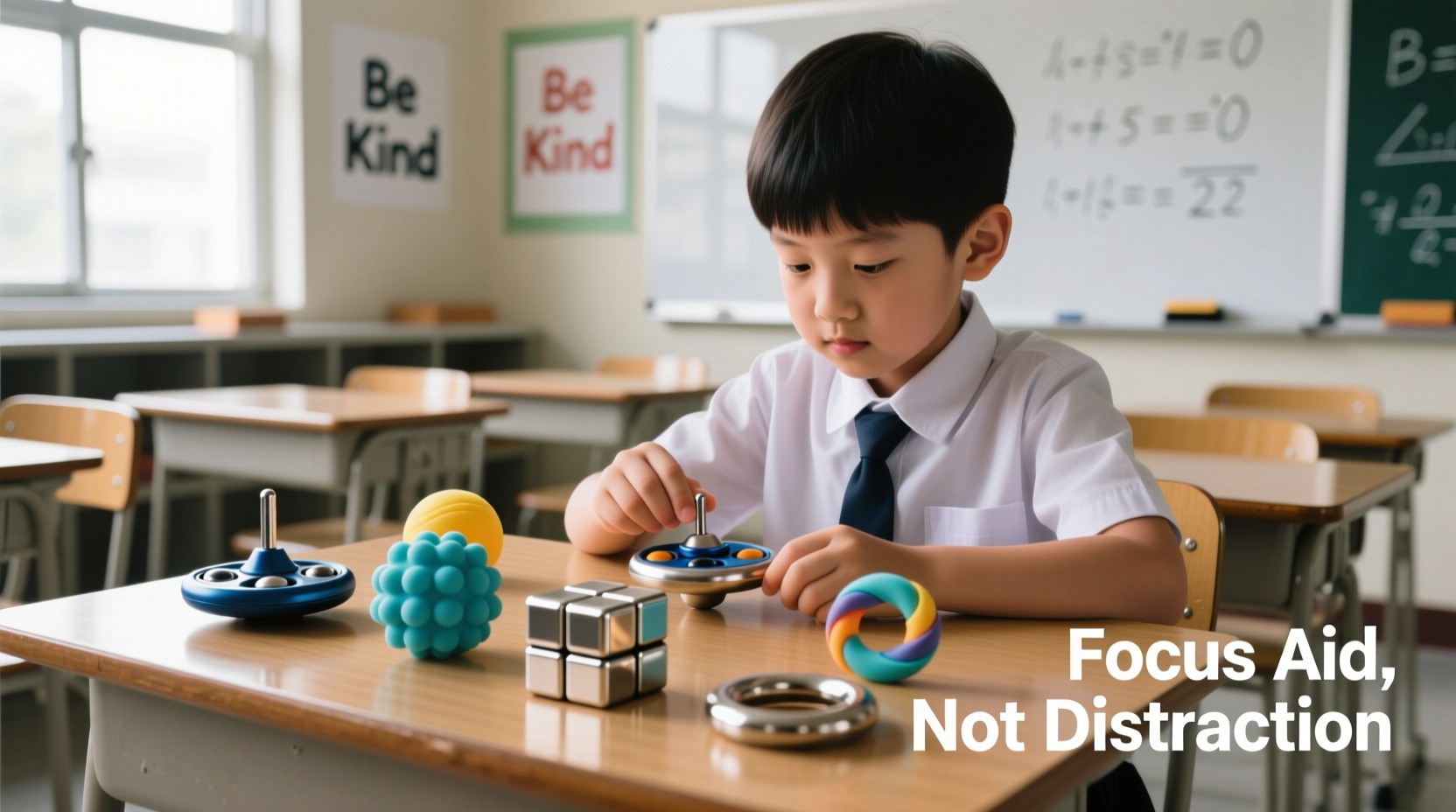
Fidgeting isn't inherently counterproductive. In fact, research suggests that low-level physical movement can improve cognitive performance, particularly in individuals with attention-deficit/hyperactivity disorder (ADHD) or anxiety-related conditions. The brain often uses motor activity to regulate arousal levels, helping maintain alertness without overstimulation.
A 2015 study published in the Journal of Abnormal Child Psychology found that children with ADHD performed better on cognitive tasks when allowed to move more freely. Researchers observed that leg movements and hand fidgeting correlated with improved attention and working memory. This implies that what appears to be restlessness may actually be a self-regulatory strategy.
Neurodivergent learners often process sensory input differently. For them, fidget toys provide controlled sensory feedback—known as \"proprioceptive input\"—that grounds their nervous system, reducing internal distractions and enhancing mental clarity. Think of it like background music helping someone concentrate: not necessary for everyone, but transformative for some.
“Movement is not the enemy of attention—it can be its ally. When used appropriately, fidget tools help students channel excess energy into focused engagement.” — Dr. Rebecca Shumway, Developmental Psychologist and ADHD Researcher
When Fidget Toys Help: Who Benefits Most?
Fidget toys are not universally beneficial. Their effectiveness depends heavily on individual needs, context, and implementation. Certain groups tend to gain the most from structured access:
- Students with ADHD: Often struggle with impulse control and sustained attention. A discreet fidget can reduce off-task behavior by giving restless hands a purposeful outlet.
- Autistic learners: May experience sensory overload in busy classrooms. Tactile stimulation from a familiar object helps modulate sensory input and reduce anxiety.
- Anxious or stressed students: Repetitive motions can activate the parasympathetic nervous system, lowering heart rate and calming the mind during high-pressure situations like tests.
- Those with executive function challenges: Difficulty organizing thoughts or managing time may improve when paired with a physical anchor, such as rotating a smooth spinner while planning an essay.
However, benefits only emerge when usage is intentional and regulated. Unsupervised access leads to misuse—spinning toys across desks, tossing cubes, or using them as trading currency during math class.
Tip: Limit fidget toy use to students who demonstrate a clear need and pair it with a behavioral agreement outlining acceptable use.Classroom Realities: A Teacher’s Dilemma
Ms. Elena Torres teaches fifth grade at a public school in Portland, Oregon. Two years ago, she introduced a trial program allowing three students with diagnosed ADHD to use fidget bands attached to chair legs and quiet squeeze balls during independent work. Initially skeptical, she noticed immediate changes.
One student, Marcus, previously struggled to complete reading assignments without constant redirection. With a textured fidget ring, he began finishing passages with fewer interruptions. “It wasn’t magic,” Ms. Torres recalls. “But it gave him something to do with his hands so his brain could stay on the page.”
Yet success didn’t scale automatically. When other students asked for similar items, citing “I can’t focus either,” she realized demand was outpacing rationale. Without proper screening, fidget toys became status symbols rather than therapeutic tools.
By mid-year, two students were using spinners during silent reading to flick paper scraps across the room. Another started collecting multiple toys, swapping them daily like trading cards. What began as a support strategy risked becoming a management burden.
She revised the policy: only students with documented sensory or attention needs could apply for fidget access, and each had to sign a usage contract. Results improved dramatically. Distractions decreased, and targeted users reported feeling calmer and more engaged.
Best Practices for Effective Implementation
To avoid turning fidget toys into classroom liabilities, schools and caregivers should follow evidence-based guidelines. Below is a step-by-step framework for responsible integration:
- Assess individual need: Use observations, parent input, and professional evaluations (e.g., occupational therapy reports) to determine if a student would benefit from tactile support.
- Select appropriate tools: Choose non-disruptive, quiet, and simple devices. Avoid lights, sounds, or parts that detach easily.
- Establish clear rules: Define when, where, and how the toy can be used. Prohibit sharing, throwing, or loud manipulation.
- Monitor regularly: Observe whether the tool improves focus or becomes a distraction. Be ready to revoke access if misused.
- Educate peers: Explain that some students need different tools to learn effectively, fostering empathy and reducing stigma.
| Do’s | Don’ts |
|---|---|
| Use silent, non-mechanical fidgets (e.g., putty, fabric strips) | Allow toys with clicking sounds or flashing lights |
| Introduce tools gradually under supervision | Distribute toys to entire class indiscriminately |
| Involve parents and specialists in decision-making | Let students choose flashy or game-like gadgets |
| Reassess usage monthly for effectiveness | Ignore complaints from peers about disruptions |
| Teach self-monitoring skills alongside tool use | Treat fidgets as permanent accommodations without review |
Creating a Fidget Policy: A Checklist for Educators
- ☐ Identify students with documented attention or sensory regulation needs
- ☐ Consult with school psychologist or occupational therapist
- ☐ Select 1–2 approved toy types per student (quiet, durable, minimal moving parts)
- ☐ Draft a written agreement outlining expectations and consequences
- ☐ Educate classmates about neurodiversity and accommodation fairness
- ☐ Schedule bi-weekly check-ins during first month of use
- ☐ Document behavioral changes (on-task time, completion rates, peer feedback)
- ☐ Re-evaluate after six weeks; discontinue if no measurable benefit
The Risks of Overuse and Misuse
Despite their potential, fidget toys carry real risks when implemented poorly. One major concern is normalization without justification. When every child wants a spinner because “everyone else has one,” the line between accommodation and trend blurs.
Additionally, complex or visually stimulating toys defeat the purpose. A spinner with LED lights draws attention outward rather than inward. Instead of aiding focus, it invites comparison and competition. Even subtle noises—like the click of a button fidget—can disrupt auditory processing in quiet settings.
There's also the danger of dependency. Some students begin to believe they cannot work without their toy, creating psychological reliance that undermines self-regulation development. Like any assistive tool, fidgets should ideally serve as stepping stones toward greater independence, not lifelong crutches.
Schools must balance inclusion with accountability. Accommodations are meant to level the playing field—not create new imbalances. If a student without diagnosed needs performs better with a fidget, perhaps the issue lies in instructional design or environmental factors (e.g., poor lighting, noise), not the absence of a gadget.
FAQ: Common Questions About Fidget Toys in Education
Can any student use a fidget toy in class?
No. Fidget toys should be treated as tools for specific functional needs, not general classroom supplies. Widespread distribution increases misuse and diminishes their value as accommodations. Access should be based on observation, professional input, and documented challenges.
What type of fidget toy is best for focus?
The most effective fidgets are simple, silent, and unobtrusive. Examples include therapy putty, knotted fabric bracelets, soft squeezable shapes, or textured silicone rings. Devices requiring assembly, making sound, or attracting visual attention are generally unsuitable for group learning environments.
Do fidget toys really work, or is it just placebo?
For many neurodivergent individuals, the effect is physiological, not psychological. Sensory modulation through touch activates neural pathways linked to attention regulation. However, results vary widely. Some users report noticeable improvement; others see no change. Objective tracking (e.g., task completion times, teacher ratings) helps distinguish genuine benefit from perceived effect.
Conclusion: Tools, Not Toys
Fidget toys occupy a gray zone in modern education—one that demands nuance, not blanket bans or unrestricted access. They are neither miracle solutions nor frivolous distractions. When thoughtfully deployed, they empower students to manage their own learning needs. When handed out casually, they erode classroom cohesion and shift focus from content to contraptions.
The key is intentionality. Schools should approach fidget tools like any other accommodation: grounded in assessment, guided by professionals, and evaluated over time. Teachers, parents, and therapists must collaborate to ensure these devices serve their intended purpose—supporting focus, not substituting for it.
Ultimately, the goal isn’t to eliminate fidgeting—it’s to understand it. Movement is part of human cognition. By respecting individual differences and applying smart policies, educators can transform what looks like distraction into a pathway for deeper engagement.
🚀 Ready to rethink classroom focus? Share this article with your teaching team or PTA group and start a conversation about thoughtful sensory support in learning spaces.








