
Choosing an exotic pet is a significant decision that extends far beyond initial cuteness or novelty. Ferrets and sugar gliders are both popular small mammals in the exotic pet world, known for their playful personalities and unique behaviors. However, they differ dramatically in care requirements, social needs, longevity, and daily demands. Understanding these differences is crucial for anyone considering long-term companionship with either species. This comparison breaks down the true commitment behind each animal, helping you determine which aligns best with your lifestyle, schedule, and emotional capacity.
Lifespan and Long-Term Responsibility
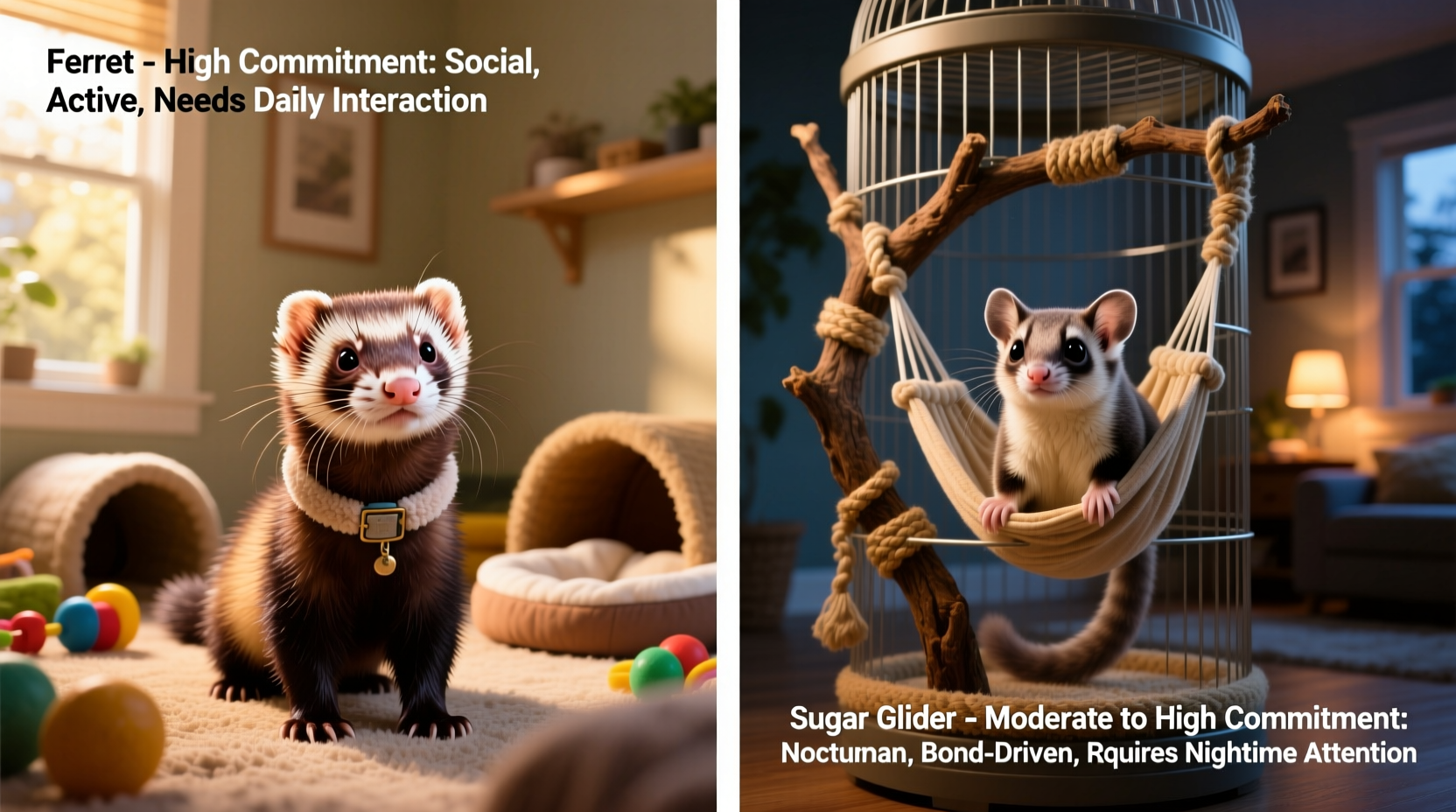
The length of time you'll be responsible for your pet directly impacts the level of commitment required. Both ferrets and sugar gliders live significantly longer than many assume, making this one of the most important factors to consider.
- Ferrets typically live between 6 to 10 years, with some reaching up to 12 years under exceptional care. This means committing to over a decade of consistent attention, veterinary visits, diet management, and environmental enrichment.
- Sugar gliders, on the other hand, have a longer average lifespan of 12 to 15 years, with individuals in captivity occasionally living up to 17 years. This extended timeline doubles the emotional and financial investment compared to shorter-lived pets.
A longer lifespan means more veterinary expenses, potential changes in housing needs over time, and sustained daily interaction. Sugar gliders, due to their greater longevity, require a deeper long-term commitment—especially for owners who may face life transitions such as moving, career changes, or family growth.
Tip: Before adopting any exotic pet, ensure your household plans stability for at least the next 10–15 years—especially with sugar gliders.Daily Care and Time Investment
Time spent caring for your pet isn't just about feeding—it includes cleaning, handling, enrichment, and bonding. The daily routine differs significantly between ferrets and sugar gliders.
Ferrets are active for about 4 to 6 hours per day, split into multiple wake-sleep cycles. During active periods, they need supervised playtime outside their cage (minimum 3–4 hours daily). They also require frequent litter box maintenance, bedding changes, and toy rotation to prevent boredom. Their high metabolism demands fresh food and water available throughout the day, and their strong odor necessitates regular cage cleaning—at least twice weekly.
Sugar gliders are nocturnal, meaning their peak activity occurs at night. They demand extensive social interaction during these hours—ideally 2 to 3 hours of direct out-of-cage time every evening. Because they are highly social colony animals, they suffer from depression and self-mutilation if isolated. Even with proper handling, they must never be left alone for more than 12 hours without contact. This makes them unsuitable for people who work late shifts or travel frequently.
“Sugar gliders don’t just want attention—they *need* it like oxygen. Neglect leads to severe psychological distress.” — Dr. Rebecca Tran, Exotic Mammal Veterinarian
| Care Factor | Ferret | Sugar Glider |
|---|---|---|
| Daily Handling Time | 3–4 hours (split sessions) | 2–3 hours (nightly) |
| Cleaning Frequency | Twice weekly cage clean | Weekly deep clean + spot cleaning |
| Feeding Schedule | Multiples meals/day (high protein) | Nightly fresh diet prep |
| Social Dependency | Moderate (enjoy company but can tolerate short solitude) | Extreme (require constant companionship) |
| Nocturnal? | No (crepuscular – dawn/dusk active) | Yes (fully nocturnal) |
Housing and Environmental Needs
Proper housing ensures physical health and mental well-being. Both animals need specialized enclosures, but their design and placement vary based on natural behaviors.
Ferrets require large, multi-level cages with secure latches (they’re escape artists), soft bedding, hammocks, tunnels, and litter boxes. Since they explore homes during playtime, ferret-proofing is essential—covering electrical cords, sealing gaps, and locking cabinets. Their strong musky odor also means cages should be placed in well-ventilated areas, preferably not in bedrooms or tightly enclosed spaces.
Sugar gliders need tall, vertical enclosures made of stainless steel or powder-coated wire to prevent chewing. The cage must include branches, ropes, pouches, and climbing toys to mimic arboreal life. Unlike ferrets, they cannot roam freely in homes unless fully trained and monitored—fall risks and exposure to toxins (like aerosols or candles) are dangerous. Their enclosure must remain in a quiet, dimly lit room at night to support natural rhythms.
Tip: Never house sugar gliders in bedrooms where light or noise could disrupt their sleep cycle—it causes chronic stress.Dietary Complexity and Nutritional Demands
Both species require precise diets that go far beyond commercial kibble. Improper nutrition leads to serious health issues, including organ failure and metabolic bone disease.
Ferrets are obligate carnivores, meaning they require a diet high in animal-based protein (35–40%) and fat (18–20%), with minimal fiber and no carbohydrates. Feeding cat food—even high-end brands—is insufficient and potentially harmful long-term. Many owners opt for raw diets or premium ferret-specific formulas. Fresh water must be provided daily, and bowls are preferred over bottles to encourage natural drinking behavior.
Sugar gliders have one of the most complex dietary regimens among exotic pets. A balanced diet consists of three components: a lead-based nutrition mix (such as HPW, BML, or TPG), fresh fruits/vegetables, and protein sources like insects or cooked eggs. These must be prepared fresh each night. Calcium-to-phosphorus ratios are critical; imbalances cause hind limb paralysis within months. Supplements are often necessary, and portion control prevents obesity.
Sample Weekly Diet Prep Timeline (Sugar Glider)
- Monday–Sunday: Prepare nightly sugar glider meal (15–20 minutes): mix base formula, add diced fruit, and include protein item.
- Every Other Day: Offer calcium-rich vegetables like collard greens or squash.
- Daily: Remove uneaten food by morning to prevent spoilage and bacterial growth.
- Weekly: Rotate protein sources to ensure variety and nutrient balance.
“We see more malnourished sugar gliders than any other exotic pet. Owners underestimate how much effort goes into feeding them correctly.” — Dr. Alan Kim, Wildlife Nutritionist
Financial Commitment Over Time
Beyond adoption cost, ongoing expenses accumulate quickly. Here’s a realistic breakdown of annual costs for each pet:
| Expense Category | Ferret (Annual) | Sugar Glider (Annual) |
|---|---|---|
| Initial Setup (Cage, Toys, Supplies) | $250–$500 | $400–$700 |
| Food & Supplements | $300–$600 | $500–$800 |
| Veterinary Care (Check-ups, Emergencies) | $200–$600 | $300–$800 |
| Cleaning Supplies & Bedding | $100–$200 | $100–$150 |
| Total Estimated Annual Cost | $850–$1,900 | $1,300–$2,450 |
While initial setup costs favor ferrets slightly, sugar gliders edge higher due to specialized caging and dietary complexity. Over a 15-year lifespan, total expenditures can exceed $20,000 for sugar gliders—more than some small dogs.
Emotional and Social Bonding Requirements
These animals form deep attachments, but the nature of those bonds varies.
Ferrets bond strongly with their owners and recognize voices and scents. They enjoy interactive play, chasing toys, and cuddling after exertion. While affectionate, they are independent enough to entertain themselves briefly when needed. Bonding takes consistent handling over several weeks, especially with rescues or shy individuals.
Sugar gliders form lifelong pair bonds—not just with humans, but ideally with another glider. Keeping a single glider without human interaction for 2+ hours nightly leads to depression. They groom their bonded humans, cry when separated, and show signs of PTSD after abandonment. Rehoming adult gliders is extremely difficult due to trauma risk.
Mini Case Study: The Cost of Misjudged Commitment
Sarah adopted a baby sugar glider named Pip, charmed by videos of gliders leaping into pockets. She worked from home and believed she could meet its needs. After six months, she accepted a remote job requiring international travel. Despite hiring a caretaker, Pip became withdrawn, stopped eating, and developed fur loss from stress-induced overgrooming. When Sarah returned after four weeks, Pip had regressed severely. It took months of rehabilitation with an exotic vet to restore trust. Eventually, she rehomed Pip to a sanctuary with a bonded colony. “I didn’t realize he wasn’t a pet,” she said. “He was a dependent. I underestimated what that meant.”
Tip: If you travel more than once every two months, reconsider adopting a sugar glider. Boarding options are limited and risky.Checklist: Are You Ready for a Ferret or Sugar Glider?
Use this checklist to assess your readiness before adoption:
- Can you dedicate 2–3+ hours daily to interaction, especially at night? → Sugar gliders only
- Do you have a stable living situation for the next 10–15 years?
- Is your budget prepared for $1,000–$2,500 in annual care costs?
- Are you able to find and afford an exotic veterinarian nearby?
- Can you commit to preparing fresh, species-specific meals nightly?
- Will someone reliable care for your pet during vacations or emergencies?
- Have you researched local laws? (Some states ban ferrets or gliders.)
- Are you adopting a pair if choosing sugar gliders? (Solo housing is inhumane without intense human bonding.)
FAQ
Can I keep a sugar glider if I work full-time during the day?
Yes, but only if you’re home every evening and available for 2–3 hours of interaction between dusk and midnight. Daytime workers who come home late, work overtime, or frequently socialize at night are not suitable owners.
Do ferrets smell bad?
Ferrets have a natural musky odor due to skin glands. It’s manageable with regular bathing (no more than once a month), cage cleaning, and neutering/spaying—but it never disappears completely. People sensitive to smells may find it unpleasant.
Which pet is better for families with children?
Neither species is ideal for young children. Ferrets may nip during play, and sugar gliders are fragile and easily stressed by loud noises. Supervised, calm interactions with older teens (14+) can work, but these are not \"starter pets\" for kids.
Conclusion: Choosing Based on True Commitment
Selecting between a ferret and a sugar glider isn’t about which is cuter or trendier—it’s about matching your life to the animal’s biological and emotional needs. Ferrets demand energy, space, and odor tolerance, but offer flexibility in scheduling and moderate independence. Sugar gliders require near-total integration into your nightly routine, unwavering emotional availability, and meticulous attention to diet and socialization. They are less pets and more lifelong companions with the dependency level of a special-needs animal.
If you value spontaneity, travel often, or have unpredictable hours, a ferret may still stretch your limits—but a sugar glider will inevitably suffer. Conversely, if you thrive on routine, cherish deep bonds, and seek a nocturnal companion, a sugar glider might fulfill that role uniquely.
💬 Thinking about adopting? Share your questions or experiences below. Help others understand what real exotic pet ownership looks like—beyond the Instagram reels.








