Ferrets are intelligent, curious, and incredibly agile animals—traits that make them delightful pets but also challenging to manage outdoors. Unlike cats or dogs, ferrets have slender bodies, flexible spines, and an instinctive drive to explore tight spaces. This makes harness training essential for safe outdoor adventures. However, many owners struggle with escape attempts, resistance, or fear during the process. The key isn’t just choosing the right gear—it’s building trust, consistency, and positive associations over time. With the right approach, you can teach your ferret to accept and even enjoy wearing a harness, minimizing stress for both of you.
Understanding Ferret Behavior and Harness Challenges
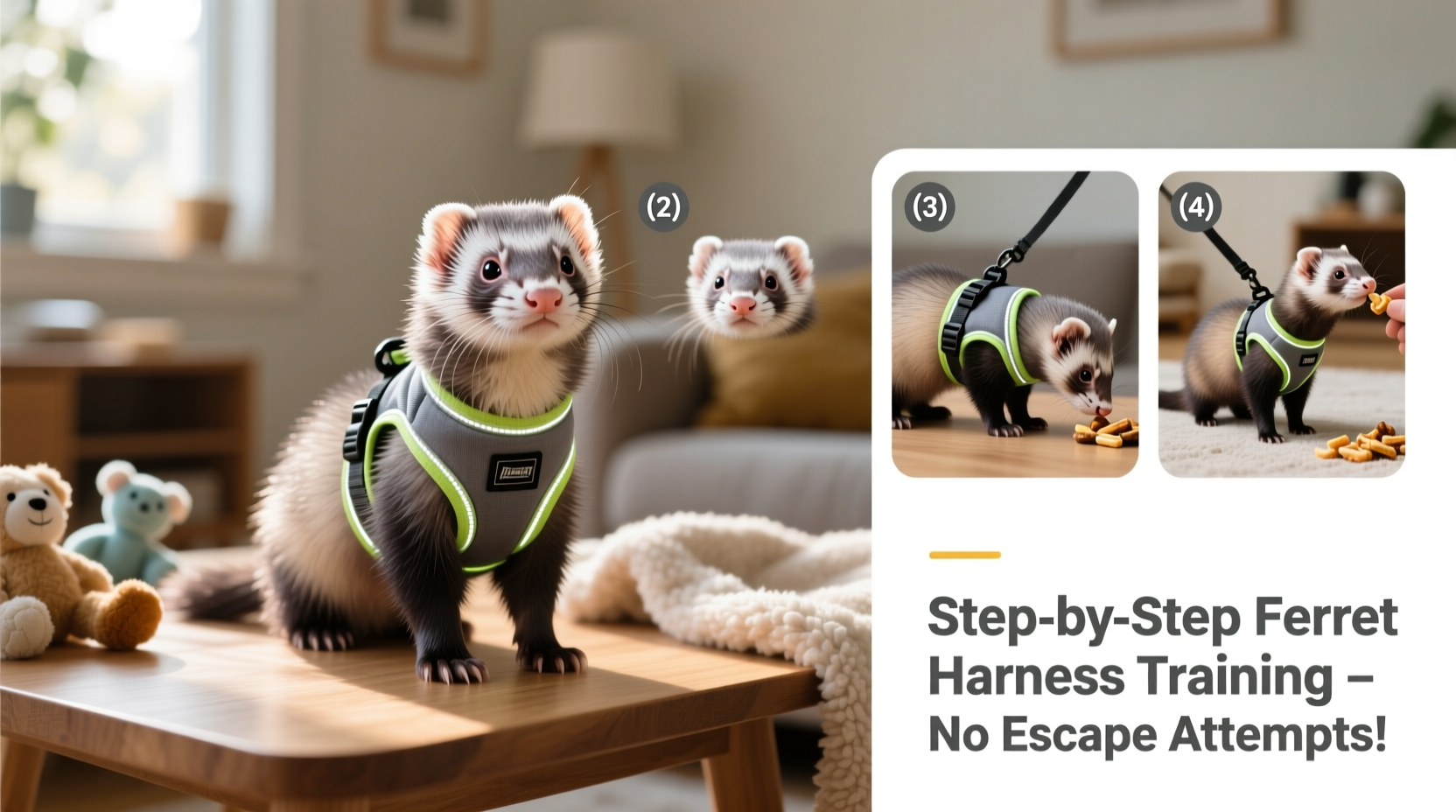
Ferrets are natural escapologists. Their long, flexible bodies evolved to navigate burrows and tunnels in the wild, which means they can slip out of ill-fitting restraints with surprising speed. When introduced abruptly to a harness, a ferret may perceive it as a threat or restriction, triggering panic responses like twisting, biting, or freezing. These behaviors aren't defiance—they're instinctual reactions to discomfort or perceived danger.
To succeed in harness training, you must work *with* your ferret’s nature, not against it. Rushing the process leads to setbacks. Instead, focus on gradual exposure, positive reinforcement, and patience. A well-trained ferret won’t just tolerate a harness—they’ll associate it with enjoyable experiences like playtime, treats, and exploration.
Tip: Always supervise your ferret when wearing a harness—even indoors—during early training stages.Choosing the Right Harness and Leash
Not all harnesses are suitable for ferrets. Many cat harnesses are too loose around the neck or chest, allowing ferrets to back out easily. The ideal ferret harness should be:
- Tailored specifically for small, elongated animals
- Adjustable at the neck, chest, and waist
- Made from soft, breathable material (neoprene or nylon)
- Equipped with a secure clip and D-ring for leash attachment
Popular options include the Ferret Nation harness, CritterTrix, and some custom-fit rabbit harnesses. Avoid H-style harnesses unless properly fitted—many leave gaps at the shoulders where ferrets can wriggle free.
| Harness Type | Pros | Cons |
|---|---|---|
| Vest-style (e.g., CritterTrix) | Distributes pressure evenly; less likely to slip off | May require trimming for very small ferrets |
| Figure-eight (H-style) | Widely available; adjustable | Potential escape points if not snug at armpits |
| Custom neoprene | Highly secure; comfortable for long wear | More expensive; limited availability |
The leash should be lightweight and short (3–4 feet) to maintain control without dragging. Retractable leashes are unsafe—ferrets can dart into hazards before you react.
Step-by-Step Harness Training Timeline
Successful harness training unfolds over days or weeks, depending on your ferret’s temperament. Follow this timeline to build confidence gradually and eliminate escape behaviors.
- Day 1–3: Introduce the Harness Off-Body
Place the harness near your ferret’s play area. Let them sniff, nudge, and investigate it freely. Reward curiosity with treats or praise. Never force contact. - Day 4–6: Touch and Associate
Gently touch your ferret with the harness while offering high-value treats (like ferret-safe meat paste or scrambled egg). Pair physical contact with positive outcomes. If your ferret flinches, pause and try again later. - Day 7–9: Brief Fitting Without Fastening
Slide the harness over your ferret’s head and front legs without clipping it. Hold it loosely in place for 10–15 seconds while giving treats. Remove it calmly. Repeat 2–3 times daily. Watch for signs of stress—piloerection, hissing, or immobility—and scale back if needed. - Day 10–14: Short Clipped Sessions Indoors
Fasten the harness securely and let your ferret move around indoors for 5–10 minutes. Supervise closely. Use a lightweight leash attached to a belt loop or held loosely to simulate outdoor conditions. End sessions with a treat and cuddle. - Day 15–21: Increase Duration and Distraction
Extend wear time to 20–30 minutes. Introduce mild distractions—play music, walk nearby, or open a door—to simulate real-world stimuli. Continue reinforcing calm behavior. - Day 22+: Outdoor Trials in Safe Zones
Choose a quiet, enclosed area like a fenced yard or balcony. Keep the first outing under 10 minutes. Stay low to the ground and allow exploration. If your ferret tries to escape, calmly pick them up, return indoors, and repeat indoor sessions before retrying.
Preventing Escape Attempts: Key Strategies
Escape attempts often stem from poor fit, fear, or lack of conditioning. Address each factor systematically.
- Fit Check: Two fingers should fit snugly under any strap—no more, no less. Test mobility: your ferret should walk, stretch, and lie down comfortably, but not twist backward to remove the harness.
- Desensitization: Repeat short, positive sessions until your ferret ignores the harness rather than fights it. Ignore minor wriggling—reacting reinforces attention-seeking behavior.
- Leash Handling: Avoid jerking or pulling. Let your ferret lead gently, guiding with body position instead of tension. Sudden restraint triggers flight instincts.
- Environment Control: Start training in a distraction-free room. Gradually add complexity only after mastery at each stage.
“Ferrets don’t resist harnesses because they’re stubborn—they resist because they feel trapped. Your job is to prove they’re not.” — Dr. Lena Patel, Exotic Animal Behavior Specialist
Real-Life Example: Training Milo the Escape Artist
Milo, a 1-year-old sable ferret, had escaped three different harnesses within two weeks. His owner, Sarah, assumed he was “just too clever” for containment. After consulting a vet behaviorist, she learned Milo wasn’t being defiant—he was terrified. Every time the harness touched him, he froze, then bolted when released.
Sarah restarted training from scratch. She left the harness in Milo’s cage for five days with treats nearby. She spent minutes daily touching him with the straps while hand-feeding chicken baby food. By day 10, Milo would approach the harness voluntarily. She used a neoprene vest model instead of the previous H-style, ensuring no gaps at the armpits.
After three weeks of consistent 5-minute sessions, Milo wore the harness for 30 minutes indoors with no resistance. On his first outdoor trial, he sniffed flowers and chased leaves—on leash, without attempting escape. Today, he goes on weekly park visits.
Milo’s case shows that even “hopeless” escape artists can learn—when fear is addressed and trust is rebuilt.
Essential Training Checklist
Use this checklist to ensure you cover every critical step:
- ✅ Select a ferret-specific, adjustable harness
- ✅ Allow unpressured exploration of the harness
- ✅ Pair harness contact with high-value treats
- ✅ Practice brief fittings without fastening
- ✅ Conduct multiple short indoor sessions with supervision
- ✅ Confirm proper fit: snug but not restrictive
- ✅ Introduce the leash gradually, avoiding tension
- ✅ Monitor body language for stress signals
- ✅ Transition to outdoor outings only after indoor confidence
- ✅ End every session positively, even if shortened
Frequently Asked Questions
How long does it take to harness-train a ferret?
Most ferrets show progress within 2–3 weeks, but full confidence can take 4–6 weeks. Some may adapt in days; others, especially shy or previously traumatized ferrets, need months. Consistency matters more than speed.
My ferret keeps trying to chew the harness—what should I do?
Chewing is common during early stages. Redirect with a toy or treat. Ensure the harness is not pinching—if discomfort is ruled out, chewing usually fades as the ferret accepts the item as neutral. Bitter sprays are not recommended due to toxicity risks.
Can I skip harness training and use a ferret backpack instead?
Backpacks are useful for transport, but they don’t replace harness training for active exploration. Ferrets need mental stimulation from walking and scenting. A harness allows controlled freedom; a backpack limits sensory input. Use both as complementary tools.
Final Thoughts and Next Steps
Training a ferret to wear a harness without escape attempts isn’t about control—it’s about cooperation. When done with empathy and precision, the process strengthens your bond and opens new dimensions of enrichment. Ferrets thrive on novelty, and safe outdoor access provides unmatched mental and physical stimulation.
Remember, setbacks are normal. If your ferret resists one day, revisit earlier steps without frustration. Progress isn’t linear, but persistence pays off. Once your ferret walks beside you willingly, tail twitching with excitement, you’ll know the effort was worth it.
🚀 Start today: Pick up the harness, offer a treat, and begin building trust—one gentle step at a time. Share your journey in the comments or with fellow ferret parents—your experience could help someone else succeed.








