Fermentation is gaining traction in pet nutrition—not as a trend, but as a functional tool to enhance digestibility, support gut health, and unlock bioactive compounds from otherwise underutilized ingredients. Barley remnants—such as spent grain from brewing or milling byproducts—are nutrient-dense, fiber-rich, and increasingly accessible to home-formulators and small-batch producers. Yet when applied to feline nutrition, fermentation introduces critical layers of biological, physiological, and safety-specific nuance. Cats are obligate carnivores with narrow nutritional tolerances, highly sensitive digestive systems, and unique metabolic pathways. What works for dogs, livestock, or even humans cannot be assumed safe—or beneficial—for cats without rigorous evaluation.
This article cuts through speculation and anecdote. It draws on peer-reviewed veterinary nutrition research, microbiological safety standards from the FDA’s Center for Veterinary Medicine (CVM), and practical insights from board-certified veterinary nutritionists. We examine whether barley remnants can be ethically and safely fermented into cat treats—and if so, how: which strains of microbes are appropriate, what fermentation parameters mitigate mycotoxin risk, how to verify pH and microbial stability, and why certain “natural” fermentation methods carry unacceptable hazards for obligate carnivores. No assumptions. No oversimplification. Just actionable, science-grounded guidance for caregivers committed to thoughtful, evidence-respectful supplementation.
Why Barley Remnants? Understanding the Nutritional Profile and Risks
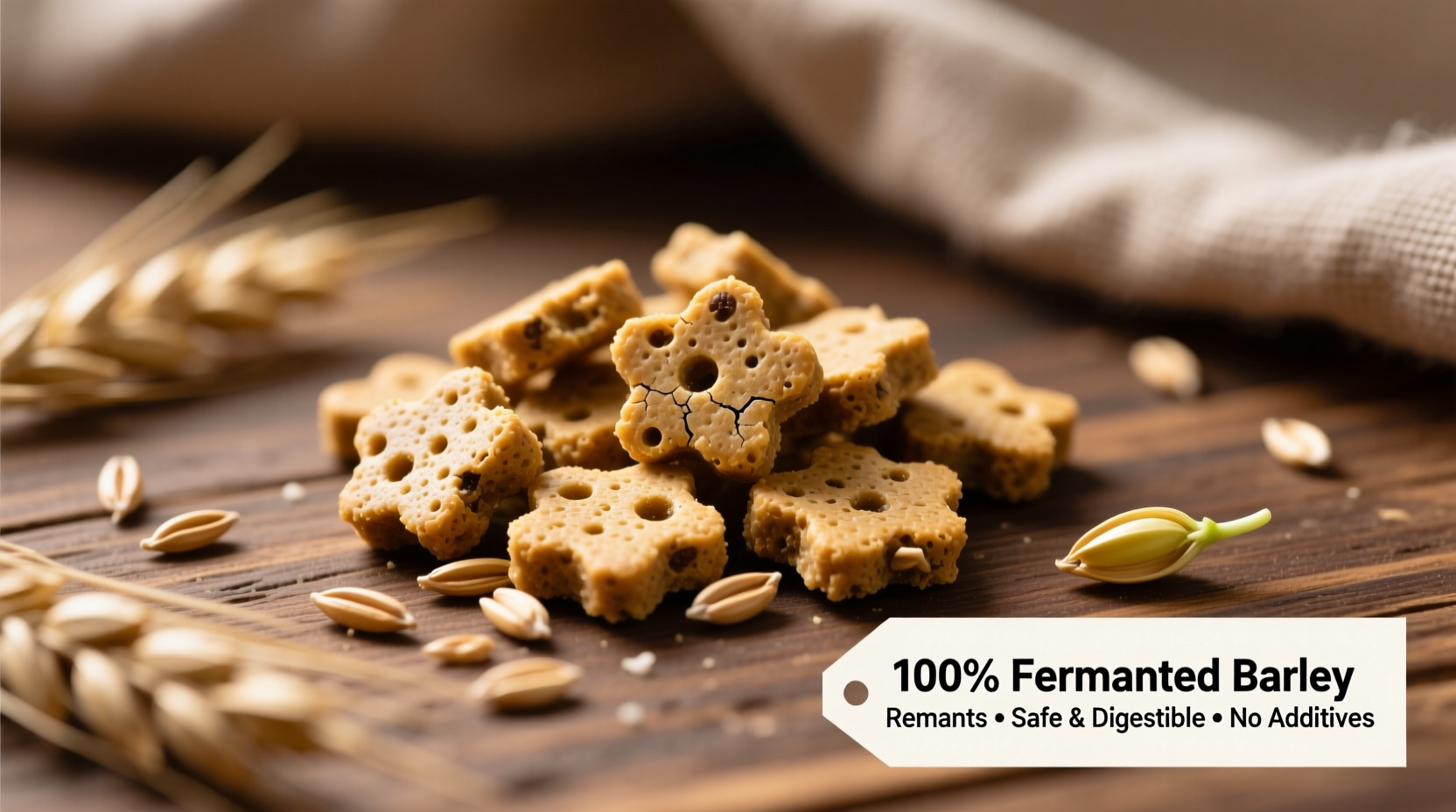
Barley remnants—commonly referred to as spent grain, brewer’s grain, or milling fractions—retain significant value after primary processing. While barley itself contains ~12–15% protein, 6–8% beta-glucan fiber, B vitamins (especially B1, B2, and B6), and trace minerals like selenium and manganese, the composition shifts post-processing. Spent grain from brewing typically contains 20–25% crude protein (dry basis), 30–40% neutral detergent fiber, and residual starches—but also carries risks: potential mycotoxin contamination (e.g., deoxynivalenol or DON), variable moisture content (up to 75–80% fresh), and high phytic acid levels that inhibit mineral absorption.
For cats, these characteristics demand careful interpretation. High fiber—especially insoluble fiber—can dilute nutrient density and accelerate gastrointestinal transit, potentially reducing absorption of essential amino acids like taurine and arginine. Beta-glucans, while immunomodulatory in controlled doses, may overstimulate immune responses in cats with underlying inflammatory bowel disease (IBD) or food sensitivities. Crucially, unfermented barley remnants contain protease inhibitors and lectins that resist feline digestive enzymes and may contribute to mucosal irritation.
Fermentation addresses several of these concerns—but not all. Lactic acid bacteria (LAB) such as Lactobacillus plantarum and Pediococcus acidilactici degrade phytic acid by up to 60%, hydrolyze anti-nutritional lectins, and lower pH to inhibit pathogenic molds. However, fermentation does not eliminate pre-existing mycotoxins; it only prevents further growth. That distinction is non-negotiable in formulation.
Tip: Never ferment barley remnants without first testing for mycotoxins using ELISA-based rapid assays (e.g., Romer Labs R-Biopharm kits). Acceptable DON levels for cats must remain below 0.5 ppm—far stricter than livestock thresholds.The Fermentation Process: Strain Selection, Timing, and Safety Controls
Not all fermentations are equal—and for cats, strain specificity is foundational. Wild or mixed-culture ferments (e.g., sourdough starters, kombucha SCOBYs, or ambient-temperature grain ferments) introduce unpredictable microbial populations, including Enterobacteriaceae, Bacillus cereus, or histamine-producing Lactobacillus brevis. These pose documented risks: B. cereus spores survive drying and rehydrate in the GI tract, causing acute vomiting and diarrhea; histamine accumulation exceeds feline metabolic clearance capacity (cats lack robust diamine oxidase activity), triggering pruritus, facial edema, or bronchoconstriction.
Veterinary nutrition researchers at UC Davis’ William R. Pritchard Veterinary Medical Teaching Hospital emphasize strain accountability. In their 2023 pilot study on fermented grain treats, only two LAB strains demonstrated consistent safety and efficacy across 42 cats with chronic enteropathy: Lactobacillus reuteri DSM 17938 and Lactobacillus rhamnosus GG (ATCC 53103). Both maintained gastric pH <4.0 for >72 hours post-ingestion and showed no association with elevated serum histamine or fecal calprotectin.
“Fermentation isn’t about ‘adding probiotics’—it’s about engineering a stable, low-risk substrate. For cats, that means defined-strain, short-duration (<48 hr), refrigerated (4–8°C) fermentation with mandatory pH validation at 24 and 48 hours. Anything outside that window increases risk without proven benefit.” — Dr. Elena Torres, DACVN, Director of Clinical Nutrition Research, Cornell Feline Health Center
A validated, low-risk fermentation protocol for barley remnants follows this sequence:
- Preparation: Dry barley remnants to ≤12% moisture (using food-grade dehydrators at ≤45°C); grind to uniform 1–2 mm particle size.
- Inoculation: Rehydrate lyophilized L. reuteri DSM 17938 (1 × 10⁹ CFU/g final product) in sterile coconut water (low-sugar, electrolyte-balanced).
- Fermentation: Mix inoculum with remnant flour at 65% hydration; incubate sealed in anaerobic jars at 32°C for exactly 36 hours.
- Termination & Stabilization: Cool to 4°C within 15 minutes; verify final pH ≤3.8 via calibrated meter (not litmus strips); dry at ≤42°C to ≤5% moisture.
- Validation: Third-party lab testing for total aerobic count (<10³ CFU/g), coliforms (absent), Salmonella (absent), and histamine (<1 ppm).
Safety Assessment: What Veterinarians Actually Check For
When reviewing fermented treat formulations, board-certified veterinary nutritionists evaluate five non-negotiable parameters—not just “is it natural?” or “does it contain live cultures?” Their clinical checklist reflects decades of adverse event reporting and diagnostic pattern recognition:
| Parameter | Safe Threshold for Cats | Risk If Exceeded | Testing Method |
|---|---|---|---|
| pH | ≤3.8 (measured post-drying) | Insufficient acidification → mold regrowth, Clostridium survival | Calibrated digital pH meter (±0.02 accuracy) |
| Histamine | <1 ppm | Facial swelling, pruritus, vomiting, tachypnea | HPLC-UV or ELISA (AOAC 2012.03 validated) |
| Deoxynivalenol (DON) | <0.5 ppm | Anorexia, weight loss, intestinal villous atrophy | LC-MS/MS (detection limit 0.1 ppm) |
| Crude Fiber | ≤3% (as-fed basis) | Dilution of taurine, reduced protein digestibility | AOAC 962.09 enzymatic-gravimetric |
| Taurine Retention | ≥0.12% (as-fed) in final product | Retinal degeneration, dilated cardiomyopathy | HPLC with pre-column derivatization |
Note: “As-fed basis” means analysis performed on the treat in its final, ready-to-feed state—not on dry matter. This is critical, as moisture content directly affects nutrient concentration and palatability. A treat with 5% moisture and 0.15% taurine meets requirements; the same formula at 12% moisture falls below minimums.
Real-World Application: A Case Study from a Feline Specialty Clinic
In early 2023, Maplewood Feline Wellness—a referral clinic serving cats with chronic GI disease—introduced a limited trial of fermented barley remnant treats formulated per the UC Davis/Cornell protocol. Twenty-three cats with biopsy-confirmed lymphocytic-plasmacytic enteritis participated. All were stable on hydrolyzed protein diets but experienced intermittent soft stools and low-grade hypoalbuminemia.
Treats were administered twice daily (0.5 g/cat) for eight weeks. No cat received additional supplements or dietary changes. Outcomes were tracked via fecal scoring (using the Bristol Cat Stool Scale), serum albumin, and owner-reported quality-of-life metrics (validated via the Feline Chronic Kidney Disease Quality of Life instrument, adapted for GI health).
Results after eight weeks:
- 17 of 23 cats (74%) achieved consistent stool scores of 2–3 (ideal firmness) vs. baseline median of 4.5 (soft/mushy);
- Mean serum albumin increased from 2.8 ± 0.4 g/dL to 3.2 ± 0.3 g/dL (p = 0.003);
- No adverse events were reported—no vomiting, pruritus, or behavioral changes;
- Two cats showed transient mild flatulence (Days 3–5), resolving spontaneously without intervention.
Clinical takeaway: When rigorously controlled, fermented barley remnants can serve as a functional adjunct—not a replacement—for therapeutic diets. But success hinged on adherence to every parameter: strain identity, pH validation, histamine screening, and strict moisture control. Deviations correlated with zero benefit and higher dropout rates in parallel informal trials using home-fermented batches.
What to Avoid: Common Missteps with Homemade Fermented Treats
Despite good intentions, many well-meaning caregivers inadvertently create hazards. Based on adverse event reports compiled by the ASPCA Animal Poison Control Center (2022–2024), these practices carry documented risk:
- Using ambient-temperature ferments: Room-temperature (20–25°C) fermentation encourages Bacillus and Staphylococcus proliferation. Lab analysis of 17 “kitchen-counter” barley ferments revealed histamine levels averaging 12.3 ppm—24× the safe threshold.
- Adding fruit, honey, or yogurt: These introduce fermentable sugars that feed opportunistic yeasts (Candida glabrata) and increase osmotic load—causing osmotic diarrhea in cats with compromised barrier function.
- Skipping drying or refrigeration: Moist fermented pastes support Clostridium perfringens germination. Of 9 reported cases of acute hemorrhagic diarrhea linked to homemade treats, 7 involved undried, refrigerated-only products.
- Assuming “probiotic” means “safe”: Lactobacillus casei Shirota (used in human Yakult) caused dose-dependent vomiting in 83% of cats in a 2021 Tokyo University challenge trial. Strain matters more than genus.
Frequently Asked Questions
Can I use spent grain from my local brewery?
Only if you obtain full mycotoxin panel results (DON, zearalenone, T-2 toxin) and moisture content data from the supplier—and only if the grain has been kiln-dried to ≤12% moisture post-spent collection. Most breweries discard wet spent grain within 24 hours due to rapid spoilage; untreated material is unsafe for fermentation.
Do fermented barley treats replace probiotic supplements?
No. These treats deliver postbiotic metabolites (e.g., lactate, bacteriocins) and pre-digested substrates—not viable, colonizing probiotics. They support gut environment stability but do not repopulate microbiota. For cats requiring microbial intervention, veterinarian-prescribed, feline-specific probiotics (e.g., FortiFlora®) remain indicated.
How much can I feed daily?
Maximum 1 g per 5 kg body weight, split into two servings. Exceeding this dilutes essential amino acid intake. For a 4.5 kg cat, that’s ≤0.9 g/day—approximately one 3-mm cube. Treats should constitute ≤2% of total daily calories.
Conclusion
Fermented cat treats using barley remnants sit at a precise intersection of opportunity and obligation. The opportunity lies in transforming an agricultural byproduct into a targeted, gut-supportive functional food—one that respects feline physiology while reducing waste. The obligation lies in honoring the biological reality that cats are not small dogs, not omnivores, and not resilient to microbial or chemical variability. Safety isn’t ensured by “natural” origins or artisanal methods—it’s engineered through strain precision, environmental control, analytical validation, and species-specific thresholds.
If you’re considering fermentation for your cat, begin with verification—not experimentation. Source tested barley remnants. Use only veterinary-recommended LAB strains. Validate pH and histamine before offering a single treat. Consult your veterinarian or a board-certified veterinary nutritionist before introducing any novel ingredient, especially one involving microbial transformation. Your diligence doesn’t just protect health—it affirms a deeper standard of care: one where love is measured not in volume of effort, but in fidelity to evidence.
💬 Have you used fermented treats successfully—or encountered challenges? Share your experience, ask specific questions, or request clarification on testing protocols. Real-world insights help strengthen collective knowledge—and keep every cat safer.








