
Feral cats live on the margins of human society, often unseen during daylight but unmistakable at night through their vocalizations and movements. Unlike stray or domestic cats, feral cats have little to no contact with people and survive independently. Understanding their behavior—particularly how they claim territory and communicate after dark—is essential for anyone living near colonies, managing urban wildlife, or involved in Trap-Neuter-Return (TNR) programs. This article explores the instinctual patterns behind feral cat territoriality and nocturnal activity, offering actionable knowledge grounded in animal behavior science.
The Nature of Feral Cats
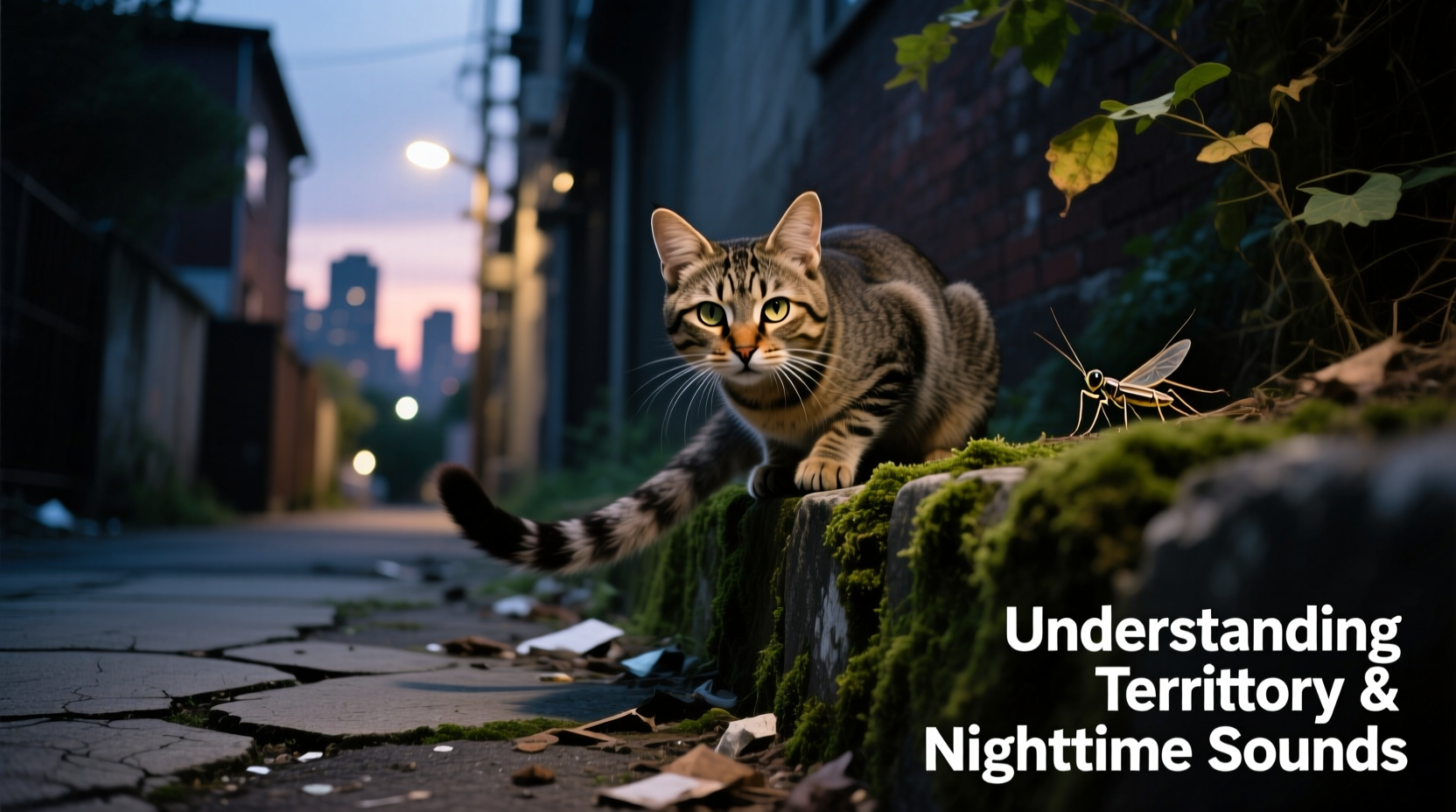
Feral cats are descendants of domesticated cats that have returned to a wild state. They differ from strays, which may have once lived indoors but were lost or abandoned. Feral cats are typically fearful of humans, avoid interaction, and rely on natural instincts to survive. These instincts govern everything from hunting habits to social structure and communication.
Most feral cats form loose colonies around reliable food sources—such as dumpsters, backyards, or feeding stations set up by caretakers. While these groups may appear social, hierarchy and space distribution are carefully maintained through scent marking, body language, and vocal signals. Territory is not just about physical space; it's a complex system of resource control, safety, and reproductive opportunity.
“Feral cats operate under deeply ingrained survival mechanisms. Their behaviors aren’t random—they’re calculated responses to environmental pressures.” — Dr. Lydia Chen, Wildlife Ethologist, University of Oregon
How Feral Cats Establish and Defend Territory
Territory is central to a feral cat’s existence. It determines access to food, shelter, and mating partners. A single cat may patrol an area ranging from half an acre in urban environments to several acres in rural zones, depending on resource availability.
Cats use multiple methods to mark and defend their domain:
- Scent marking: Rubbing facial glands on objects, scratching trees or fences, and spraying urine leave chemical signals detectable only to other cats.
- Visual cues: Scratches on bark or walls serve as warnings to intruders.
- Vocalizations: Hissing, growling, and yowling escalate during confrontations.
- Patrolling: Regular routes reinforce ownership and allow monitoring for rivals or threats.
Newcomers entering established territories face resistance. Dominant cats—usually older males or experienced females—will challenge intruders through posturing or direct conflict. However, outright fights are relatively rare; most disputes are resolved through displays of dominance, such as arching the back, puffing fur, or slow approach tactics designed to intimidate without injury.
Tip: If you notice frequent spraying near your property, it may indicate territorial disputes between feral cats. Reducing attractants like open garbage can minimize conflict.Nighttime Sounds: Decoding Feral Cat Vocalizations
The night is when feral cat activity peaks. With reduced human movement and cooler temperatures, cats take advantage of the quiet hours to hunt, mate, and patrol. Their vocal repertoire becomes especially noticeable after dark.
Common nighttime sounds include:
| Sound | Meaning | Context |
|---|---|---|
| Yowling | Mating call or territorial warning | Unneutered males seeking mates; females in heat; rival cats challenging boundaries |
| Hissing/Growling | Aggression or fear | Confrontation over food or space |
| Chattering | Prey excitement | Spotting birds or rodents through windows or fences |
| Meowing (rare) | Distress or communication with kittens | Injured cat or mother separated from litter |
One of the most misunderstood sounds is the prolonged, guttural yowl. Often mistaken for fighting or pain, this call frequently signals reproductive activity. Female cats in heat produce loud, repetitive cries to attract males, while males respond with competitive yowls to assert dominance. Neutering significantly reduces these noises, making TNR programs one of the most effective long-term solutions for noise reduction in residential areas.
The Role of Mating Season in Nocturnal Behavior
Mating season amplifies both territorial aggression and vocalization. In temperate climates, breeding peaks in spring and fall, though indoor warmth or mild winters can extend cycles year-round. During this time, male cats expand their ranges dramatically—sometimes doubling their usual territory—to locate receptive females.
This increased roaming leads to more encounters, fights, and vocal disputes. Unspayed females may call for days, drawing multiple males into neighborhoods, leading to concentrated noise and stress within colonies. The cycle repeats until hormonal drives subside or population control measures are implemented.
Case Study: Managing Nighttime Noise in a Suburban Neighborhood
In 2021, residents of Maple Ridge, a suburban community in Washington State, reported escalating nighttime disturbances attributed to feral cats. Complaints included screaming, fighting sounds, and persistent yowling lasting several hours each night.
Local animal services partnered with a nonprofit TNR group to assess the situation. Camera traps revealed a colony of 14 cats centered around a wooded lot adjacent to a shopping plaza. Two intact males dominated the area, competing for access to three unspayed females. Frequent skirmishes and mating calls disrupted nearby homes.
A six-week intervention followed:
- Trapping all 14 cats using humane traps.
- Spaying/neutering and vaccinating each animal.
- Returning them to their original location with ear-tipping for identification.
- Establishing a managed feeding schedule with a designated caretaker.
Within three months, nighttime vocalizations dropped by over 80%. Residents noted fewer visible conflicts and no new litters. The success was attributed not only to sterilization but also to stabilized social dynamics and consistent care.
“When we neutered the dominant males, the entire tone of the colony changed. The constant challenges stopped, and so did the screaming.” — Maria Delgado, Field Coordinator, Pacific Northwest Feline Rescue
Practical Strategies for Coexistence and Management
Living near feral cats doesn’t have to mean enduring constant noise or disruption. Proactive, humane strategies can reduce conflict and support ecological balance.
Step-by-Step Guide to Reducing Feral Cat Impact
- Identify the colony size and location: Observe over several nights to map where cats gather, feed, and sleep.
- Contact local TNR organizations: Many groups offer free or low-cost trapping, sterilization, and return services.
- Secure food sources: Encourage neighbors to stop unmanaged feeding and instead support regulated feeding stations away from bedrooms or shared walls.
- Eliminate shelter opportunities: Seal off crawl spaces, sheds, and decks where cats might nest.
- Use deterrents strategically: Motion-activated sprinklers or ultrasonic devices can discourage loitering without harming animals.
- Educate the community: Host informational sessions explaining feral cat behavior and the benefits of TNR.
Do’s and Don’ts When Living Near Feral Cats
| Action | Do | Don't |
|---|---|---|
| Feeding | Support managed feeding by caretakers on a fixed schedule | Leave food out overnight or encourage unregulated feeding |
| Noise Concerns | Report persistent issues to animal control or TNR groups | Shout at or throw objects to scare cats |
| Kittens Found | Contact rescues; assess if truly orphaned before intervening | Remove kittens immediately—mother cats often return within 24–48 hours |
| Health Risks | Ensure pets are vaccinated; keep trash secured | Assume all feral cats carry disease—most are healthy and pose minimal risk |
Frequently Asked Questions
Are feral cats dangerous to humans?
Generally, no. Feral cats avoid people and only act aggressively if cornered or injured. Rabies transmission from feral cats to humans is extremely rare, especially in managed colonies. The best approach is non-interference unless medical attention is needed.
Why do feral cats scream at night?
The most common reason is mating behavior. Unspayed females in heat emit loud cries to attract males, who respond with competitive yowls. Territorial disputes and predator alerts can also cause intense vocalizations. Spaying and neutering greatly reduce these sounds.
Can I adopt a feral cat?
Adult feral cats are rarely socializable and do not adapt well to indoor life. However, feral kittens taken at 4–8 weeks old can often be tamed with patient handling. Always consult a rescue organization before attempting to domesticate a wild cat.
Conclusion: Promoting Harmony Through Understanding
Feral cats are not pests; they are survivors navigating a world shaped by human expansion. Their territorial instincts and nighttime communications are not acts of nuisance but expressions of biological necessity. By understanding these behaviors, communities can move beyond frustration toward compassionate, effective management.
Supporting TNR initiatives, minimizing attractants, and fostering informed dialogue are steps anyone can take. Silence at night isn’t achieved through removal or fear—it comes from stability, sterilization, and respect for the animals sharing our environment.
💬 Have experience with feral cats in your neighborhood? Share your story or questions below. Your insights could help others build safer, quieter, and more humane communities.








