Pearl embellished pet collars blend elegance with functionality, offering a touch of sophistication to your pet’s everyday look. Whether worn for special occasions or as a statement of style, these delicate accessories require thoughtful care. Pearls are organic gemstones, formed within mollusks, and are far more sensitive than synthetic or metallic embellishments. When set into pet collars—items exposed to fur, oils, saliva, and outdoor elements—the need for gentle yet effective maintenance becomes even more critical. Without proper attention, pearls can lose their luster, become discolored, or even detach from the collar backing.
Maintaining these collars isn’t just about preserving appearance; it’s also about respecting the craftsmanship and materials involved. A well-cared-for collar lasts longer, remains safe for your pet, and continues to reflect the bond you share. This guide delivers practical, vetted strategies to clean, store, and protect pearl-adorned pet collars using methods that honor both the gemstone’s fragility and the realities of pet ownership.
Understanding Pearl Sensitivity in Pet Accessories
Pearls are composed primarily of calcium carbonate in the form of nacre, layered over time to create their iridescent glow. Unlike harder gems such as diamonds or sapphires, pearls score between 2.5 and 4.5 on the Mohs hardness scale, making them prone to scratches, abrasions, and chemical damage. Exposure to common substances like perfumes, lotions, household cleaners, and even pet shampoos can erode the surface of the pearl, leading to dullness or pitting.
In the context of pet collars, additional stressors come into play. Pets may rub against furniture, roll in grass, or get caught in rain—all of which expose the collar to moisture, dirt, and friction. The metal or fabric base of the collar can also affect the pearls if it corrodes or stretches over time. Understanding these vulnerabilities is the first step toward effective maintenance.
“Pearls are living gems—they respond to their environment. Even minor exposure to acids or dry conditions can alter their appearance within weeks.” — Dr. Lena Peterson, Gemologist & Jewelry Conservation Specialist
Step-by-Step Guide: Safe Cleaning Process for Pearl Collars
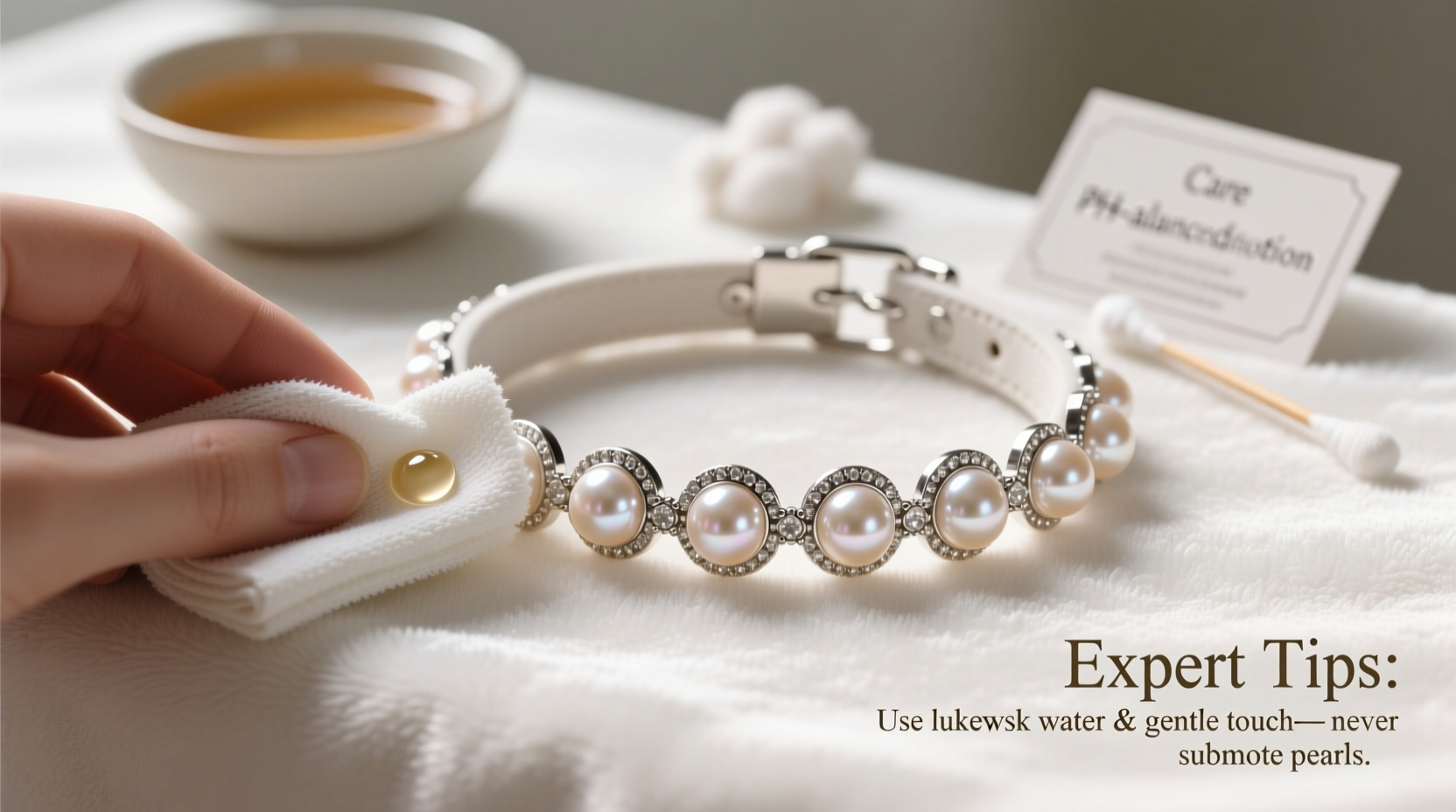
Cleaning a pearl-embellished pet collar requires patience and precision. Never submerge the entire collar in water, especially if it has a fabric or leather base, as this can weaken adhesives and promote mold growth. Instead, follow this careful, step-by-step routine:
- Remove Debris Gently: Use a soft-bristled toothbrush (preferably one designated for jewelry) to lightly brush away dust or dried dirt around the pearls and stitching. Work in one direction to avoid snagging threads.
- Damp Cloth Wipe: Dampen a lint-free microfiber cloth with distilled water only. Squeeze out excess moisture until the cloth is barely damp. Wipe each pearl individually, using light pressure and circular motions.
- Air Dry Flat: Lay the collar on a dry towel in a shaded area, away from direct sunlight or heat sources. Allow it to air dry completely—this may take 2–3 hours depending on humidity.
- Inspect Settings: Once dry, examine each pearl setting under natural light. Look for loose prongs, frayed threads, or signs of adhesive wear. If any pearls feel wobbly, discontinue use until repaired.
- Recondition Fabric (if applicable): For fabric-based collars, lightly apply a pH-neutral textile conditioner after drying to prevent brittleness. Avoid contact with pearls.
Do’s and Don’ts: Best Practices for Daily Care
To maintain the integrity of both the pearls and the collar structure, adhere to a clear set of guidelines. The following table summarizes essential dos and don’ts based on material science and professional jewelry care standards.
| Do | Don’t |
|---|---|
| Wipe pearls after each use with a dry, soft cloth | Spray perfumes or grooming products near the collar |
| Store the collar flat in a breathable fabric pouch | Leave the collar in direct sunlight or humid bathrooms |
| Check monthly for loose settings or thread wear | Use ultrasonic cleaners or steam devices |
| Limit wear to supervised indoor or short outdoor outings | Allow pets to swim or bathe while wearing the collar |
Real Example: How One Owner Prevented Irreversible Damage
Sarah, a dachshund owner from Portland, noticed her dog’s pearl collar had begun to yellow after several months of regular use. Initially, she assumed it was dirt and tried wiping it with a baby wipe containing citric acid. Within days, the pearls developed a chalky film. Alarmed, she consulted a local jeweler who specializes in vintage pieces. The jeweler explained that acidic wipes had etched the nacre, causing permanent dullness.
Following professional advice, Sarah switched to a regimen of post-wear microfiber wiping and quarterly deep inspections. She now stores the collar in a lined box when not in use and only puts it on her dog for photo sessions or events. Over the next six months, the remaining luster stabilized, and no further degradation occurred. Her experience underscores how small missteps can have lasting consequences—and how informed care makes all the difference.
Essential Maintenance Checklist
To simplify ongoing care, here’s a concise checklist every owner of a pearl-embellished pet collar should follow:
- ☐ Wipe pearls with a dry microfiber cloth after each use
- ☐ Inspect stitching and settings every 4 weeks
- ☐ Clean gently with distilled water and soft cloth every 4–6 weeks
- ☐ Store in a cool, dry place inside a breathable fabric pouch
- ☐ Avoid pairing with chemical-based flea treatments or sprays
- ☐ Rotate with other collars to reduce wear frequency
- ☐ Schedule professional inspection annually (or biannually for heavy-use cases)
Frequently Asked Questions
Can I use vinegar or lemon juice to clean dull pearls?
No. Vinegar and lemon juice are acidic and will dissolve the calcium carbonate in pearls, causing irreversible surface damage. Stick to distilled water and mechanical cleaning only.
How often should I have the collar professionally inspected?
At minimum, once per year. If the collar is used frequently or shows signs of loosening embellishments, consider biannual checkups with a jeweler experienced in delicate settings.
Are synthetic pearls easier to maintain?
Yes. Imitation pearls (usually made from glass or resin) are less porous and more resistant to moisture and chemicals. However, they lack the depth and warmth of genuine pearls. If low maintenance is a priority, high-quality simulated pearls offer a durable alternative without sacrificing aesthetics.
Final Thoughts: Honor the Details, Protect the Bond
A pearl-embellished pet collar is more than an accessory—it’s a symbol of affection, attention to detail, and shared moments. These collars invite us to extend the same level of care we might give fine jewelry to the items our pets wear closest to their skin. By understanding the unique needs of pearls and integrating simple, consistent habits into your routine, you ensure that these delicate pieces remain beautiful, secure, and meaningful for years to come.
💬 Have a favorite tip or story about caring for your pet’s special collar? Share your experience in the comments and help fellow pet lovers preserve their cherished accessories with confidence.








