Zircon snake rings are more than just jewelry—they’re wearable art. With their intricate coiled designs and shimmering zircon stones, they draw attention and admiration. But like all fine accessories, they demand thoughtful care. Over time, exposure to oils, lotions, dust, and moisture can dull the brilliance of zirconia stones and tarnish the metal base. Cleaning them improperly can lead to scratches, loosened prongs, or even stone loss. The good news? With the right approach, you can restore your ring’s luster without risking damage. This guide delivers expert-backed techniques to clean your zircon snake ring safely while preserving its elegance for years.
Why Zircon Snake Rings Need Special Care
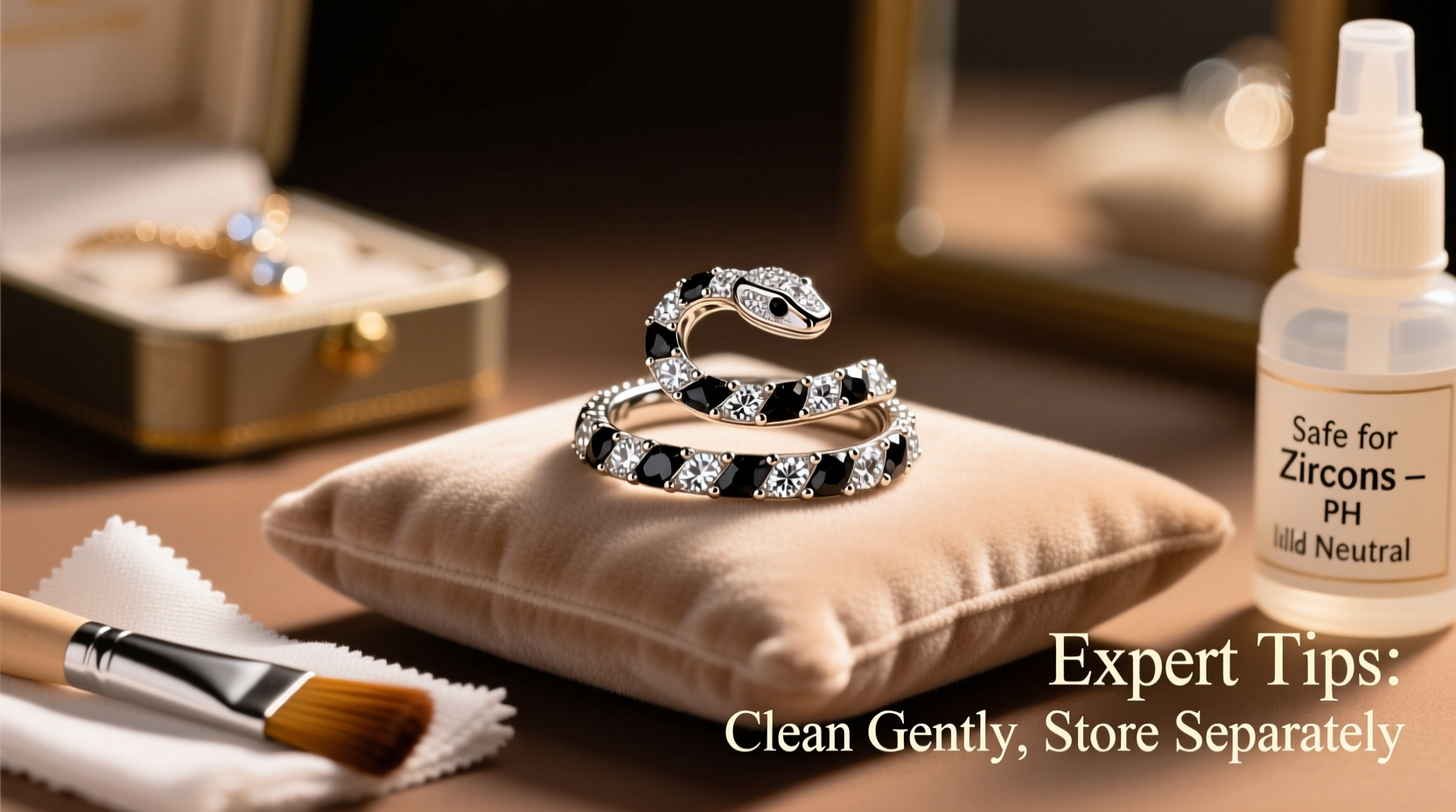
Zircon (often referred to as cubic zirconia in jewelry) is a synthetic gemstone designed to mimic diamonds. While durable, it ranks around 8–8.5 on the Mohs hardness scale—hard enough to resist everyday wear but still vulnerable to abrasion from harder materials like sapphire or diamond dust. The snake design, often detailed with textured scales and delicate curves, creates crevices where grime accumulates. Additionally, many zircon snake rings are made from silver, brass, or stainless steel with rhodium plating, which can corrode if exposed to harsh chemicals.
Cleaning isn’t just about appearance—it’s structural preservation. Buildup in the grooves can weaken metal over time, and trapped moisture may accelerate oxidation. Regular maintenance prevents long-term deterioration and keeps the ring safe to wear daily.
“Zircon jewelry should be cleaned gently and frequently. Aggressive scrubbing or ultrasonic cleaners can loosen settings, especially in ornate designs.” — Lena Patel, Certified Jewelry Care Technician, GIA Alumni
Step-by-Step Guide: Safe Home Cleaning Process
You don’t need professional tools to clean your zircon snake ring at home. What matters is technique, timing, and using the right materials. Follow this method every 2–3 weeks for consistent results.
- Remove the ring and inspect it: Check for loose stones, bent claws, or visible cracks. If any part feels unstable, delay cleaning and consult a jeweler.
- Prepare a gentle cleaning solution: Mix one cup of lukewarm distilled water with two drops of mild dish soap (phosphate-free). Avoid detergents with moisturizers or degreasers.
- Soak for 10–15 minutes: Place the ring in the solution. Letting it sit loosens oils and debris from tight spaces without scrubbing.
- Use a soft-bristle toothbrush: A clean, unused brush with ultra-fine bristles works best. Gently brush along the snake’s body, paying attention to under the head and between coils.
- Rinse thoroughly: Hold the ring under lukewarm running water for 10 seconds. Ensure no soap residue remains, especially near the band.
- Dry with precision: Pat dry with a lint-free microfiber cloth. Never air-dry on a towel—fibers can snag, and lingering moisture promotes tarnish.
- Polish lightly: Use a separate jewelry polishing cloth (not paper towels) to restore shine on the metal surface.
Do’s and Don’ts: What to Avoid When Cleaning
Mistakes during cleaning can cause irreversible harm. Even seemingly harmless products may contain ingredients that erode zirconia coatings or strip protective plating. Refer to the table below for quick guidance.
| Do | Don’t |
|---|---|
| Use distilled water to prevent mineral deposits | Use tap water with high chlorine or fluoride content |
| Clean every 2–3 weeks with mild soap | Wait months between cleanings—buildup becomes harder to remove |
| Dry immediately with a microfiber cloth | Let the ring air-dry on porous surfaces |
| Store in a soft-lined jewelry box | Store loosely in a drawer with other metal items |
| Inspect prongs monthly | Use bleach, ammonia, or vinegar-based cleaners |
Mini Case Study: Reviving a Dull Heirloom Ring
Sophie inherited a vintage zircon snake ring from her grandmother. Though beautiful, it had turned cloudy after years of occasional wear and improper storage in a velvet pouch with other jewelry. After noticing a faint green tint near the band—likely early copper oxidation—she avoided DIY remedies like baking soda paste and instead followed the gentle soaking method outlined above.
After three weekly cleanings, the zircon regained its fire, and the silver-tone band brightened significantly. She switched to storing it in an anti-tarnish zip bag and now cleans it routinely. “It looks better than when I first received it,” she said. “I wish I hadn’t waited so long—but at least I didn’t make it worse.”
Jewelry Care Checklist: Monthly Maintenance Routine
Preserving your zircon snake ring doesn’t require hours of effort. Integrate these steps into your monthly self-care routine:
- ✅ Inspect each zircon stone for looseness or cloudiness
- ✅ Soak in mild soapy water for 10–15 minutes
- ✅ Gently brush with a soft toothbrush
- ✅ Rinse under lukewarm water and pat dry completely
- ✅ Polish with a dedicated jewelry cloth
- ✅ Store separately in a lined box or soft pouch
- ✅ Remove before swimming, showering, or exercising
Frequently Asked Questions
Can I use an ultrasonic cleaner on my zircon snake ring?
No, ultrasonic cleaners are not recommended for zircon jewelry, especially pieces with intricate settings. The high-frequency vibrations can dislodge stones or stress soldered joints. While some jewelers use them cautiously, home units lack precision control and pose unnecessary risks.
Why is my zircon ring turning yellow or gray?
Zirconia itself does not discolor, but the underlying metal might. Yellowing often indicates tarnished silver or degraded plating. Gray haze usually comes from accumulated lotion or soap film. A proper cleaning often restores clarity. Persistent discoloration may require professional re-plating.
How often should I have my ring professionally cleaned?
Even with regular home care, schedule a professional inspection and cleaning once a year. Jewelers can deep-clean hard-to-reach areas, tighten loose prongs, and check for structural fatigue—especially important for heirloom or frequently worn pieces.
Conclusion: Make Care a Seamless Habit
Your zircon snake ring is more than an accessory—it’s a statement of style and individuality. Its intricate design deserves care that matches its craftsmanship. By integrating gentle, consistent cleaning into your routine, you protect not just its beauty but its integrity. Avoid shortcuts, respect the material limits, and treat each cleaning session as a moment of appreciation for your jewelry.
Start today: take out your ring, prepare a bowl with distilled water and a drop of dish soap, and give it the attention it deserves. Small actions compound into lasting preservation. Your future self will thank you when that serpent still glimmers decades from now.
💬 Have a tip or experience with zircon jewelry care? Share your story in the comments—your insight could help others keep their treasures radiant!








