
Maintaining stable water chemistry is one of the most critical aspects of successful reef keeping. Among the key parameters, alkalinity stands out as a cornerstone of coral health and calcification. Alkalinity—measured in milliequivalents per liter (meq/L) or degrees of carbonate hardness (dKH)—represents the water’s ability to buffer pH fluctuations and supply carbonate ions that corals use to build their skeletons. When alkalinity falls below the ideal range of 7–9 dKH (2.5–3.2 meq/L), stony corals struggle to grow, and pH can become unstable. However, raising alkalinity too quickly or improperly can shock sensitive organisms and destabilize other parameters. This guide outlines safe, effective, and sustainable methods to raise alkalinity without compromising the delicate balance of your reef ecosystem.
Understanding Alkalinity and Its Role in Reef Tanks
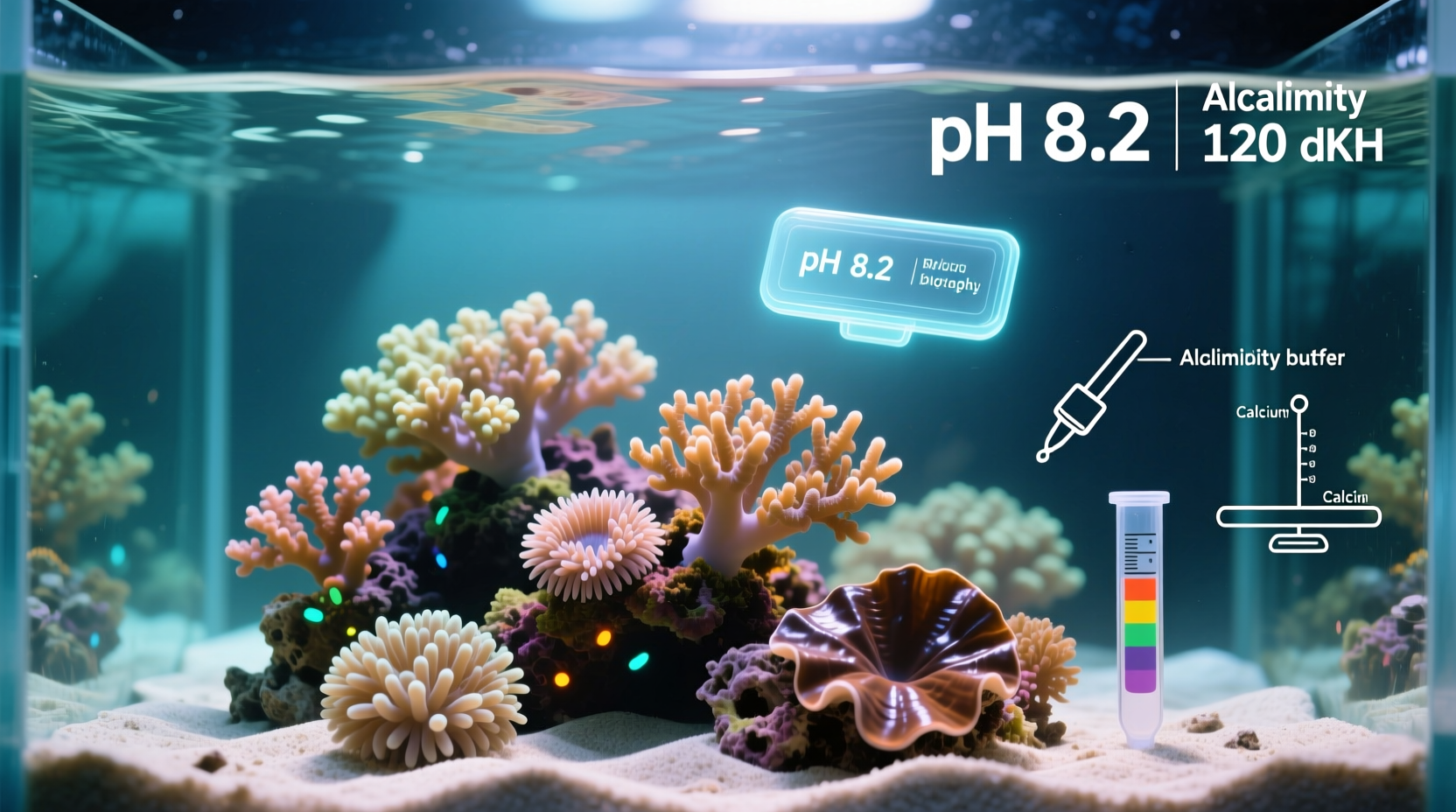
Alkalinity is not a direct measure of a specific ion but rather the total concentration of buffering compounds in the water—primarily bicarbonate (HCO₃⁻) and carbonate (CO₃²⁻). These ions neutralize acids produced by biological processes, helping maintain a stable pH between 8.0 and 8.4. For stony corals like Acropora, Montipora, and SPS species, these same ions are actively extracted from the water column during calcification. As a result, high-demand tanks often experience rapid alkalinity depletion, requiring regular replenishment.
Low alkalinity leads to brittle coral growth, poor coloration, and increased vulnerability to stress. Conversely, excessively high levels (>10 dKH) can cause calcium and magnesium to precipitate out of solution, leading to cloudy water and nutrient lockout. The goal is not just to raise alkalinity, but to do so gradually and sustainably while preserving overall water stability.
“Reef aquarium success hinges on consistency. Rapid changes in alkalinity—even if within ‘ideal’ ranges—can be more harmful than slightly low values held steady.” — Dr. Craig Downs, Marine Toxicologist & Coral Health Researcher
Step-by-Step Guide to Safely Increase Alkalinity
Raising alkalinity should never be rushed. A sudden spike can stress corals, invertebrates, and even fish. Follow this methodical approach to ensure safety and effectiveness:
- Test current levels accurately: Use a high-quality digital titrator or reliable liquid test kit (e.g., Salifert or Hanna Checker) to determine your baseline. Test at the same time daily, preferably before lights on, to reduce variability from photosynthesis.
- Determine target increase: Never raise alkalinity by more than 1 dKH per day. If your level is 6 dKH and your target is 8 dKH, plan for a two-day adjustment period.
- Choose the right supplement: Sodium bicarbonate (baking soda) is effective for immediate correction, while balanced two-part solutions (alkalinity + calcium) are better for ongoing maintenance.
- Pre-dissolve and dose slowly: Mix the additive in RO/DI water and drip it into a high-flow area over several hours. Avoid dumping directly into the sump or display.
- Monitor closely: Re-test after 6–8 hours and observe livestock for signs of stress (retracted polyps, excessive mucus).
- Stabilize before next adjustment: Wait 24 hours after each increment before making further changes.
Effective Methods and Products for Raising Alkalinity
Not all alkalinity boosters are created equal. The method you choose depends on your tank size, bioload, and maintenance routine. Below is a comparison of common approaches:
| Method | How It Works | Best For | Potential Risks |
|---|---|---|---|
| Sodium Bicarbonate (Baking Soda) | Direct addition of HCO₃⁻ ions; fast-acting | Small corrections, emergency boosts | pH spikes if overdosed; sodium buildup over time |
| Two-Part Liquid Systems | Balanced dosing of Ca²⁺ and alkalinity components | SPS-dominated tanks with high demand | Requires precise dosing; costlier upfront |
| Kalkwasser (Calcium Hydroxide) | Adds Ca²⁺ and OH⁻, which increases pH and alkalinity | Tanks needing both pH stabilization and alkalinity support | Can raise pH too high; clogs equipment; not for large corrections |
| Balling Method (Dry Powders) | Manual dosing of purified NaHCO₃ and CaCl₂ separately | Aquarists seeking full control and low cost | Labor-intensive; risk of imbalances if not monitored |
| Carbonate Reactor | Dissolves calcium carbonate media with CO₂ to release Ca²⁺ and HCO₃⁻ | Large, mature reefs with consistent demand | Expensive setup; requires CO₂ regulation and monitoring |
For most hobbyists, a two-part dosing system offers the best balance of safety, precision, and ease. Automated dosing pumps further enhance consistency, especially when paired with smart monitors that track alkalinity trends over time.
Real-World Example: Recovering a Stressed SPS Tank
Mark, an intermediate reef keeper in San Diego, noticed his Acropora colonies had stopped growing and were losing vibrant color. Testing revealed alkalinity at 5.8 dKH, calcium at 380 ppm, and pH fluctuating between 7.8 and 8.1. Over the course of three days, he used a pre-mixed alkalinity supplement, adding 0.5 dKH per day while simultaneously increasing water flow near the dosing outlet. He avoided any calcium adjustments during this period to prevent precipitation. By day four, alkalinity stabilized at 8.0 dKH, pH remained steady at 8.2, and within two weeks, new coral tips began extending. His key insight? “Slow and steady won the race. I almost doubled the dose on day one, but I paused—and it made all the difference.”
Essential Checklist for Safe Alkalinity Management
- ✅ Test alkalinity at least twice weekly using a reliable method
- ✅ Never increase alkalinity by more than 1 dKH per 24 hours
- ✅ Pre-dissolve dry powders completely before dosing
- ✅ Dose during natural pH lows (early morning)
- ✅ Maintain calcium (420–450 ppm) and magnesium (1250–1350 ppm) levels to support alkalinity stability
- ✅ Use a dosing pump or auto-topoff system to minimize parameter swings from evaporation
- ✅ Keep a log of all doses and test results to identify consumption trends
Frequently Asked Questions
Why does my alkalinity keep dropping even after dosing?
High-demand systems, particularly those with dense populations of stony corals, consume alkalinity rapidly through calcification. Inadequate calcium or magnesium levels can also impair alkalinity uptake. Additionally, old or exhausted filter media (like phosphate removers) may absorb carbonate ions. Evaluate your stocking density and consider upgrading to automated supplementation.
Can I mix baking soda with kalkwasser?
No. Mixing sodium bicarbonate with calcium hydroxide creates insoluble calcium carbonate, which precipitates out of solution and reduces effectiveness. They should never be dosed simultaneously or combined in the same container.
Is it safe to use human-grade baking soda?
Only if it is pure sodium bicarbonate with no additives. Many commercial baking sodas contain anti-caking agents or iodine, which can harm reef invertebrates. Always use food-grade or aquarium-specific sodium bicarbonate.
Final Recommendations for Long-Term Success
Safely raising alkalinity is not just about correcting a number—it's about fostering a resilient, thriving reef environment. The most successful aquarists don’t chase perfect readings; they cultivate stability. This means understanding your tank’s unique consumption rate, avoiding abrupt interventions, and integrating alkalinity management into a holistic approach that includes proper lighting, flow, and nutrient control.
Start small. Monitor consistently. Adjust gradually. Whether you're using a simple dosing cup or a fully automated reactor, the principles remain the same: respect the biology of your system, prioritize consistency over speed, and let coral health be your ultimate guide.
🚀 Take action today: Test your alkalinity, review your dosing method, and commit to a slow, controlled adjustment plan. Your corals will respond with stronger growth, richer colors, and greater resilience. Share your journey in the comments—what worked for your tank?








