Many pet owners turn to essential oils in hopes of calming their cats and dogs, especially at bedtime. The appeal is understandable: natural solutions seem gentler than pharmaceuticals, and the soothing scents of lavender or chamomile can help humans relax. But what works for people doesn’t always translate safely to pets. Cats and dogs have vastly different metabolisms, sensitivities, and olfactory systems. Some essential oils commonly used for human sleep can be toxic—even fatal—to animals.
This article focuses on identifying essential oils that are not only effective for promoting relaxation and sleep but are also genuinely safe when used appropriately around cats and dogs. More importantly, it outlines how to use them correctly, highlights common misconceptions, and offers safer alternatives for households with sensitive pets.
Why Most Essential Oils Are Risky Around Pets
Cats, in particular, lack certain liver enzymes (glucuronosyltransferases) needed to break down compounds found in many essential oils, such as phenols and monoterpene hydrocarbons. This makes them highly susceptible to toxicity from even small exposures. Dogs, while generally more resilient, can still suffer respiratory irritation, neurological symptoms, or gastrointestinal upset when exposed to concentrated oils—especially via diffusion or direct skin contact.
The American Society for the Prevention of Cruelty to Animals (ASPCA) lists tea tree, eucalyptus, citrus, cinnamon, peppermint, pine, wintergreen, and ylang-ylang among the most dangerous essential oils for pets. These should never be diffused or applied in homes with cats or dogs.
Even oils considered \"safe\" can become hazardous depending on concentration, method of use, ventilation, and individual animal sensitivity. A 2014 study published in *Veterinary Medicine* documented cases of cats developing tremors, lethargy, and liver damage after exposure to diffused lavender and tea tree oils—highlighting that “natural” does not mean risk-free.
“Essential oils must be treated like medications—not just pleasant scents—because they contain potent biochemical compounds that can overwhelm a pet’s system.” — Dr. Susan Wynn, Veterinary Integrative Medicine Specialist
Sleep-Supportive Oils That Are Safe When Used Correctly
A few essential oils have demonstrated mild sedative effects and relatively low toxicity profiles when used with extreme caution. The key is proper dilution, indirect application, and ensuring pets can leave the area if overwhelmed.
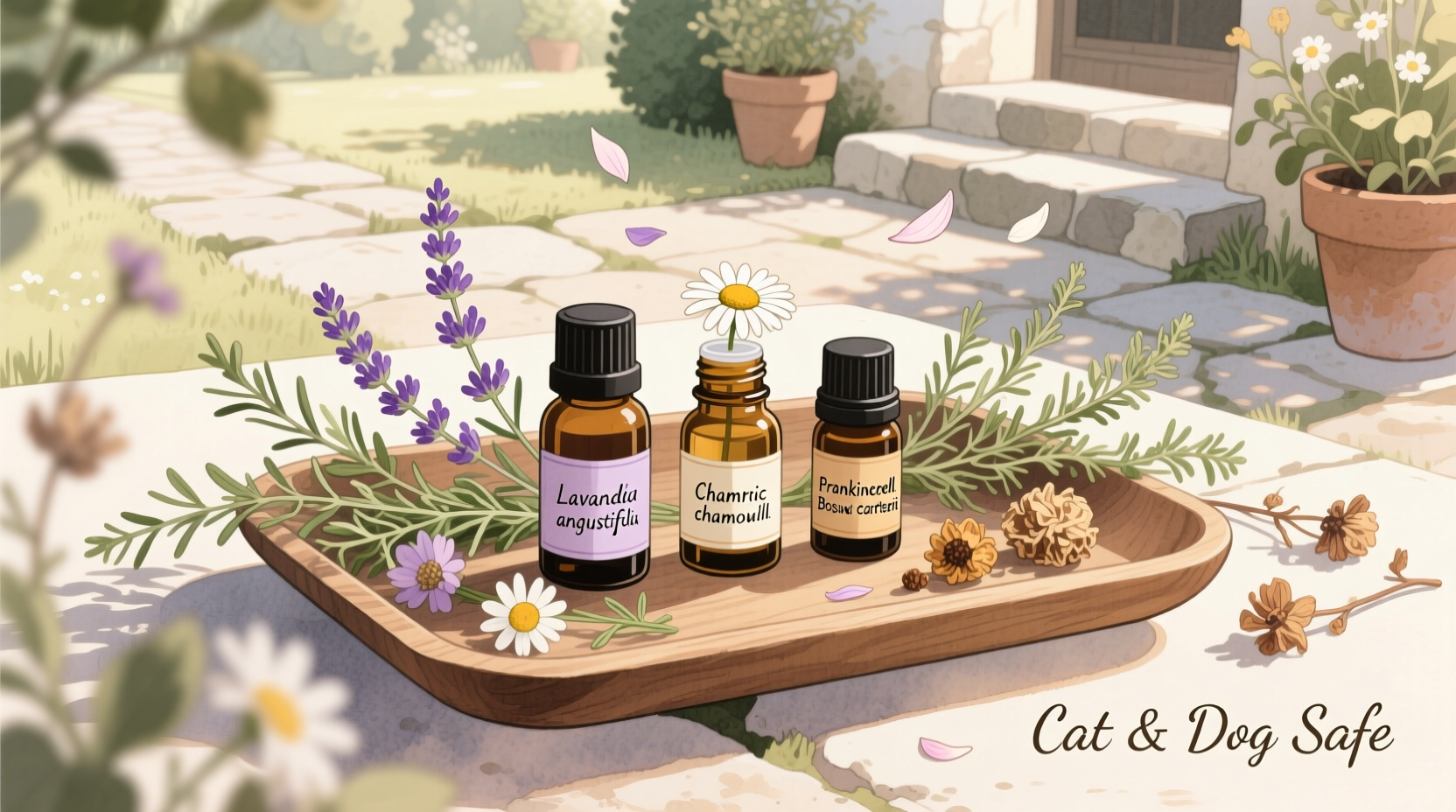
Lavender (Lavandula angustifolia)
True lavender (Lavandula angustifolia) has been studied for its anxiolytic properties in both humans and animals. A 2017 study in the Journal of Veterinary Behavior found that dogs exposed to diluted lavender scent during veterinary visits showed reduced stress behaviors. However, this was done using controlled diffusion in well-ventilated areas, not direct application.
Important: Only steam-distilled, pure Lavandula angustifolia should be used. Avoid spike lavender or blends containing camphor derivatives. Use no more than 1–2 drops in a large room diffuser for 15–30 minutes before bedtime, and ensure pets can exit the room freely.
Chamomile (Roman or German)
Chamomile—particularly Roman chamomile (Chamaemelum nobile)—contains esters that may promote calmness. It’s often used in herbal remedies for anxious pets. While essential oil form is potent, very low-concentration diffusion may be tolerated by some dogs. Cats are less predictable; avoid use if your cat grooms excessively or has liver conditions.
Frankincense (Boswellia carterii)
Frankincense has anti-inflammatory and grounding properties. Though research in pets is limited, anecdotal reports suggest it helps reduce nighttime restlessness in older dogs. Its earthy aroma is less likely to irritate sensitive noses. Use only 1 drop in a blend with a carrier or in a large-space diffuser for short durations.
Tip: Always choose therapeutic-grade, GC/MS tested oils from reputable brands. Adulterated oils increase the risk of adverse reactions.Safe Usage Guidelines for Pet-Friendly Aromatherapy
Even safe oils require strict protocols. Here’s how to minimize risk while supporting your pet’s sleep routine:
- Never apply essential oils directly to pets. Their skin absorbs chemicals rapidly, and ingestion through grooming can lead to poisoning.
- Avoid continuous diffusion. Limit sessions to 15–30 minutes in a large, ventilated room where pets can walk away.
- Use high-dilution ratios. For diffusion, one drop per 100 square feet is sufficient. Never exceed two drops total in a household with cats.
- Observe your pet closely. Signs of discomfort include sneezing, drooling, panting, hiding, or excessive blinking. Discontinue use immediately if observed.
- Keep oils out of reach. Bottles left open can result in accidental ingestion or dermal exposure.
Special Considerations for Cats
Cats are especially vulnerable due to their grooming habits and inefficient detox pathways. Even passive exposure over time can accumulate to toxic levels. If you have a cat, consider skipping essential oil diffusion altogether. Instead, explore non-aromatic calming tools like pheromone diffusers (e.g., Feliway), weighted blankets, or white noise machines.
Non-Oil Alternatives for Better Pet Sleep
For pet owners seeking natural sleep support without the risks of essential oils, several evidence-backed options exist:
- Adaptil (for dogs): A synthetic copy of the dog-appeasing pheromone, shown to reduce anxiety and improve sleep quality in stressed dogs.
- Feliway (for cats): Mimics facial pheromones cats use to mark safe spaces, helping reduce nighttime vocalization and restlessness.
- Calming supplements: Ingredients like L-theanine, colostrum, and alpha-casozepine (found in Zylkène) have clinical support for reducing anxiety in pets.
- Environmental enrichment: Regular exercise, consistent bedtime routines, and cozy sleeping areas significantly improve sleep hygiene.
- White noise or classical music: Studies show certain sound frequencies can lower heart rate and promote relaxation in dogs and cats.
| Oil Type | Suitable for Dogs? | Suitable for Cats? | Recommended Use | Risk Level |
|---|---|---|---|---|
| Lavender (pure) | Yes, with caution | Limited, short-term only | Diffusion: 1 drop, 15 min, ventilated room | Moderate |
| Roman Chamomile | Yes, diluted | No—avoid | Diffusion only, not near cats | High for cats |
| Frankincense | Yes, minimal use | Not recommended | Occasional diffusion, well-diluted | Low-Moderate |
| Peppermint | No | No | Avoid entirely | High |
| Tea Tree | No | No | Never use | Very High |
Real-Life Example: Managing Nighttime Anxiety in a Senior Dog
Sarah, a pet owner in Colorado, noticed her 10-year-old Labrador, Max, began pacing at night and whining every few hours. Concerned about his disrupted sleep—and hers—she initially tried diffusing lavender oil nightly. After two weeks, Max became lethargic and refused food. A vet visit revealed mild liver enzyme elevation, likely linked to chronic inhalation exposure.
Under veterinary guidance, Sarah discontinued all essential oils. She switched to an Adaptil diffuser, added a heated orthopedic bed, and introduced a daily supplement with L-theanine. Within three weeks, Max’s nighttime activity decreased significantly, and blood work returned to normal. His improved rest also reduced daytime confusion associated with cognitive decline.
This case illustrates how well-intentioned natural remedies can backfire without proper safety knowledge—and how safer, targeted alternatives often yield better results.
Step-by-Step: Creating a Pet-Safe Sleep Routine
If you want to enhance your pet’s sleep environment without risking their health, follow this science-backed sequence:
- Evaluate the cause of sleep disruption. Is it pain, anxiety, cognitive decline, or environmental noise? Consult your veterinarian first.
- Optimize the physical space. Provide a supportive bed, control temperature, and reduce light exposure at night.
- Establish a consistent routine. Feed, walk, and settle your pet at the same time each evening.
- Introduce proven calming aids. Use Feliway or Adaptil diffusers as directed. Consider vet-approved supplements.
- Test sound therapy. Play species-specific calming music (e.g., Through a Dog’s Ear) at low volume.
- Monitor and adjust. Track changes in behavior and consult your vet if issues persist.
Frequently Asked Questions
Can I use a diffuser with essential oils if my pet isn’t in the room?
Only if the room is completely sealed and the pet cannot access it during or immediately after diffusion. Residual vapors can linger on surfaces and be ingested during grooming. Even brief exposure can affect sensitive animals, so this approach is not recommended for multi-pet households.
Are “pet-safe” essential oil blends sold online really safe?
Unfortunately, no regulatory body verifies these claims. Many commercial blends labeled “safe for pets” still contain risky constituents or insufficient dilution. The term is largely marketing. Always check ingredient lists and consult your veterinarian before use.
What should I do if my pet shows signs of essential oil poisoning?
Immediately remove the source, move your pet to fresh air, and contact your veterinarian or the ASPCA Animal Poison Control Center (888-426-4435). Symptoms include vomiting, difficulty breathing, tremors, and wobbling. Do not induce vomiting unless instructed.
Final Thoughts: Safety First, Always
While the desire to help pets sleep better is compassionate, the path to achieving it must prioritize safety over convenience or trendiness. Essential oils carry real risks, and the margin for error is narrow—especially with cats. Even oils traditionally viewed as benign can cause harm under everyday conditions.
The safest approach is to rely on veterinarian-approved methods: pheromone therapy, behavioral routines, environmental adjustments, and clinically tested supplements. These tools offer measurable benefits without exposing pets to preventable dangers.
If you choose to use essential oils, do so sparingly, responsibly, and only after consulting a holistic veterinarian. Remember: a calm, well-rested pet is the goal—but never at the cost of their long-term health.
💬 Have experience with natural sleep aids for pets? Share your story or questions in the comments to help others make informed, compassionate choices.








