
A well-oxygenated aquarium is the foundation of a healthy aquatic environment. Fish, beneficial bacteria, and even plants rely on consistent dissolved oxygen levels to thrive. While surface agitation from filters contributes to gas exchange, an air pump enhances circulation and ensures stable oxygen saturation—especially in densely stocked tanks or warm water conditions where oxygen solubility drops. Installing an air pump correctly not only improves water quality but also minimizes noise and extends equipment life. This guide walks through every step of selecting, setting up, and maintaining an air pump for reliable, quiet performance.
Why Your Aquarium Needs an Air Pump
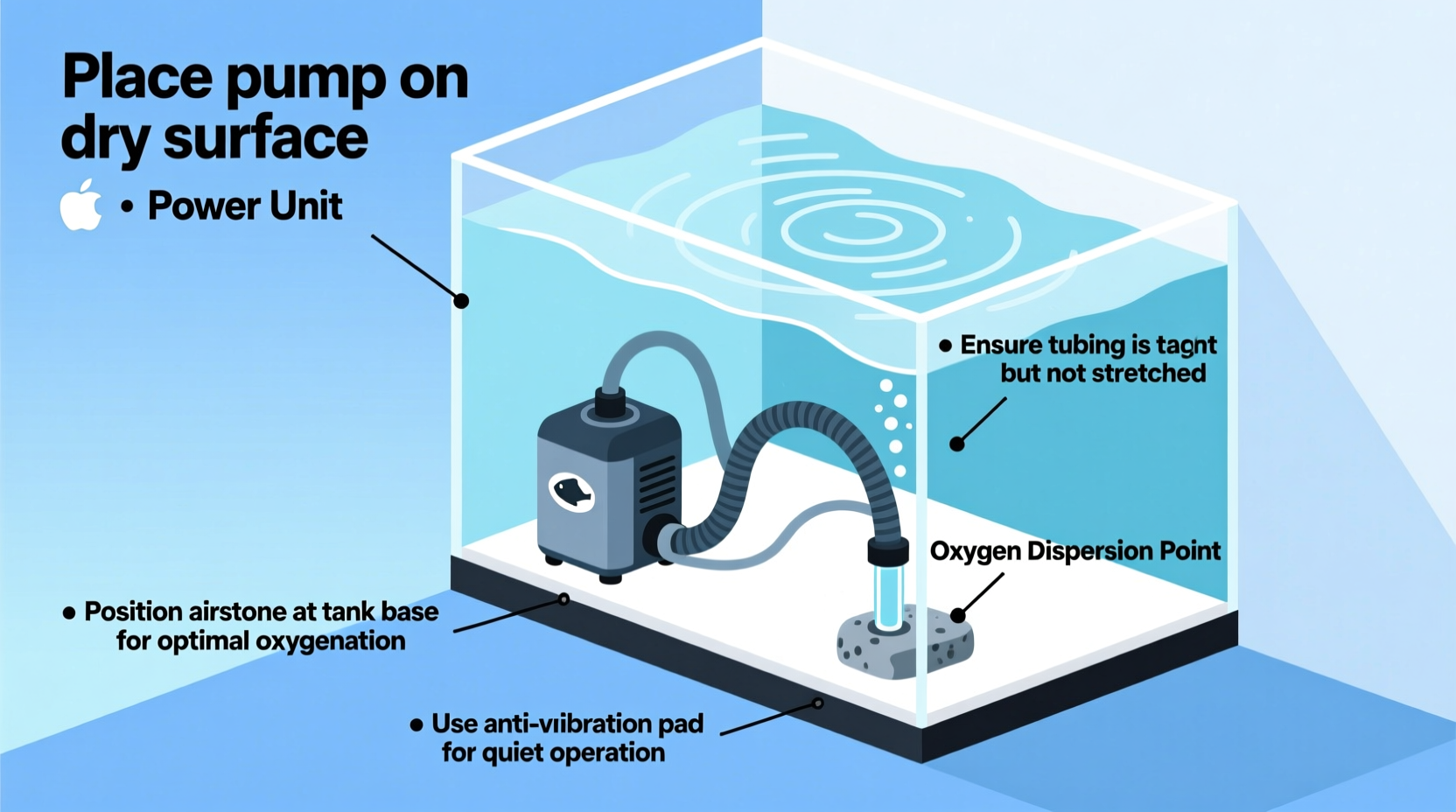
Oxygen enters the aquarium primarily at the water’s surface through diffusion. The more surface movement, the greater the gas exchange. In still tanks or those with poor circulation, oxygen can deplete rapidly—particularly at night when plants stop photosynthesizing and only consume oxygen. An air pump drives airflow through airstones, sponge filters, or decorative ornaments, creating bubbles that rise and agitate the surface while also lifting deeper water layers toward the top.
Beyond oxygenation, air pumps support biological filtration by powering sponge and undergravel filters, which host colonies of nitrifying bacteria. They also help prevent dead zones in corners or behind decorations where detritus accumulates. Tanks in warmer climates or those housing high-oxygen-demand species like goldfish or African cichlids benefit significantly from supplemental aeration.
“An air pump isn’t just about bubbles—it’s about sustaining life. Even in well-filtered tanks, additional aeration can be the difference during power outages or heat spikes.” — Dr. Lena Torres, Aquatic Biologist
Choosing the Right Air Pump: Key Factors
Not all air pumps are created equal. Selecting one suited to your tank size, setup, and placement is critical for efficiency and longevity.
- Tank Size: Small pumps (1–2 watts) work for nano tanks up to 20 gallons. Medium to large tanks (30+ gallons) require dual-outlet or adjustable diaphragm pumps.
- Noise Level: Look for models labeled “ultra-quiet” with internal dampening chambers. Magnetic coil pumps tend to hum less than piston types.
- Adjustability: A built-in flow control valve lets you regulate bubble rate, preventing excessive splashing or stress to sensitive fish.
- Durability: Rubber diaphragms should be replaceable, and housing should be sealed against moisture damage.
- Power Source: AC-powered units offer consistent output; battery backups are useful for emergency aeration during outages.
Step-by-Step Installation Guide
Proper installation ensures maximum efficiency and prevents common issues like water backflow or uneven airflow.
- Unbox and inspect components: Confirm you have the pump, airstone(s), airline tubing, check valve (if included), and connectors.
- Cut tubing to length: Measure from the pump outlet to the tank inlet, allowing slight slack. Use sharp scissors for clean cuts.
- Attach the airstone: Insert one end of the tubing into the airstone’s barb fitting. Ensure a snug fit to avoid leaks.
- Install a check valve: Slide it into the tubing near the pump, aligning the arrow with airflow direction (toward the tank).
- Position the pump: Mount it on a shelf or wall above the tank. Avoid placing it inside cabinets below water level.
- Connect to outlets: Plug the tubing into the pump’s nozzle. For multi-outlet pumps, use T-connectors if splitting airflow.
- Submerge the airstone: Place it at the bottom of the tank, ideally near a corner or filter intake for better circulation.
- Power on and test: Turn on the pump and verify steady bubbles. Adjust flow using the dial if available.
- Monitor for 24 hours: Check for leaks, unusual vibrations, or gurgling sounds indicating trapped air.
Optimizing Oxygenation and Minimizing Noise
Once installed, fine-tuning your system ensures both effective aeration and peaceful operation.
| Goal | Best Practice | Avoid |
|---|---|---|
| Maximize oxygen transfer | Use fine-pore airstones for smaller bubbles (greater surface area) | Large bubbles that burst quickly at the surface |
| Reduce noise | Place pump on foam pad or rubber mat; use silicone-lined hoses | Direct contact with hard surfaces like glass or metal shelves |
| Prevent splash disturbance | Adjust airflow to moderate bubbling; position airstone below mid-water level | Excessive bubbling that causes surface turbulence near shy fish |
| Maintain consistent flow | Clean airstones monthly; replace diaphragms annually | Ignoring declining airflow due to clogged stones or worn parts |
Fine-pore limewood or ceramic airstones produce dense clouds of microbubbles, increasing contact time with water and enhancing oxygen dissolution. However, they clog faster than coarse stones and require regular soaking in bleach solution (1:10 ratio with water) followed by thorough rinsing.
Tip: Soak airstones in vinegar overnight to dissolve mineral buildup without damaging porous material.Real-World Example: Solving Low Oxygen in a Planted Tank
Mark, a hobbyist with a 55-gallon planted aquarium, noticed his tetras gasping at the surface each morning. Despite strong lighting and CO₂ injection, oxygen levels dropped overnight as plants respired. He added a silent dual-diaphragm air pump connected to two sponge filters positioned at opposite ends of the tank. By running the pump only during lights-off hours, he restored nighttime oxygenation without disrupting daytime CO₂ balance. Within days, fish resumed normal behavior, and biofilm buildup on leaves decreased due to improved water movement.
This case highlights how strategic air pump use complements other systems rather than replacing them. Timing and placement were key to solving the issue without side effects.
Maintenance Checklist for Long-Term Performance
To keep your air pump operating efficiently and quietly, follow this routine:
- ✅ Clean airstones monthly with vinegar or diluted bleach
- ✅ Inspect airline tubing for cracks or kinks every 6 weeks
- ✅ Replace rubber diaphragms annually (kits cost $5–$10)
- ✅ Wipe dust from pump vents to prevent overheating
- ✅ Test check valves periodically by disconnecting tubing briefly
- ✅ Rotate backup airstones if using multiple setups
Frequently Asked Questions
Do I need an air pump if I already have a filter?
Many filters provide surface agitation, but they may not supply enough oxygen in heavily stocked tanks or warm environments. An air pump adds redundancy and improves circulation in lower water layers, especially when paired with a sponge filter or airstone.
Why is my air pump so loud?
Common causes include loose internal parts, lack of vibration padding, clogged airstones increasing pressure, or placement on a resonant surface. Try mounting the pump on a rubber mat, cleaning the airstone, and ensuring all connections are tight. If noise persists, the diaphragm may be failing and need replacement.
Can I run an air pump 24/7?
Yes, most modern pumps are designed for continuous operation. However, in planted tanks with CO₂ supplementation, consider running the pump only at night to avoid degassing valuable carbon dioxide during daylight hours.
Final Thoughts and Action Steps
Installing an air pump is a simple upgrade with profound benefits for aquarium health. When chosen and maintained properly, it operates silently in the background, delivering steady oxygenation and supporting biological stability. Whether you’re managing a community tank, breeding setup, or hospital aquarium, reliable aeration is non-negotiable.
Start by evaluating your current oxygen levels—watch for signs like surface gasping, lethargic fish, or stagnant water corners. Then select a pump that matches your tank’s needs and follow the installation steps carefully. With routine maintenance and smart placement, your air pump will serve reliably for years, keeping your aquatic ecosystem vibrant and balanced.
🚀 Take action today: Inspect your tank’s surface movement, test your airstone’s output, and ensure your pump is elevated and protected. Share your setup tips or ask questions in the comments below—your experience could help another aquarist breathe easier.








