Every pet owner wants their dog to stand out—whether through personality, accessories, or a custom collar that reflects their identity. In recent years, personalized dog collars have surged in popularity, with engraved metal tags and embroidered text emerging as the two dominant options. But beyond aesthetics, does this personalization actually serve a meaningful purpose? Or is it simply a marketing-driven trend capitalizing on emotional attachment?
The answer isn’t binary. Personalization offers real benefits in terms of safety and identification, but not all methods are equally effective. Choosing between engraved and embroidered collars involves trade-offs in durability, readability, cost, and function. Understanding these differences helps pet owners make informed decisions that balance style with practicality.
Understanding the Two Main Types: Engraved vs Embroidered
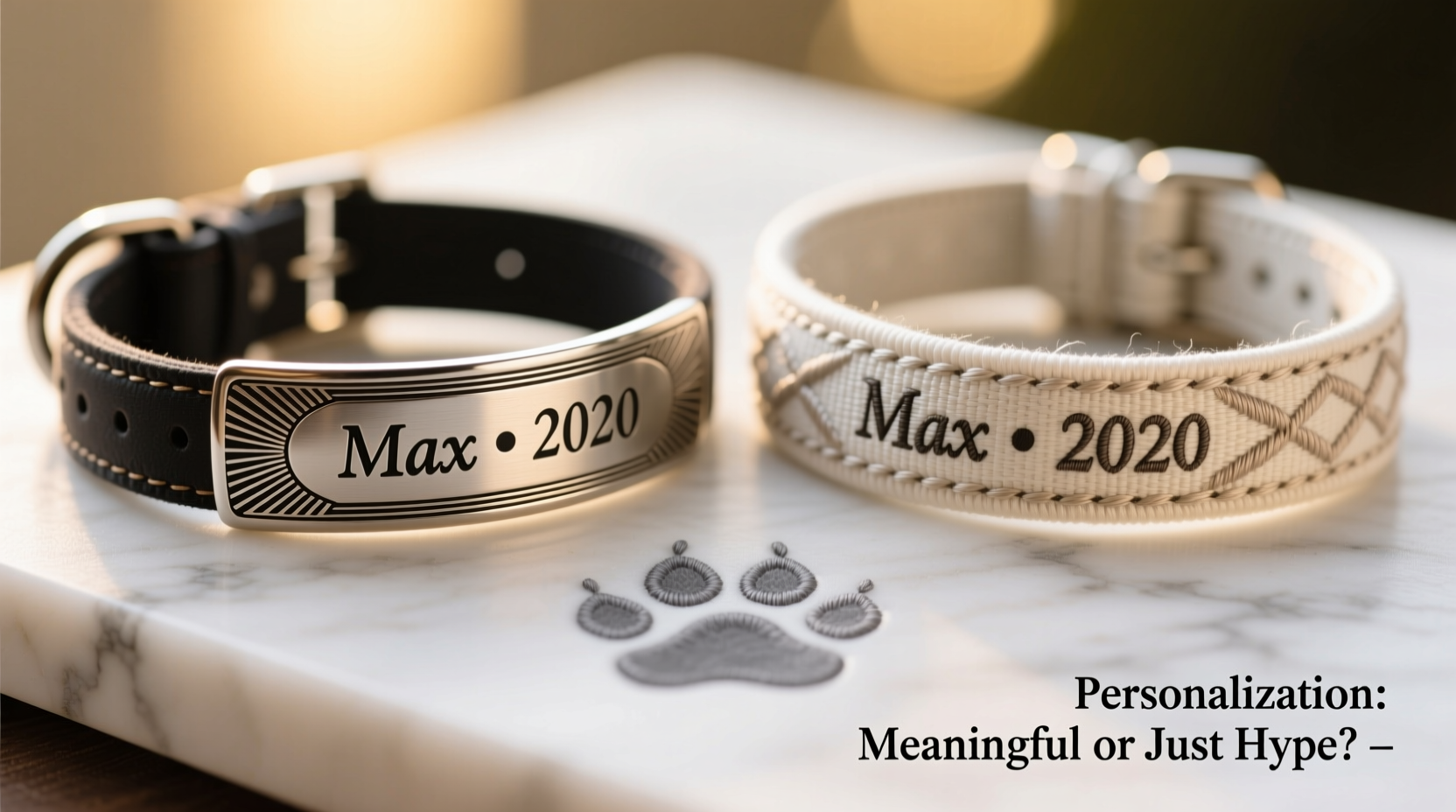
At first glance, both engraved and embroidered collars appear to offer similar outcomes—your dog’s name and your contact information displayed prominently. However, the technology and materials behind each method differ significantly.
Engraved collars typically feature a metal tag (often stainless steel or aluminum) attached to the collar, with information permanently etched into the surface using laser or rotary tools. This method produces crisp, long-lasting text that withstands weather, wear, and frequent handling.
Embroidered collars, on the other hand, integrate the text directly into the fabric of the collar using colored thread. The design becomes part of the collar’s weave, offering a sleek, seamless look. While visually appealing, embroidery relies on thread integrity and can fade or fray over time, especially with exposure to moisture and friction.
Tip: If your dog spends significant time outdoors or near water, opt for an engraved metal tag—it’s more resistant to environmental damage than stitched text.Practical Benefits of Personalization: Safety First
The most compelling reason to personalize a dog collar isn’t vanity—it’s safety. According to the American Veterinary Medical Association, less than 22% of lost dogs without ID tags are reunited with their owners, compared to over 50% when a tag is present.
An engraved tag provides immediate, legible access to contact information. Even if a passerby doesn’t have a phone, they can call the owner directly from a landline. In contrast, embroidered collars may become unreadable due to fading, dirt buildup, or thread wear, especially after months of outdoor activity.
Moreover, engraved tags can include additional details like medical conditions (“Allergic to penicillin”) or behavioral notes (“Friendly but shy”), which are invaluable in emergency situations. These details remain clear and unambiguous, whereas embroidered text lacks the precision and permanence needed for critical alerts.
“While embroidered collars look elegant, they should never replace a physical ID tag. In emergencies, clarity and durability save lives.” — Dr. Lena Patel, DVM, Pet Safety Advocate
Comparing Durability, Readability, and Maintenance
To assess which option performs better over time, consider key factors like longevity, resistance to elements, and ease of reading under stress.
| Feature | Engraved Tag | Embroidered Collar |
|---|---|---|
| Durability | High – metal resists scratching, rust, and UV exposure | Moderate – thread can fray, fade, or loosen over time |
| Readability | Excellent – deep engraving remains visible even when dirty | Fair – ink can bleed; stitching may blur with wear |
| Weather Resistance | Superior – unaffected by rain, snow, or mud | Limited – moisture weakens thread adhesion |
| Customization Flexibility | Good – supports names, numbers, short messages | Excellent – allows fonts, colors, logos, and longer text |
| Maintenance Needs | Low – occasional wipe-down suffices | Moderate – requires gentle cleaning to preserve threads |
This comparison shows that while embroidery wins in aesthetic versatility, engraving excels in functional reliability—especially for working dogs, hikers, or pets prone to escaping.
Real-World Example: A Lost Dog Found Thanks to an Engraved Tag
In rural Colorado, a Border Collie named Scout slipped his leash during a hiking trip and went missing for nearly 36 hours. His owner had invested in a high-quality nylon collar with a stainless steel engraved tag listing her cell number and home address.
A local farmer found Scout wandering near a cattle gate. Despite being muddy and tired, the dog’s tag was fully legible. The farmer called immediately, and within two hours, Scout was safely back home. “I almost opted for the pretty embroidered collar,” the owner later shared, “but I’m so grateful I chose the engraved tag. It made all the difference.”
This case underscores a crucial point: when a dog is stressed, dirty, or far from home, only a durable, clearly marked ID ensures a fast return.
When Embroidery Makes Sense: Style Meets Secondary Identification
That said, embroidered collars aren’t without merit. For indoor pets, city dwellers, or fashion-conscious owners, they offer unmatched customization. You can choose script styles, incorporate paw prints, or match your dog’s collar to seasonal outfits.
More importantly, embroidery works best as a secondary identifier—not a replacement for a metal tag. Think of it like clothing with your name stitched inside: useful, but not immediately visible. When combined with a jingle-free engraved tag (ideal for noise-sensitive dogs), embroidery adds charm without compromising safety.
- Use embroidery for names or playful slogans (“Snack Inspector”)
- Pair with a discreet engraved tag for contact details
- Choose UV-resistant thread and water-repellent backing for extended life
Step-by-Step Guide to Choosing the Right Personalized Collar
- Evaluate your dog’s lifestyle: Does he hike, swim, or dig frequently? Active dogs need durable IDs.
- Prioritize legibility: Choose large, bold fonts and contrasting colors for engraved tags.
- Include essential info: Name, phone number, and optionally, a backup contact.
- Layer your identification: Combine an embroidered collar with a separate engraved tag. <5> Test readability: Hold the collar at arm’s length—can you read it easily?
- Check fit and comfort: Ensure the collar sits snugly without restricting movement.
FAQ
Can I update information on an engraved tag?
Traditional engraved tags cannot be altered once inscribed. However, some companies offer interchangeable tag systems where you swap out the metal plate. For frequently changing details (like temporary addresses), consider a QR code tag linked to an editable online profile.
Are embroidered collars safe for puppies?
Yes, provided the stitching is smooth and secure. Puppies chew and scratch, so inspect the collar weekly for loose threads. Avoid collars with raised text that could irritate sensitive skin.
Do veterinarians recommend one type over the other?
Most vets emphasize having *any* visible ID but strongly prefer engraved tags due to their reliability. The Humane Society explicitly advises against relying solely on embroidered or printed collars for identification.
Conclusion: Personalization That Matters
Personalized dog collars are more than a trend—they’re a tool for protection. While embroidered designs add flair and individuality, they shouldn’t be the sole means of identification. Engraved tags, though less stylish, provide a fail-safe way for good Samaritans to return your dog quickly and safely.
The smart approach? Combine both. Use an embroidered collar to express your dog’s personality and pair it with a simple, well-engraved tag containing up-to-date contact information. This dual-layer strategy balances form and function, ensuring your dog looks great—and stays safe—no matter where adventures take them.
🚀 Ready to upgrade your dog’s collar? Start by checking your current ID tag’s legibility. If it’s worn or missing, invest in a durable engraved option today—your peace of mind is worth it.








