Dog collars are more than just fashion statements—they serve essential functions like identification, safety, and training. But over time, they accumulate dirt, sweat, bacteria, and odor from daily use. A grimy collar isn’t just unhygienic; it can irritate your dog’s skin and shorten the accessory’s lifespan. Regular cleaning is crucial, but not all collars can be cleaned the same way. Using improper techniques may damage materials or leave behind residue that harms your pet. The key lies in understanding your collar type and applying the right method. With a few smart habits, you can keep every collar fresh, functional, and safe.
Why Regular Collar Cleaning Matters
Unlike human clothing, dog collars remain in constant contact with skin and fur, absorbing oils, saliva, and environmental debris. Outdoor walks expose them to mud, pollen, and even parasites. Indoor collars collect dander and food particles. Over weeks, this buildup fosters bacterial growth and mold, especially in warm, humid climates. A study by the American Veterinary Medical Association notes that unclean collars contribute to minor dermatological issues in dogs with sensitive skin.
Beyond hygiene, cleanliness preserves structural integrity. Dirt and grime can weaken stitching, corrode metal hardware, and degrade synthetic fibers. A well-maintained collar lasts longer, maintains its color, and continues to function safely during walks or training sessions.
Tip: Clean your dog’s collar at least once every two weeks—or weekly if your pet swims, rolls in mud, or has allergies.Step-by-Step Guide to Washing Different Types of Dog Collars
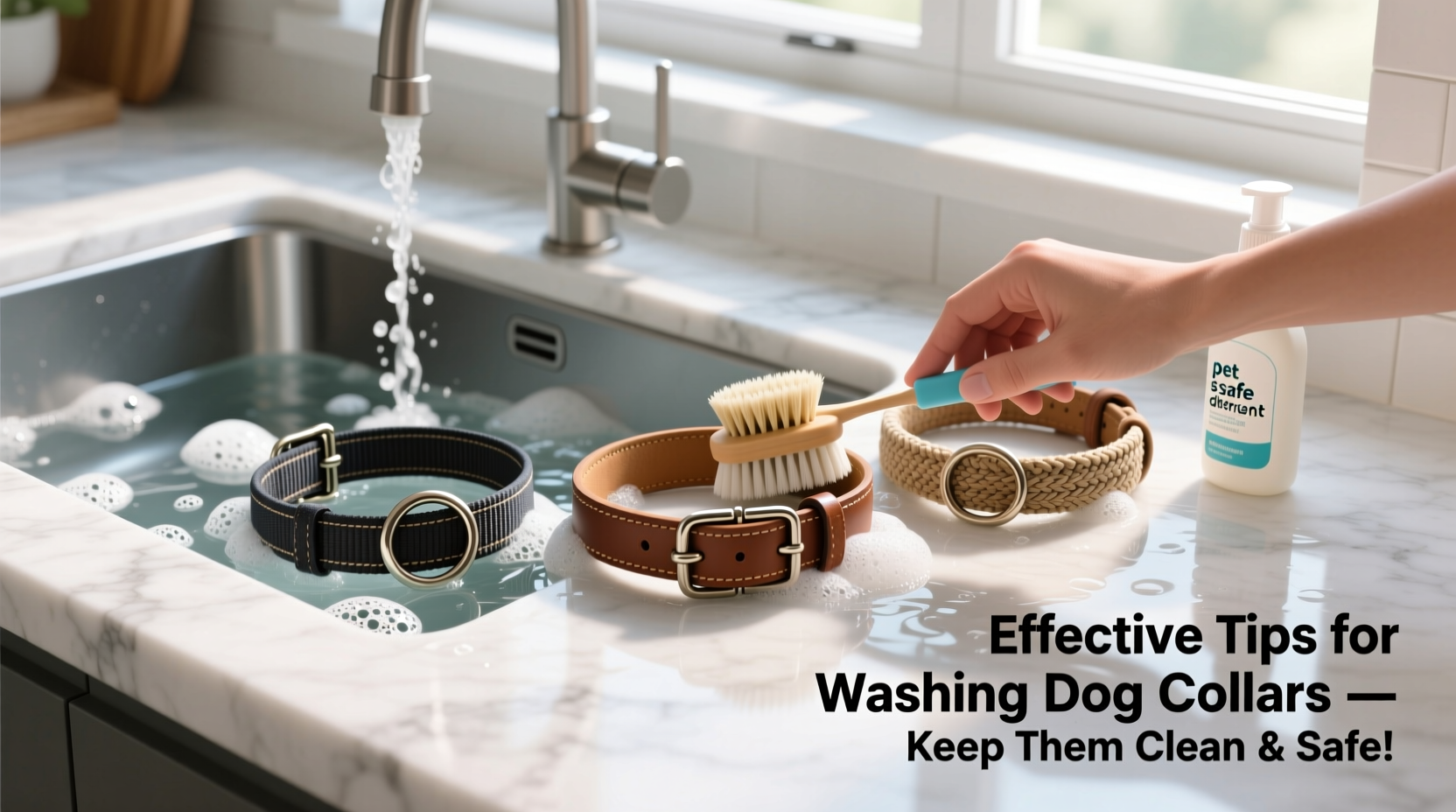
Not all collars are created equal. Materials vary widely—from nylon and polyester to leather, biothane, and embroidered fabrics. Each requires specific care. Follow this timeline-based guide to ensure safe, effective cleaning.
- Inspect the collar: Check for fraying, broken buckles, or rusted tags. If damaged, replace it before washing.
- Remove attachments: Take off ID tags, leashes, and nameplates to prevent scratching or water damage.
- Determine material type: Refer to manufacturer labels or packaging. When in doubt, treat it as delicate.
- Choose your cleaning method: Based on material (see table below).
- Wash gently: Use lukewarm water and mild detergent. Avoid bleach or harsh chemicals.
- Rinse thoroughly: Residue can cause skin irritation.
- Air dry completely: Never use a dryer or direct sunlight, which can warp or fade materials.
- Reattach hardware: Ensure buckles click securely and tags are legible.
Material-Specific Care Instructions
| Material | Cleaning Method | Do’s | Don’ts |
|---|---|---|---|
| Nylon/Polyester | Hand wash with mild soap; machine wash (gentle cycle) if label allows | Use soft brush for stains; air dry flat | Don’t soak for hours; avoid fabric softener |
| Leather | Wipe with damp cloth; condition monthly | Use leather cleaner and conditioner; store in breathable bag | Don’t submerge in water; never use alcohol-based cleaners |
| Biothane | Wipe with soapy water; rinse and dry | Excellent for outdoor dogs; resistant to mold and odor | Don’t use abrasive scrubbers |
| Embroidered/Fabric | Spot clean or hand wash gently | Test cleaner on hidden area first | Don’t machine wash unless specified |
| Chain (Choke/Prong) | Soak in vinegar-water mix; rinse and dry | Inspect links for sharp edges | Don’t leave wet—rust forms quickly |
Common Mistakes That Damage Dog Collars
Even well-meaning owners make errors that compromise collar quality. Awareness helps prevent costly replacements or safety risks.
- Using dish soap or shampoo: These may seem gentle but often contain degreasers that strip protective coatings, especially on leather and biothane.
- Machine drying: Heat warps plastic buckles, shrinks fabric, and cracks glued components.
- Ignoring hardware: Metal D-rings and side-release buckles need inspection. Corrosion weakens load-bearing parts.
- Over-soaking: Prolonged water exposure causes delamination in layered collars and loosens embroidery.
- Storing wet: Mold develops within 24 hours in damp environments, leading to permanent odor and health hazards.
“Many skin irritations we see in clinics stem from poorly maintained collars. A simple weekly wipe-down can prevent infections.” — Dr. Lena Torres, DVM, Pet Dermatology Specialist
Real Example: How One Owner Prevented a Skin Rash
Sarah from Portland adopted a rescue beagle named Milo, who developed a persistent neck rash after two months. She changed his food, used medicated shampoos, and visited the vet twice—each time receiving temporary relief. It wasn’t until her groomer asked about collar cleaning that she realized she’d never washed it. The once-blue nylon collar was stiff with grime and emitted a sour smell when wet. Sarah soaked it in a vinegar-and-baking-soda solution, then hand-washed it with baby-safe detergent. After switching to bi-weekly cleanings and rotating between two collars, Milo’s rash disappeared and hasn’t returned in eight months. This case underscores how overlooked accessories can directly impact pet health.
Checklist: Best Practices for Long-Term Collar Care
To simplify maintenance, follow this actionable checklist:
- ✅ Inspect collar weekly for wear and tear
- ✅ Remove tags before washing
- ✅ Use only pet-safe or mild, fragrance-free detergents
- ✅ Hand wash when unsure; avoid aggressive agitation
- ✅ Dry flat away from radiators or windowsills
- ✅ Condition leather collars monthly
- ✅ Rotate between multiple collars to reduce strain
- ✅ Replace collars every 1–2 years, or sooner if damaged
Frequently Asked Questions
Can I use baby wipes to clean my dog’s collar?
Yes, for quick surface cleaning—but only on non-porous materials like nylon or biothane. Avoid using wipes with alcohol or parabens on leather or fabric, as they can dry or discolor the material. Baby wipes are not a substitute for deep cleaning.
How do I remove stubborn odors from a dog collar?
Soak the collar in a mixture of 1 part white vinegar to 3 parts water for 15–20 minutes, then rinse and air dry. For fabric collars, sprinkle baking soda before washing to neutralize smells. Never use perfumed sprays, which can trigger allergies.
Is it safe to machine wash dog collars?
Only if the manufacturer explicitly states it’s safe. Use a mesh laundry bag and gentle cycle with cold water. Avoid washing with heavy items like towels that can cause abrasion. Always air dry afterward.
Final Thoughts: Make Cleanliness Part of Your Routine
Just as you wouldn’t let your dog go weeks without a bath, their collar deserves regular attention. The best way to wash dog collars combines knowledge of materials, consistent scheduling, and gentle techniques. By integrating these practices into your pet care routine, you protect your dog’s comfort, maintain equipment reliability, and extend the life of each collar. Think of it as preventive care—one small act that supports overall wellness.
💬 What’s your go-to method for cleaning dog collars? Share your tips or ask questions in the comments���your experience could help another pet owner keep their furry friend safer and cleaner.








