
Walking your dog should be a relaxing ritual, not a daily tug-of-war. Yet, many pet owners struggle with dogs that pull relentlessly on the leash, turning what should be a peaceful outing into a frustrating battle of strength. The good news is that leash pulling isn’t a permanent behavior—it’s a learned habit that can be reshaped with consistency, patience, and the right training techniques. This guide dives deep into practical, science-backed strategies to teach your dog to walk calmly by your side.
Understanding Why Dogs Pull
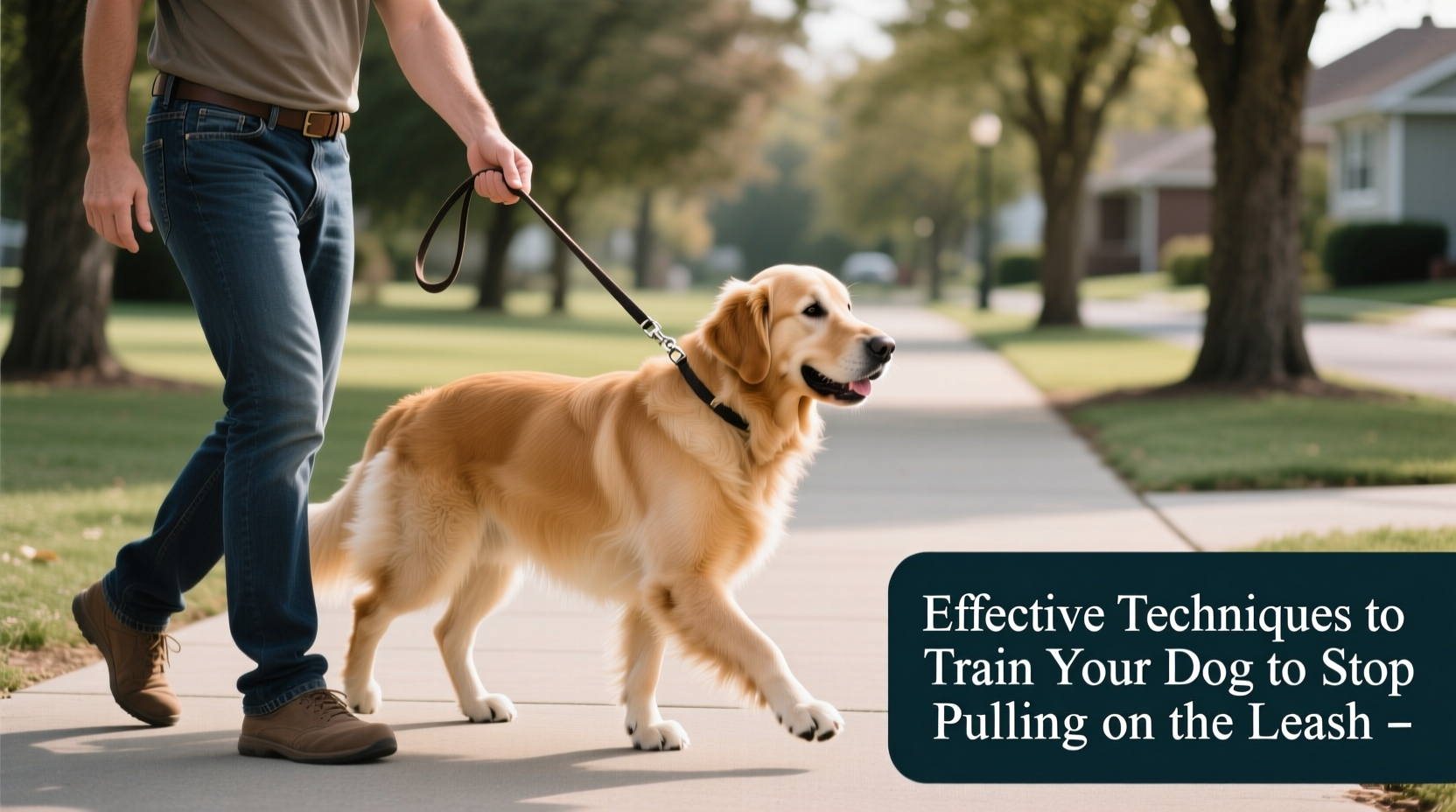
Dogs are naturally curious and driven by scent, movement, and exploration. When they sense something exciting—a squirrel, another dog, or even a new bush—they instinctively move toward it. Since the leash connects them to you, their forward motion translates into pulling. It's not defiance; it's simply their way of navigating the world.
The problem arises when this behavior is unintentionally reinforced. Every time your dog pulls and still moves forward (even an inch), they learn that pulling works. Over time, this becomes a self-rewarding cycle. Breaking it requires replacing the old habit with a new one: walking beside you for rewards and direction.
Tip: Always carry high-value treats during training walks—small pieces of chicken, cheese, or hot dog work well because they’re highly motivating.Step-by-Step Guide to Loose-Leash Walking
Loose-leash walking means your dog stays within a defined zone (usually 1–2 feet) beside you without tension on the leash. Achieving this takes structured training. Follow this timeline over 2–4 weeks for best results:
- Start in a low-distraction area like your backyard or quiet driveway. Use a standard 4–6 foot leash—avoid retractable leashes during training.
- Introduce the “focus” cue. Say your dog’s name followed by “let’s go” or “this way,” then immediately take a step. Reward any attention or movement toward you.
- Mark and reward short moments of calm walking. Use a clicker or verbal marker like “yes!” the instant your dog walks beside you without pulling, then treat.
- Stop when pulling begins. The moment the leash tightens, come to a complete stop. Wait patiently until the leash goes slack, then mark and reward before moving again.
- Change direction frequently. Make unexpected turns to keep your dog attentive. Reward them for following you smoothly.
- Gradually increase difficulty. Once your dog masters the backyard, move to sidewalks, parks, and busier areas with more distractions.
Consistency is critical. Train in short sessions (5–10 minutes) multiple times per day rather than one long walk. This keeps your dog engaged and prevents frustration.
Essential Tools and Equipment
The right gear supports your training goals. Not all collars and harnesses are created equal—some can actually encourage pulling or cause discomfort.
| Equipment | Best For | Caution |
|---|---|---|
| Front-clip harness | Dogs that pull heavily; redirects pressure to turn the dog gently | Avoid back-clip harnesses for strong pullers—they can encourage pulling like a sled dog |
| Head halter (e.g., Gentle Leader) | Dogs with high prey drive or reactivity | Must be fitted properly; introduce gradually to avoid fear |
| Standard flat collar | Mild pullers already responsive to cues | Not ideal for strong pullers—can strain neck and trachea |
| 6-foot nylon or leather leash | All training phases | Avoid retractable leashes—they teach inconsistent boundaries |
“Dogs don’t pull to dominate—they pull because it works. Change the consequence, and the behavior changes.” — Dr. Ian Dunbar, Veterinarian and Animal Behaviorist
Common Mistakes That Sabotage Progress
Even well-meaning owners unknowingly undermine their training. Avoid these pitfalls:
- Allowing forward motion while pulling. If your dog pulls and still gets to move toward a stimulus, the behavior is reinforced.
- Inconsistent responses. Sometimes stopping, sometimes letting them pull sends mixed signals.
- Using punishment or jerking the leash. This damages trust and can increase anxiety or aggression.
- Training in overly distracting environments too soon. Set your dog up to fail instead of succeed.
- Expecting perfection quickly. Leash manners take weeks to months to solidify, especially in excitable breeds.
Real Example: Transforming Max, the Eager Beagle
Max, a 2-year-old Beagle, pulled so hard on walks that his owner developed shoulder pain. He’d lunge at every smell, barking at passing dogs. His owner tried yanking the leash and scolding, but Max only pulled harder.
Working with a certified trainer, they started over. They switched to a front-clip harness and began training in the driveway. For the first week, they didn’t walk more than 20 feet total per session. Instead, they practiced focus, turns, and stopping on a tight leash. Max was rewarded for looking at his owner or walking beside him—even for just two steps.
By week three, Max could walk 100 feet with minimal pulling. By week six, he walked calmly through the neighborhood park. The key wasn’t force—it was consistency and positive reinforcement. Today, Max checks in with his owner regularly during walks, earning treats for staying close.
Checklist: Key Actions for Success
To ensure your training sticks, follow this actionable checklist:
- ✅ Use a front-clip harness or head halter if needed
- ✅ Carry high-value treats on every training walk
- ✅ Start training in a quiet, distraction-free space
- ✅ Stop immediately when the leash tightens
- ✅ Reward your dog the moment the leash goes slack
- ✅ Practice frequent changes of direction
- ✅ Keep sessions short (5–10 minutes) and frequent
- ✅ Gradually increase distractions as skills improve
- ✅ Stay patient and never punish pulling
- ✅ Celebrate small progress—every step counts
Frequently Asked Questions
How long does it take to stop a dog from pulling?
Most dogs show improvement within 2–3 weeks of consistent daily training. Full mastery may take 6–8 weeks or longer, depending on the dog’s age, breed, and prior habits. Older dogs or those with years of reinforced pulling may need additional time.
Can I use a no-pull harness instead of training?
No-pull harnesses can help manage pulling, but they’re not a substitute for training. Used alone, they may suppress the symptom without teaching your dog what to do instead. Combine equipment with positive reinforcement training for lasting results.
What if my dog ignores treats during walks?
If your dog is too distracted to respond to food, lower the stimulation level. Train in a quieter area and use higher-value rewards like boiled chicken or cheese. You can also incorporate play (a quick game of tug) as a reward once basic focus is established.
Conclusion: A Calmer Walk Is Within Reach
Teaching your dog to walk politely on a leash isn’t just about convenience—it strengthens your bond, reduces stress, and makes outdoor time enjoyable for both of you. The techniques outlined here rely on clarity, consistency, and kindness. There’s no need for force or intimidation. With repetition and positive reinforcement, your dog can learn that walking beside you is more rewarding than charging ahead.
💬 Ready to transform your walks? Pick one technique from this guide and practice it today. Share your progress or questions in the comments—your journey might inspire another dog owner to try a gentler approach.








