Walking your dog should be a peaceful, bonding experience—not a constant tug-of-war down the sidewalk. Yet, many dog owners struggle with a pet that pulls relentlessly on the leash, making every outing exhausting and sometimes even dangerous. The good news is that leash pulling is not an unchangeable behavior. With consistency, patience, and the right training methods, most dogs can learn to walk politely by your side. This guide explores proven strategies grounded in positive reinforcement and canine behavior science to help you regain control and enjoy relaxed, stress-free walks.
Understanding Why Dogs Pull
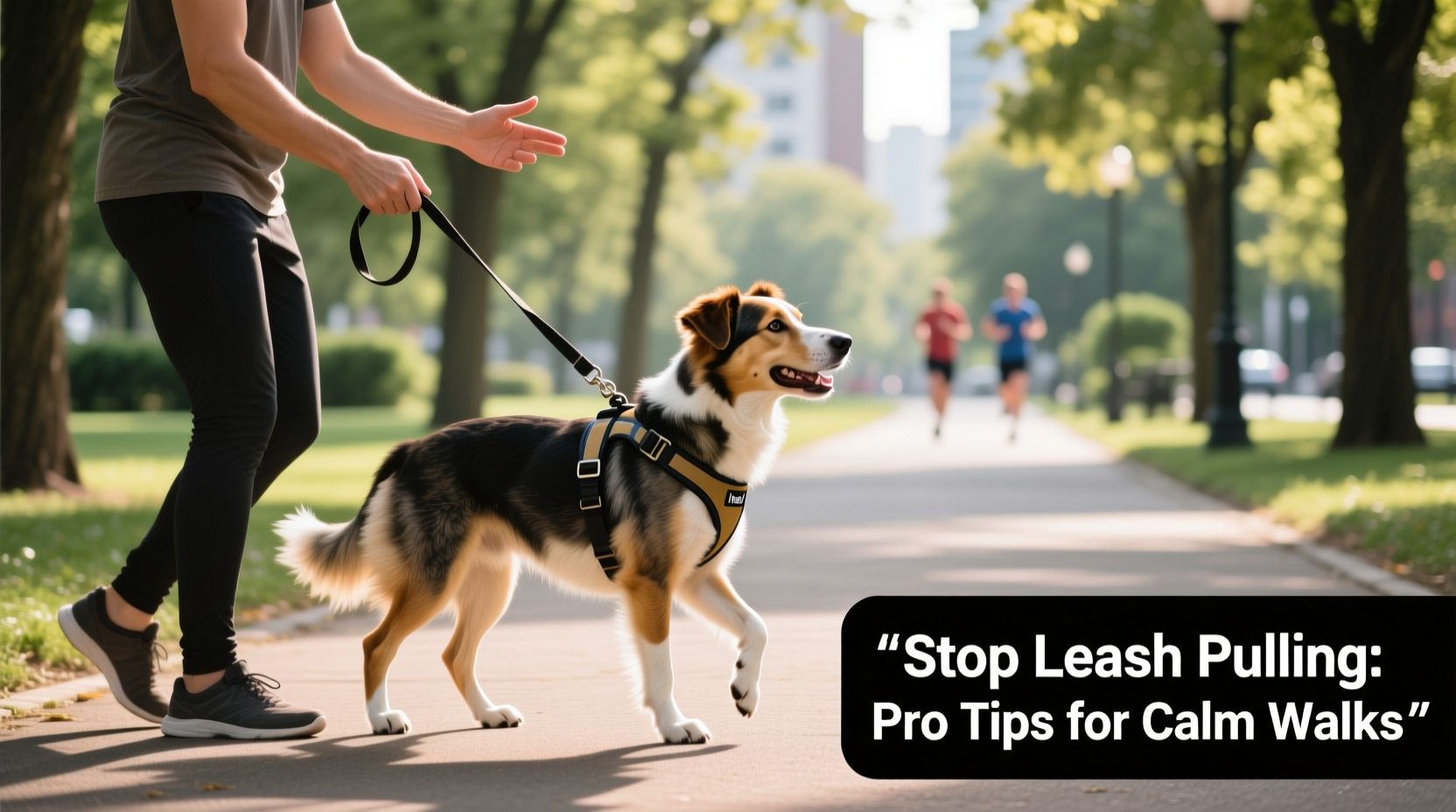
Dogs are naturally curious and eager to explore their environment. When they see something exciting—a squirrel, another dog, or a new scent—they instinctively move toward it. Since the leash connects them to you, their forward motion translates into pulling. From the dog’s perspective, pulling works: it gets them where they want to go faster. This unintentional reinforcement makes the behavior persistent.
Additionally, some dogs pull due to lack of training, overexcitement, fear, or insufficient mental and physical stimulation. Recognizing the root cause helps tailor your approach. For example, a high-energy Border Collie may pull out of excitement, while a rescue dog might do so due to anxiety or past neglect.
“Leash pulling isn’t defiance—it’s communication. Your dog is saying, ‘I want to go there!’ Our job is to teach them a better way.” — Dr. Sarah Hartman, Certified Canine Behaviorist
Essential Tools for Success
Before diving into training, ensure you’re using equipment that supports your goals. Not all collars and harnesses are created equal, and some can actually worsen pulling or cause injury.
| Equipment | Pros | Cons |
|---|---|---|
| Front-clip harness | Redirects dog’s movement when they pull; gentle on joints | May require adjustment period |
| No-pull harness (e.g., Sensible, Easy Walk) | Reduces pulling force; widely available | Not suitable for all body types |
| Head halter (e.g., Gentle Leader) | Offers precise steering; excellent for strong pullers | Requires gradual introduction; some dogs resist at first |
| Standard collar | Familiar and simple | Pulling can strain neck and trachea—especially risky for small breeds |
Step-by-Step Training Method: The Turn-and-Go Technique
This method teaches your dog that pulling doesn’t get them what they want—moving forward—while walking calmly does.
- Start in a low-distraction area, like your backyard or quiet driveway. Use a standard 4–6 foot leash (avoid retractable leashes).
- Wait for slack. Stand still and wait until the leash is loose. The moment your dog looks at you or steps back, mark it with a “yes!” or clicker and offer a treat.
- Begin walking. Take a few steps forward. If the leash stays loose, reward frequently.
- If your dog pulls, stop immediately. Stand still like a tree. Do not yank or speak harshly.
- Wait for the leash to loosen. The second your dog turns back or eases tension, mark and treat.
- Turn and walk the other way. After rewarding, pivot 180 degrees and walk in the opposite direction. This teaches that pulling leads away from the target.
- Repeat consistently. Over time, your dog will learn that staying close means progress.
Practice this for 5–10 minutes daily. Gradually increase distractions as your dog improves.
Positive Reinforcement Strategies That Work
Reward-based training builds trust and motivation. Instead of punishing pulling, focus on reinforcing desired behaviors like attention, sitting, or heel walking.
- Treat placement: Hold treats near your thigh to encourage your dog to stay close. Avoid reaching forward, which can encourage lunging.
- Verbal cues: Use a consistent word like “let’s go” to signal forward movement when the leash is slack.
- Intermittent rewards: Once your dog grasps the concept, switch from continuous to occasional treats to build reliability.
- Life rewards: Let your dog sniff a bush or greet another dog only after walking nicely for a set distance—this reinforces self-control.
Real Example: Transforming Max, the Eager Beagle
Max, a two-year-old Beagle, would lunge at every scent during walks, dragging his owner for blocks. His guardian, Lisa, tried scolding and jerking the leash, but Max only grew more excited. Frustrated, she consulted a trainer who recommended a front-clip harness and the turn-and-go method.
Starting in her quiet neighborhood, Lisa practiced daily for ten minutes. She used small pieces of hot dog as rewards and turned around each time Max pulled. Within two weeks, Max began checking in with her before moving forward. By week four, he walked calmly past squirrels and other dogs, earning sniff breaks as rewards. Today, their walks are relaxed, and Lisa says, “It’s like we finally speak the same language.”
Common Mistakes to Avoid
Even well-meaning owners can sabotage progress with these habits:
- Allowing pulling occasionally: Inconsistency teaches dogs that sometimes pulling works.
- Yanking the leash: This causes discomfort and can damage trust or lead to reactivity.
- Using punishment-based tools: Prong or shock collars may suppress pulling but often increase fear or aggression.
- Expecting instant results: Training takes time. Progress may plateau, but persistence pays off.
“Dogs don’t generalize well. Just because your dog walks nicely in the park doesn’t mean they’ll do the same downtown. Practice in multiple environments.” — Carlos Mendez, Professional Dog Trainer, APDT Member
Checklist: Building a Loose-Leash Walking Habit
- ✅ Choose the right equipment (front-clip harness or head halter)
- ✅ Use high-value treats and keep them accessible
- ✅ Train in low-distraction areas first
- ✅ Practice the turn-and-go method daily
- ✅ Reward attention and loose-leash walking immediately
- ✅ Gradually increase difficulty (more distractions, longer walks)
- ✅ Stay patient and consistent—even on tough days
FAQ
How long does it take to stop a dog from pulling?
Most dogs show improvement within 2–4 weeks of consistent training. However, full reliability in all environments may take several months, depending on the dog’s age, breed, and history.
Can older dogs learn not to pull?
Absolutely. While puppies are easier to train from the start, adult and senior dogs can learn new behaviors with patience and positive reinforcement. It may take longer, but the effort is worthwhile.
Should I use a retractable leash during training?
No. Retractable leashes encourage pulling by allowing dogs to surge ahead. They also provide poor control and can cause injury. Stick to a standard 4–6 foot leash during training phases.
Conclusion
Stopping your dog from pulling on the leash isn’t about dominance or force—it’s about communication, consistency, and kindness. By understanding your dog’s motivations and using humane, effective techniques, you can transform chaotic walks into moments of connection and calm. Every small step forward is progress. Celebrate the pauses, the glances back, the moments of slack in the leash. These are the building blocks of a well-mannered companion.
💬 Have a success story or a challenge with leash training? Share your experience in the comments—your insights could help another dog owner find peace on the pavement.








