
Cat urine issues are one of the most common and frustrating challenges pet owners face. Whether your cat has suddenly started marking outside the litter box or has never fully learned proper bathroom habits, this behavior is rarely about spite. Instead, it's usually a signal of medical concerns, environmental stress, or unmet behavioral needs. Addressing the root cause with patience, consistency, and the right techniques can lead to lasting change. The goal isn’t just to clean up accidents—it’s to create an environment where your cat chooses the litter box every time.
Rule Out Medical Issues First
Before assuming behavioral causes, it's essential to rule out underlying health problems. Conditions like urinary tract infections (UTIs), bladder stones, kidney disease, diabetes, or arthritis can make using the litter box painful or difficult. Cats often respond by avoiding the box altogether.
If your cat exhibits any of the following, schedule a vet visit immediately:
- Straining to urinate
- Frequent trips to the litter box with little output
- Blood in the urine
- Licking the genital area excessively
- Sudden onset of inappropriate urination
“Over 30% of cats presenting with house-soiling behaviors have an undiagnosed medical condition. Always start with a veterinary exam.” — Dr. Lena Torres, Feline Behavior SpecialistTip: Bring a fresh urine sample to your vet appointment if possible—it can speed up diagnosis.
Understand Why Cats Pee Outside the Litter Box
Cats don’t eliminate outside the box to punish you. Their actions are driven by instinct and communication. Common reasons include:
- Stress or anxiety: Changes in routine, new pets, loud noises, or moving homes can trigger marking behavior.
- Litter box dissatisfaction: Cats are fastidious. A dirty box, wrong litter texture, or poor location may deter use.
- Marking territory: Unneutered cats are more likely to spray, but even spayed/neutered cats may mark when stressed.
- Preference for surfaces: Some cats prefer soft surfaces like carpets or laundry over litter.
- Multipet household conflicts: Dominance issues or fear of other animals can prevent access to the box.
Distinguishing Between Urination and Spraying
It’s crucial to identify whether your cat is squatting to urinate or spraying. Spray marks are typically vertical—on walls, furniture legs, or doors—and involve a small amount of urine sprayed backward with a quivering tail. Squatting indicates elimination, while spraying is territorial communication.
| Behavior | Posture | Location | Urine Amount |
|---|---|---|---|
| Urination | Squatting low to ground | Floors, rugs, beds | Larger puddles |
| Spraying | Standing, tail upright and twitching | Vertical surfaces | Small droplets |
Step-by-Step Guide to Re-Training Your Cat
Once medical issues are ruled out, follow this structured approach to correct inappropriate elimination:
- Thoroughly clean all soiled areas using an enzymatic cleaner. Avoid ammonia-based products—they mimic urine scent and attract repeat incidents.
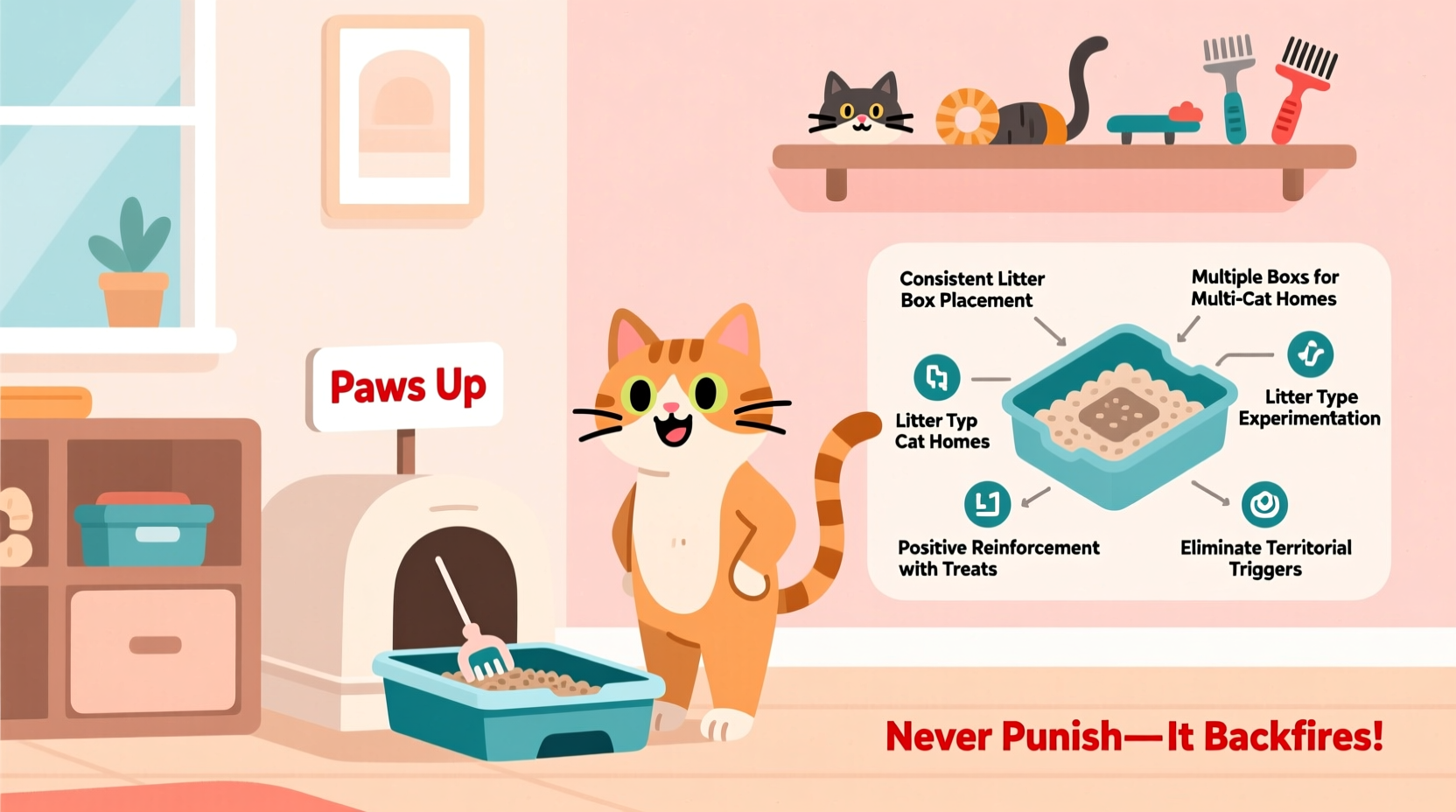
- Provide enough litter boxes: Follow the “n+1” rule—one box per cat, plus one extra. Place them in quiet, accessible locations away from food and appliances.
- Choose the right litter: Most cats prefer unscented, clumping, fine-grained sand-like litter. Avoid liners or covered boxes unless your cat clearly likes them.
- Restrict access to problem areas: Use baby gates, aluminum foil, or double-sided tape to discourage lingering in off-limit zones.
- Confine your cat temporarily to a small room with a litter box, bed, food, and water. Gradually reintroduce freedom as consistent box use resumes.
- Reinforce positive behavior: Praise quietly or offer a treat when your cat uses the box correctly. Never punish accidents—this increases stress and worsens the issue.
- Gradually expand territory: Once your cat uses the box reliably for 7–10 days, allow controlled access to larger areas of the home.
Environmental Adjustments That Make a Difference
A cat’s sense of safety directly impacts bathroom habits. Consider these modifications:
- Multiple litter box locations: In multi-level homes, place at least one box per floor.
- Quiet placement: Avoid high-traffic areas or near noisy appliances like washers.
- Easy access: Older or arthritic cats may struggle with high-sided boxes. Use low-entry models.
- Reduce competition: In multi-cat homes, ensure no cat is being bullied away from the box.
Mini Case Study: Luna the Anxious Tabby
Luna, a 3-year-old female tabby, began urinating on her owner’s bedroom rug after the family adopted a second cat. Despite cleaning efforts, the behavior persisted for weeks. A vet visit ruled out infection. The owner then implemented confinement in a spare bathroom with two litter boxes (clumping, unscented), removed carpet runners, and used Feliway diffusers to reduce stress. Within ten days, Luna consistently used the box. Over the next month, gradual reintroduction to shared spaces—with positive reinforcement during peaceful interactions—helped resolve the issue permanently.
Checklist: Key Actions to Stop Indoor Urination
Use this checklist to systematically address the issue:
- ✅ Schedule a veterinary check-up
- ✅ Clean all past accident sites with enzymatic cleaner
- ✅ Provide n+1 litter boxes in quiet, accessible locations
- ✅ Switch to unscented, clumping litter if needed
- ✅ Scoop boxes daily, replace litter weekly
- ✅ Identify and reduce sources of stress (e.g., new pets, construction)
- ✅ Use pheromone diffusers like Feliway in high-stress areas
- ✅ Confine cat temporarily if necessary to re-establish box habits
- ✅ Monitor progress and adjust strategy as needed
Frequently Asked Questions
Why is my cat peeing on my bed?
This is often linked to scent-marking due to stress. Beds carry your personal scent, making them a target for territorial reassurance. Rule out medical causes first, then assess environmental stressors such as new people, pets, or changes in routine.
Can neutering stop my cat from spraying?
Yes—neutering reduces or eliminates spraying in up to 90% of male cats if done before sexual maturity. Even older cats often improve after the procedure, though established habits may require additional behavioral intervention.
How long does it take to re-train a cat?
With consistent effort, many cats relearn proper habits within 2–4 weeks. Chronic cases or those involving deep-seated anxiety may take longer. Patience and avoiding punishment are critical.
Conclusion: Consistency Is the Key to Success
Stopping inappropriate urination isn’t about quick fixes—it’s about understanding your cat’s needs and creating a supportive environment. With medical clearance, proper litter management, stress reduction, and positive reinforcement, most cats can be retrained successfully. The journey requires observation, empathy, and persistence, but the result is a happier, healthier bond between you and your feline companion.
🚀 Start today: Pick one action from the checklist—whether it’s scheduling a vet visit or adding a second litter box—and take the first step toward a urine-free home. Share your progress or questions in the comments below to connect with fellow cat owners facing similar challenges.








