Teaching your dog to reliably stay and come when called—especially off-leash—is one of the most valuable skills you can develop together. It’s not just about obedience; it’s about safety, trust, and freedom. A dog who responds consistently to recall commands can enjoy more liberty in open spaces without compromising their well-being or disturbing others. Yet, achieving this level of reliability requires more than repetition—it demands understanding canine behavior, consistency, and smart progression.
Many owners struggle with off-leash control because they skip foundational steps or expect too much too soon. The key is building self-control in distracting environments through incremental exposure and positive reinforcement. When done correctly, your dog will choose to return to you even when temptation abounds.
Understanding the Psychology Behind Stay and Recall
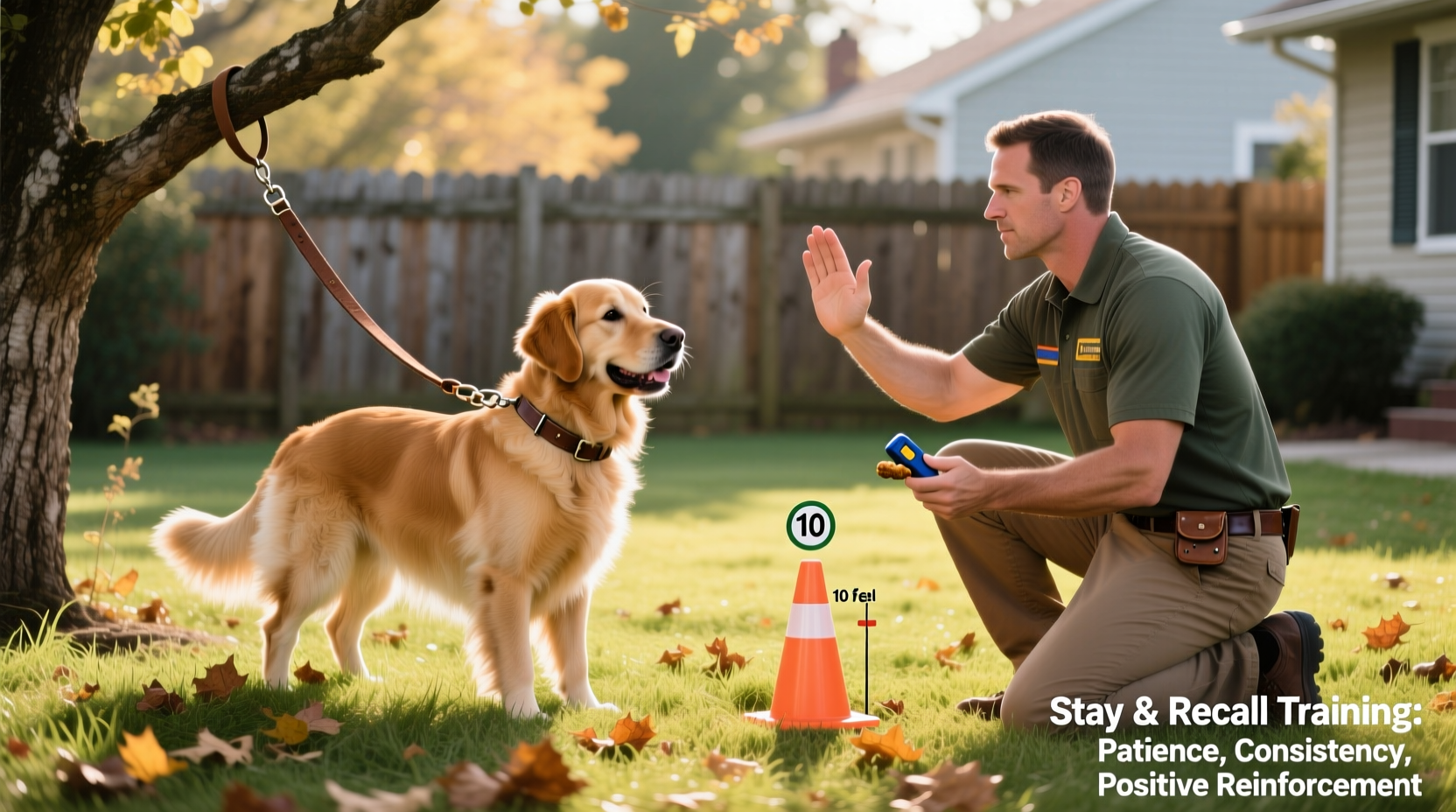
Dogs are naturally curious and driven by scent, movement, and social interaction. An effective off-leash stay or recall doesn’t suppress these instincts—it channels them through conditioned responses. At its core, training relies on creating strong associations: staying near you leads to rewards, and returning when called results in better outcomes than chasing distractions.
Reliability hinges on three pillars: motivation, clarity, and generalization. Your dog must want to respond (motivation), understand exactly what you’re asking (clarity), and perform the behavior across different contexts (generalization). Rushing into off-leash work before mastering these elements undermines long-term success.
“Off-leash reliability isn’t achieved through force—it’s earned through consistent, positive experiences that make coming back the best choice.” — Dr. Sarah Hartman, Certified Canine Behavior Consultant
Step-by-Step Guide to Building Reliable Off-Leash Recall
Start indoors or in a securely fenced area with minimal distractions. Use high-value treats—such as small pieces of chicken or cheese—that your dog rarely gets elsewhere. Follow this timeline over several weeks:
- Phase 1: On-Leash Foundation (Weeks 1–2)
Practice “come” using a short leash. Say your cue once, gently reel your dog in if needed, then reward lavishly upon arrival. Never call your dog to end fun abruptly (e.g., for bath time); this creates negative associations. - Phase 2: Long-Line Practice (Weeks 3–4)
Use a 15–30 foot training lead in a quiet outdoor space. Let your dog explore, then call. If they hesitate, give a light tug and immediately reward compliance. Gradually increase distance and distraction levels. - Phase 3: Controlled Off-Leash Sessions (Weeks 5–6)
In a safe, enclosed area, allow brief off-leash intervals. Call during low-distraction moments—not mid-chase. Reward enthusiastically every time. If your dog ignores you, calmly reattach the long line and repeat. - Phase 4: Real-World Generalization (Ongoing)
Progress to parks, trails, and urban settings. Always start with a lower expectation and rebuild proofing gradually. Carry multiple rewards and use surprise bonuses (e.g., playtime) to strengthen motivation.
Mastering the Off-Leash Stay: Structure and Self-Control
The off-leash stay is often overlooked but equally critical. It teaches impulse control and prepares your dog for real-world pauses—like waiting at crosswalks or resisting wildlife encounters.
Begin with a solid on-leash stay command. Once your dog holds position reliably for 30 seconds in a quiet room, begin adding movement. Step away one foot, return, reward. Increase distance slowly. Introduce duration by counting silently to five, then ten, then thirty.
Next, add mild distractions: toss a toy nearby, have someone walk past. Only progress when your dog remains calm. Use a release word like “okay” to signal the end of the stay—never assume silence means permission to move.
When transitioning off-leash, do so only in fully enclosed areas. Stand directly in front of your dog, give the stay cue, step back slowly, and return quickly to reward. If your dog breaks early, avoid scolding. Instead, reset and shorten the challenge.
Do’s and Don’ts of Off-Leash Training
| Do | Don’t |
|---|---|
| Use high-value rewards exclusively for recall and stay | Call your dog only to punish or end play |
| Practice frequently in short sessions (5–10 minutes) | Expect perfection after one or two tries |
| Gradually increase difficulty: distance, duration, distraction | Move to open fields before mastering basics in controlled spaces |
| Use a consistent verbal cue and hand signal | Vary cues (“Come here!”, “Get over here!”) causing confusion |
| Reinforce intermittently once reliability improves | Stop rewarding altogether—behavior will fade |
Real Example: Transforming a Distracted Herding Dog
Milo, a 2-year-old Border Collie, loved chasing squirrels and ignoring calls during hikes. His owner, Jenna, struggled with frustration and resorted to yelling, which only made Milo avoid her. She shifted strategy: first, she trained recall using a long line in a grassy field. Every time Milo turned toward her after a chase, she rewarded him with freeze-dried liver and a quick game of tug.
She avoided calling him during high arousal until he had practiced enough to succeed. Instead, she used management—gently guiding him back with the line—and celebrated small wins. Within six weeks, Milo began checking in spontaneously during walks. After three months of consistent training, he reliably returned even when spotting deer at 50 yards. The breakthrough wasn’t force—it was making coming back more rewarding than running forward.
Essential Checklist for Off-Leash Success
- ✅ Establish a clear, consistent recall cue (e.g., “Here!” or “Come!”)
- ✅ Use high-value treats available only during training
- ✅ Begin training in low-distraction environments
- ✅ Use a long-line before attempting full off-leash freedom
- ✅ Avoid calling your dog to end fun activities—pair it with continuation instead
- ✅ Proof behaviors across locations, sounds, and moving stimuli
- ✅ Never punish a dog upon arrival, even if delayed
- ✅ Practice regularly, even after mastery, to maintain reliability
Frequently Asked Questions
What if my dog runs the other way when I call?
This usually indicates negative associations with the recall command. Stop using the cue temporarily. Instead, try running in the opposite direction to trigger chase instinct, then reward heavily when your dog follows. Rebuild the cue from scratch in a controlled setting using positive reinforcement only.
How long does it take to achieve reliable off-leash recall?
For most dogs, consistent training over 8–12 weeks establishes solid foundation skills. Full reliability in high-distraction environments may take 6 months or longer, depending on breed, temperament, and training frequency. Some working breeds require more mental engagement to override instinctual drives.
Can older dogs learn reliable recall?
Absolutely. While puppies are easier to shape from the start, adult dogs can learn new habits with patience and proper technique. Focus on rebuilding trust and motivation. Older dogs often excel due to increased focus and life experience.
Conclusion: Freedom Built on Trust and Consistency
Reliable off-leash stay and recall don’t happen overnight, but they are achievable for nearly any dog with the right approach. It’s not about dominance or fear—it’s about partnership. When your dog chooses to stay close or return despite distractions, it’s a testament to the bond you’ve built and the clarity you’ve provided.
Start where your dog is, not where you wish they were. Celebrate progress, manage setbacks with patience, and keep training joyful. With time, your dog won’t just obey—they’ll want to be with you, no leash required.
💬 Have a success story or challenge with off-leash training? Share your experience below—your insights could help another dog owner build a safer, more trusting relationship with their pet.








