Water hardness is a critical yet often overlooked factor in maintaining a thriving aquarium. While tap water may seem suitable for fish, its mineral content—particularly calcium and magnesium—can create conditions that stress or harm sensitive species. High water hardness (GH) affects osmoregulation, reproductive success, and the overall vitality of fish, especially soft-water species like tetras, angelfish, and discus. Fortunately, with careful planning and consistent monitoring, aquarists can effectively and safely reduce water hardness to match their fish’s natural habitat.
Understanding Water Hardness: GH vs. KH
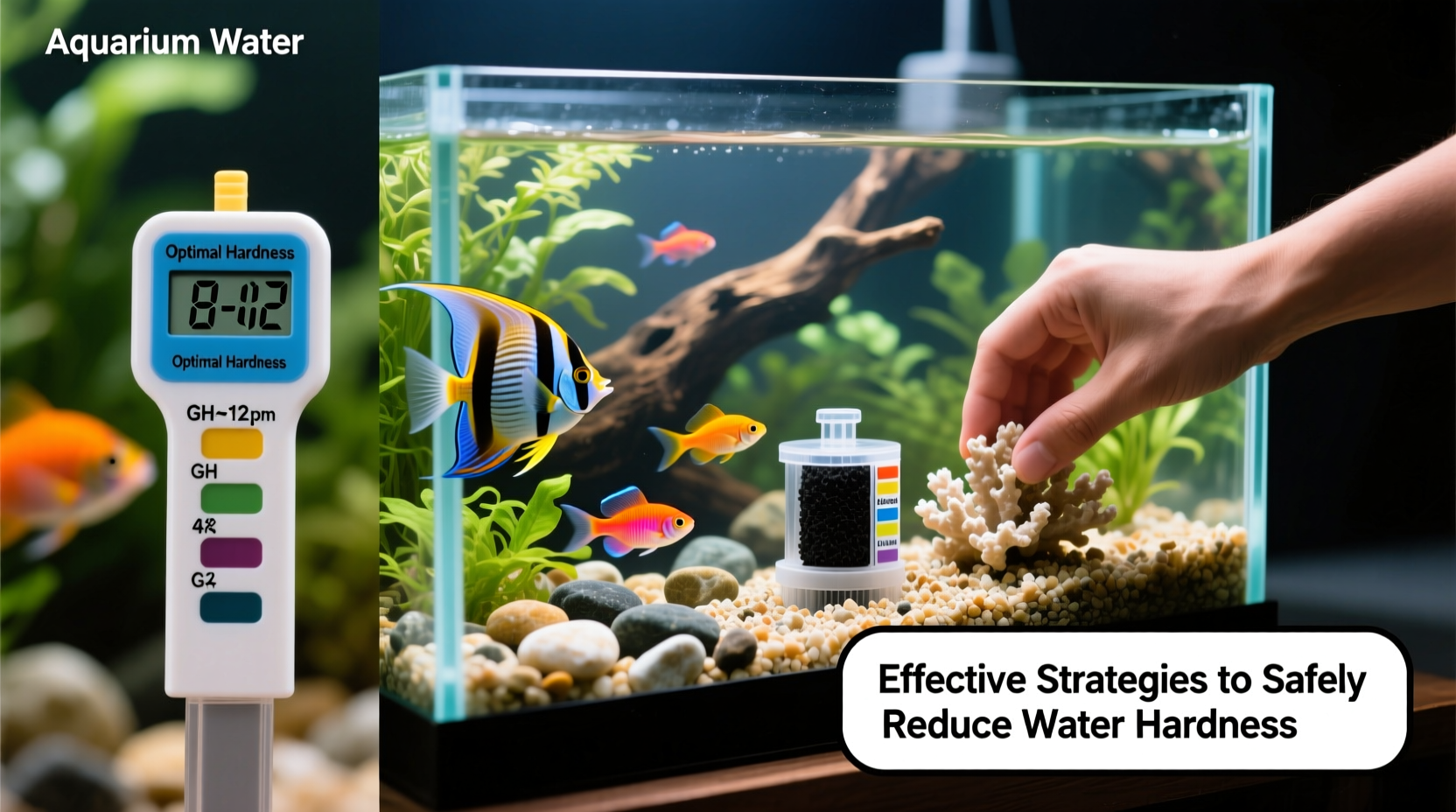
Before addressing how to reduce hardness, it's essential to distinguish between two types: general hardness (GH) and carbonate hardness (KH). GH measures the concentration of calcium and magnesium ions in the water and directly impacts fish physiology. KH, on the other hand, reflects the buffering capacity of water—the ability to resist pH changes—and is primarily due to bicarbonate and carbonate ions.
Fish from tropical rainforest environments, such as Amazonian blackwater streams, are adapted to very soft water (GH below 4 dGH). In contrast, African cichlids thrive in hard, alkaline water. Attempting to keep soft-water species in hard water without adjustment leads to chronic stress, weakened immune systems, and shortened lifespans.
Tip: Always test both GH and KH before making adjustments. Reducing GH without considering KH can destabilize pH.Proven Methods to Reduce Water Hardness Safely
Safely reducing water hardness requires gradual changes and an understanding of your source water. Sudden shifts in water chemistry can shock fish and disrupt biological filtration. Below are five reliable methods, each suited to different setups and goals.
1. Use Reverse Osmosis (RO) Water
Reverse osmosis is one of the most effective ways to remove dissolved minerals. RO units filter water through a semi-permeable membrane, eliminating up to 95–99% of ions, including calcium and magnesium. The resulting water is nearly pure, with GH close to zero.
To use RO water, mix it with a portion of tap water to achieve the desired hardness level. For example, blending 50% RO water with 50% tap water typically halves the original GH. Always remineralize RO water when used for fish tanks, as completely demineralized water lacks essential electrolytes needed for fish health.
2. Add Peat Moss
Peat moss, derived from decomposed organic matter, naturally softens water by releasing organic acids (humic and fulvic acids) that bind to calcium and magnesium ions. It also gently lowers pH, mimicking blackwater environments.
To use peat, place it in a mesh bag inside the filter. Pre-boil the peat to sterilize it and reduce initial tannin release, which can discolor water. Over time, peat gradually reduces GH and enhances water stability for soft-water species.
3. Introduce Driftwood
Natural driftwood releases tannins into the water, which slightly soften it and lower pH. While less potent than peat or RO water, driftwood provides a steady, low-level softening effect ideal for maintenance rather than drastic change.
Soak new driftwood in a separate container for several days to leach out excess tannins before placing it in the main tank. This prevents excessive yellowing of water while still allowing beneficial softening effects.
4. Mix with Distilled or Deionized Water
Distilled and deionized (DI) water are affordable alternatives to RO water. Both have negligible mineral content and can be mixed with tap water to dilute hardness. However, like RO water, they must be remineralized before use to avoid osmotic stress in fish.
A typical approach is to replace 50% of weekly water changes with distilled water, slowly acclimating fish to softer conditions over several weeks.
5. Utilize Water Softening Resins
Ion-exchange resins specifically designed for aquariums remove calcium and magnesium ions and replace them with hydrogen or sodium ions. These resins are placed in filter compartments and regenerate automatically during water flow.
While effective, resins require regular replacement or recharging. They are best used in conjunction with monitoring tools to prevent over-softening, which can lead to unstable pH levels.
“Maintaining appropriate water hardness isn’t just about aesthetics—it’s fundamental to fish osmoregulation and long-term health.” — Dr. Lena Peterson, Aquatic Biologist, University of Florida
Step-by-Step Guide to Lowering Water Hardness Gradually
Rapid changes in water parameters can be fatal. Follow this timeline to safely reduce hardness over 4–6 weeks:
- Test current levels: Use liquid test kits to measure GH and KH. Record baseline values.
- Determine target hardness: Research the ideal GH range for your fish species (e.g., neon tetras prefer 1–5 dGH).
- Choose a method: Select one primary technique (e.g., 50% RO/tap mix) based on availability and budget.
- Begin partial replacements: Replace 25% of tank water weekly with softened water, ensuring temperature and pH match closely.
- Monitor weekly: Track GH, KH, and pH. Adjust mixing ratios if changes are too fast or slow.
- Stabilize and maintain: Once target GH is reached, continue using softened water for all changes.
Do’s and Don’ts When Reducing Water Hardness
| Action | Do | Don't |
|---|---|---|
| Water Changes | Mix softened and tap water gradually | Replace more than 50% with pure RO/distilled at once |
| pH Stability | Monitor KH to prevent crashes | Ignore KH while adjusting GH |
| Remineralization | Add electrolyte supplements for RO/DI water | Use untreated RO water directly in the tank |
| Testing | Use accurate liquid test kits weekly | Rely solely on test strips for GH/KH |
| Fish Observation | Watch for signs of stress (rapid gilling, lethargy) | Proceed if fish show distress |
Mini Case Study: A Discus Keeper’s Success Story
Mark, an aquarist in Chicago, struggled for months with recurring illness in his discus tank. Despite pristine filtration and feeding, fish showed poor coloration and frequent breathing issues. Testing revealed his tap water had a GH of 12 dGH—far above the ideal 1–4 dGH for discus.
He installed a small RO unit and began mixing 70% RO with 30% tap water, adding a specialized remineralizer for soft-water fish. Over six weeks, he reduced GH to 3 dGH. Within a month, the discus displayed vibrant colors, increased appetite, and successful spawning. Mark now maintains stable parameters and credits the change in water hardness as the turning point in his success.
Essential Checklist for Safe Hardness Reduction
- ✅ Test GH, KH, and pH before starting
- ✅ Identify the ideal hardness for your fish species
- ✅ Choose a softening method (RO, peat, resin, etc.)
- ✅ Prepare remineralized water if using RO/DI
- ✅ Perform weekly 25% water changes with adjusted water
- ✅ Monitor fish behavior and water parameters weekly
- ✅ Avoid sudden changes—adjust over 4–6 weeks
- ✅ Maintain KH above 3 dKH to stabilize pH
Frequently Asked Questions
Can I use vinegar or lemon juice to soften aquarium water?
No. Organic acids like vinegar or lemon juice cause rapid pH drops and are toxic to fish in uncontrolled amounts. They do not effectively reduce GH and can destabilize the entire system.
Will live plants help reduce water hardness?
Some aquatic plants absorb minerals during growth, but the effect on GH is minimal and inconsistent. Plants like hornwort or java moss may contribute slightly over time but should not be relied upon as a primary softening method.
How often should I test water hardness after stabilization?
Once stable, test GH and KH monthly. If using RO or resins, check every two weeks to ensure consistency, especially if source water varies seasonally.
Take Action for Healthier Fish Today
Managing water hardness is not a luxury—it’s a necessity for species-specific care. By understanding your water and applying proven, gradual techniques, you create an environment where fish don’t just survive, but thrive. Whether you’re keeping delicate tetras or breeding discus, the right water chemistry lays the foundation for vibrant color, strong immunity, and natural behavior.
💬 Have experience softening aquarium water? Share your tips or challenges in the comments—your insight could help fellow aquarists achieve healthier tanks!








