Cat owners often feel frustrated and confused when their feline begins urinating outside the litter box. This behavior is rarely about spite or rebellion—it’s usually a signal of underlying issues ranging from medical conditions to environmental stressors. Addressing the problem effectively requires a multifaceted approach that considers health, hygiene, and emotional well-being. With patience and consistency, most cases can be resolved. Below are eight proven strategies to help you restore proper litter box use and strengthen your bond with your cat.
1. Rule Out Medical Issues First
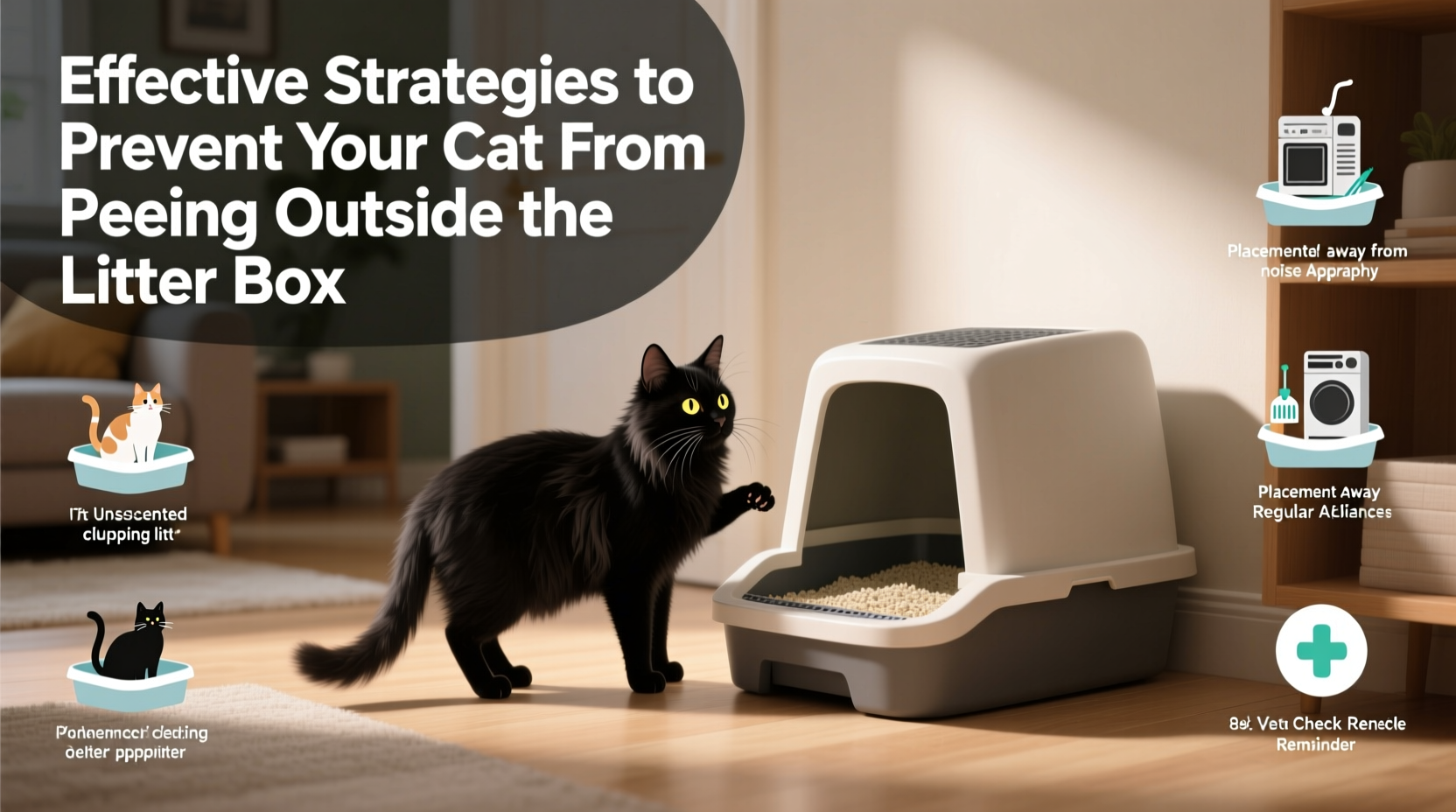
Before assuming behavioral causes, it’s essential to consult a veterinarian. Urinary tract infections, kidney disease, diabetes, arthritis, and bladder stones can all cause inappropriate urination. Cats in pain may associate the litter box with discomfort and avoid it altogether.
Symptoms to watch for include frequent trips to the box with little output, vocalizing while urinating, blood in urine, or excessive licking of the genital area. If any of these are present, seek veterinary care immediately.
“Never assume litter box avoidance is purely behavioral. Up to 40% of cases have a medical root.” — Dr. Laura Gonzales, Feline Veterinarian, American Association of Feline PractitionersTip: Keep a log of your cat’s urination patterns—frequency, location, and appearance—to share with your vet.
2. Evaluate Litter Box Hygiene and Placement
Cats are fastidious groomers and expect the same cleanliness from their bathroom. A dirty litter box is one of the top reasons cats refuse to use it. Scoop daily and completely change the litter weekly. Use unscented, clumping litter unless your cat shows a preference otherwise.
Placement matters too. Avoid high-traffic areas, noisy appliances, or locations near food and water bowls. Cats prefer quiet, accessible spots where they feel safe during vulnerable moments. If you have multiple floors, ensure there’s at least one box per level.
| Factor | Do | Avoid |
|---|---|---|
| Cleaning Frequency | Scoop daily, full change weekly | Letting waste accumulate |
| Location | Quiet, low-traffic area | Near washing machines or loud spaces |
| Litter Type | Unscented, fine-grained clumping | Scented or crystal litters (for sensitive cats) |
| Box Count | One per cat + one extra | Sharing boxes among multiple cats |
3. Address Stress and Environmental Triggers
Cats are highly sensitive to changes in their environment. Moving homes, new pets, visitors, construction noise, or even rearranged furniture can trigger anxiety-related elimination. When stressed, cats may mark territory by urinating on vertical surfaces—or simply avoid the litter box due to fear.
To reduce stress, maintain routines, provide safe hiding spaces (like covered beds or cat trees), and consider using pheromone diffusers such as Feliway. These release synthetic versions of calming facial pheromones cats naturally produce.
Tip: Introduce changes gradually. If adding a new pet, allow scent swapping before face-to-face contact.4. Choose the Right Litter Box Type
Not all litter boxes suit every cat. Older or arthritic cats may struggle with high-sided boxes. Some cats dislike hoods due to trapped odors or feeling trapped. Others may prefer larger boxes to turn around comfortably.
Experiment with different styles: open vs. covered, large vs. standard, low-entry vs. high walls. For multi-cat households, vary box types to see what each cat prefers. Remember, preferences can change with age or health.
- Open-top boxes: Better ventilation, easier access
- Covered boxes: More privacy but may trap smells
- Self-cleaning boxes: Convenient but can startle some cats
- Large rectangular pans: Ideal for bigger cats or digging preferences
5. Clean Accidents Thoroughly to Prevent Repeat Behavior
If your cat has already urinated outside the box, improper cleaning can lead to repeat incidents. Residual odor encourages re-marking. Avoid ammonia-based cleaners, which smell like urine to cats.
Instead, use enzymatic cleaners specifically designed for pet stains. These break down urea and ammonia crystals at a molecular level. Blot the area first, apply the cleaner generously, and let it dry naturally—do not wipe away.
“Enzymatic cleaners are non-negotiable. Without them, you’re just inviting the behavior to continue.” — Sarah Thompson, Certified Cat Behavior Consultant
6. Step-by-Step Guide to Reestablish Litter Box Use
Follow this timeline to systematically correct inappropriate urination:
- Day 1–2: Schedule a vet visit to rule out medical causes.
- Day 3: Remove all soiled substrates and clean affected areas with an enzymatic cleaner.
- Day 4: Audit current litter boxes—cleanliness, number, placement, type.
- Day 5: Add additional boxes in quiet, accessible locations. Use uncovered, large pans with unscented clumping litter.
- Day 6–7: Confine your cat to a small room with food, water, bed, and a pristine litter box. Encourage use through positive reinforcement.
- Week 2: Gradually expand territory, monitoring for accidents. Continue confinement if issues persist.
- Week 3–4: Reintroduce freedom while maintaining consistent cleaning and observation.
7. Mini Case Study: Luna, the Anxious Apartment Cat
Luna, a 4-year-old female tabby, began urinating on her owner’s bedroom rug after the building next door started construction. Her owner initially scolded her, worsening the issue. After a vet ruled out infection, a behaviorist recommended moving the litter box away from the window facing the construction site, adding a second box in a quieter room, and using a Feliway diffuser.
Within two weeks, Luna stopped urinating outside the box. The owner also began playing white noise at night to mask sudden sounds. This case highlights how environmental stress���not defiance—can drive unwanted behaviors.
8. Create a Positive Litter Box Experience
Make the litter box a safe and rewarding place. Never punish your cat for accidents—this increases fear and worsens the problem. Instead, reward correct use with treats, praise, or gentle petting.
Consider placing toys or catnip near (but not in) the box to build positive associations. Some cats respond well to clicker training to reinforce desired habits.
Tip: If your cat backs into the box and squats quickly, she likely wants to get in and out fast—keep it clean and unobstructed.Checklist: Quick Actions to Stop Inappropriate Urination
- ✅ Schedule a veterinary check-up
- ✅ Scoop litter boxes daily
- ✅ Provide one box per cat plus one extra
- ✅ Place boxes in quiet, accessible areas
- ✅ Use unscented, clumping litter
- ✅ Clean accidents with enzymatic cleaner
- ✅ Reduce household stress with pheromone diffusers
- ✅ Avoid punishment; use positive reinforcement
FAQ
Why is my cat peeing on the carpet but still pooping in the box?
This often indicates a surface or location preference. Carpet may feel softer than litter, or the box may be in an undesirable spot for urination. Try placing a litter box near the accident site temporarily, then slowly move it to the desired location.
Can spaying or neutering stop marking behavior?
Yes, especially if done early. Unneutered males are more likely to spray, but even fixed cats may mark due to stress. Spaying/neutering reduces hormonal motivation but doesn’t eliminate behavioral causes.
How long does it take to fix litter box problems?
With consistent effort, improvement can occur within 2–4 weeks. Chronic cases may take longer, especially if anxiety or medical recovery is involved. Patience and persistence are key.
Conclusion
Preventing your cat from peeing outside the litter box isn’t about control—it’s about understanding. By addressing health, hygiene, and emotional needs, you create an environment where your cat feels safe and confident. These eight strategies offer a comprehensive roadmap to restoring harmony in your home. Start with the vet, refine your setup, and respond with empathy, not frustration.
🚀 Take action today: Pick one strategy to implement tonight—whether it’s scheduling a vet visit or cleaning a box thoroughly. Small steps lead to lasting change. Share your experience or questions in the comments to connect with fellow cat lovers!








