
For many cat owners, a dedicated outdoor cat house offers their feline a secure retreat while enjoying fresh air. However, such shelters can unintentionally attract unwanted guests—raccoons, squirrels, stray cats, opossums, or even rodents. These intruders not only disrupt your cat’s comfort but may also pose health risks through disease transmission or territorial aggression. The challenge lies in deterring these animals effectively without resorting to harmful chemicals or traps. Fortunately, there are proven, humane, and eco-friendly methods to safeguard your cat’s space while respecting local wildlife.
Understand Why Other Animals Are Drawn to Cat Houses
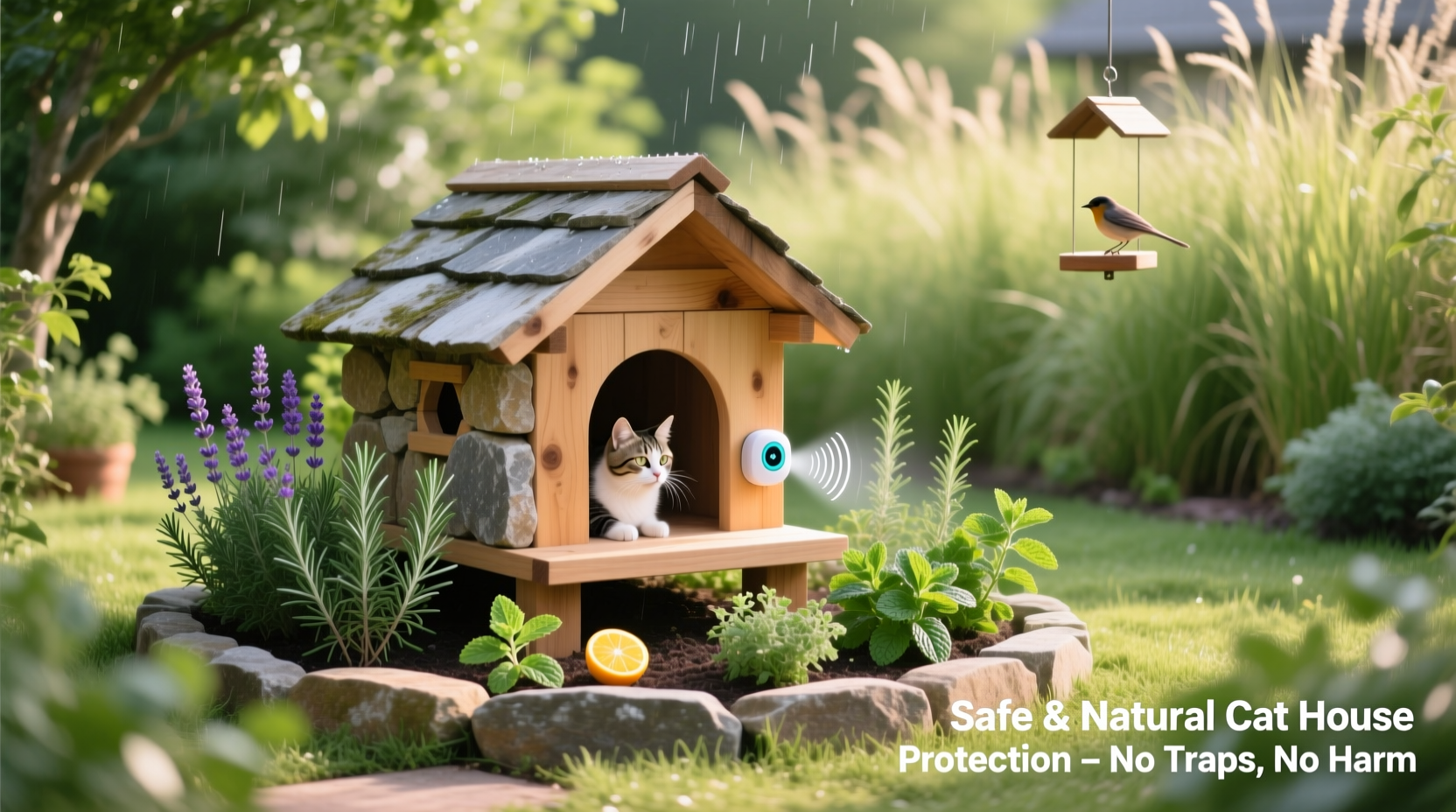
Before implementing deterrents, it's essential to understand the motivations behind animal intrusion. Warmth, shelter from weather, and the scent of food or another animal all make cat houses appealing. Outdoor structures often mimic ideal nesting spots for small mammals and opportunistic scavengers. Raccoons, for instance, seek dry, enclosed spaces elevated off the ground. Stray cats may view an unoccupied shelter as potential territory. Even birds or rodents might investigate if nesting material is present.
The key is to remove incentives without compromising your cat’s safety or comfort. Neutralizing scent markers, eliminating food sources, and modifying access points go a long way in discouraging intruders.
Tip: Clean the cat house weekly with mild vinegar solution to neutralize lingering odors that might attract other animals.Natural Deterrents That Work Without Harm
Many effective repellents rely on sensory discomfort rather than physical barriers. Animals avoid areas that smell, feel, or sound threatening. The following natural options are safe for pets and people while being highly effective against common intruders:
- Mother Nature’s Warning: Predator Urine – Products containing coyote or fox urine simulate the presence of a predator. Sprinkled around the perimeter (not inside), they signal danger to raccoons, rodents, and stray cats. Reapply after rain.
- Essential Oils with Caution – Peppermint, eucalyptus, and citrus oils are unpleasant to many animals. Soak cotton balls and place them near—but never inside—the entrance. Note: Never apply oils directly to surfaces your cat touches, as some essential oils are toxic to felines.
- Chili-Based Repellents – A homemade spray made from blended jalapeños, garlic, and water deters mammals without toxicity. Strain and spray around entry zones. Avoid contact with plants or direct exposure to your cat.
“Using scent-based deterrents mimics natural ecological signals, which is far more sustainable than trapping or poisoning.” — Dr. Lena Torres, Urban Wildlife Biologist
Physical Modifications for Secure Access
One of the most reliable ways to exclude unwanted animals is by controlling access. Many intruders are larger or lack the agility of domestic cats. Strategic design adjustments can make entry difficult for others while remaining convenient for your pet.
A **cat flap with microchip activation** is one of the most effective solutions. These flaps open only when your cat’s implanted chip or collar tag is detected, completely blocking access to unidentified animals. While slightly more expensive, they offer peace of mind and long-term security.
If a smart flap isn’t feasible, consider a **curved tunnel entrance**—a flexible PVC tube bent at a 90-degree angle before reaching the main chamber. Cats can navigate it easily, but larger animals like raccoons cannot maneuver through the turn.
| Modification | Effectiveness | Best For |
|---|---|---|
| Microchip-activated door | ★★★★★ | Stray cats, raccoons, opossums |
| Curved entrance tunnel | ★★★★☆ | Raccoons, rodents, larger mammals |
| Elevated placement (2+ feet) | ★★★☆☆ | Rodents, snakes |
| Slanted roof with overhang | ★★★☆☆ | Birds, squirrels |
Step-by-Step: Securing Your Cat House in 5 Days
- Day 1: Clean the interior thoroughly with a vinegar-water mix (1:1). Remove any bedding that holds strong odors.
- Day 2: Install a curved tunnel or upgrade to a microchip door. Test that your cat can enter comfortably.
- Day 3: Place cotton balls soaked in peppermint oil around the perimeter (6 inches from entrance).
- Day 4: Apply predator urine granules or spray in a 3-foot radius around the shelter. Avoid windy days.
- Day 5: Elevate the house on a stand or deck post. Monitor for signs of intrusion over the next week.
Behavioral and Environmental Strategies
Your yard’s overall environment plays a major role in animal traffic. A cluttered, food-rich landscape invites wildlife; a tidy, controlled one does not. Simple landscaping choices can reduce appeal significantly.
- Store pet food indoors and clean feeding areas daily.
- Remove fallen fruit, birdseed spills, and compost piles near the cat house.
- Trim back overgrown bushes and eliminate debris piles where animals might hide.
- Use motion-activated sprinklers to startle nocturnal visitors without causing harm.
Real Example: How the Patel Family Protected Their Cat’s Shelter
The Patels in suburban Austin built a cozy insulated house for their senior cat, Luna. Within weeks, a family of raccoons moved in overnight, forcing Luna to stay indoors. After consulting a local humane society, they implemented a multi-pronged approach: they cleaned the shelter, installed a curved entrance, and placed coyote urine pellets around the base. They also added a motion-activated LED light for nighttime deterrence. Within five days, the raccoons left and did not return. Luna now uses her house daily, and no other animals have attempted entry in six months.
Checklist: Keep Intruders Out—Naturally & Safely
- ☐ Clean the cat house weekly with non-toxic solution
- ☐ Install a microchip door or curved tunnel entrance
- ☐ Use predator urine granules around the perimeter
- ☐ Place essential oil-soaked cotton balls nearby (not inside)
- ☐ Elevate the house at least 2 feet off the ground
- ☐ Remove food sources and yard debris
- ☐ Monitor for tracks or droppings weekly
- ☐ Relocate if persistent issues continue
Frequently Asked Questions
Will cayenne pepper hurt my cat?
Topical exposure to cayenne pepper can irritate a cat’s paws and eyes. It should never be applied inside or directly around the entrance. Instead, use it in diluted spray form on surrounding soil, keeping it away from high-touch zones.
Can I use ultrasonic repellents?
Ultrasonic devices emit high-frequency sounds meant to deter pests. While generally safe, their effectiveness varies. Some cats may also be sensitive to the frequencies. If used, choose models with adjustable settings and monitor your cat’s behavior for signs of stress.
What if a stray cat keeps trying to enter?
Stray cats are territorial and may persist despite deterrents. In addition to securing the house, consider contacting a local TNR (Trap-Neuter-Return) program. Humane relocation and community efforts often yield better long-term results than exclusion alone.
Final Thoughts: Safety, Respect, and Coexistence
Protecting your cat’s outdoor sanctuary doesn’t require conflict with nature. By combining thoughtful design, natural repellents, and environmental management, you create a space that welcomes your pet while gently discouraging others. The goal isn’t eradication—it’s coexistence with clear boundaries. These strategies uphold both your cat’s well-being and ethical responsibility toward urban wildlife.
💬 Have a natural method that worked for you? Share your experience in the comments and help fellow cat owners protect their pets humanely.








