
Bird feeders bring life, color, and song to backyards across the country. But when outdoor or neighborhood cats discover these avian buffets, the joy can quickly turn into distress. Cats are natural hunters, and even well-fed pets may stalk and kill birds drawn to feeders. Protecting your feathered visitors isn’t just about preserving the beauty of your garden—it’s also a matter of ecological responsibility. Birds play vital roles in pollination, pest control, and seed dispersal. This guide offers practical, humane, and scientifically supported strategies to deter cats from bird feeders while keeping both feline and avian friends safe.
Elevate Feeders Beyond Feline Reach
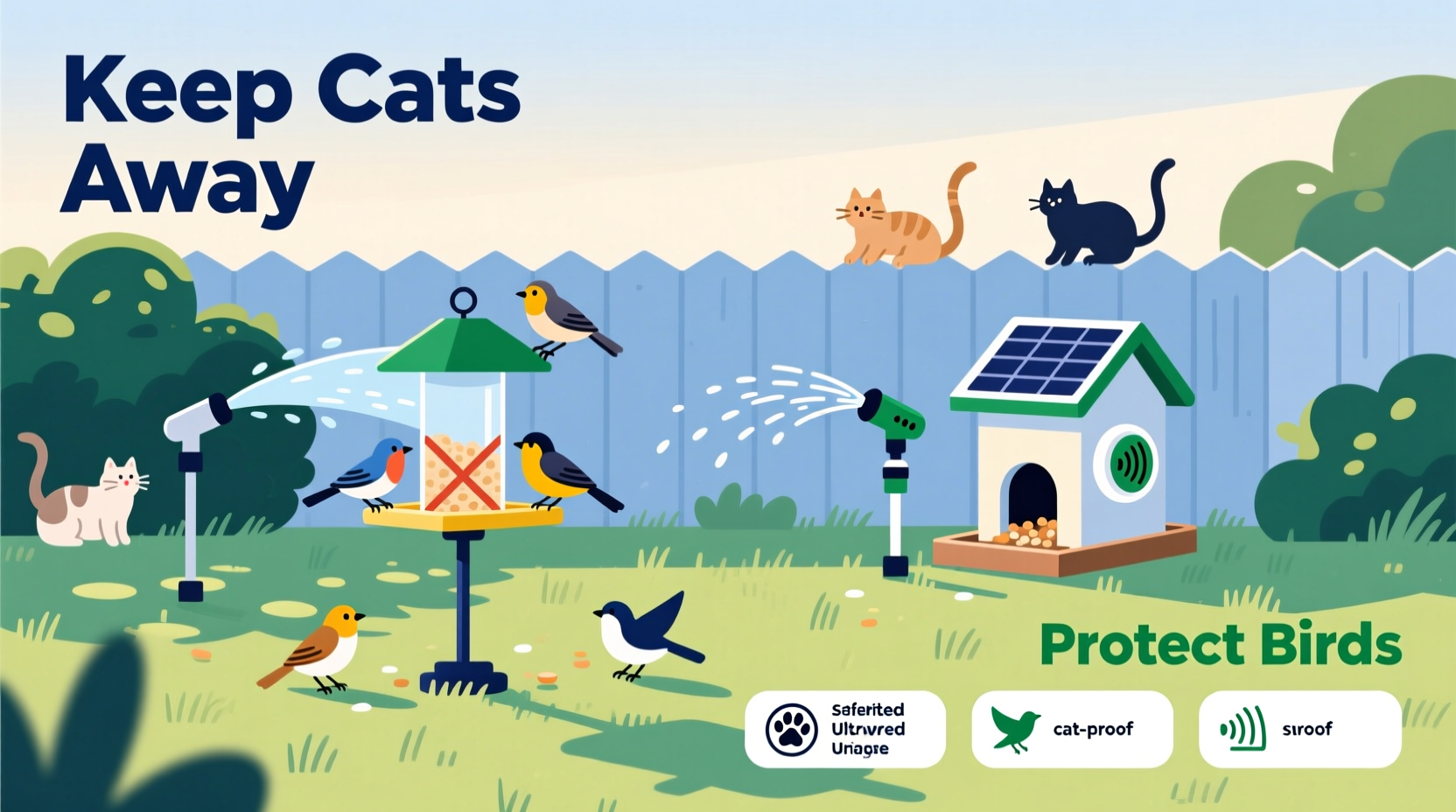
One of the most effective physical deterrents is positioning bird feeders where cats simply cannot jump or climb. Most domestic cats can leap up to five feet vertically from a standing position, but few can manage more than six feet—especially if there’s no nearby launching point.
Mount feeders at least 6–7 feet above ground level. Use tall, smooth metal poles that don’t allow climbing. Avoid placing feeders near fences, trees, or structures that cats can use as springboards. If you must place a feeder near a tree, ensure it's at least 8 feet away horizontally from any branch or trunk that could serve as access.
Tip: Use a squirrel baffle on your pole—it doubles as a cat deterrent by blocking upward movement.Use Physical Barriers and Strategic Placement
Beyond height, consider protective enclosures around the feeding zone. A wire mesh cage placed around the feeder (with openings large enough for birds but too small for cats) can prevent pouncing while still allowing access to food. These are especially useful for ground-feeding birds like doves or juncos.
Another approach is to create “safe zones” using dense shrubbery or thorny plants like barberry or holly around the base of the feeder pole. While this may seem counterintuitive, thick vegetation can discourage cats from lurking close by, as they prefer open sightlines for stalking.
“Cats rely on stealth and surprise when hunting. Disrupt their ambush points, and you disrupt their success.” — Dr. Sarah Thompson, Wildlife Biologist, Cornell Lab of Ornithology
Implement Motion-Activated Deterrents
Technology offers powerful tools for non-lethal cat control. Motion-activated sprinklers, lights, or sound emitters can startle cats without harming them. When triggered by movement near the feeder, these devices create an unpleasant or startling experience that discourages repeat visits.
Sprinklers are particularly effective because cats dislike water. Units like the ScareCrow motion-activated sprinkler cover a 10-foot radius and activate instantly upon detecting motion. They’re solar-powered, weather-resistant, and programmable to avoid false triggers from birds or wind-blown debris.
For urban settings where noise might be a concern, opt for ultrasonic repellers. These emit high-frequency sounds inaudible to humans but unpleasant to cats. While results vary, consistent use in combination with other methods increases effectiveness.
Step-by-Step Guide: Installing a Cat-Deterrent Feeder System
- Assess the area: Identify common cat pathways and vantage points near your current feeder.
- Select a new location: Choose a spot at least 6 feet off the ground and 8 feet from trees, fences, or walls.
- Install a slick metal pole: Use a 7-foot aluminum or steel pole with a squirrel baffle mounted below the feeder.
- Add a motion-activated sprinkler: Position it to cover the ground beneath the feeder.
- Test and adjust: Monitor activity for several days. Reposition if cats find alternative routes.
Modify the Environment to Reduce Cat Appeal
Cats are less likely to linger in areas that feel exposed or uncomfortable. You can make your yard less inviting by removing hiding spots such as woodpiles, dense underbrush, or abandoned structures where cats might wait in ambush.
Introduce textured ground cover like gravel, chicken wire, or decorative rocks beneath feeders. Cats prefer soft, quiet surfaces like mulch or grass for stalking. Rough textures disrupt their ability to move silently and reduce comfort.
Avoid placing feeders near low decks or porches where cats can hide underneath. If unavoidable, install lattice panels or hardware cloth to block access beneath structures.
Tip: Scatter citrus peels or coffee grounds around the base of the feeder—cats dislike the smell, though reapplication after rain is necessary.Community Solutions and Responsible Pet Ownership
In many cases, the cats visiting your yard aren’t yours. Neighborhood free-roaming cats pose a significant threat to local bird populations. The American Bird Conservancy estimates that outdoor cats kill between 1.3 and 4 billion birds annually in the U.S. alone.
Engaging with neighbors respectfully can lead to lasting change. Encourage cat owners to keep pets indoors, especially during dawn and dusk—the peak hunting times for cats. Suggest using breakaway collars with bells, which studies show can reduce bird predation by up to 50%.
Support Trap-Neuter-Return (TNR) programs for feral cats in your area. While controversial among conservationists, TNR reduces overall cat populations over time and often includes relocation away from sensitive wildlife habitats.
Mini Case Study: The Greenway Family’s Bird-Friendly Yard
The Greenways in Portland, Oregon, loved watching chickadees and finches at their backyard feeder—until a neighbor’s tabby began frequent ambushes. After losing three birds in two weeks, they repositioned the feeder on a 7-foot pole 10 feet from the nearest tree. They added a motion-activated sprinkler and planted holly bushes around the base. Within ten days, cat visits dropped to zero. Over the next month, bird activity increased by 70%. “We didn’t want to harm the cat,” said homeowner Lisa Greenway, “but we had to protect the birds. These changes worked better than we expected.”
Do’s and Don’ts: Cat Deterrence at a Glance
| Do | Don't |
|---|---|
| Elevate feeders beyond 6 feet | Place feeders near fences or trees |
| Use smooth metal poles with baffles | Use wooden or textured poles cats can climb |
| Install motion-activated deterrents | Rely solely on scent repellents |
| Encourage indoor cat ownership | Yell at or chase cats aggressively |
| Plant thorny or dense shrubs nearby | Leave food scraps or pet food outdoors |
Frequently Asked Questions
Will hanging feeders from trees work?
Hanging feeders from tree branches often backfires. While swaying may deter squirrels, cats can easily jump onto lower branches and lunge at birds. If you must hang a feeder, ensure it’s at least 8 feet from the trunk and 10 feet from any structure, and use a wide baffle above the hook.
Are ultrasonic cat repellers effective?
Results vary. Some models work well in enclosed spaces or small yards, but open landscapes may diminish their range. Pair them with physical barriers for best results. Note that not all cats respond to ultrasonic tones, especially older animals with hearing loss.
Can I train my own cat to stay away from bird feeders?
Yes. Positive reinforcement works best. Redirect your cat’s attention with toys or treats when near the feeder zone. Consider building a secure catio (cat patio) to satisfy outdoor instincts safely. Over time, consistent training reduces predatory behavior.
Take Action to Protect Your Backyard Ecosystem
Creating a bird-friendly yard doesn’t mean waging war on cats. It means designing a space where both species can coexist with minimal conflict. By combining smart placement, humane deterrents, and community awareness, you can enjoy vibrant birdlife without compromising compassion for cats.
Start today: assess your feeder setup, eliminate ambush points, and invest in one or two key deterrents. Small changes yield big results—not just for birds, but for the balance of your local ecosystem.
💬 Have a strategy that worked in your yard? Share your experience in the comments and help others create safer spaces for birds and cats alike.








