
Bringing a stray dog into your life is an act of compassion. But transitioning from survival on the streets to walking calmly on a leash requires patience, empathy, and structure. Unlike dogs raised in homes, strays often lack exposure to collars, leashes, or human-led routines. Pushing too fast can damage trust. The key lies in gradual, reward-based training that fosters confidence. When done with care, leash training becomes not just a skill—but a bonding experience.
Understanding the Stray Dog Mindset
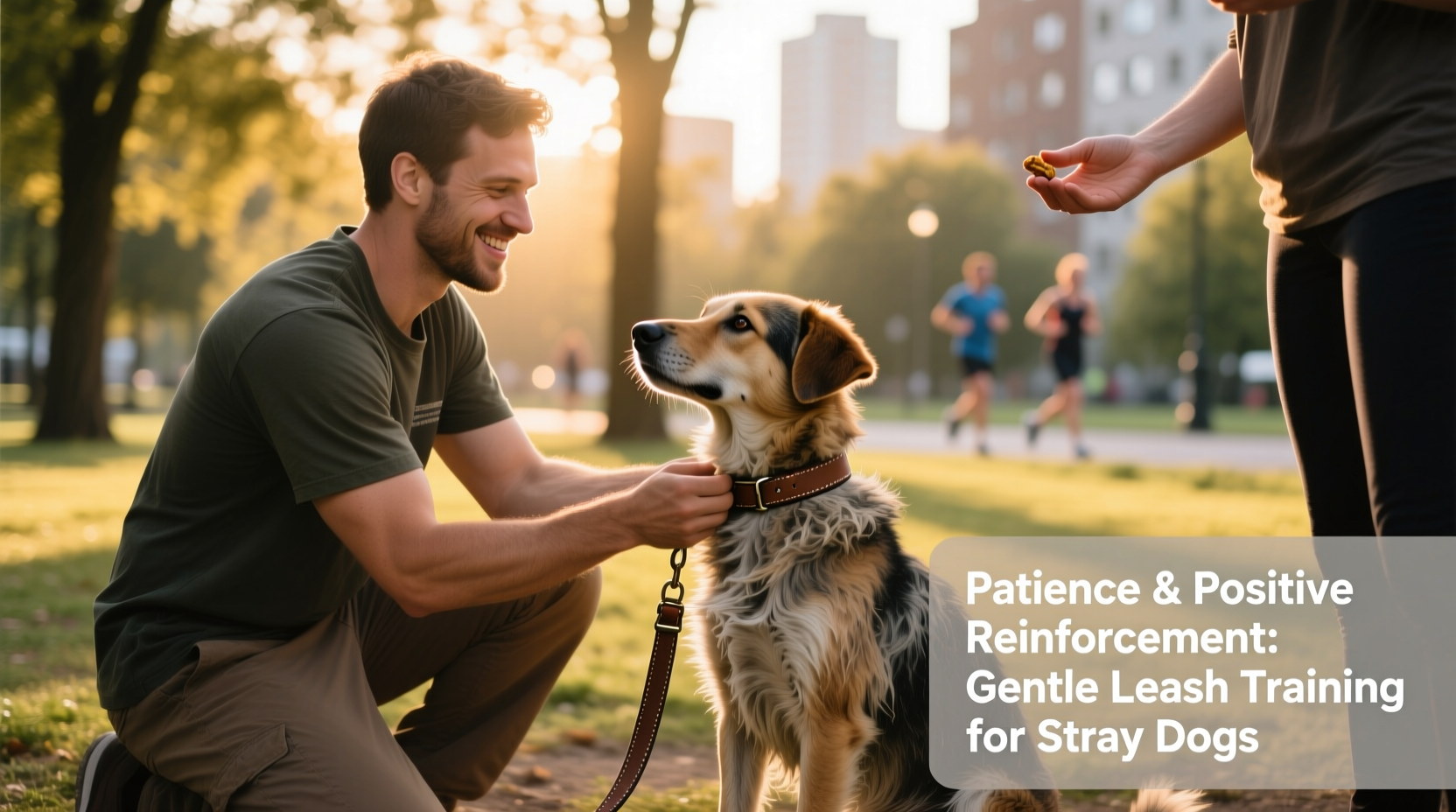
A stray dog’s behavior is shaped by necessity. Their instincts prioritize caution, self-preservation, and flight over obedience. Sudden movements, loud noises, or physical restraint may trigger fear or defensive reactions. Before introducing a leash, recognize that every step forward must be earned through consistency and safety.
Many strays have never worn a collar. The sensation of pressure around the neck—especially when pulled—can feel like a threat. Rushing this process risks creating lasting anxiety around walking. Instead, focus first on building trust. Allow several days or even weeks of adjustment before attempting any formal training. Let the dog explore their new environment at their own pace, forming positive associations with you as a source of food, comfort, and calm.
“With stray dogs, trust isn’t assumed—it’s built one quiet moment at a time.” — Dr. Lena Reyes, Veterinary Behaviorist
Step-by-Step: A Gentle Leash Training Timeline
Effective leash training unfolds in phases. Each stage reinforces security and cooperation. Follow this timeline to ensure steady progress without overwhelming the dog.
- Phase 1: Collar Acclimation (Days 1–5)
Introduce the collar during mealtime. Let the dog sniff it first. Gently place it around their neck for short intervals—just a few minutes at first—while offering treats. Gradually increase duration until they wear it comfortably throughout the day. - Phase 2: Harness Introduction (Days 6–10)
A front-clip harness is ideal for strays. It reduces pulling and feels less restrictive than a collar. Present the harness similarly—let them investigate it, then drape it over their back before fastening. Reward calm acceptance. Practice putting it on and removing it multiple times daily. - Phase 3: Leash Indoors (Days 11–14)
Attach the leash inside a quiet room. Let the dog drag it under supervision (remove when unsupervised). Sit nearby and toss high-value treats when they remain relaxed. Avoid holding the leash initially—this prevents tension. Your goal is neutrality: the leash should mean nothing scary. - Phase 4: First Outdoor Steps (Days 15–21)
Choose a low-distraction outdoor space—early morning sidewalks or empty parking lots work well. Hold the leash loosely and let the dog lead. Don’t force direction. If they freeze, wait. If they move, praise softly and offer treats. Keep sessions under five minutes at first. - Phase 5: Building Confidence on Walks (Weeks 4–6)
Gradually extend walk duration. Introduce mild distractions—like distant traffic or birds—only after the dog shows consistent calmness. Use verbal cues like “Let’s go” paired with treats when they follow willingly. Never yank or correct harshly.
Essential Tools and Techniques
The right equipment supports success. Avoid retractable leashes or choke chains—they create unpredictable tension. Instead, use a 4–6 foot flat leash and a well-fitted front-clip harness. Pair these with soft, pea-sized treats (boiled chicken, cheese, or commercial training bites) to reinforce desired behaviors instantly.
Positive reinforcement works best when timing is precise. Reward the dog within two seconds of a calm or forward-moving action. Over time, they’ll associate walking beside you with good outcomes. Avoid punishment-based methods; fear undermines progress and damages trust irreparably.
| Tool | Purpose | Recommended? |
|---|---|---|
| Front-Clip Harness | Redirects pulling, reduces neck strain | Yes – ideal for strays |
| Standard Collar | ID tags only; not for walking | Limited use |
| Retractable Leash | Unpredictable tension, encourages pulling | No – avoid |
| 6-Foot Nylon Leash | Consistent control, clear boundaries | Yes – preferred |
Common Challenges and Solutions
Even with careful planning, setbacks occur. Here’s how to handle frequent issues:
- Dog refuses to move: This is common in fearful strays. Don’t force. Stand quietly and drop treats near their paws. Wait for curiosity to take over. Back up slowly while tossing treats behind you to encourage following.
- Leash biting: Often stems from overstimulation or playfulness. Redirect with a toy or pause the walk until they settle. Never yank the leash away—it can turn into a game of tug-of-war.
- Reactive lunging: At traffic, other animals, or people? Increase distance immediately. Use “look at me” cues with high-value rewards when eye contact is given. Desensitization takes time—don’t rush exposure.
“Progress isn’t measured in distance walked, but in moments of calm connection.” — Marcus Tran, Canine Rehabilitation Specialist
Real Example: Training Luna, a Street-Rescued Terrier Mix
Luna, a three-year-old terrier mix, was found wandering near a highway. She flinched at sudden sounds and avoided touch. Her rescuer spent ten days simply feeding her by hand and sitting nearby reading aloud. Only then did she introduce a padded harness.
For the first outdoor attempt, Luna froze at the doorstep. Her caretaker sat on the porch with treats, ignoring the leash dragging behind her. After 20 minutes, Luna took one step forward. A treat followed. The next day, two steps. By day four, she walked 15 feet down the driveway.
Within six weeks, Luna walked confidently around the block, turning to check in with her person mid-walk. No corrections were used—only patience, repetition, and kindness. Today, she hikes trails and greets neighbors willingly.
Checklist: Key Actions for Successful Leash Training
- ✅ Spend 1–2 weeks building basic trust before introducing gear
- ✅ Use a front-clip harness instead of a collar for walks
- ✅ Let the dog drag the leash indoors under supervision
- ✅ Start outdoor walks in quiet, open spaces with minimal distractions
- ✅ Reward every small sign of progress—eye contact, forward steps, loose body posture
- ✅ Keep initial walks under 5 minutes; gradually increase duration
- ✅ End each session positively, even if progress seems minimal
- ✅ Avoid forcing movement or using aversive tools
Frequently Asked Questions
How long does it take to leash train a stray dog?
Timeline varies widely. Some dogs adapt in 3–4 weeks; others take 2–3 months. Success depends on prior trauma, temperament, and consistency. Focus on behavioral milestones—not calendar dates.
What if my dog pulls violently or tries to run?
Stop moving and stand still. Wait for the leash to slacken, even slightly, then mark that moment with a “yes!” or click and reward. Teach that pulling leads nowhere, while walking calmly produces rewards. Consider working with a force-free trainer if reactivity persists.
Can I train an older stray dog?
Absolutely. Age doesn’t prevent learning. Older strays may be slower to adapt due to entrenched habits, but they often respond well to structured, predictable routines. Patience and repetition are essential.
Final Thoughts: Walking Together, One Step at a Time
Leash training a stray dog is less about teaching obedience and more about restoring dignity. Every step taken beside you is a choice born of trust. There will be days of hesitation, fear, and backward motion. But there will also be breakthroughs—a tail wag, a glance upward, a willing turn down the sidewalk—that make the effort profound.
You’re not just teaching a dog to walk on a leash. You’re showing them that the world can be safe, that guidance doesn’t mean harm, and that companionship is worth embracing. With gentle persistence, the once-wary stray can become a confident companion, ready to explore life at your side.
🚀 Start today with one small step—literally. Put on the harness, offer a treat, and celebrate courage in whatever form it appears. Share your journey in the comments and inspire others walking the same path.








