
A saltwater aquarium is a living work of art—a dynamic ecosystem that brings the ocean’s beauty into your home. But when green algae begins to coat the glass, rocks, and equipment, that beauty quickly fades. While some algae presence is natural, excessive growth signals imbalance and can threaten coral health, reduce water clarity, and diminish aesthetic appeal. The good news: with targeted, consistent strategies, you can regain control and restore your tank to pristine condition.
This guide outlines proven, sustainable methods to eliminate green algae and prevent recurrence—without resorting to harsh chemicals or risky shortcuts.
Understanding Green Algae in Saltwater Tanks
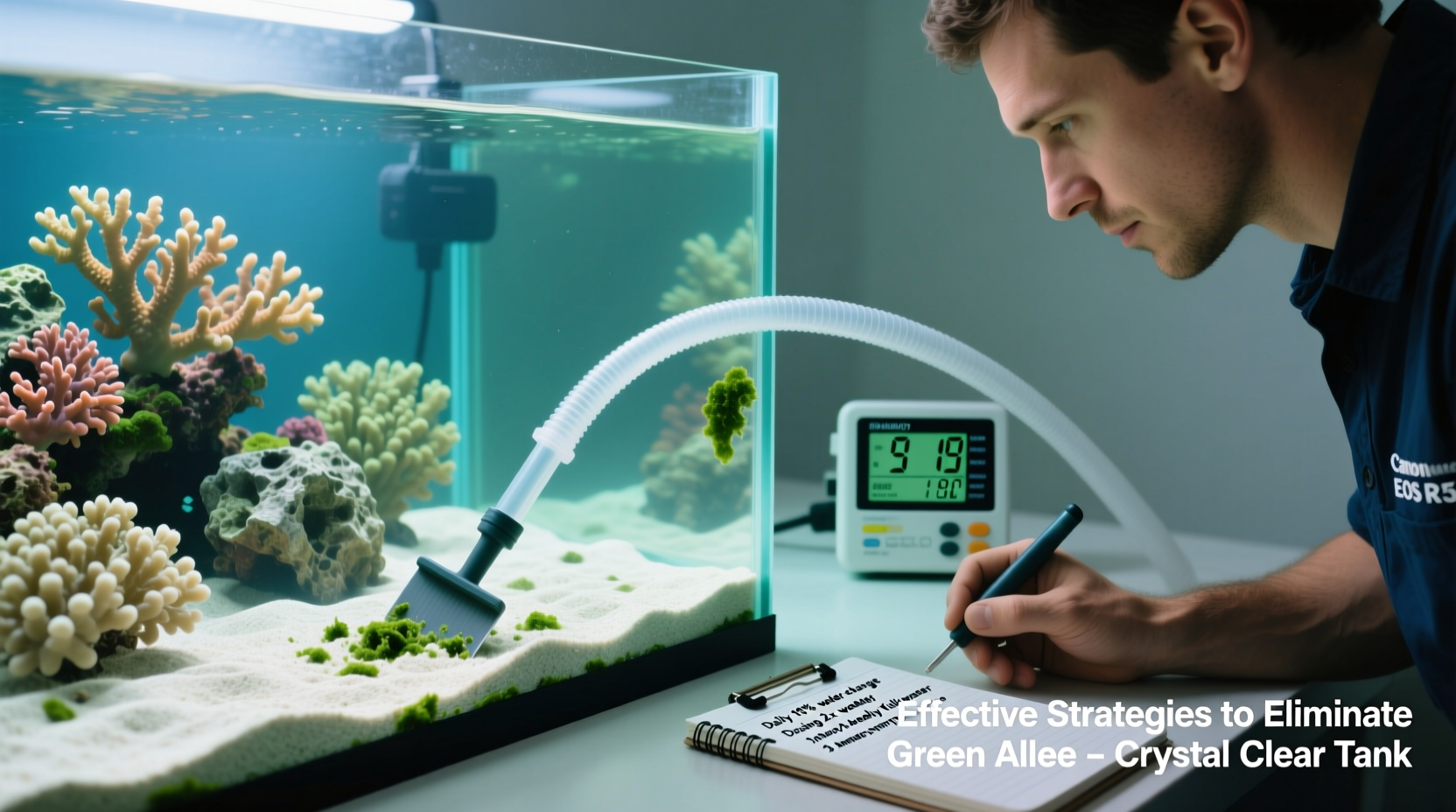
Green algae, primarily species like *Chlorella* and *Ulva*, thrive on light and nutrients such as nitrates and phosphates. In moderation, they contribute oxygen and serve as food for certain grazers. However, overgrowth typically stems from an imbalance in three key areas: lighting, nutrient levels, and biological competition.
Common forms include:
- Film algae: A thin green layer on glass, common in new tanks.
- Spot algae: Hard-to-remove dots often found on slow-growing corals or rock surfaces.
- Thread algae: Hair-like strands that tangle around decor and powerheads.
While not inherently toxic, unchecked green algae deplete oxygen at night, block light from corals, and create unsightly conditions. More importantly, their presence indicates excess nutrients or suboptimal husbandry practices.
“Algae isn’t the problem—it’s the symptom. Fix the underlying imbalance, and the algae will follow.” — Dr. Mark Rivera, Marine Aquaculture Biologist
Step-by-Step Guide to Eliminating Green Algae
Eradicating green algae requires a systematic approach. Follow this 6-week timeline to achieve lasting results:
- Week 1: Assess and Test
Test water for nitrates, phosphates, pH, alkalinity, and salinity. Use reliable liquid test kits (not strips). Document baseline levels. - Week 2: Adjust Lighting
Reduce photoperiod to 6–8 hours daily. Use timers for consistency. Consider switching to actinic-heavy spectrum if using full-spectrum LEDs. - Week 3: Perform Deep Cleaning
Manually remove algae from glass, substrate, and equipment. Use a magnetic scraper for glass and a soft toothbrush for rocks. Replace filter socks and clean protein skimmer collection cup. - Week 4: Upgrade Filtration & Water Changes
Conduct 20% water change with purified saltwater. Install phosphate-removing media (e.g., GFO) in a media reactor or filter bag. - Week 5: Introduce Algae Competitors
Add macroalgae like *Chaetomorpha* in a refugium to absorb excess nutrients and outcompete nuisance algae. - Week 6: Stock Clean-Up Crew
Introduce herbivores such as emerald crabs, turbo snails, and lawnmower blennies suited to your tank size and bioload.
Nutrient Control: The Foundation of Algae Prevention
Controlling nutrients is the most critical long-term strategy. Nitrate and phosphate enter tanks through overfeeding, decaying matter, and tap water impurities.
Effective nutrient management includes:
- Routine 10–15% weekly water changes using RO/DI-purified water.
- Feeding only what fish consume in 2 minutes, 1–2 times daily.
- Vacuuming detritus from sand beds during water changes.
- Using a high-efficiency protein skimmer to export organic waste before it breaks down.
| Nutrient | Ideal Level | Primary Sources | Removal Methods |
|---|---|---|---|
| Nitrate (NO₃⁻) | Less than 10 ppm | Overfeeding, fish waste, decomposing matter | Water changes, live rock, deep sand bed, skimming |
| Phosphate (PO₄³⁻) | 0.03 ppm or lower | Tap water, frozen foods, supplements | GFO media, water changes, macroalgae uptake |
Real-World Example: Reef Tank Recovery Case Study
In San Diego, marine hobbyist Lena Torres struggled with persistent green film algae in her 75-gallon reef tank. Despite frequent scraping and reduced feeding, algae returned within days. After testing, she discovered phosphate levels at 0.8 ppm—eight times the recommended maximum.
Lena implemented the following changes:
- Installed a reverse osmosis/deionization (RO/DI) unit for water changes.
- Added a 15-micron filter pre-skimmer to capture fine particulates.
- Set up a small refugium with Chaetomorpha lit on a reverse daylight schedule.
- Introduced six turbo snails and four blue-legged hermit crabs.
Within five weeks, phosphate dropped to 0.05 ppm, nitrate stabilized at 7 ppm, and the glass remained algae-free. Corals showed improved polyp extension and coloration, confirming a healthier environment.
Checklist: Maintain a Crystal Clear Saltwater Aquarium
To keep green algae at bay, integrate these habits into your routine:
- ✅ Test water weekly for nitrates and phosphates.
- ✅ Perform 10–15% water changes every 7–10 days.
- ✅ Clean mechanical filters and skimmer cups biweekly.
- ✅ Limit lighting to 6–8 hours; use actinic-heavy spectrum after coral acclimation.
- ✅ Feed sparingly and remove uneaten food promptly.
- ✅ Inspect and clean pump intakes monthly to prevent dead zones.
- ✅ Monitor flow patterns to ensure no stagnant areas where detritus accumulates.
Frequently Asked Questions
Can I use hydrogen peroxide to kill green algae?
No. While hydrogen peroxide may kill visible algae, it also harms beneficial bacteria, corals, and invertebrates. Targeted spot treatments are risky and not recommended in established reef systems. Focus instead on correcting root causes.
How many algae eaters do I need for my tank?
A general guideline is 1–2 cleanup crew members per 10 gallons, but species selection matters. Turbo snails excel at glass cleaning, while lawnmower blennies handle hair algae. Avoid overstocking—too many herbivores increase bioload and waste production.
Will UV sterilizers help with green algae?
UV sterilizers target free-floating microalgae (causing green water), not benthic (surface-growing) green algae. They can reduce algal blooms in the water column but won’t eliminate film or spot algae on surfaces. Use them as a supplement, not a primary solution.
Sustainable Clarity Starts Today
A crystal clear saltwater aquarium isn’t achieved overnight—it’s the result of consistent care, informed decisions, and ecological balance. By addressing nutrient sources, optimizing lighting, enhancing filtration, and leveraging nature’s own cleaners, you create a self-regulating system where algae stays under control.
The goal isn’t sterility but harmony. A thriving tank has minimal visible algae because its energy is directed toward coral growth, fish vitality, and microbial stability. Every adjustment you make ripples through the ecosystem, bringing it closer to equilibrium.
💬 Have a breakthrough tip or success story with algae control? Share your experience in the comments—your insight could help another aquarist reclaim their tank’s clarity.








