Hair algae is one of the most persistent nuisances in planted aquariums. It forms dense, thread-like mats that wrap around stems, cling to hardscape, and obscure plant leaves. While unsightly, it’s rarely fatal—but if left unchecked, it can choke out healthy growth and disrupt the aesthetic balance of a carefully designed aquascape. The challenge lies in eliminating it without damaging delicate live plants or destabilizing the tank’s ecosystem. Fortunately, with the right combination of environmental adjustments, biological controls, and manual maintenance, hair algae can be managed effectively and safely.
Understanding Hair Algae: Causes and Triggers
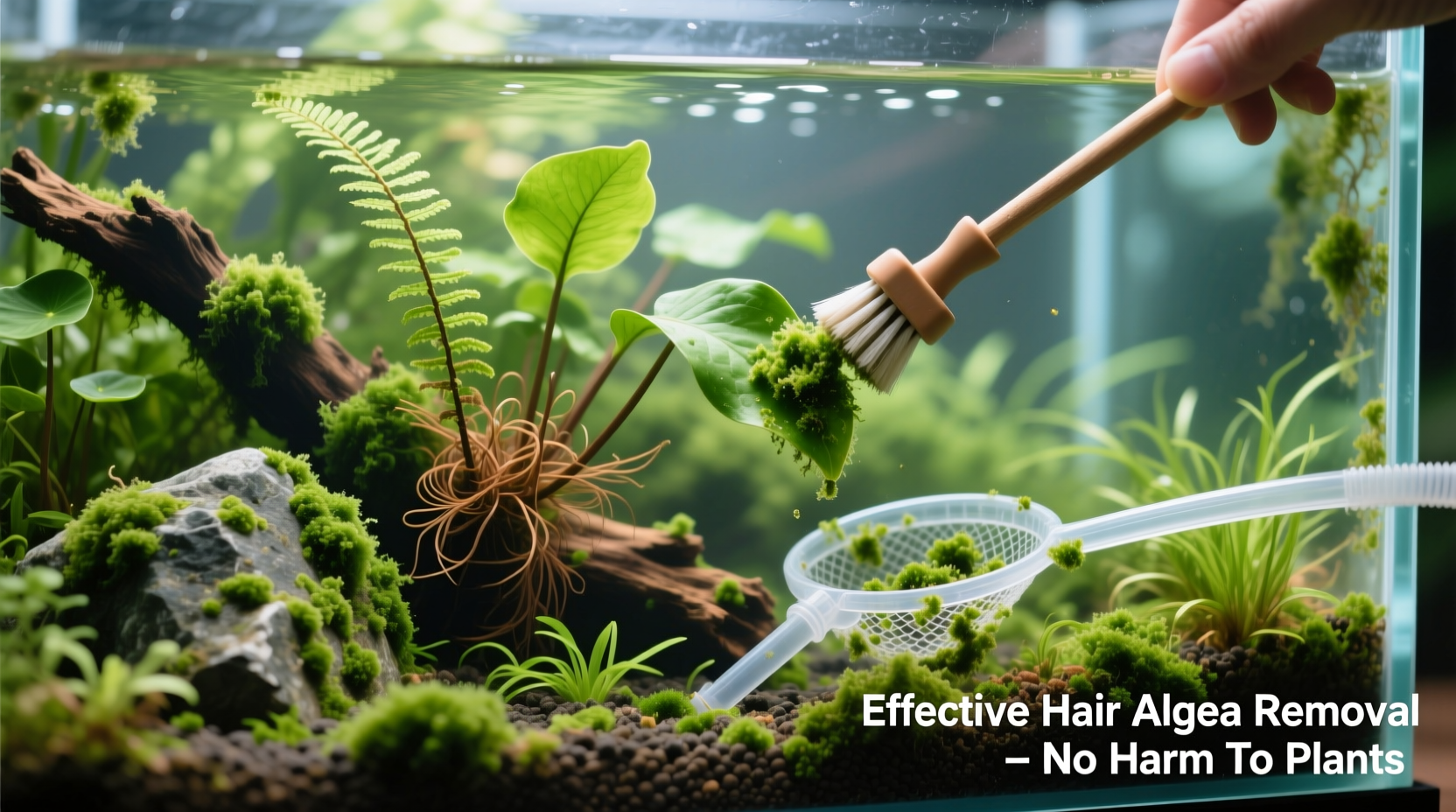
Hair algae (often classified under *Cladophora* or similar filamentous green algae) thrives under specific imbalances in the aquarium environment. Unlike some algae types that signal poor water quality, hair algae typically emerges from inconsistencies in light, nutrients, and CO₂ availability. It often appears when:
- Light duration exceeds 8–10 hours daily
- There are fluctuations in CO₂ levels
- Nutrient ratios—especially nitrogen (NO₃) and phosphorus (PO₄)—are unstable
- Water flow is insufficient, allowing debris and spores to settle
- There’s a lack of fast-growing, nutrient-hungry plants to outcompete algae
Because hair algae exploits gaps in plant dominance, the most sustainable solution isn’t just removal—it’s creating conditions where plants thrive and algae cannot gain a foothold.
Tip: Introduce floating plants like *Pistia* or *Salvinia* to reduce light penetration and absorb excess nutrients quickly.Step-by-Step Guide to Removing Hair Algae Safely
Eradicating hair algae requires a multi-phase approach. Rushing with chemical treatments can harm plants and fish. Instead, follow this proven sequence:
- Manual Removal: Use tweezers or a soft toothbrush to gently roll and pull out visible clumps. Do this during water changes to remove loosened particles.
- Assess Lighting: Reduce photoperiod to 6–7 hours. Use a timer for consistency. Consider shielding the tank from direct sunlight.
- Test Water Parameters: Check NO₃ (ideal: 10–25 ppm), PO₄ (0.5–1.5 ppm), and KH/CO₂ levels. Adjust fertilization accordingly.
- Boost Plant Competition: Add fast-growing stem plants like *Hygrophila*, *Rotala*, or *Hornwort* to consume excess nutrients.
- Improve Flow and Maintenance: Increase water movement with powerheads or adjust filter output. Vacuum substrate weekly.
- Introduce Algae Eaters: Add species known to target hair algae without disturbing plants (see table below).
- Monitor and Stabilize: Allow 2–3 weeks between major changes to observe results before adjusting further.
Best Algae-Eating Species for Planted Tanks
Selecting the right cleanup crew is critical. Some species ignore hair algae; others damage tender plants. The following have been vetted by aquascapers for effectiveness and plant safety:
| Species | Effectiveness on Hair Algae | Plant Safety | Notes |
|---|---|---|---|
| Amano Shrimp (*Caridina multidentata*) | ★★★★★ | Excellent | Highly efficient; works day and night. Avoid with small fish. |
| Nerite Snails | ★★★★☆ | Excellent | Won’t reproduce in freshwater; excellent on hardscape. |
| Otocinclus Catfish | ★★★☆☆ | Excellent | Best in groups; may need supplemental feeding. |
| Siamese Algae Eater (True *Crossocheilus oblongus*) | ★★★★★ | Good | Ensure correct species—many sold as SAE are lookalikes. |
| Mollies or Guppies (occasional grazers) | ★☆☆☆☆ | Excellent | Not primary cleaners, but help reduce spore load. |
“Algae control isn’t about killing off invaders—it’s about cultivating a system where desirable life outcompetes the unwanted.” — Dr. Lena Torres, Aquatic Ecologist
Common Mistakes That Worsen Hair Algae
Many well-intentioned aquarists inadvertently feed hair algae outbreaks. Avoid these pitfalls:
- Overcleaning filters: Washing mechanical media in tap water kills beneficial bacteria needed for nutrient processing.
- Inconsistent CO₂: Fluctuating levels stress plants, giving algae an advantage.
- Spot-treating with algaecides: Most contain glutaraldehyde, which can burn sensitive plants like *Hemianthus* or *Monte Carlo*.
- Skipping water changes: Accumulated organics fuel algae even in low-light tanks.
- Adding too many fish: Excess waste increases nitrate and phosphate unpredictably.
Real Example: Recovering a High-Tech Planted Tank
Mark, an intermediate aquascaper in Portland, noticed thick hair algae forming on his *Eleocharis parvula* carpet and driftwood within weeks of upgrading to brighter LED lighting. He initially reduced light intensity, but the algae persisted. After testing his water, he found erratic CO₂ levels due to a faulty solenoid valve. He replaced the valve, added a second Amano shrimp, introduced *Hornwort* as a nutrient sponge, and manually removed algae every other day. Within four weeks, plant growth overtook the algae, and the tank regained its clarity. His key insight: “Fixing CO₂ stability made all the difference. The plants finally grew fast enough to win.”
Do’s and Don’ts: Quick Reference Table
| Action | Do | Don’t |
|---|---|---|
| Fertilizing | Use comprehensive liquid fertilizers with iron and micronutrients | Overdose NPK; avoid dry fertilizers unless dosing precisely |
| Lighting | Use a consistent 6–8 hour schedule with midday breaks | Leave lights on overnight or extend beyond 10 hours |
| CO₂ Injection | Maintain steady 20–30 ppm during lights-on period | Turn CO₂ on/off abruptly; avoid running at night |
| Cleaning | Vacuum substrate and wipe glass weekly | Scrub plants aggressively or use bleach solutions |
| Biological Control | Add Amano shrimp or true Siamese algae eaters | Use apple snails or goldfish—they uproot plants |
FAQ
Can I use hydrogen peroxide to kill hair algae?
Yes, but with caution. Apply 3% hydrogen peroxide directly to affected areas using a syringe (1–2 ml per gallon, maximum). Do this during lights-off to minimize plant stress. Never mix with other chemicals. Overuse can harm biofilm and sensitive roots.
Will cutting down my plants help stop hair algae?
Pruning infected parts can help, especially if done before mass removal. However, cutting too much reduces photosynthetic capacity, weakening the plants’ ability to compete. Always replace trimmed biomass with fast-growing species.
How long does it take to get rid of hair algae naturally?
With consistent care, visible improvement usually occurs in 2–3 weeks. Full recovery may take 4–6 weeks, depending on the severity and how quickly root causes are corrected.
Conclusion: Build Balance, Not Battles
Eliminating hair algae isn’t about finding the strongest chemical or fastest scraper—it’s about restoring equilibrium. Healthy plants, stable parameters, and thoughtful stocking create a self-regulating environment where algae struggles to survive. Manual removal and biological allies support the process, but lasting success comes from consistency: reliable lighting schedules, routine water changes, and attentive observation. Once balance is achieved, maintenance becomes intuitive, and the aquarium flourishes as a living ecosystem, not just a display.
💬 Have a hair algae success story or a favorite plant-safe trick? Share your experience in the comments—your insight could help another aquarist regain their tank’s clarity.








