
Sharing a home with two dogs brings joy, companionship, and sometimes, unexpected challenges. One of the most common yet overlooked issues is feeding time. When dogs have different dietary needs, temperaments, or food motivations, feeding them together can lead to tension, resource guarding, or even aggression. Left unaddressed, these behaviors erode household harmony and compromise each dog’s well-being. The solution lies not in chance but in intentional, structured feeding practices that prioritize safety, individual needs, and calm routines.
Separate feeding isn’t about isolation—it’s about respect. By creating a feeding environment tailored to each dog, you reduce competition, prevent overeating, and support long-term behavioral health. Whether your dogs are best friends or merely tolerate each other, implementing consistent separation strategies ensures every meal is peaceful and productive.
Why Separate Feeding Matters
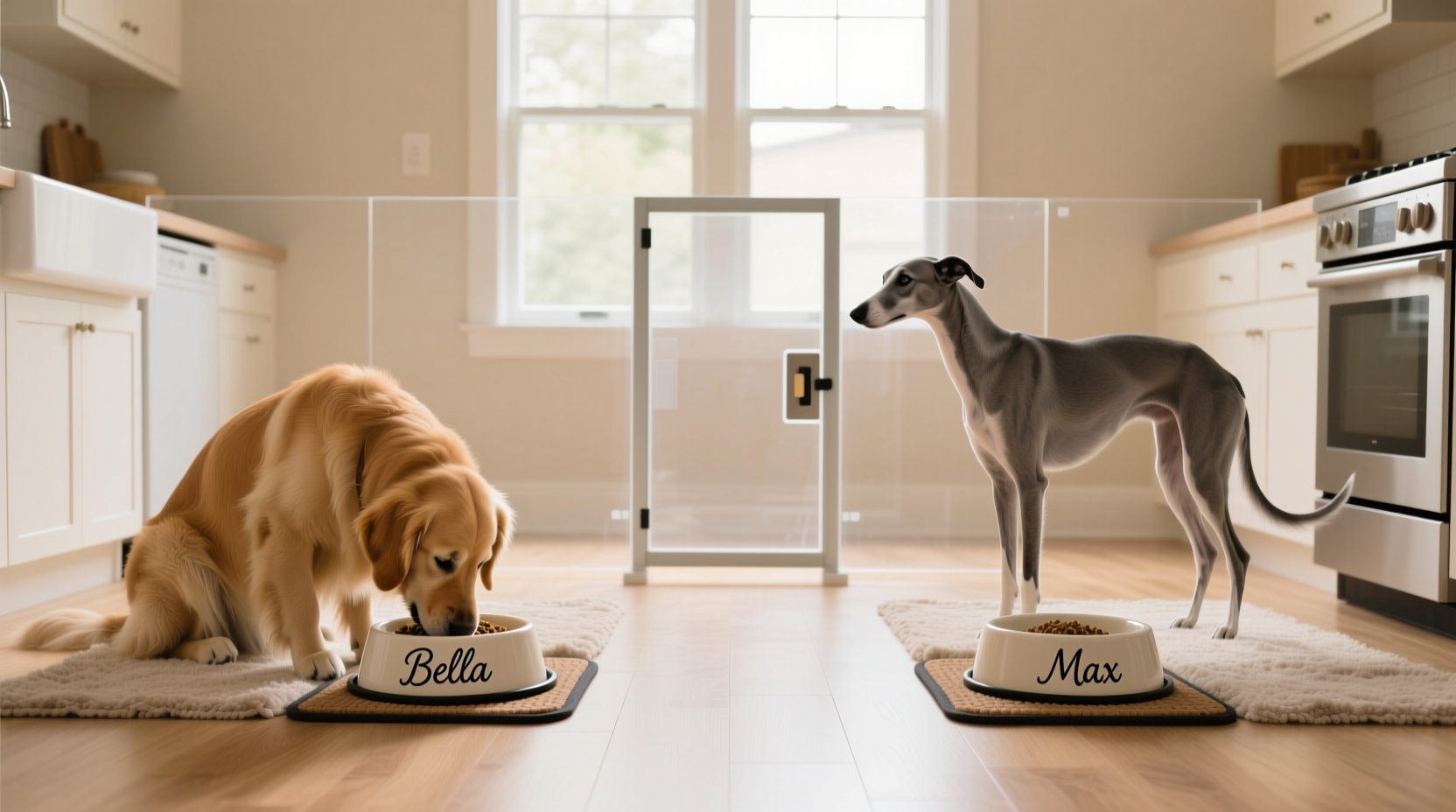
Dogs are individuals with unique physical and emotional requirements. One may need a prescription diet for a medical condition; another might be prone to gulping food too quickly. When fed together, dominant dogs often consume more than their share, while anxious or submissive ones may eat too fast or avoid eating altogether. This imbalance can lead to nutritional deficiencies, weight gain, or gastrointestinal distress.
Moreover, food-related aggression isn’t always dramatic. Subtle signs—like stiff body posture, side-eye glances, or quick snatching—can escalate if ignored. Veterinary behaviorists emphasize that early intervention through management prevents entrenched problems. As Dr. Karen Overall, a leading veterinary behaviorist, states:
“Food is a primary reinforcer. How we manage access determines whether it becomes a source of conflict or calm.” — Dr. Karen Overall, Diplomate ACVB
By separating meals, you remove the temptation to compete and allow each dog to eat at their own pace, free from pressure.
Step-by-Step Guide to Stress-Free Separate Feeding
Implementing separate feeding doesn’t require elaborate equipment or constant supervision. With a clear plan, most households can establish a smooth routine within days. Follow this timeline to build consistency:
- Assess Individual Needs (Day 1): Note each dog’s dietary restrictions, feeding schedule, and behavior around food. Is one on medication? Does either guard bowls?
- Designate Feeding Zones (Day 2): Choose two quiet, low-traffic areas at least 10–15 feet apart. Use baby gates, crates, or separate rooms if needed.
- Establish Timing (Day 3): Feed both dogs simultaneously to maintain routine, but in isolation. Use a timer to coordinate placement and pickup of bowls.
- Introduce Barriers (Ongoing): If using the same room, place visual barriers like cardboard panels or furniture between feeding stations.
- Monitor & Adjust (Week 2+): Observe body language during and after meals. Adjust locations or timing if stress signs persist.
Consistency is key. Dogs thrive on predictability. Once they learn that food appears only in their designated spot and time, anxiety decreases significantly.
Tip: Use distinct-colored bowls or mats to reinforce each dog’s space. A blue mat for Max, a red one for Bella—visual cues help prevent confusion.Practical Tools and Techniques
Not all homes have multiple rooms ideal for feeding. Fortunately, several practical tools can create effective separation even in compact spaces:
- Crate training: Feed each dog in their crate with the door closed. This prevents access and provides a den-like sense of security.
- Room dividers or screens: Portable partitions block line of sight while allowing ventilation.
- Timed feedings: Feed one dog first, remove the bowl after 15 minutes, then release the second. Best for dogs with similar schedules.
- Leashed supervision: Keep both dogs on leash in adjacent areas during meals to intervene instantly if tension arises.
For multi-level homes, consider feeding dogs on different floors. Even stairwell separation reduces auditory and olfactory triggers. The goal is to eliminate opportunity for interaction during consumption.
Do’s and Don’ts at Mealtimes
| Do’s | Don’ts |
|---|---|
| Feed at the same time daily | Free-feed both dogs in shared areas |
| Use positive reinforcement when dogs remain calm | Punish growling or stiffening—instead, reevaluate setup |
| Supervise until both finish eating | Leave uneaten food out longer than 20 minutes |
| Wash bowls daily to prevent bacteria buildup | Allow one dog to eat leftovers from another’s bowl |
| Rotate feeding locations occasionally to build flexibility | Change routines abruptly without transition periods |
Real Example: Managing Two Rescues with Food Anxiety
Sarah adopted Luna, a shy terrier mix, six months after bringing home Bear, a confident Labrador. Initially, she fed them side by side in the kitchen. Within weeks, Bear began nudging Luna’s bowl, causing her to bolt her food. Luna started avoiding meals unless Bear was crated. After consulting a trainer, Sarah restructured mealtimes: Bear ate in the living room behind a gate, while Luna dined in the bedroom with the door closed. She played soft music to mask sounds. Within ten days, both dogs relaxed during meals. Luna stopped rushing, and Bear no longer approached other areas when someone was eating. The change wasn’t instant—but it was sustainable.
This case illustrates how environmental modification, not behavior correction, solved the core issue. No dog was “bad”—they simply needed space aligned with their emotional thresholds.
Frequently Asked Questions
Can I ever let my dogs eat together?
Only under strict supervision and after extensive training. Some dogs never safely co-feed due to ingrained guarding instincts. If you attempt it, start with high-value distractions and widely spaced bowls. Most experts recommend maintaining separation as the safest standard.
How long should dogs stay separated during meals?
From the moment food is placed down until 10–15 minutes after the last dog finishes. This buffer prevents scavenging and post-meal tension. Use timers to track duration accurately.
What if I don’t have space for two feeding areas?
Use staggered feeding times. Feed one dog, wait 20 minutes, then feed the other. While less ideal for routine consistency, it’s a viable alternative in small apartments. Combine with white noise or background TV to mask cues.
Tip: Practice “leave it” and “wait” commands during non-meal times to strengthen impulse control. These skills transfer to feeding situations.Building Long-Term Harmony
Feeding two dogs separately isn’t a temporary fix—it’s part of responsible multi-dog stewardship. Over time, consistent routines reduce overall household stress. Dogs learn that resources are reliable and personal space is respected. This foundation supports better social dynamics beyond mealtimes, improving interactions during play, grooming, and rest.
The investment in structure pays dividends in safety and emotional well-being. Just as humans benefit from personal space during meals, so do dogs. Recognizing this need isn’t indulgence—it’s empathy in action.
“When we manage the environment, we prevent the problem before it starts. That’s true leadership for dog guardians.” — Sophia Yin, DVM, Animal Behavior Specialist
Final Checklist for Success
- ✅ Identify each dog’s dietary and behavioral needs
- ✅ Designate two physically separated feeding zones
- ✅ Use visual or physical barriers to block sightlines
- ✅ Feed simultaneously whenever possible
- ✅ Supervise all meals and remove bowls promptly
- ✅ Reinforce calm behavior with praise or treats
- ✅ Reassess monthly for signs of stress or change
Take Action Today
Your dogs’ relationship with food shapes their daily experience. A few simple adjustments now can prevent years of conflict, anxiety, and vet visits. Start tonight: map out two safe feeding spots, gather bowls, and commit to a trial week of separation. Observe the subtle shifts—the deeper breathing, the slower chewing, the absence of side-eye glances. These quiet moments signal progress. Share your journey with fellow dog owners, and inspire others to prioritize peace over convenience. Because every dog deserves to eat in peace.
💬 Have a multi-dog household? Share your feeding strategy below—your insight could help another pet parent find balance.








