Damp or wet cat litter is more than just an inconvenience—it can lead to unpleasant odors, bacterial growth, and an unwelcoming environment for your cat. Whether due to accidental spills, high humidity, or moisture from urine clumps not being scooped promptly, wet litter compromises hygiene and effectiveness. Addressing this issue quickly ensures your pet remains comfortable and your home stays fresh. This guide provides actionable strategies to dry cat litter efficiently and maintain its freshness over time.
Understanding the Impact of Moisture on Cat Litter
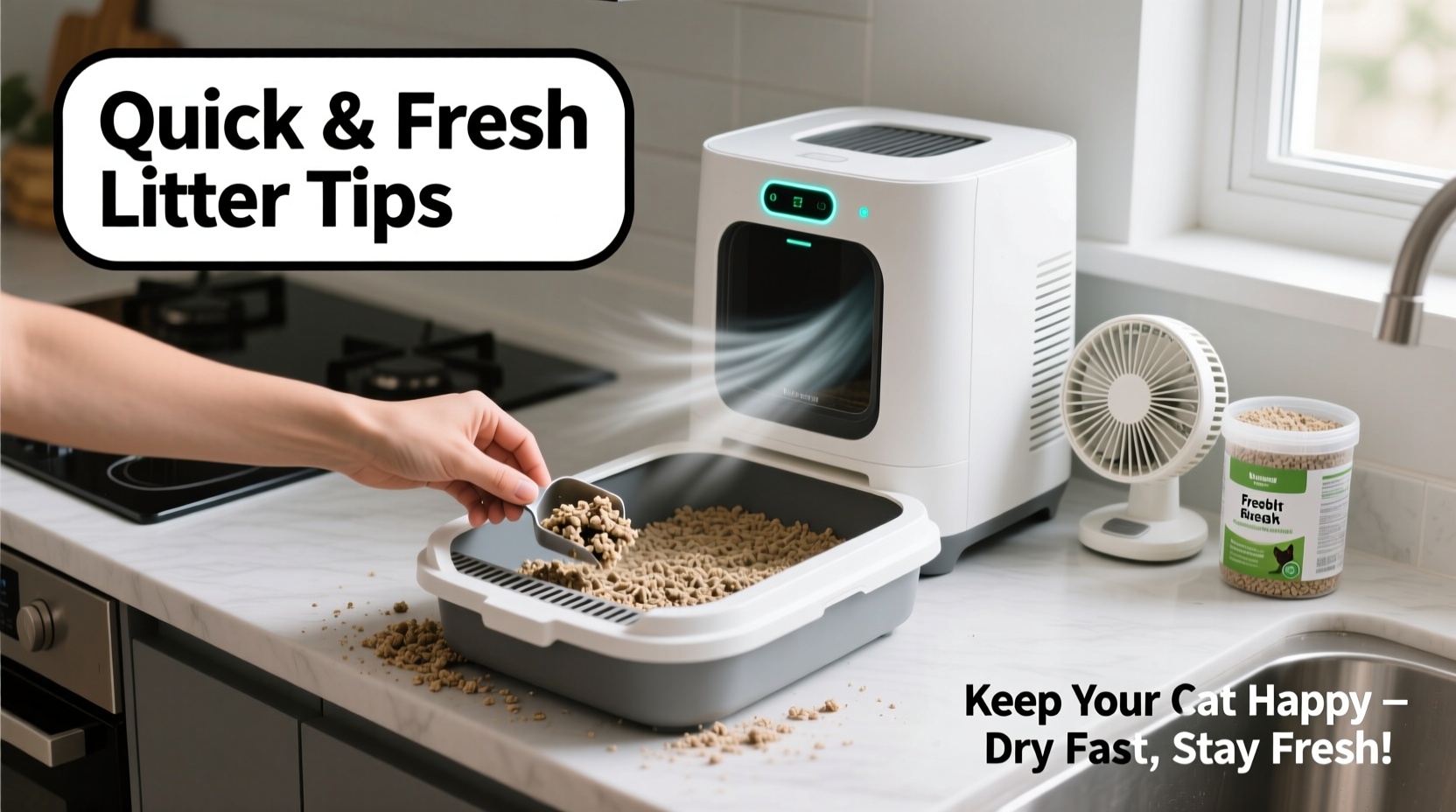
Cat litter functions primarily by absorbing moisture and trapping odors. Once saturated or exposed to excess humidity, its ability to perform these tasks diminishes significantly. Clumping litters may break down prematurely, while non-clumping types can become compacted and difficult to manage. Wet litter also creates a breeding ground for bacteria and mold, increasing health risks for both pets and humans.
Moisture often enters the litter box through incomplete scooping, high bathroom humidity, or even outdoor conditions if the box is placed near a laundry area or basement. Recognizing early signs—such as clumps that don’t hold shape, a musty smell, or visible dampness—is key to preventing full saturation.
Tip: Check the litter box twice daily, especially after your cat uses it, to catch and remove wet clumps before they spread moisture.Step-by-Step Guide to Drying Wet Cat Litter
If your litter has become damp but isn’t completely soaked, immediate action can salvage much of it. Follow this timeline to restore dryness safely and effectively:
- Remove your cat from the area – Ensure safety and prevent tracking during cleanup.
- Scoop out all visibly wet clumps – Use a slotted scoop to extract moist sections thoroughly.
- Spread remaining litter in a thin layer – Transfer it onto a large baking sheet or tray lined with parchment paper.
- Air-dry in a well-ventilated space – Place the tray near a fan or open window, avoiding direct sunlight which may degrade certain litter materials.
- Use a dehumidifier or desiccant packets – Position near the drying area to accelerate moisture absorption.
- Stir every few hours – Promote even drying across all particles.
- Reassess after 6–12 hours – If fully dry and free of odor, return to the box; otherwise, discard and replace.
Note: Clay-based and silica gel litters respond better to drying than plant-based or paper varieties, which may disintegrate when wet.
Best Practices for Keeping Cat Litter Fresh
Prolonged freshness starts with consistent maintenance and smart environmental control. The following strategies help preserve litter quality between changes:
- Scoop daily – Remove solids and clumps to minimize moisture buildup.
- Ventilate the room – Run an exhaust fan or crack a window to reduce ambient humidity.
- Use litter box liners with caution – While helpful, torn liners can trap moisture underneath.
- Choose high-absorbency litter – Look for products labeled “extra strength” or “odor control.”
- Replace litter completely every 2–4 weeks – Even with scooping, residual moisture accumulates over time.
“Maintaining dry litter isn’t just about cleanliness—it directly affects your cat’s willingness to use the box. Cats are highly sensitive to texture and smell.” — Dr. Lena Torres, DVM, Feline Behavior Consultant
Do’s and Don’ts: Managing Wet Litter Situations
| Do’s | Don’ts |
|---|---|
| Store unused litter in sealed containers away from moisture | Leave wet litter unattended overnight |
| Use a covered box in humid climates (with ventilation) | Use heat sources like hairdryers or ovens to dry litter |
| Place a mat under the litter box to absorb tracked moisture | Mix different litter types unless transitioning gradually |
| Inspect the box base for leaks or cracks regularly | Add fresh litter directly on top of damp layers |
| Rotate litter brands based on seasonal humidity levels | Ignore persistent dampness—it may indicate underlying issues |
Real-Life Example: Solving Recurring Dampness in a Basement Litter Zone
Sarah, a cat owner in Seattle, struggled with consistently damp litter despite daily scooping. Her litter box was located in a cool basement utility room prone to condensation. Over time, the litter developed a sour odor, and her cat began avoiding the box.
After consulting her vet, Sarah realized the issue wasn’t her routine—but the environment. She relocated the box to a heated hallway closet with airflow, installed a small plug-in dehumidifier nearby, and switched to a silica crystal litter known for superior moisture absorption. Within days, the litter stayed drier longer, odors disappeared, and her cat resumed normal usage.
This case highlights how location and material choice play critical roles in moisture management—even with excellent cleaning habits.
Tip: In high-humidity areas, consider using disposable litter mats with moisture-wicking properties beneath the box.Checklist: How to Keep Cat Litter Dry and Fresh
Use this checklist weekly to maintain optimal litter condition:
- ☐ Scoop waste at least once per day
- ☐ Inspect for clump integrity and unusual dampness
- ☐ Wipe down litter box walls with a dry cloth weekly
- ☐ Replace full litter batch every 3–4 weeks
- ☐ Monitor room humidity (ideal: below 50%)
- ☐ Store spare litter in airtight bins
- ☐ Clean the empty litter box with mild soap and water monthly
- ☐ Evaluate litter type seasonally (e.g., switch to clay in winter, crystals in summer)
Frequently Asked Questions
Can I reuse partially dried cat litter?
In most cases, yes—if the litter hasn’t been contaminated with feces or strong odors. Spread it thinly and allow complete air-drying over 12+ hours. However, clumping litters that have broken down should be discarded to avoid ineffective performance.
Is it safe to use a dehumidifier near my cat’s litter box?
Yes, as long as the unit is placed safely out of reach and doesn’t create noise or airflow discomfort for your pet. Portable mini-dehumidifiers designed for closets work well in small spaces without disturbing animals.
What kind of cat litter resists moisture best?
Silica gel crystals and sodium bentonite clay litters offer the highest moisture resistance. Silica beads absorb up to 40 times their weight in liquid and wick moisture quickly, making them ideal for humid environments or multi-cat households.
Final Thoughts: A Dry Litter Box Equals a Happy Home
Dry, fresh cat litter is essential for hygiene, odor control, and feline comfort. By understanding how moisture compromises litter performance and applying practical drying techniques, you can extend the life of each batch and reduce waste. Combine prompt cleanup with strategic placement, proper ventilation, and the right litter choice to maintain a consistently clean environment.
💬 Have a tip that keeps your cat’s litter box fresh? Share your experience below and help fellow pet owners create cleaner, drier spaces for their furry companions!








