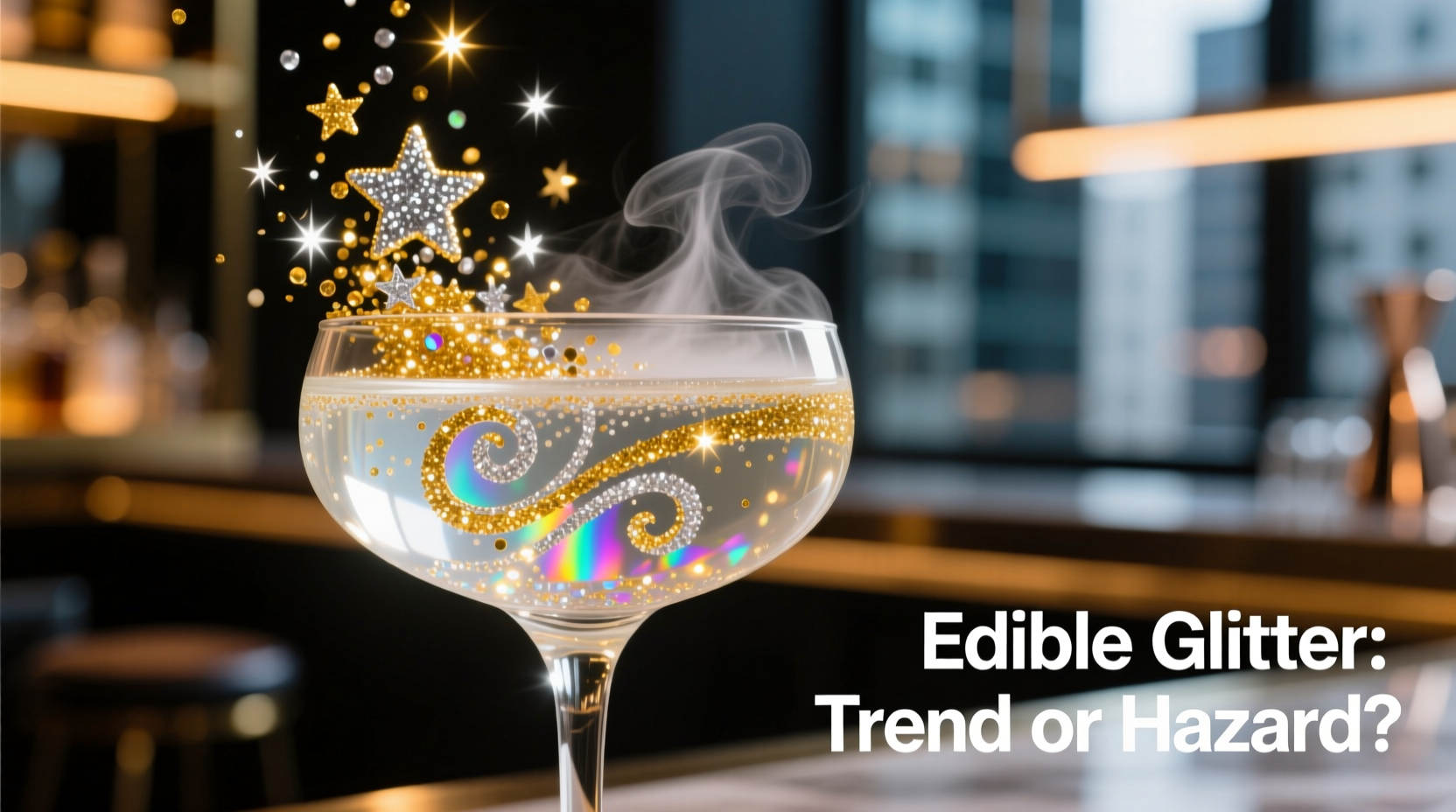
Walk into any high-end lounge or Instagram-fueled pop-up bar in the past five years, and you’ll likely spot it: a shimmering martini, a galaxy-hued margarita, or a rose-gold spritz catching the light like liquid stardust. Edible glitter—often sold as “luster dust,” “pearl powder,” or “food-grade sparkle”—has become shorthand for celebration, luxury, and social media readiness. But behind the dazzle lies a growing tension between aesthetic appeal and physiological reality. Unlike natural food colorings or botanical garnishes, edible glitter is engineered to reflect light—not nourish. Its rise coincides with increased consumer scrutiny of food additives, rising reports of gastrointestinal discomfort after consumption, and regulatory gray zones that leave bartenders, mixologists, and home entertainers navigating unmarked terrain. This isn’t about banning beauty from the bar—it’s about understanding what’s truly safe, what’s merely permitted, and what’s being misrepresented on labels.
The Science Behind the Sparkle: What Exactly Is Edible Glitter?
“Edible glitter” is a marketing term—not a scientific classification. In reality, most commercially available products fall into two categories: certified food-grade mica-based powders and synthetic polymer blends. The former relies on purified mica (a naturally occurring silicate mineral), coated with titanium dioxide, iron oxides, or FDA-approved colorants like FD&C Blue No. 1 or Red No. 40. The latter may contain polyethylene terephthalate (PET) or polyvinyl alcohol (PVA)—plastic-derived films cut into microscopic flakes. While both types are often labeled “edible” or “for food use,” only those bearing explicit FDA certification (or EU E-number approval, such as E171 for titanium dioxide—though note: the EU banned E171 in food as of 2022) meet rigorous safety thresholds for ingestion.
Crucially, the FDA does not maintain a separate “edible glitter” category. Instead, ingredients must comply with existing food additive regulations. Mica itself is *not* approved as a direct food additive—but when used as a substrate for certified colorants and present at ≤1.5% concentration in finished products, it falls under the FDA’s “color additive exemption for incidental use.” That means its presence is tolerated—not endorsed. As Dr. Lena Torres, toxicologist and Senior Advisor at the Center for Food Safety and Applied Nutrition, explains:
“Calling something ‘edible’ doesn’t mean it’s nutritionally beneficial—or even intended for regular consumption. Mica passes through the digestive tract inertly in most people, but it’s biologically inert for a reason: the human body has no mechanism to break it down. Think of it like swallowing a tiny piece of glass that happens to be non-toxic. Safe in trace amounts? Yes. Harmless at scale? Unproven.” — Dr. Lena Torres, FDA CFSAN (ret.)
This distinction matters profoundly in cocktail service, where glitter is rarely used in “trace amounts.” A single garnish can deliver 20–50 mg of particulate matter—orders of magnitude higher than the incidental exposure assumed in regulatory exemptions.
Regulatory Reality vs. Label Claims: A Dangerous Gap
A 2023 investigation by the Consumer Product Safety Commission found that 68% of online “edible glitter” listings failed basic labeling compliance: missing ingredient lists, absent net weight, no batch number, or vague claims like “100% natural sparkle” with no verifiable sourcing. Worse, 22% contained detectable levels of aluminum, lead, or arsenic—contaminants introduced during low-grade mica mining or improper coating processes. These aren’t outliers—they’re systemic risks baked into an unregulated supply chain.
The FDA’s current enforcement posture prioritizes “adulterated” or “misbranded” products only after adverse event reports accumulate. Yet gastrointestinal distress—bloating, cramping, or transient nausea—rarely triggers formal reporting. Most consumers assume discomfort is from the alcohol or citrus, not the glitter.
Tip: Always verify third-party lab testing. Reputable suppliers (e.g., Brew Glitter, Luster Dust Co.) publish Certificates of Analysis showing heavy metal screening, particle size distribution (<63 microns recommended for safety), and full ingredient transparency. If it’s not on their website, don’t buy it.Real-World Impact: A Mini Case Study from Portland’s Bar Scene
In early 2022, three patrons at “Nebula Lounge,” a craft cocktail bar known for its celestial-themed drinks, reported similar symptoms within 48 hours of consuming the “Stardust Sour”: severe abdominal cramping, diarrhea, and transient fatigue. All had consumed the same drink—shaken with house-made lavender syrup, lemon, gin, and a generous dusting of gold “edible glitter” sourced from a popular e-commerce vendor. An internal review revealed the product lacked batch-specific testing documentation. When the bar sent a sample to an independent lab, results showed elevated aluminum (12.7 ppm vs. FDA’s 2 ppm guideline for color additives) and inconsistent particle sizing—some flakes measured over 150 microns, increasing mucosal abrasion risk.
The bar immediately discontinued the product, switched to a verified mica-free alternative (crushed, food-grade sugar crystals with edible gold leaf), and implemented a new procurement policy: no glitter without a current COA, lot number, and written assurance of USP-grade titanium dioxide coating. Within six weeks, incident reports dropped to zero—and customer feedback noted improved “mouthfeel” and “cleaner finish” in glittered drinks.
This wasn’t an isolated incident. Similar patterns emerged in Denver, Nashville, and Toronto—always tied to uncertified glitter, never to rigorously vetted alternatives.
Do’s and Don’ts: A Practical Checklist for Bartenders & Home Mixologists
Whether you’re curating a $22 signature serve or prepping for a backyard birthday toast, responsible glitter use demands intention—not instinct. Below is a field-tested checklist distilled from interviews with 14 award-winning mixologists and food safety consultants.
- DO source glitter exclusively from vendors who list every ingredient—including coating agents (e.g., “titanium dioxide, FD&C Yellow No. 5, cornstarch”)—and provide batch-specific Certificates of Analysis.
- DO limit application to surface-only garnish: sprinkle *after* shaking/stirring, directly onto foam or rim—never incorporate into the base liquid where prolonged contact with stomach acid occurs.
- DO avoid glitter on drinks served to children, pregnant individuals, or anyone with IBS, Crohn’s disease, or chronic gastritis—conditions linked to heightened sensitivity to inert particulates.
- DON’T use craft-store “non-toxic” glitter—even if labeled “for food use.” These lack food-grade manufacturing controls and often contain acrylic binders or solvents unsafe for ingestion.
- DON’T apply glitter to hot beverages (e.g., spiced cider). Heat accelerates leaching of metal oxides from coatings and increases gastric irritation potential.
- DON’T reuse glitter containers across shifts. Cross-contamination with citrus oils, bitters, or dairy residue can degrade coating integrity.
Safer Sparkle Alternatives: Beyond Mica and Plastic
Fortunately, dazzling cocktails needn’t rely on regulatory loopholes. Emerging alternatives prioritize both safety and sensory experience—without compromising visual impact.
| Alternative | How It Works | Safety Profile | Best For |
|---|---|---|---|
| Crushed edible gold/silver leaf | 24-karat gold (E175) or silver (E174) leaf, hand-crushed into microflakes | FDA-approved; biologically inert; zero absorption; non-allergenic | Champagne flutes, clear spirits, dessert cocktails |
| Organic sugar crystals + natural color | Coarse turbinado or demerara sugar infused with butterfly pea flower (blue), beetroot (pink), or matcha (green) | Whole-food origin; digestible; adds subtle sweetness | Rims, stirred drinks, low-ABV spritzes |
| Dehydrated fruit dusts | Powdered freeze-dried raspberry, blackberry, or mango—naturally glossy when finely milled | High in antioxidants; fiber-rich; no additives | Fruit-forward cocktails, mocktails, brunch drinks |
| Food-grade bioluminescent algae (experimental) | Non-GMO Pyrocystis lunula cultures, dried and stabilized (available via specialty food labs) | GRAS-status pending; currently limited to research kitchens | High-concept tasting menus (under strict supervision) |
Note: Even gold leaf requires verification. Some “edible gold” products contain copper alloys or nickel impurities. Look for “E175” on packaging and confirm purity ≥99.99%.
Step-by-Step: How to Vet & Introduce Glitter Safely in Your Bar Program
- Research & Source: Identify 3–5 vendors with documented USP/FCC-grade certifications. Cross-check their COAs against FDA’s Color Additive Database.
- Test Batch: Purchase minimum order. Run internal sensory trials: dissolve 10 mg in warm water; check for grittiness, metallic aftertaste, or cloudiness (signs of poor coating).
- Staff Training: Conduct a 20-minute session covering particle risks, symptom recognition (abdominal pain >30 mins post-consumption), and mandatory disclosure on menus (“Contains inert mica-based glitter”).
- Menu Integration: Restrict glitter to 1–2 signature drinks max. Never on high-volume staples (e.g., Old Fashioneds or Negronis). Add asterisked footnote: “Glitter is for visual effect only; not intended for regular consumption.”
- Monitor & Audit: Track glitter usage volume weekly. If >15% of glittered drinks generate feedback mentioning “gritty texture” or “odd aftertaste,” pause and retest supplier materials.
FAQ: Addressing Common Concerns Head-On
Is “natural” edible glitter safer than synthetic?
No—“natural” is unregulated and potentially more dangerous. Some vendors market ground mica as “natural mineral glitter,” omitting that raw mica deposits often contain asbestos fibers or heavy metals. Certified synthetic coatings (e.g., titanium dioxide) undergo stricter purification than unprocessed earth minerals. Safety lies in verification—not origin.
Can I make my own edible glitter at home?
Not safely. DIY methods using crushed candy, salt, or baking soda create irregular, sharp-edged particles that can scratch oral or esophageal tissue. Food-grade grinding equipment capable of achieving sub-50-micron consistency costs thousands and requires sterile environments. Homemade glitter lacks coating stability and introduces contamination risks. Stick to professionally manufactured options.
Does edible glitter affect alcohol absorption or intoxication?
No evidence suggests glitter alters pharmacokinetics. However, the physical presence of inert particles may delay gastric emptying slightly—potentially slowing initial alcohol uptake but not changing total absorption. More critically, glitter-related GI distress can mimic or mask alcohol poisoning symptoms (nausea, dizziness), complicating emergency assessment.
Conclusion: Beauty with Boundaries
Edible glitter occupies a paradoxical space in modern mixology: simultaneously trivial and consequential, decorative and dietary, fleeting and persistent. Its allure is undeniable—the way light fractures across a chilled coupe speaks to celebration, artistry, and human delight in the ephemeral. But true craftsmanship respects boundaries: between aesthetics and anatomy, between trend and tolerance, between “permitted” and “prudent.” The most memorable cocktails aren’t remembered for their sparkle alone—they’re remembered for balance, intention, and respect—for the guest, the craft, and the body that receives it. You don’t need glitter to make magic. But if you choose to use it, do so with eyes wide open, labels scrutinized, and alternatives explored. Prioritize safety not as a constraint, but as the deepest form of hospitality.
💬 Your barroom experience matters. Have you encountered glitter-related issues—or discovered a brilliant safe alternative? Share your story, supplier recommendations, or menu tweaks in the comments. Let’s raise the standard—together.








