
Glittering margaritas, shimmering mocktails, and rainbow-hued lemonades have become staples at birthday parties, baby showers, and backyard barbecues. But when a child reaches for a “unicorn drink” or a curious dog sniffs a spilled cocktail rimmed with iridescent dust, the question stops being about aesthetics—and becomes urgent: Is this actually safe? Edible glitter is marketed as harmless fun, but its safety hinges on precise formulation, regulatory compliance, and context of use—not just the word “edible” on the label. This isn’t about banning sparkle; it’s about understanding what makes glitter *truly* food-grade, why some versions pose silent risks, and how to distinguish responsible use from performative flair.
What “Edible Glitter” Really Means—And Why the Label Can Mislead
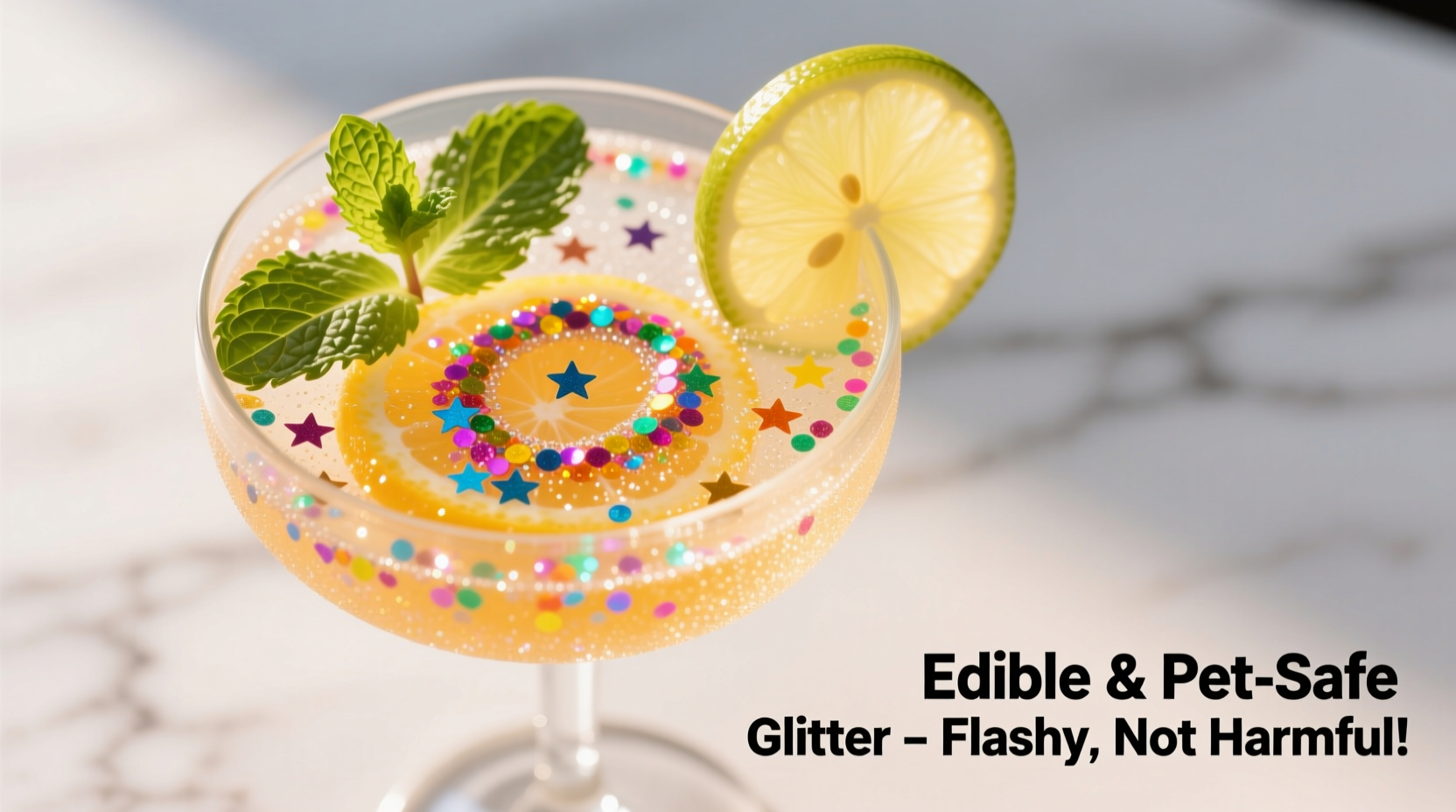
The term “edible glitter” carries no legal definition under U.S. Food and Drug Administration (FDA) regulations. Instead, safety depends entirely on the specific ingredients used—and whether those ingredients are approved for human consumption in that form and concentration. Most commercially sold “edible” glitters fall into one of three categories:
- Approved food-grade mica-based glitters: Made from purified, food-safe mica (a naturally occurring mineral), coated with FDA-permitted color additives like titanium dioxide (E171), iron oxides (E172), or FD&C dyes (e.g., Blue No. 1, Red No. 40). These are regulated as color additives and must meet strict purity standards—including limits on heavy metals like lead, arsenic, and mercury.
- Non-approved “cosmetic-grade” glitters: Often identical in appearance but manufactured for topical use only (e.g., face paint or lip gloss). These may contain aluminum flakes, unapproved pigments, or higher levels of contaminants not permitted in food. They’re frequently mislabeled or sold without clear distinction from food-grade products.
- “Natural” or “plant-based” glitters (marketing claims only): Some brands tout “vegan,” “non-GMO,” or “natural” glitter—but none of these terms guarantee safety. A glitter made from ground rice paper or cellulose may be inert, but it offers zero shimmer and dissolves instantly—making it functionally useless for cocktails. More critically, “natural” does not equal “safe for ingestion”: even food-derived minerals can be hazardous if improperly processed or contaminated.
Crucially, the FDA does not pre-approve glitter products before they hit shelves. Manufacturers self-declare compliance—and enforcement relies heavily on post-market complaints or testing. A 2022 FDA review of 47 online “edible glitter” listings found that 31% lacked complete ingredient disclosure, 24% referenced only “cosmetic-grade” certifications, and 12% contained undeclared aluminum or synthetic polymers not permitted in food.
Tip: Never assume “edible” means “safe for children or pets.” Always verify the ingredient list includes only FDA-permitted color additives (look for E numbers or FD&C designations) and avoid products listing “aluminum,” “polyethylene terephthalate (PET),” or vague terms like “pearlescent agent.”Safety Realities: Kids, Pets, and the Limits of “Food-Grade”
Just because a substance is approved for occasional human consumption doesn’t mean it’s appropriate—or safe—for all populations. Children and pets introduce unique physiological vulnerabilities:
- Kids under age 5: Their developing digestive systems absorb minerals more readily, increasing susceptibility to cumulative exposure. While a single 10-mg serving of FDA-compliant mica glitter poses negligible risk, repeated daily use (e.g., in school party drinks or daily smoothies) could contribute to long-term intake of titanium dioxide—a substance the European Food Safety Authority (EFSA) declared “no longer safe” as a food additive in 2021 due to potential genotoxicity concerns. The U.S. has not adopted this stance, but the scientific uncertainty remains.
- Pets: Dogs and cats lack the enzymatic pathways to metabolize many food dyes and mineral coatings. Iron oxide (common in red/brown glitters) can cause gastrointestinal irritation or, in high doses, oxidative stress in canine red blood cells. Aluminum—sometimes present as a coating or contaminant—has been linked to neurotoxicity in animal studies. And unlike humans, pets cannot be instructed to “spit it out.” A single lick of a glitter-dusted rim or spilled drink may trigger vomiting, lethargy, or oral irritation.
- Chronic vs. acute exposure: Regulatory approvals are based on occasional, low-dose use. A wedding bartender using 50 mg per cocktail for 200 guests represents very different exposure dynamics than a parent adding glitter to their toddler’s daily apple juice. Dose, frequency, and route of exposure matter more than binary “safe/unsafe” labels.
“The ‘edible’ designation applies to the ingredient—not the application, the dose, or the consumer. A food-grade color additive approved for use in candy coatings at 0.01% concentration isn’t automatically safe when suspended in ethanol, consumed by a 12-pound toddler, or ingested by a dog with sensitive kidneys.” — Dr. Lena Torres, Toxicologist and former FDA Center for Food Safety reviewer
Do’s and Don’ts: A Practical Safety Checklist
Protecting children and pets while still enjoying visual appeal requires intention—not elimination. Use this actionable checklist before purchasing or serving glittered beverages:
Checklist: Safe Glitter Use in Family-Friendly Settings- ✅ Verify the full ingredient list—not just marketing copy. Look for “mica,” “titanium dioxide,” “iron oxides,” or “FD&C Blue No. 1.” Avoid “aluminum,” “PET,” “synthetic polymer,” or unlisted “colorants.”
- ✅ Confirm third-party certification—reputable suppliers provide Certificates of Analysis (CoA) showing heavy metal testing (Pb, As, Hg, Cd) below FDA limits (e.g., lead < 0.5 ppm).
- ✅ Use only in beverages served to adults—keep glittered drinks physically separated from children’s and pets’ zones. Never apply to rims of sippy cups, bottles, or pet water bowls.
- ❌ Don’t use cosmetic-grade glitter—even if labeled “non-toxic.” Non-toxic ≠ ingestible. Skin-safe ≠ gut-safe.
- ❌ Don’t assume “vegan” or “natural” equals safer—many plant-based glitters rely on unregulated starches or gums that may harbor microbial contamination or allergens.
- ❌ Don’t reuse glitter containers near food prep areas—cross-contamination risk is real. Store in sealed, labeled containers away from spices or baking supplies.
A Real-World Scenario: When “Harmless Fun” Led to an Emergency Room Visit
In March 2023, a family in Portland hosted a “rainbow tea party” for their 3-year-old daughter’s birthday. They purchased $12 “edible glitter” online, attracted by packaging showing smiling children and the phrase “100% Kid-Safe!” The glitter was applied to lemonade rims and fruit skewers. Within 90 minutes, the child developed persistent gagging, refusal to swallow, and mild cyanosis around her lips. Her parents rushed her to the ER.
Testing revealed no toxins—but pediatric ENT specialists identified micro-abrasions on her pharyngeal wall caused by coarse, poorly milled mica particles. The glitter’s particle size averaged 120 microns—well above the FDA-recommended maximum of 50 microns for food-grade mica intended for oral use. Larger particles create mechanical irritation, especially in young children with thinner mucosal tissue and less developed swallowing reflexes. The product had no particle-size disclosure, no CoA, and listed only “pearlescent minerals” on its label.
The family later discovered the seller operated from a garage facility with no food-handling license—and the glitter was repackaged from a bulk cosmetic supplier. No recall was issued. This wasn’t a case of “poisoning”—it was a failure of transparency, regulation, and informed choice.
Comparing Glitter Types: What’s Actually Approved, What’s Risky, and What’s Just Marketing
Not all glitter is created equal—even within the “edible” category. This table compares common formulations by regulatory status, typical use cases, and documented safety considerations:
| Type | FDA Status | Common Ingredients | Safe for Kids? | Safe for Pets? | Key Risks |
|---|---|---|---|---|---|
| FDA-Compliant Mica Glitter | Approved as color additive (21 CFR §73.1646) | Mica, titanium dioxide, iron oxides, FD&C dyes | Occasional use only; avoid daily exposure in under-5s | No—never intentionally administer | Heavy metal contamination if untested; particle abrasion if >50μm |
| Cosmetic-Grade Glitter | Not approved for ingestion; regulated as cosmetic (21 CFR §70) | Mica + aluminum flakes, PET, acrylic polymers | No—prohibited for internal use | No—high risk of GI obstruction or toxicity | Aluminum neurotoxicity; plastic particle accumulation; unknown dye metabolites |
| Cellulose-Based “Natural” Glitter | No formal approval; generally recognized as safe (GRAS) as fiber source | Microcrystalline cellulose, gum arabic, natural colors | Yes—low-risk, but zero shimmer effect | Low risk, though unnecessary for pets | None known; ineffective for visual impact in liquids |
| Cloud-Forming “Liquid Glitter” | Unregulated; often contains undisclosed solvents | Propylene glycol, glycerin, dispersed pigments | Uncertain—propylene glycol is GRAS, but concentration matters | No—PG is toxic to cats even in small amounts | Cat-specific hemolysis; unpredictable dispersion stability |
FAQ: Straight Answers to Common Concerns
Can I make my own “edible glitter” at home with sugar or salt?
No—grinding sugar or salt creates sharp, crystalline shards that can lacerate delicate oral or esophageal tissue. Food-grade mica is specifically milled to be smooth, non-irritating, and chemically inert. Homemade alternatives lack particle-size control, purity verification, and safety testing. Even “food-grade” craft mica sold for DIY projects is rarely tested for heavy metals or suitable for ingestion.
Is there any edible glitter certified organic?
No. The USDA National Organic Program (NOP) prohibits the use of mined minerals—including mica and titanium dioxide—in certified organic foods. Any “organic edible glitter” claim is either misleading or refers only to binding agents (e.g., organic rice syrup), not the glitter itself. True organic certification cannot apply to mineral-based colorants.
What should I do if my child or pet accidentally ingests glitter?
For verified FDA-compliant mica glitter (small amount, single incident): Monitor for vomiting, diarrhea, or respiratory distress. Do not induce vomiting. Contact Poison Control (U.S.: 1-800-222-1222) for guidance. For cosmetic-grade, aluminum-containing, or unlabeled glitter: Seek immediate veterinary or medical attention—even if symptoms seem mild. Bring the product container for ingredient analysis.
Conclusion: Sparkle With Integrity, Not Illusion
Glitter in cocktails doesn’t need to be a compromise between joy and responsibility. The flashiest garnish loses its magic the moment it compromises someone’s health—or erodes trust in what “edible” truly means. Safety isn’t found in glossy packaging or influencer endorsements. It lives in transparent ingredient lists, verifiable lab reports, thoughtful dosing, and the humility to say “not here” when serving those who cannot advocate for themselves.
You don’t need to abandon celebration to practice care. Choose certified mica glitters sparingly—for adult-only occasions. Reserve vibrant, joyful drinks for kids using natural fruit infusions, herb sprigs, or edible flowers—elements that nourish as they delight. Keep pets safely distanced from bar areas, and store all glitters in locked, labeled cabinets—not next to the sprinkles.
True sophistication lies not in how much glitter you use, but in how thoughtfully you choose it. Every time you read a label twice, ask for a Certificate of Analysis, or opt for a simpler, safer alternative, you’re doing more than making a drink—you’re modeling conscientious consumption. That kind of sparkle lasts longer than any mica particle ever could.
💬 Have you encountered misleading “edible glitter” claims or had a safety-related experience? Share your story in the comments—your insight could help another parent, bartender, or pet owner make a safer choice tomorrow.








