
When a dog is recovering from surgery or injury and wearing an Elizabethan collar—commonly known as a “cone”—simple daily activities like eating become unexpectedly difficult. The rigid plastic barrier limits their ability to lower their head, often preventing them from reaching food bowls placed on the floor. This challenge calls for thoughtful solutions, particularly when selecting the right feeding bowl. Choosing a durable and practical bowl isn’t just about convenience; it’s essential for maintaining your pet’s nutrition, comfort, and emotional well-being during recovery.
The ideal bowl must accommodate the physical constraints of the cone while being made of materials that withstand frequent use, cleaning, and potential chewing. It should also promote natural posture to avoid strain. With numerous options on the market, identifying what truly works requires understanding material durability, height ergonomics, stability, and ease of maintenance.
Understanding the Challenge: Why Regular Bowls Don’t Work
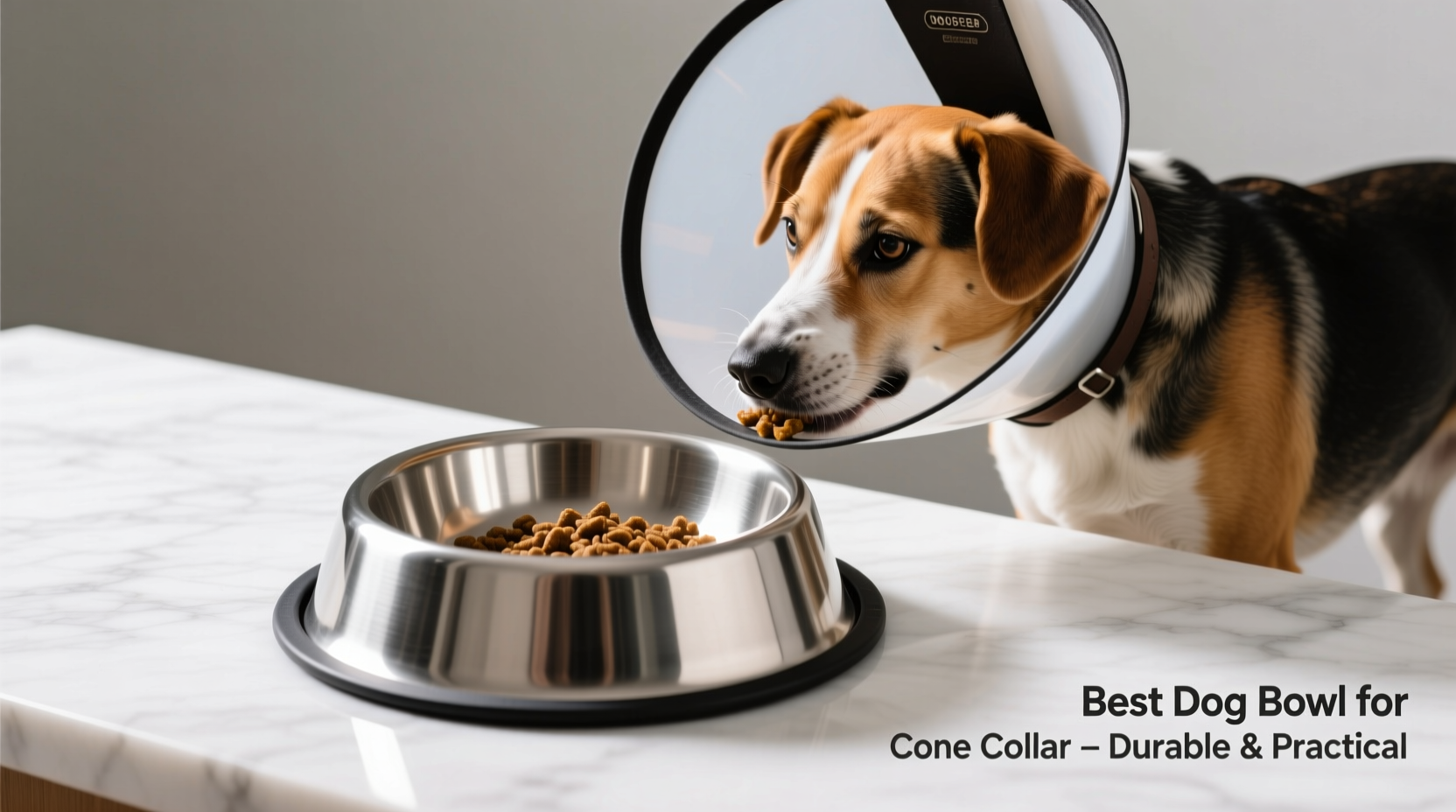
A standard pet bowl sits flush with the ground, requiring a dog to bend its neck downward at an angle that becomes impossible with a cone. The wide rim of the cone blocks access, causing food to be pushed away or missed entirely. Frustration, reduced appetite, and mess are common outcomes.
Veterinarians frequently observe dogs refusing meals not out of disinterest, but because they can't physically reach them. Dr. Laura Simmons, a small animal rehabilitation specialist, notes:
“Many post-op complications stem not from the surgery itself, but from inadequate support during recovery—like improper feeding setups. A poorly chosen bowl can lead to malnutrition or stress-induced behaviors.” — Dr. Laura Simmons, DVM, Canine Recovery Specialist
This highlights the importance of rethinking feeding logistics the moment a cone enters the picture.
Key Features of the Best Bowl for Dog with Cone
To overcome these challenges, certain design and material features are non-negotiable for a functional recovery bowl.
- Elevated Design: The bowl should raise food to chin level, allowing the dog to eat without tilting its head down. Optimal height varies by breed but generally falls between 4 to 8 inches for medium-sized dogs.
- Wide, Open Top: Narrow openings restrict access. Bowls with broad tops give more room for maneuvering around the cone.
- Non-Skid Base: Dogs may push or paw at the bowl aggressively. A rubberized or weighted base prevents sliding.
- Durable Materials: Stainless steel, thick food-grade silicone, or reinforced ceramic resist chewing, scratching, and dishwasher wear.
- Easy to Clean: Recovery periods increase exposure to bacteria. Dishwasher-safe or smooth-surface bowls reduce contamination risks.
Material Comparison: What Holds Up Best?
Not all materials perform equally under stress. Below is a comparison of common bowl materials in the context of cone-wearing dogs.
| Material | Durability | Cone Compatibility | Cleaning Ease | Best For |
|---|---|---|---|---|
| Stainless Steel | ★★★★★ | ★★★★☆ | ★★★★★ | Dogs prone to chewing or knocking over bowls |
| Food-Grade Silicone | ★★★★☆ | ★★★★★ | ★★★★☆ | Small breeds or dogs needing flexible, lightweight options |
| Reinforced Ceramic | ★★★☆☆ | ★★★☆☆ | ★★★☆☆ | Indoor, calm environments with supervision |
| Plastic | ★☆☆☆☆ | ★★☆☆☆ | ★★☆☆☆ | Avoid—easily cracked, stained, and chewed |
Stainless steel stands out for longevity and hygiene, though some models require elevation. Silicone offers flexibility and grip but may not satisfy larger dogs’ needs. Ceramic is stable but fragile. Plastic is strongly discouraged due to low durability and potential chemical leaching when chewed.
Step-by-Step Guide: How to Choose & Introduce the Right Bowl
Selecting the right bowl involves more than reading labels. Follow this timeline to ensure a smooth transition.
- Measure Your Dog’s Chin Height While Wearing the Cone: Use a tape measure from the floor to the dog’s mouth when standing naturally. Add 1–2 inches for clearance.
- Select a Bowl Matching That Height: Look for elevated feeders or shallow, wide containers that meet the measurement.
- Test Stability: Press down on one side—if it tips easily, it’s not suitable.
- Introduce Gradually: Place familiar food in the new bowl near the old one. Praise successful attempts.
- Monitor for 3 Days: Watch for signs of frustration, spillage, or refusal. Adjust height or switch materials if needed.
- Maintain Routine Cleaning: Wash daily with hot water and pet-safe soap, especially if using silicone or porous ceramics.
Real-Life Example: Max’s Recovery Journey
Max, a 3-year-old Australian Shepherd, underwent TPLO surgery and was fitted with a standard plastic cone. His owners noticed he would nudge his stainless steel bowl across the kitchen without eating. Meals were skipped, and weight loss began within days.
After consulting their vet, they switched to a 6-inch elevated silicone bowl with a non-slip base. The wide opening allowed Max to scoop kibble with his tongue despite the cone’s width. Within 24 hours, he resumed normal eating. By week two, his energy improved significantly. The family credited the change in feeding setup as a key factor in his rapid recovery.
This case underscores how a simple equipment adjustment can have profound health impacts.
Top Practical Picks: Durable Bowls That Work
Based on veterinary recommendations and user feedback, the following bowls consistently perform well for cone-wearing dogs:
- Outward Hound Fun Feeder Slow Bowl (Elevated Version): Made of BPA-free silicone with a maze design that slows eating and reduces air intake. Its wide, shallow profile works well with cones.
- PetFusion Premium Stainless Steel Bowl: Includes a rubber base and comes with an optional stand to elevate it. Highly durable and dishwasher-safe.
- Neater Feeder Original: A deep tray-style bowl with high sides but a low front entry. Designed for minimal spillage and excellent cone access.
- Slow Feed Pet Bowl by Busy Buddy: Rubber-based with ridges, sits securely on floors, and allows lateral access—ideal for dogs who push bowls forward.
Frequently Asked Questions
Can I use a human plate instead of a pet bowl?
Yes, as a short-term solution. A wide, shallow dinner plate made of ceramic or metal can provide better access than a deep bowl. However, it lacks non-slip features and may slide. Supervise use and transition to a proper pet bowl when possible.
How do I stop my dog from pushing the bowl around?
Choose a bowl with a rubberized base or place it inside a larger non-slip mat. Some owners use a baking tray lined with a silicone mat to contain movement. Weighted bases or wall-mounted feeder brackets are long-term solutions.
Is it okay to hand-feed during recovery?
Hand-feeding can help initially, especially to encourage eating. However, relying on it long-term may create dependency or guarding behaviors. Use it as a bridge while training your dog to use the new bowl.
Checklist: Selecting the Ideal Bowl for Your Dog with a Cone
- ✅ Measure your dog’s chin height with the cone on
- ✅ Choose a material: stainless steel, silicone, or reinforced ceramic
- ✅ Ensure the bowl has a wide opening and shallow depth
- ✅ Confirm it has a non-slip or weighted base
- ✅ Test it with dry food first before switching wet food
- ✅ Clean daily and inspect for wear, especially if chewed
- ✅ Monitor eating behavior for at least three days
Final Thoughts: Small Change, Big Impact
The recovery period after surgery is stressful for both pets and owners. Something as simple as a feeding bowl can either ease or exacerbate that stress. Investing time in choosing a durable, practical bowl tailored to the limitations of a cone is not an indulgence—it’s responsible pet care.
By prioritizing elevation, stability, and material strength, you empower your dog to maintain nutrition and dignity during healing. These bowls aren’t just tools—they’re part of a compassionate recovery strategy.
💬 Have a tip or favorite bowl that worked for your dog? Share your experience in the comments to help other pet parents navigate this challenging time.








