
Using dry ice in punch bowls creates a dramatic, swirling fog effect that elevates parties—from weddings to Halloween soirées. But behind the visual magic lies real risk: temperatures as low as −109.3°F (−78.5°C), rapid carbon dioxide (CO₂) gas displacement, and potential for severe cold burns or asphyxiation in poorly ventilated spaces. Every year, emergency departments treat dozens of cases linked to improper dry ice handling at home events—most involving children reaching into bowls or adults mistaking dry ice for regular ice. This isn’t about eliminating the effect—it’s about mastering it with precision, respect for physics, and proven safeguards.
Why Dry Ice Is Not Just “Cold Ice” — The Science Behind the Risk
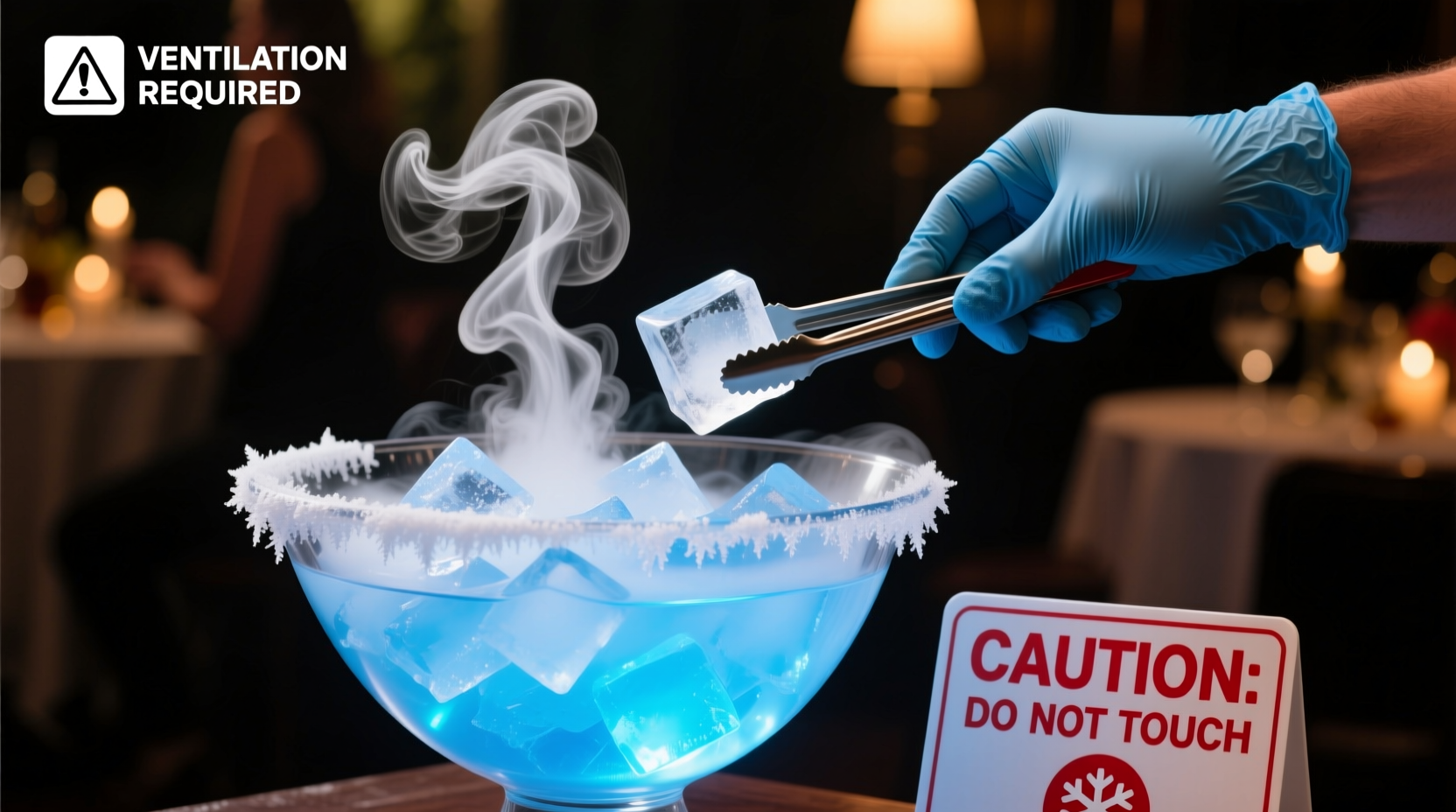
Dry ice is solid carbon dioxide, sublimating directly from solid to gas without passing through a liquid phase. That means no puddles—but also no warning signs like condensation or melting. Its surface temperature sits at −78.5°C (−109.3°F), far colder than freezer-grade ice (−18°C / 0°F). Contact with bare skin—even for 2–3 seconds—can cause instant frostbite: cellular damage from intracellular ice crystal formation, leading to blistering, necrosis, and permanent nerve injury. Simultaneously, each pound of dry ice releases approximately 250 liters of CO₂ gas at room temperature. In enclosed or crowded indoor spaces—especially basements, garages, or tightly sealed banquet halls—CO₂ can accumulate near floor level (it’s denser than air), displacing oxygen. At concentrations above 1%, people experience dizziness and shortness of breath; above 3%, confusion and loss of consciousness may occur within minutes.
“Dry ice is deceptively dangerous because it looks inert and familiar—like a chunk of ice—but behaves like a cryogenic chemical agent. There’s zero margin for improvisation.” — Dr. Lena Torres, Toxicologist and Director of the National Poison Control Center’s Environmental Hazards Division
Five Non-Negotiable Safety Rules Before You Buy a Single Pellet
These aren’t suggestions—they’re prerequisites. Skip one, and you compromise safety for spectacle.
- Verify ventilation first: Use dry ice only in well-ventilated areas with active airflow—open windows, ceiling fans, or HVAC systems running. Never use in rooms smaller than 200 sq. ft. without mechanical ventilation.
- Never handle with bare hands: Always wear insulated cryogenic gloves (not oven mitts—those lack thermal mass and compress, increasing conduction). Leather or neoprene alone are insufficient.
- Never serve punch with dry ice still actively sublimating in the bowl: Dry ice must be fully dissipated before guests drink. No exceptions—even if it looks “mostly gone.” Residual pellets sink and hide beneath liquid.
- Never place dry ice directly into glass or ceramic punch bowls: Thermal shock can cause sudden, violent shattering. Only use thick-walled stainless steel, food-grade HDPE plastic, or specially rated acrylic bowls labeled “cryo-safe.”
- Never leave unattended around children or pets: A child curious about the fog may reach in—or mistake dry ice for candy. Keep the bowl elevated, cordoned, and monitored continuously.
Step-by-Step: How to Use Dry Ice in Punch Bowls Safely (From Setup to Serve)
Follow this exact sequence—no shortcuts, no substitutions.
- Pre-chill the punch (not the bowl): Refrigerate your non-carbonated punch base to 38–42°F (3–6°C) for at least 4 hours. Cold liquid slows sublimation and reduces visible fog intensity—giving you better control.
- Select and prepare the vessel: Choose a stainless steel bowl with a minimum 1/8-inch wall thickness. Place it on a stable, non-slip surface. Line the bottom with a clean, dry towel to absorb condensation and prevent sliding.
- Prepare dry ice correctly: Using tongs, break dry ice into 1-inch cubes (not powder or dust—dust increases surface area and accelerates CO₂ release). Store cubes in an insulated cooler—not a sealed container—with the lid slightly ajar.
- Add dry ice *before* pouring punch: Place 2–4 cubes (depending on bowl size) into the empty, chilled bowl. Wait 30 seconds—this pre-cools the metal and minimizes thermal stress. Then carefully pour punch over the top, ensuring liquid covers the cubes completely. Do not stir.
- Monitor and time rigorously: Set a visible timer for 5 minutes. During this time, fog will peak. After 5 minutes, gently lift one cube with tongs—if it’s visibly reduced by >70% and no hissing remains, wait another 2 minutes. If any hissing, bubbling, or visible vapor persists, do not serve.
- Remove all residue before serving: Using tongs, remove every visible piece—even tiny shards. Then ladle 2–3 cups of punch into a separate pitcher and let sit for 60 seconds. If no further bubbling occurs, the punch is safe. Discard the first ladled portion if bubbles appear.
Do’s and Don’ts: A Practical Comparison Table
| Action | DO | DON’T |
|---|---|---|
| Handling | Use ASTM F2673-certified cryogenic gloves + safety goggles | Use kitchen towels, cotton gloves, or bare hands—even briefly |
| Bowl Material | Stainless steel (18/10 grade) or FDA-compliant acrylic rated to −40°C | Glass, ceramic, thin plastic, or decorative resin bowls |
| Punch Composition | Non-carbonated bases (e.g., fruit juice, tea, cream-based punches) | Soda, sparkling wine, or anything with existing CO₂—risk of violent foaming |
| Post-Use Disposal | Place remaining dry ice in a well-ventilated area (e.g., open garage) to sublimate naturally | Seal in plastic bags, freezers, sinks, or trash cans |
| Child Supervision | Assign one adult solely to monitor the bowl—no multitasking | Rely on “just one minute” absence or assume kids “know better” |
Real-World Case Study: The Backyard Wedding Incident
In June 2023, a couple hosted 65 guests in their suburban backyard for a summer wedding. They purchased dry ice online, used it in a vintage glass punch bowl they’d borrowed from a relative, and added sparkling lemonade—thinking “more fizz = more fun.” Within 8 minutes, guests began reporting headaches and nausea. Two teenagers who leaned in to admire the fog complained of tingling lips and dizziness. The groom, reaching in to retrieve a stray mint leaf, touched a partially submerged pellet and withdrew screaming—his thumb developed white, waxy blanching within seconds. Paramedics arrived promptly; CO₂ levels measured at 2.8% near the bowl (safe limit: <0.5%). The glass bowl had microfractures from thermal stress, and the lemonade’s carbonation accelerated CO₂ off-gassing. Thankfully, no long-term injury occurred—but the incident triggered a formal safety advisory from their state’s Department of Health. What prevented escalation? Immediate removal of the bowl, opening all nearby sliding doors, and moving guests into open air. Their post-event review revealed three critical failures: no ventilation assessment, inappropriate vessel choice, and mixing carbonated liquid with dry ice.
Essential Safety Checklist (Print & Verify Before Every Use)
- ☐ Ventilation confirmed: Windows open + fan running OR outdoor setting with cross-breeze
- ☐ Cryogenic gloves and ANSI-approved safety goggles on hand and inspected for tears or moisture
- ☐ Punch pre-chilled to ≤42°F (≤6°C)
- ☐ Bowl verified as stainless steel or cryo-rated acrylic—no cracks or scratches
- ☐ Dry ice purchased ≤4 hours prior and stored in vented cooler
- ☐ Timer set and visible to host (not on phone alone)
- ☐ Designated adult assigned solely to monitor bowl—no distractions
- ☐ First aid kit accessible, including burn gel and non-adherent dressings
- ☐ Emergency numbers posted nearby (911 + Poison Control: 1-800-222-1222)
Frequently Asked Questions
Can I put dry ice in a drink glass for individual servings?
No. Individual glasses pose unacceptable risks: high surface-area-to-volume ratio increases CO₂ concentration near the nose/mouth, and accidental ingestion is likely. The CDC explicitly prohibits dry ice in single-serve containers. If you want theatrical effect per guest, use dry ice in a central bowl only—and serve punch via ladle into pre-chilled glasses away from the source.
What if someone touches dry ice and gets frostbite?
Do not rub the area. Immerse gently in warm (not hot) water—104–107.6°F (40–42°C)—for 15–20 minutes. Warm water rewarms tissue gradually without cooking it. Do not use heating pads, hair dryers, or snow. Cover loosely with sterile gauze. Seek medical evaluation immediately—even for small areas—because deep tissue damage may not be visible initially. Document exposure time and temperature if possible.
Is food-grade dry ice actually safer than industrial-grade?
Yes—but only in terms of purity, not temperature or gas output. Food-grade dry ice is produced under ISO 22000 standards, meaning it’s free of lubricants, hydraulic fluids, or contaminants from manufacturing equipment. Industrial-grade may contain trace hydrocarbons unsuitable for food proximity. However, both sublimate at identical rates and produce identical CO₂ volumes. Always confirm “food-grade” on the packaging—and buy only from reputable suppliers who provide batch traceability.
Conclusion: Respect the Fog, Protect the Experience
Dry ice in punch bowls doesn’t need to be risky—it needs to be respected. When handled with scientific awareness, procedural discipline, and unwavering attention to human factors, it becomes a safe, memorable highlight—not a liability. The difference between awe and accident lies not in the product, but in preparation: verifying materials, validating ventilation, timing precisely, and never underestimating cold. Your guests deserve wonder—not worry. Your responsibility isn’t to eliminate drama, but to engineer safety so thoroughly that the magic feels effortless. Start tonight: check your glove rating, measure your event space, and rehearse the 5-minute monitoring protocol. Because the best party trick isn’t the fog—it’s the peace of mind that comes from knowing every detail was safeguarded.
💬 Have you used dry ice safely at an event? Share your verified tip, timeline, or lesson learned in the comments—your experience could prevent someone else’s emergency.








