At weddings, holiday parties, and themed galas, few visual effects command attention like cascading white vapor spilling over the rim of a punch bowl—ethereal, mysterious, and undeniably “Instagram-ready.” This effect is almost always achieved using dry ice: solid carbon dioxide cooled to −78.5°C (−109.3°F). While the aesthetic is compelling, the practice carries real, documented dangers—from minor frostbite to life-threatening asphyxiation. What begins as a festive flourish can quickly become a medical emergency when protocols are ignored, misapplied, or misunderstood. This isn’t speculation: emergency departments report consistent seasonal spikes in dry ice–related injuries each December and June (peak wedding and graduation months), and food safety regulators have issued repeated warnings since 2015. Understanding *why* dry ice behaves the way it does—and how human physiology responds to its presence—is essential for anyone responsible for serving beverages at gatherings.
The Science Behind the Smoke: Why Dry Ice Isn’t Just “Cold Ice”
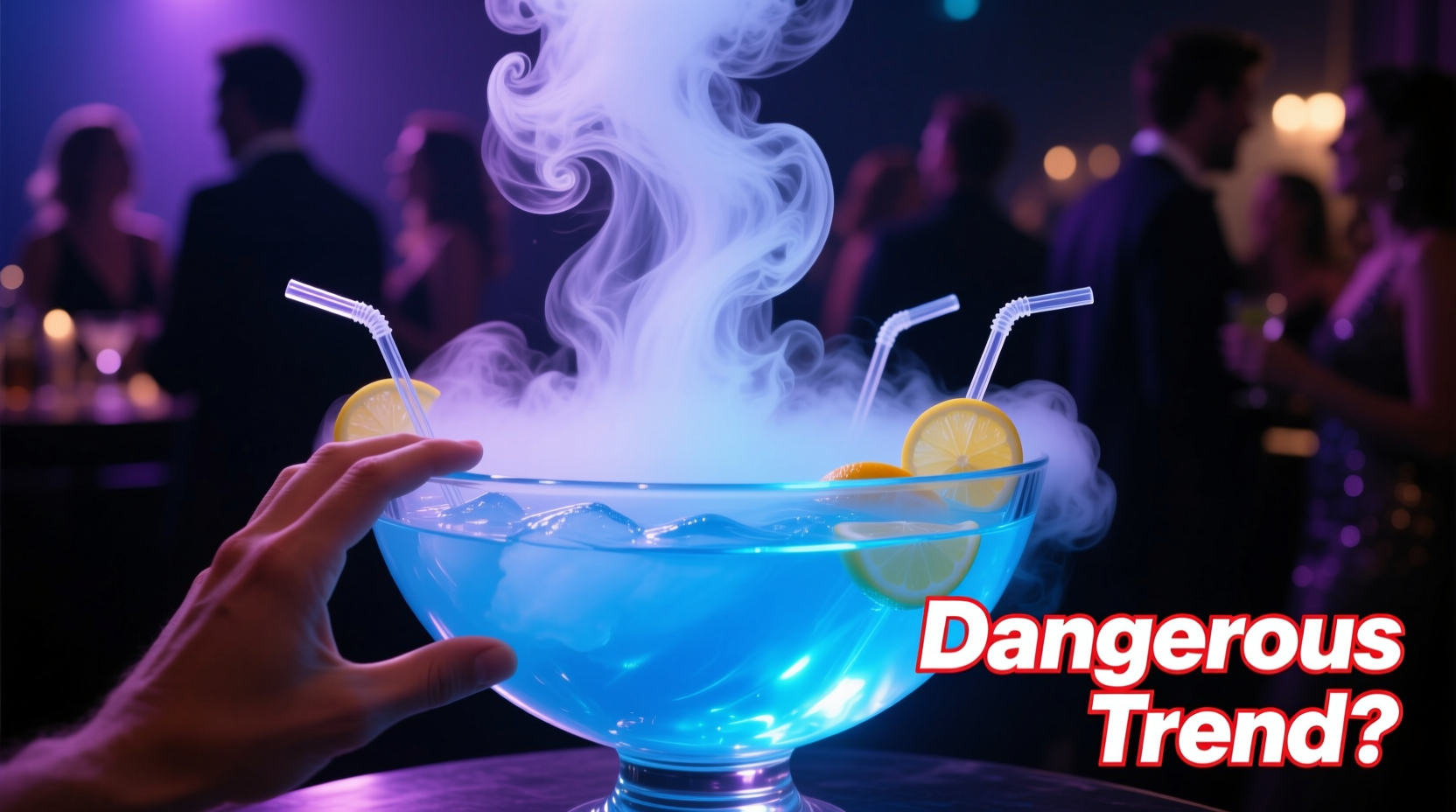
Dry ice is not frozen water. It’s solid CO₂, formed under high pressure and extreme cold. Unlike regular ice, it doesn’t melt into liquid; instead, it undergoes sublimation—transitioning directly from solid to gas. One pound of dry ice produces approximately 250 liters of carbon dioxide gas at room temperature. In an enclosed or poorly ventilated space—a tented backyard, a basement lounge, or even a crowded indoor reception—the rapid release of CO₂ can displace breathable oxygen. Because CO₂ is colorless, odorless, and heavier than air, it pools near the floor and accumulates silently. At concentrations above 1%, people may experience dizziness, shortness of breath, and headache. At 10%—easily reachable in a small, unventilated room with just two pounds of dry ice—it can cause unconsciousness within minutes. And unlike smoke or steam, there’s no warning scent or visible cue until symptoms begin.
This behavior explains why dry ice is classified by OSHA as a *hazardous material*, requiring specific handling training for commercial use. It’s also why the U.S. Food and Drug Administration (FDA) explicitly prohibits direct contact between dry ice and food or beverages intended for human consumption unless the dry ice has been removed *before* service—and even then, only after sufficient time has passed for residual CO₂ gas to dissipate.
Documented Risks: From Blisters to Brain Injury
Three categories of injury dominate clinical reports involving dry ice in beverage service:
- Cryogenic burns: Skin or mucosal tissue contact with dry ice causes immediate freezing—similar to thermal burns but without heat. A 2-second touch can produce a full-thickness blister. Lips, tongues, and fingers are most vulnerable, especially among children who reach into bowls out of curiosity.
- CO₂ asphyxiation: Multiple incidents have been confirmed by the CDC and state health departments where guests—particularly elderly attendees or those with preexisting respiratory conditions—experienced sudden confusion, collapse, or loss of consciousness near dry ice–enhanced punch stations. In one 2022 case in Portland, Oregon, three guests required oxygen therapy after a 40-person indoor holiday party used six pounds of dry ice in two adjacent punch bowls without mechanical ventilation.
- Container failure: Sealed or semi-sealed containers (like glass punch bowls with tight-fitting lids or plastic tubs) can build up dangerous internal pressure as CO₂ gas expands. Documented explosions have shattered tempered glass bowls, sending shards into nearby guests and causing lacerations.
Real-World Incident: The Lakeside Vineyard Wedding (2023)
In July 2023, a vineyard venue in Sonoma County hosted a 120-guest outdoor wedding. The catering team, aiming for “enchanted forest” ambiance, added five pounds of dry ice to two large copper punch bowls filled with sparkling blackberry lemonade. The bowls were placed on low wooden stands near the dance floor, partially shaded by a fabric canopy. Within 22 minutes, four guests—including the bride’s 72-year-old grandfather—reported dizziness and tingling lips. Two staff members noticed the grandfather slumping in his chair and called 911. Paramedics arrived to find CO₂ levels at 2.4% near floor level (nearly triple the safe exposure limit of 0.5% over 8 hours). All affected individuals recovered fully after oxygen administration, but the incident triggered a county health inspection. Investigators found no written safety protocol for dry ice use on-site, and the caterer was cited for violating California Retail Food Code §114024, which prohibits “any substance that may render food injurious to health.” The venue subsequently banned dry ice entirely from beverage service—replacing it with chilled stainless steel inserts and LED-lit acrylic fog machines.
Safer Alternatives That Deliver Visual Impact Without Risk
A dramatic presentation need not compromise safety. Professional event designers and mixologists increasingly rely on methods that mimic the “smoky” aesthetic without cryogenic hazards or gas accumulation. Below is a comparison of options, evaluated across safety, cost, ease of use, and visual fidelity:
| Method | Safety Rating (1–5★) | Visual Effect Duration | Setup Complexity | Notes |
|---|---|---|---|---|
| Dry ice (direct bowl use) | ★☆☆☆☆ | 3–5 minutes | Low | Banned by FDA for direct food contact; requires PPE, ventilation, and monitoring. |
| Chilled stainless steel “fog rings” | ★★★★★ | 15–20 minutes | Moderate | Pre-chilled rings placed beneath bowl create condensation “halo”; reusable, silent, zero emissions. |
| LED fog machines (cold fog) | ★★★★☆ | Up to 60 minutes | Moderate | Uses glycol/water vapor; non-toxic, controllable output; requires power and maintenance. |
| Sub-zero chilled punch (−2°C) | ★★★★★ | 8–12 minutes | High | Requires blast chiller; creates natural surface condensation and subtle mist; no additives. |
| Acrylic “smoke” inserts with fan | ★★★★★ | Continuous | Low | Battery-powered fan circulates ambient air through textured acrylic—creates illusion of rising vapor; completely inert. |
For home entertainers, the simplest upgrade is chilling the entire punch bowl in a freezer for 2 hours before filling, then serving over standard ice (not dry ice). The resulting condensation on the exterior mimics atmospheric fog—especially under warm lighting—and eliminates all risk. A small battery-operated fog machine ($35–$60 online) offers theatrical impact without regulatory concerns and can be safely operated at table height with minimal airflow disruption.
Expert Insight: Voices from Food Safety and Event Medicine
“Dry ice is a tool—not a decoration. Its use in food service demands the same rigor as handling industrial solvents: training, engineering controls, and continuous monitoring. I’ve treated patients who thought ‘just a little’ wouldn’t hurt—only to develop esophageal frostbite after sipping from a seemingly innocuous punch cup. There is no safe threshold for ingestion or inhalation near active sublimation.”
— Dr. Lena Torres, MD, MPH, Director of Environmental Health Emergencies, National Center for Disaster Preparedness
“The number-one mistake I see is assuming ‘outdoors = automatically safe.’ Wind patterns are unpredictable. A still afternoon, a low-hanging awning, or even a group of guests clustering around the bowl can create localized CO₂ pockets exceeding 5%. We require written dry ice protocols for any licensed caterer in New York State—and we revoke permits for first-time violations involving guest exposure.”
— Marcus Bell, Chief Inspector, NYC Department of Health & Mental Hygiene, Food Protection Division
Step-by-Step: How to Serve Punch Safely—Even With Ambition
If your vision includes atmosphere, texture, and elegance—without liability or risk—follow this verified sequence. It takes 20 minutes longer than tossing in dry ice, but protects everyone involved:
- Pre-chill everything: Place empty punch bowl, ladle, and serving cups in freezer for 90 minutes. Wipe condensation before filling.
- Prepare base beverage at refrigerator temperature (2–4°C): Avoid warm ingredients; they accelerate melting and dilution.
- Add conventional ice last: Use large, clear cubes (they melt slower and look refined). Float citrus wheels or edible flowers on top for visual interest.
- Deploy ambient effect separately: Position a small cold-fog machine (set to low output) 3 feet behind the bowl, angled upward. Or place chilled stainless steel rings beneath the bowl on a mirrored tray.
- Assign a steward: Designate one person to monitor the station—refilling ice, wiping spills, and ensuring no guest reaches into the bowl. This role should rotate every 30 minutes.
- Post clear signage: “Chilled beverage—please use provided cups and ladle. Do not insert hands or utensils into bowl.” Not decorative, but legally protective and ethically sound.
FAQ: Critical Questions Answered
Can I use dry ice if I remove it before serving?
Yes—but only if you follow strict timing. After removing dry ice, wait *at least 15 minutes* before pouring punch, and ensure the area is well-ventilated (open windows, fans, or HVAC airflow). Test CO₂ levels with a portable detector if possible—anything above 1,000 ppm warrants delay. Never serve punch from a container that previously held dry ice without thorough airing.
Is food-grade dry ice safer than industrial grade?
No. “Food-grade” refers only to purity standards (absence of contaminants like oils or heavy metals)—not safety of use. Both grades sublimate into the same CO₂ gas and cause identical cryogenic injury upon contact. The term is misleading in this context and does not reduce risk.
What should I do if someone touches dry ice?
Do NOT rub or apply heat. Gently flush the area with lukewarm (not hot) water for 10–20 minutes. Cover loosely with sterile gauze. Seek medical evaluation if blistering occurs, skin turns waxy or yellow, or numbness persists beyond 30 minutes. For ingestion or inhalation distress, evacuate to fresh air immediately and call emergency services.
Conclusion: Prioritize Presence Over Illusion
The desire to create memorable moments—to delight the senses, spark conversation, and elevate celebration—is deeply human. But true hospitality isn’t measured in visual spectacle alone; it’s proven in vigilance, empathy, and responsibility. When you choose safety over shortcut, you’re not sacrificing magic—you’re deepening trust. You’re telling guests, “Your well-being matters more than my Instagram story.” That message resonates far longer than fog ever could. Whether you’re planning a family reunion, hosting a corporate mixer, or designing a milestone event, let your creativity flow through methods that honor both artistry and anatomy. Chilled metal, clever lighting, intentional garnishes, and thoughtful service design offer richer, more sustainable impact than transient vapor ever will.
💬 Your experience matters. Have you witnessed or managed a dry ice incident? Share what you learned—and what you’d advise others—in the comments below. Let’s build safer, more joyful traditions—together.








