Dry ice—the solid form of carbon dioxide at −78.5°C—has long been a staple for theatrical party effects: cascading white fog spilling over the rim of a punch bowl, swirling mysteriously beneath floating fruit, evoking haunted mansions and enchanted feasts. It’s undeniably captivating. Yet behind that mesmerizing visual lies a substance that demands respect—not just caution. Unlike regular ice, dry ice doesn’t melt; it sublimates, transforming directly from solid to gas. That process releases large volumes of CO₂ into enclosed or poorly ventilated spaces. When used without proper understanding, dry ice in punch bowls crosses from festive enhancement into a preventable hazard. This isn’t theoretical risk. Emergency departments report dozens of annual cases linked to improper dry ice use at home events—frostbite injuries, respiratory distress, even near-asphyxiation incidents in basements and garages where CO₂ accumulated silently and invisibly.
The Science Behind the Fog—and the Risk
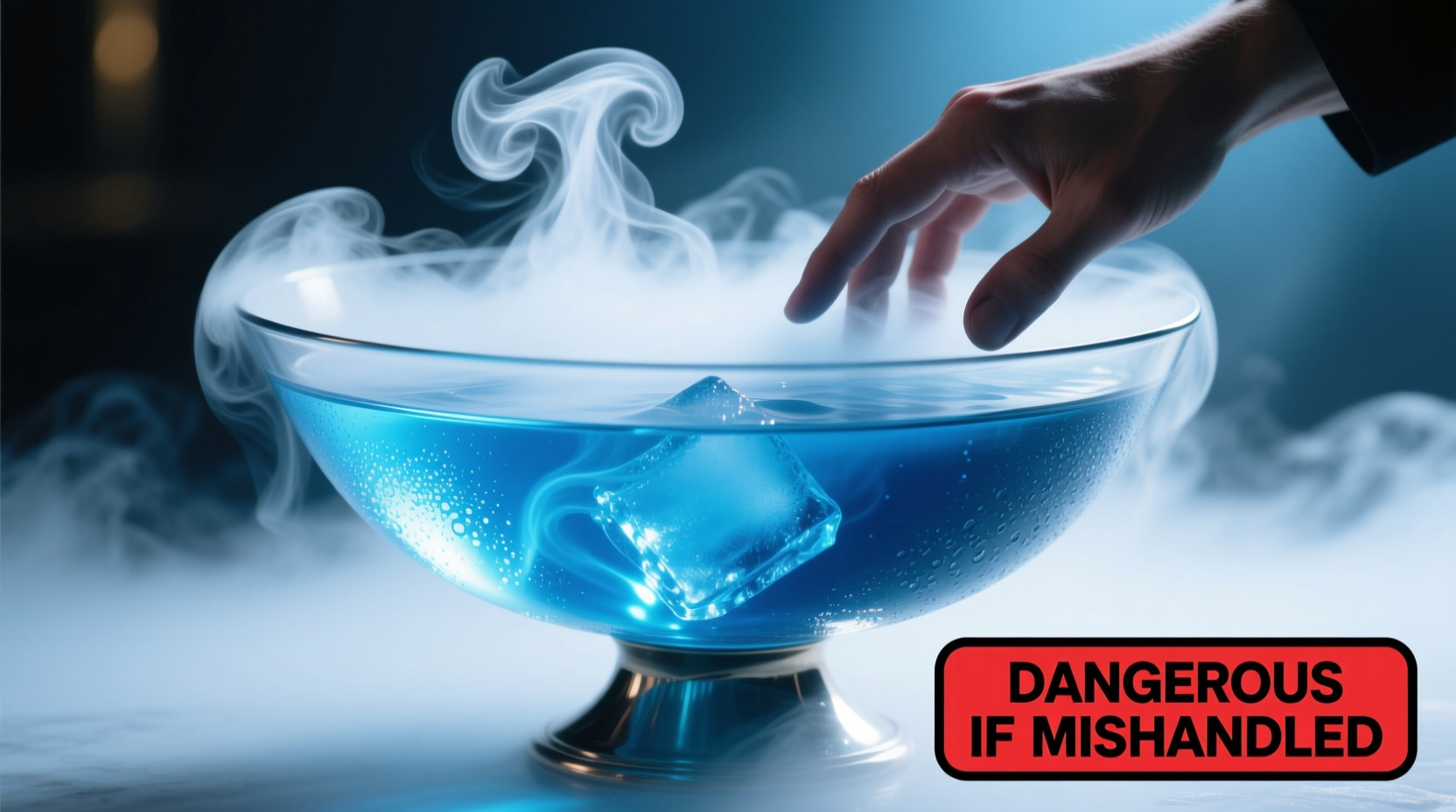
The “cool effect” is real—but it’s not just about temperature. When dry ice contacts warm liquid (like punch), rapid sublimation occurs. The resulting CO₂ gas cools surrounding air moisture, causing condensation—what we see as dense, low-lying fog. That fog looks harmless. In truth, it’s a visible marker of an invisible hazard: elevated CO₂ concentration. At 1,000 ppm, most people notice no symptoms. At 5,000 ppm—easily reached in small, unventilated rooms with multiple dry ice displays—drowsiness, headache, and dizziness begin. At 30,000 ppm, loss of consciousness can occur within minutes. Crucially, CO₂ is odorless and colorless; you cannot smell or see danger until it’s too late. Meanwhile, direct skin contact with dry ice causes instant frostbite—similar to severe burns—because cellular water freezes and ruptures tissue within seconds.
Compounding the risk is a common misconception: that dry ice is “just cold ice.” It is not food-grade unless explicitly labeled as such. Industrial dry ice may contain trace contaminants from compression equipment or transport. Even food-grade dry ice must never be ingested or allowed to contact consumables directly—no matter how tempting it is to serve punch with “smoking” cubes floating inside.
Safe Use Protocol: A Step-by-Step Guide
Using dry ice in punch bowls safely requires discipline—not improvisation. Follow this sequence precisely. Deviations increase risk exponentially.
- Plan ventilation first: Choose an open-air venue (e.g., patio, backyard) or a large, well-ventilated indoor space with operable windows and ceiling fans running continuously. Never use dry ice in enclosed areas like garages, basements, tents without side walls, or small living rooms.
- Select only food-grade dry ice: Purchase from a reputable supplier who certifies their product for food contact. Verify labeling—“food grade” or “FDA-compliant” must appear on packaging.
- Pre-chill the punch, not the bowl: Refrigerate punch to 4°C (39°F) or colder before adding dry ice. Warm liquid accelerates sublimation—and CO₂ release. Never pour warm punch over dry ice.
- Use indirect contact only: Place dry ice in a separate, insulated container (e.g., stainless steel bucket or thick-walled plastic cooler) nestled *inside* the punch bowl. Line the outer bowl with damp cloths to hide the inner container. Punch flows *around*, not *over*, the dry ice.
- Handle with protective gear: Always wear insulated gloves rated for −80°C (e.g., cryogenic or heavy-duty leather gloves). Never use bare hands, oven mitts, or thin fabric gloves.
- Monitor duration strictly: Limit display time to 15–20 minutes. After that, remove the dry ice container immediately—even if fog remains. Residual CO₂ continues accumulating after visible fog dissipates.
What NOT to Do: A Critical Do’s and Don’ts Table
| Action | Do | Don’t |
|---|---|---|
| Handling | Use tongs or insulated gloves rated for −80°C | Touch with bare hands, cloth gloves, or standard oven mitts |
| Storage | Keep in a well-ventilated, insulated cooler (never airtight) | Store in sealed plastic bags, glass jars, or freezers |
| Punch Contact | Use double-container method (dry ice in inner vessel) | Drop dry ice directly into punch or let guests scoop it |
| Ventilation | Operate only in open-air or large, cross-ventilated rooms | Use in garages, basements, screened porches, or rooms with closed doors/windows |
| Disposal | Leave at room temperature in ventilated area to sublimate fully | Flush down sinks, toilets, or drains; or place in trash bags |
A Real Incident: What Happened at the Henderson Family Reunion
Last summer, the Henderson family hosted a 45-person reunion in their suburban basement rec room—a finished space with low ceilings, two small egress windows, and no mechanical ventilation. To impress guests, the host purchased dry ice online (unlabeled “food grade”) and placed three 5-pound blocks directly into a 12-gallon punch bowl filled with chilled fruit punch. She added extra dry ice every 10 minutes to sustain the fog effect. Within 22 minutes, six adults reported lightheadedness and nausea. A 12-year-old boy collapsed near the punch bowl. Paramedics arrived to find CO₂ levels at 28,000 ppm—measured with a handheld detector—and treated four individuals for CO₂-induced hypoxia. No one died, but two required overnight observation. An investigation revealed the dry ice had been stored in a sealed plastic tote for 48 hours pre-event, accelerating off-gassing, and the basement’s HVAC system recirculated air instead of exhausting it. The incident was preventable with basic ventilation planning and adherence to time limits.
This wasn’t negligence born of carelessness—it was a gap in accessible, authoritative guidance. Many hosts assume “if it’s sold for parties, it’s safe to use freely.” That assumption fails without context.
Expert Insight: Voices from Safety and Hospitality
“Dry ice is classified as a hazardous material by OSHA and the DOT—not because it’s inherently malicious, but because its physics defy intuition. The fog looks magical. The silence of CO₂ accumulation feels safe. That cognitive disconnect is where accidents happen. Every event planner I train now begins with CO₂ safety—not décor.” — Dr. Lena Torres, Industrial Hygienist & Lead Safety Advisor, National Catering Safety Alliance
“In over 27 years managing high-end catering operations, I’ve seen more dry ice incidents than fireworks mishaps. The fix isn’t banning it—it’s standardizing protocols: mandatory ventilation checks, certified food-grade sourcing, and a strict 15-minute rule. We post laminated checklists at every punch station. It takes 10 seconds—and saves lives.” — Marcus Bellweather, Executive Director, Elite Event Safety Council
Practical Alternatives That Deliver Drama—Without Danger
For hosts prioritizing guest safety—or those hosting indoors, with children, or in venues with limited airflow—safer alternatives exist that retain visual impact. These are not compromises; they’re upgrades in responsibility.
- Cold vapor machines: Commercial-grade foggers using glycerin-based fluid produce dense, low-lying fog at room temperature. No CO₂, no extreme cold, no ventilation constraints. Rental cost: $75–$150/day.
- Chilled glass beads: Reusable tempered glass spheres frozen to −20°C in commercial freezers. They chill punch without sublimation, last 45+ minutes, and pose zero ingestion or respiratory risk. NSF-certified options available.
- Dry ice fogger rigs: Professional setups that route CO₂ through chilled water chambers, producing fog externally before piping it *into* the bowl via hidden tubing. The dry ice never contacts food or guests—and CO₂ exhausts outdoors.
- Layered visual effects: Submerge LED-lit acrylic ice cubes (battery-powered, waterproof) beneath clear punch. Add edible glitter and slow-pour blue curaçao for a luminous “glowing lake” effect—zero thermal or gaseous risk.
These alternatives don’t diminish spectacle—they redirect creativity toward sustainability and inclusion. They allow grandparents, asthmatic guests, and infants to enjoy the celebration without silent exposure to accumulating gas.
Frequently Asked Questions
Can I put dry ice in a drink for individual servings?
No—never. Even a single cube in a cocktail poses unacceptable risks: accidental ingestion, lip or tongue frostbite upon contact, and localized CO₂ buildup in the narrow airspace above the glass. Individual servings require safer alternatives like frozen glass beads or LED ice.
How much dry ice is “too much” for a standard punch bowl?
There is no safe “amount”—only safe *methods*. A 12-gallon bowl using indirect containment should never hold more than 2 pounds total, applied once at the start. Adding more mid-event multiplies CO₂ output exponentially. If fog fades, switch to a safer alternative rather than escalating dry ice volume.
Is it safe once the fog stops?
No. Sublimation continues long after visible fog ceases—especially as ambient temperature rises. CO₂ gas accumulates at floor level and persists. Remove dry ice containers immediately after the 15–20 minute window, ventilate the space for 30+ minutes, and confirm air quality before re-entry.
Conclusion: Celebrate Responsibly—Not Just Spectacularly
The desire to create wonder—to make guests pause, smile, and remember—is deeply human. Dry ice delivers that moment. But true hospitality isn’t measured solely in “wow factor.” It’s measured in the absence of harm, the presence of care, and the quiet confidence that every guest left healthier than they arrived. Understanding dry ice isn’t about stifling joy—it’s about deepening intention. It means choosing ventilation over convenience, preparation over improvisation, and education over assumption. When you opt for the double-container method, verify food-grade certification, set a timer, and step outside to feel the breeze carrying away CO₂, you’re not compromising magic—you’re refining it. You’re transforming spectacle into stewardship. So this season, whether you choose dry ice with disciplined protocol or embrace a safer alternative, do so with full awareness. Your guests’ safety isn’t part of the décor—it’s the foundation everything else rests upon.
💬 Have you used dry ice safely—or learned from a close call? Share your protocol, tip, or experience in the comments. Help build a community where celebration and safety go hand-in-hand.








