
Dog nail maintenance is a non-negotiable part of pet care. Overgrown nails can lead to discomfort, joint strain, and even posture issues in dogs. Yet, many pet owners dread the task—especially when it comes to choosing between traditional clippers and modern nail grinders. There’s a growing debate: Are clippers truly stressful for dogs, or has the grinder trend been overhyped? The truth lies somewhere in the middle. Each tool has strengths and limitations, and the best choice depends on your dog’s temperament, your experience level, and long-term grooming goals.
Understanding the Basics: How Each Tool Works
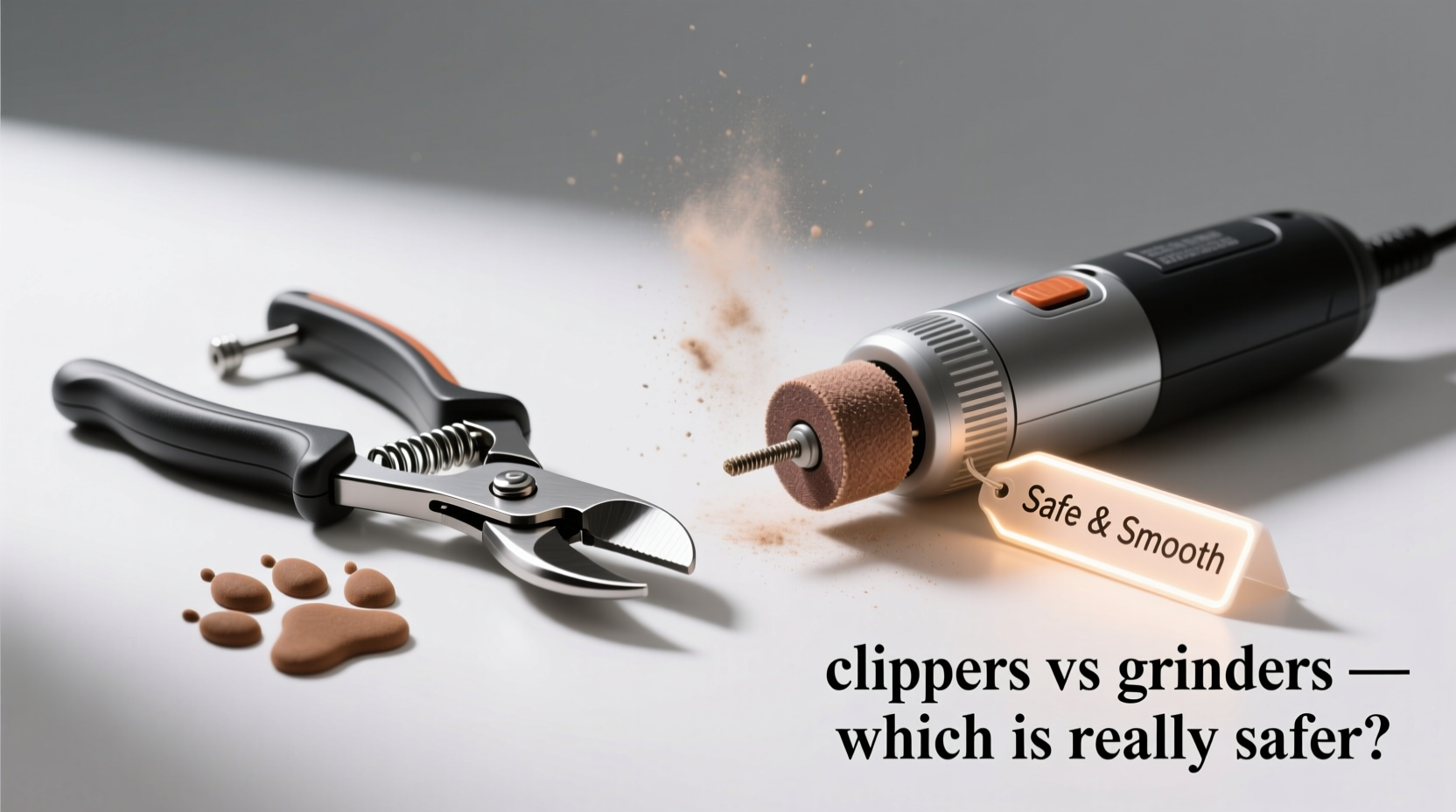
Dog nail clippers function like precision scissors or guillotine-style cutters designed to snip off the tip of the nail cleanly. They’re mechanical, quiet, and require no charging or batteries. In contrast, nail grinders use a rotating abrasive bit to file down the nail gradually. Think of them as mini-Dremels tailored for pets—offering controlled shaping rather than cutting.
The core difference isn’t just mechanics—it’s philosophy. Clippers remove length quickly; grinders shape and smooth over time. This fundamental distinction influences everything from speed to safety margins.
Tip: Always have styptic powder on hand when using clippers. It stops bleeding instantly if you accidentally cut into the quick.Pros and Cons: A Direct Comparison
| Feature | Clippers | Grinders |
|---|---|---|
| Speed | Fast—one clip per nail | Slower—requires filing time per nail |
| Noise Level | Nearly silent | Can be loud (motorized) |
| Precision | High risk if misjudged (quick contact) | Gradual control reduces risk |
| Dog Anxiety | Some fear of sudden motion | Vibration and noise may scare sensitive dogs |
| Maintenance Cost | Low (replace blades occasionally) | Higher (bits wear out, battery replacement) |
| Finish Quality | Sharp edge unless filed after | Smooth, rounded finish by default |
Clippers offer efficiency and simplicity but come with a steeper learning curve due to the risk of cutting the quick—the sensitive, blood-rich tissue inside the nail. Grinders allow incremental shortening, which many find safer, especially for dogs with dark nails where the quick isn't visible. However, they demand patience and tolerance from both owner and pet.
Real-World Example: Managing a Reactive Rescue Dog
Consider Max, a 3-year-old Border Collie mix rescued from a shelter. He flinches at sudden movements and dislikes having his paws touched. His owner, Sarah, tried clippers first—but one accidental quick nick turned Max completely resistant. Even the sight of the clippers triggered whining and withdrawal.
She switched to a grinder, starting with just turning it on nearby while giving treats. Over two weeks, she introduced the vibrating tool near his paws without contact. Eventually, she filed one corner of a single nail during a high-value treat session. Progress was slow, but after a month, Max tolerated full grinding sessions. The gradual approach built trust—and avoided further trauma.
This case illustrates that tools aren’t inherently good or bad; their success depends on how they’re introduced. For anxious dogs, grinders can be gentler psychologically, despite the noise.
“With fearful dogs, desensitization matters more than the tool itself. A calm grinder session beats a rushed clip every time.” — Dr. Lena Torres, Veterinary Behavior Specialist
Step-by-Step Guide: Choosing and Using the Right Tool
- Assess your dog’s temperament. Is your dog still during handling? Does he react to sounds or vibrations? Calm dogs adapt to either tool; noise-sensitive ones may struggle with grinders.
- Examine nail color. Light-colored nails make the quick easy to see—ideal for clippers. Dark nails obscure the quick, making grinders a safer option for incremental trimming.
- Start with short training sessions. Let your dog sniff the tool. Turn on the grinder nearby. Reward curiosity. Never force contact.
- Test both methods cautiously. Try one nail with clippers, wait a day, then attempt light grinding. Observe reactions closely.
- Commit to consistency. Whichever tool you choose, use it every 2–4 weeks. Regular maintenance prevents overgrowth and builds routine familiarity.
Common Myths Debunked
- Myth: Grinders are painless. False. If used too long on one spot, grinders generate heat that can irritate the nail bed. Always move the bit and avoid prolonged contact.
- Myth: Clippers always hurt. Not true. With proper technique and timing, clipping is quick and pain-free. The key is avoiding the quick and maintaining sharp blades.
- Myth: Only professionals should grind nails. While pros use grinders daily, many owners master them at home—with patience and practice.
Checklist: Nail Care Readiness
- ✅ Nails trimmed or ground within the last 3–4 weeks
- ✅ Styptic powder available (for clippers)
- ✅ Treats ready for positive reinforcement
- ✅ Quiet, distraction-free environment prepared
- ✅ Tool cleaned and in working order (sharp blades or fresh grinding bit)
- ✅ Dog calm and not overly excited or tired
FAQ: Common Questions Answered
Can I combine clippers and grinders?
Absolutely. Many owners use clippers to shorten the nail and then a grinder to smooth the edges. This hybrid method saves time and reduces sharpness, minimizing snagging on carpets or skin.
How short is too short?
If you see a pinkish center in the nail (the quick), stop. In black nails, cut small amounts at a 45-degree angle and look at the cut surface—a small dark circle indicates you're nearing the quick. When in doubt, leave it longer and file later.
My dog hates both tools. What now?
Focus on behavior first. Work with a trainer or veterinary behaviorist to build paw handling tolerance. Use counter-conditioning: pair tool presence with high-value treats, even if no trimming occurs at first. Rushing leads to setbacks.
Final Thoughts: It’s About Fit, Not Fashion
The rise of pet grinders has been accompanied by bold claims: quieter, safer, stress-free. But the reality is nuanced. Grinders aren’t universally better—they’re different. For some dogs and owners, they’re transformative. For others, they introduce unnecessary noise and complexity. Similarly, clippers aren’t outdated relics. When used correctly, they’re fast, effective, and reliable.
The real issue isn’t the tool—it’s preparation. A well-socialized dog, a confident handler, and consistent routines matter far more than whether you’re clipping or grinding. Don’t feel pressured to buy the latest gadget if your clippers work. Conversely, if your dog panics at scissors but tolerates vibration, a grinder could be a game-changer.
Rather than asking “Which is better?” ask “Which is better for my dog?” That shift in perspective leads to smarter decisions and calmer grooming sessions.
🚀 Take action today: Pick up your current nail tool, check its condition, and schedule your next session. Whether you clip or grind, consistency is what keeps your dog comfortable and mobile. Share your experience in the comments—what works for your pup?








