Every dog owner wants their pet to be safe, comfortable, and under control during walks. Yet one of the most common debates among pet parents centers on a simple question: should you use a collar or a harness? While collars have long been the default choice, harnesses are increasingly recommended by trainers and veterinarians. But is a harness truly better for walking your dog? The answer depends on your dog’s breed, size, behavior, and health — but understanding the differences can help you make an informed decision.
Understanding the Basics: Collar vs Harness
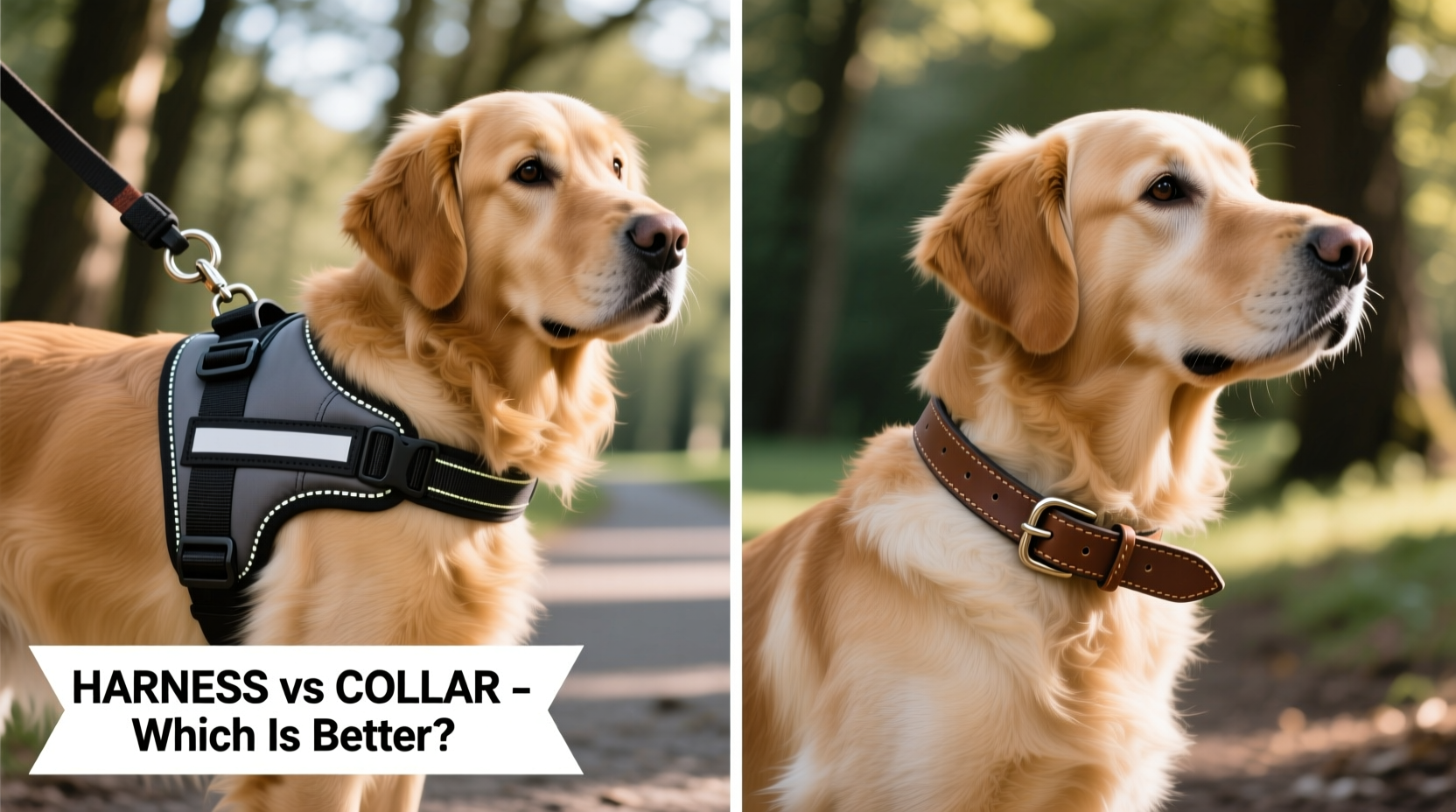
A traditional collar wraps around the neck and serves multiple purposes: identification, leash attachment, and sometimes training cues. It's simple, familiar, and effective for well-behaved dogs that don’t pull. However, when force is applied — especially during pulling — pressure concentrates on the trachea, spine, and delicate structures in the neck.
A harness distributes that force across the chest and shoulders, reducing strain on the neck. Modern harnesses come in various designs — front-clip, back-clip, no-pull, and dual-clip — each influencing how your dog walks and responds to direction. Because it secures around the torso rather than the neck, a harness offers more control and reduces injury risk, particularly in strong or excitable dogs.
Tip: Never attach a leash directly to a dog’s collar if they tend to pull — this can cause serious respiratory or spinal damage over time.When a Harness Is Clearly Better
Not all dogs are suited for collar-led walks. In fact, for certain breeds and behaviors, a harness isn’t just preferable — it’s essential.
- Bulldogs, Pugs, and other brachycephalic breeds: These dogs have shortened airways and are prone to breathing issues. Pressure on the neck from a collar can worsen respiratory problems.
- Small dogs (e.g., Chihuahuas, Yorkies): Their fragile tracheas are easily damaged. A sudden jerk on a collar could lead to tracheal collapse.
- Strong or reactive dogs: Breeds like Huskies, Boxers, or German Shepherds often pull with immense force. A harness gives owners better control and prevents choking.
- Dogs in training: Front-clip harnesses gently discourage pulling by redirecting the dog’s movement toward the handler.
“Using a properly fitted harness significantly reduces the risk of neck trauma and improves walking behavior in dogs prone to pulling.” — Dr. Karen Becker, DVM, Integrative Veterinary Care Specialist
Comparing Safety, Comfort, and Control
To understand which option suits your dog best, consider three key factors: safety, comfort, and control. Below is a comparison of collars and harnesses based on these criteria.
| Factor | Collar | Harness |
|---|---|---|
| Safety | Risk of tracheal injury, eye pressure spikes, and cervical strain when pulling | Distributes force safely; protects neck and spine |
| Comfort | Comfortable for calm dogs; may chafe or dig during pulls | Generally more comfortable, especially with padded designs |
| Control | Limited control over strong pullers; dog can easily lunge forward | Superior control, especially with front-clip models |
| Ease of Use | Quick to put on; ideal for quick outings | Takes slightly longer to adjust; some designs require threading legs |
| Escape Risk | Slip-out collars increase escape risk; martingales help but aren’t foolproof | Properly fitted harnesses are nearly escape-proof |
Real-World Example: Max the Havanese
Max, a 7-pound Havanese, began coughing after walks at six months old. His owner initially assumed it was allergies, but a vet diagnosed early signs of tracheal irritation caused by daily walks with a standard collar and leash. After switching to a soft, vest-style harness, Max’s coughing stopped within two weeks. His owner also noticed he walked more calmly, likely due to reduced discomfort and improved handling. This case illustrates how even small, gentle dogs can suffer long-term consequences from improper walking gear.
Tip: Always ensure a harness fits snugly — you should be able to fit two fingers between the straps and your dog’s body, but not more.Step-by-Step Guide to Choosing the Right Option
Follow this process to determine whether a collar or harness is best for your dog:
- Assess your dog’s behavior: Does your dog pull, lunge, or get overly excited on walks? If yes, a harness is strongly recommended.
- Consider breed-specific risks: Brachycephalic, toy, or deep-chested breeds benefit greatly from harnesses.
- Evaluate health conditions: Dogs with glaucoma, neck injuries, or respiratory issues should avoid neck pressure.
- Test a well-fitted harness: Choose a no-pull or front-clip model, allow adjustment time, and observe changes in gait and breathing.
- Use both strategically: Keep a collar for ID tags and microchip info, but use a harness for walking.
This approach ensures safety without sacrificing convenience. Many responsible owners now use both: a lightweight collar for identification and a harness for walks.
Common Misconceptions About Harnesses
Despite growing evidence supporting harness use, several myths persist:
- “Harnesses encourage pulling.” Only poorly designed or misused harnesses do. Front-clip harnesses actually discourage pulling by turning the dog toward the handler.
- “Harnesses are only for puppies or seniors.” Age doesn’t dictate need — behavior and anatomy do. Active adult dogs often need harnesses most.
- “It’s harder to train a dog with a harness.” On the contrary, better control enables clearer communication and faster training progress.
FAQ
Can I walk my dog with just a collar?
You can, but only if your dog walks politely on a loose leash. If your dog pulls, lunges, or has any pre-existing health condition affecting the neck or breathing, a harness is safer and more humane.
Are harnesses bad for a dog’s shoulders?
Poorly designed or ill-fitting harnesses can restrict shoulder movement, especially in active breeds. Look for Y-shaped or step-in designs that sit behind the front legs and avoid armpit pressure.
Should I use a harness for car rides or just walks?
A harness rated for car travel (with proper anchor points) is the safest way to secure your dog. Seatbelt attachments work with harnesses to prevent injury during sudden stops.
Final Recommendation: Prioritize Safety and Long-Term Health
The evidence is clear: for most dogs, especially those who pull or belong to high-risk breeds, a harness is the superior choice for walking. It enhances safety, reduces physical strain, and improves control. That said, collars still have a place — primarily for holding ID tags and serving as a backup.
The goal isn’t to eliminate collars entirely, but to use the right tool for the right job. Walking your dog shouldn’t come at the cost of their comfort or long-term health. By switching to a well-fitted harness, you’re not just managing behavior — you’re protecting your dog’s body with every step.
💬 Have you made the switch from collar to harness? Share your experience or ask questions in the comments — your story could help another dog owner make a safer choice today.








