Dog owners often want their pets to look stylish while staying safe and comfortable. One of the most common decisions involves choosing between a decorative bow and a charm for a dog’s collar. Both add personality and flair, but they differ significantly in terms of safety, durability, and visual appeal. Understanding these differences helps pet parents make informed choices that balance aesthetics with well-being.
Understanding the Basics: Bows vs Charms
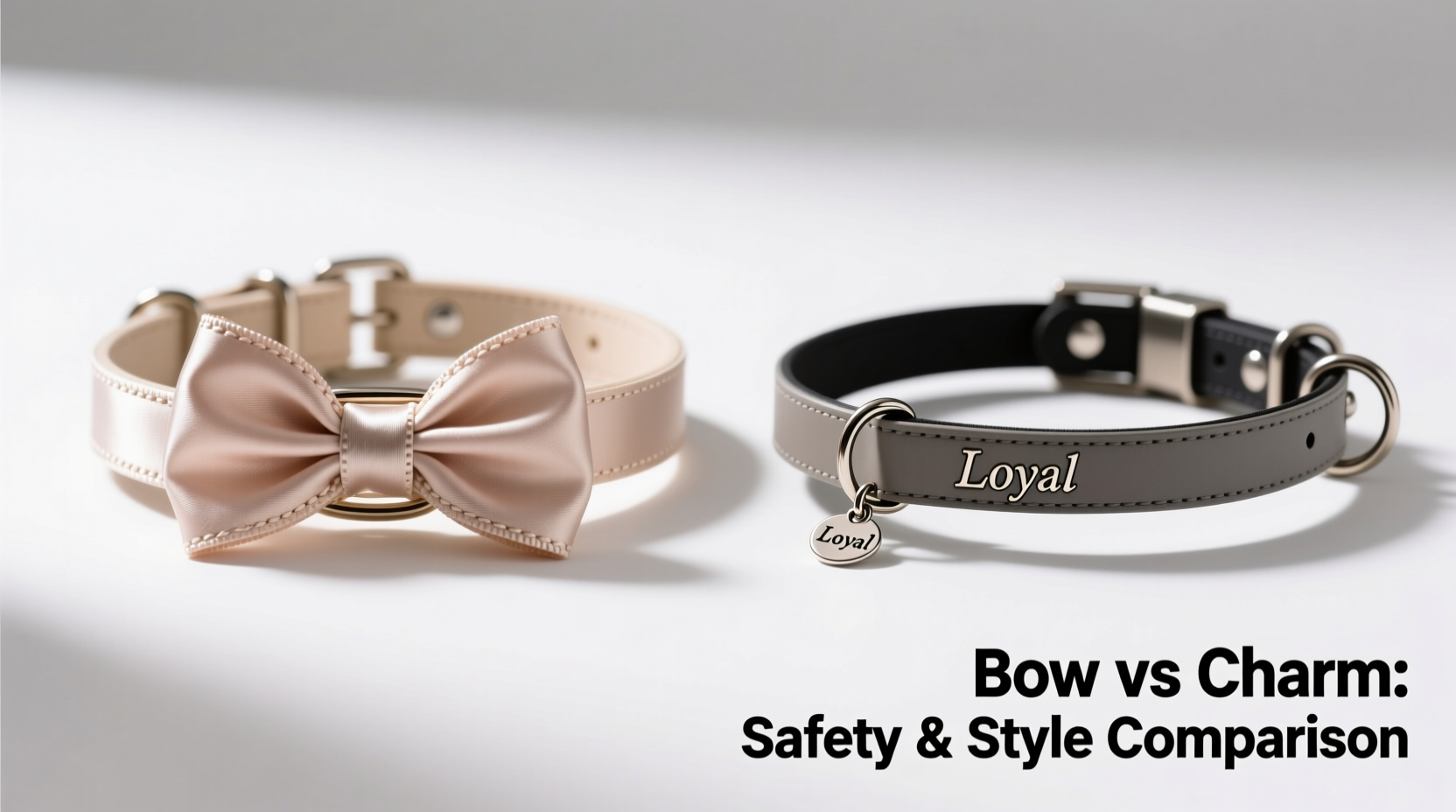
A dog collar bow is typically a fabric accessory—often made from satin, cotton, or ribbon—that attaches to the collar via a clip, loop, or elastic band. It's designed to mimic the look of a classic hair bow and comes in various sizes, colors, and patterns. Bows are generally soft, lightweight, and easy to swap out depending on the occasion.
In contrast, a charm is a small, rigid ornament—usually made of metal, plastic, or enamel—that dangles from the collar. Charms can feature initials, paw prints, bones, hearts, or even custom engravings. They’re often attached using a split ring or chain and remain fixed unless manually removed.
While both serve decorative purposes, their physical properties lead to different implications for safety and appearance.
Safety Considerations: What’s Best for Your Dog?
Safety should always come before style when accessorizing a dog. Even seemingly harmless items can pose risks if not chosen wisely.
Bows are generally considered safer because they are soft and flexible. If a bow snags on furniture, fences, or other dogs during play, it’s more likely to detach harmlessly rather than cause injury. Most bows use clips or loops that break away under pressure, reducing the risk of choking or entanglement.
Charms, however, present more hazards. A dangling metal charm can catch on objects, potentially leading to strangulation if the dog pulls back suddenly. Sharp edges or loose parts may also pose ingestion risks if the charm breaks. Additionally, some cheaper charms contain toxic metals like lead, which can be dangerous if chewed.
Tip: Always supervise your dog when wearing any new accessory and remove it during unsupervised time, especially at night or during play.“Decorative elements should never compromise a dog’s ability to move, breathe, or escape tight situations. Soft, breakaway designs are far safer than rigid attachments.” — Dr. Lena Torres, Veterinary Behaviorist
Visual Appeal: Which Looks Better?
Appearance is subjective, but certain factors influence how attractive a bow or charm appears on a dog.
- Bows offer bold color, texture, and volume. They work especially well on smaller breeds like Pomeranians, Shih Tzus, or Maltese, where the bow complements fluffy coats and expressive faces. Seasonal or holiday-themed bows (e.g., red for Christmas, pastels for Easter) allow owners to celebrate occasions in a fun way.
- Charms provide subtle elegance. A sleek engraved tag or a minimalist bone-shaped pendant adds sophistication without overwhelming the dog’s look. Charms suit larger or more traditionally styled breeds like Labradors, German Shepherds, or Greyhounds, where understated details enhance presence without seeming fussy.
The placement also matters. Bows sit flat against the collar and draw attention to the neck area, framing the face. Charms dangle below and move with the dog, creating subtle motion that catches light and attention as the pet walks.
When Appearance Meets Functionality
Some owners combine both: using a charm for ID purposes and a removable bow for special events. This hybrid approach balances utility with seasonal flair. For example, a personalized charm ensures identification, while a festive bow is added only during photo sessions or parties.
Comparison Table: Bow vs Charm at a Glance
| Feature | Dog Collar Bow | Charm |
|---|---|---|
| Material | Fabric (satin, cotton, ribbon) | Metal, plastic, enamel |
| Weight | Light | Light to medium |
| Safety Risk | Low (soft, detachable) | Moderate to high (rigid, dangling) |
| Durability | Low to moderate (prone to fraying) | High (if quality metal) |
| Style Impact | High (bold, colorful) | Moderate (subtle, elegant) |
| Best For | Photos, shows, holidays | Daily wear, ID tags, formal collars |
| Easy to Clean? | Yes (wipe or hand wash) | Yes (polish or wipe) |
Real-Life Scenario: Choosing for a Puppy vs Senior Dog
Consider Bella, a 4-month-old Cavalier King Charles Spaniel. Her owner loves dressing her up for weekend outings and family gatherings. For Bella, a soft pink satin bow clipped onto her adjustable collar enhances her sweet expression and matches her outfits. Since she’s still playful and curious, the bow’s breakaway clip gives peace of mind if it catches on something.
In contrast, Max, a 9-year-old Golden Retriever, wears a simple engraved charm with his name and phone number. He’s calm and rarely roughhouses, but his owner values functionality. The charm doubles as an ID tag and stays securely fastened without flapping or snagging. It looks dignified and requires no maintenance beyond occasional polishing.
This illustrates how life stage, temperament, and lifestyle influence the best choice.
Actionable Checklist: Choosing the Right Accessory
Use this checklist before buying or attaching any collar decoration:
- ✅ Is the accessory securely attached but able to detach under pressure?
- ✅ Does it have sharp edges or small parts a dog could chew off?
- ✅ Is it appropriate for the dog’s size and activity level?
- ✅ Can it be easily cleaned or replaced?
- ✅ Does it interfere with the collar’s fit or function?
- ✅ Is it used only during supervised times if risky?
- ✅ Does it complement the dog’s natural look without overwhelming it?
Expert Tips for Safe and Stylish Use
To get the best of both worlds without compromising safety, follow these guidelines:
- Use bows temporarily: Attach them only for photos, events, or short walks. Remove them when the dog is alone or sleeping.
- Choose charm alternatives: Opt for flat tags instead of dangling charms. Engraved leather patches or embroidered names on collars eliminate extra hardware.
- Check materials: Avoid cheap plastics and unknown metal alloys. Stick to stainless steel, silicone, or fabric from reputable pet brands.
- Inspect regularly: Look for signs of wear, looseness, or damage weekly. Replace anything frayed or bent immediately.
- Match to breed and coat: Fluffy dogs often carry bows well; short-haired dogs may look cleaner with minimal metal accents.
Frequently Asked Questions
Can I leave a bow on my dog all day?
It’s not recommended. While bows are generally safe, prolonged wear increases the chance of snagging or chewing. Use them for short durations and always supervise.
Are charms necessary if my dog has a microchip?
Yes. Microchips require scanning, but a visible charm or tag with your contact info allows anyone who finds your dog to call you immediately—no equipment needed.
What’s the safest way to attach a bow?
Use a quick-release clip or elastic loop that breaks under tension. Avoid sewing it permanently unless it’s part of the original collar design.
Final Thoughts: Safety First, Style Second
Both bows and charms have their place in pet fashion, but safety must guide every decision. Bows win in terms of low-risk decoration, especially for young, active, or small dogs. Charms offer lasting elegance and practical identification benefits but require careful selection and monitoring.
The best approach is thoughtful customization: use durable, non-toxic materials, prioritize secure yet breakaway designs, and tailor the look to your dog’s personality and routine. Remember, a happy, healthy dog is always the most beautiful sight.
🚀 Ready to upgrade your dog’s collar game? Start with a safe, stylish accessory today—and share your favorite look in the comments below!








