It starts with a photo—your best friend in a tiny knit beret, sitting perfectly still like a Parisian poet. Or maybe it’s a bucket hat perched jauntily on floppy ears, turning heads at the dog park. You snap the picture, post it, get dozens of likes. But then, a quiet thought creeps in: Does my dog even care? Am I just projecting human vanity onto an animal who couldn’t care less?
The truth is, while your dog may not appreciate fashion in the way you do, they’re more aware than you think—not of style, but of sensation, routine, and your reaction. The debate between a dog beret and a dog hat isn’t really about aesthetics; it’s about comfort, communication, and connection.
The Science of Canine Perception: What Dogs Actually Notice
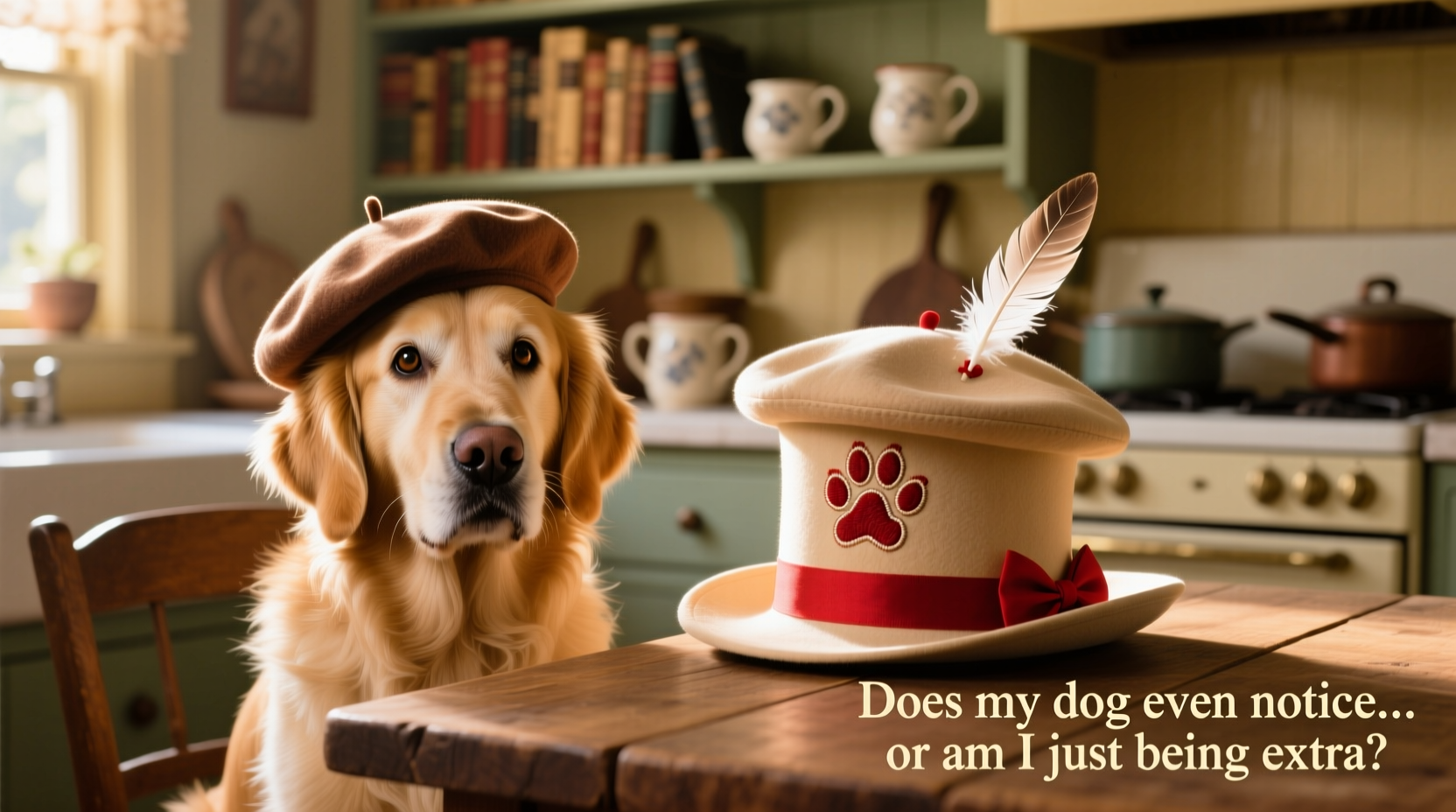
Dogs don’t see the world as we do. Their vision is tuned to motion and contrast rather than fine detail or color. They perceive fewer hues—mostly blues, yellows, and grays—and have limited depth perception. So no, your dog doesn’t “see” that the beret matches their collar in a soft lavender tone. But they do notice changes in weight, texture, temperature, and movement.
When you place a hat or beret on their head, your dog registers:
- Pressure: How tightly it sits on the skull or ears
- Texture: Is it soft cotton, scratchy wool, or smooth polyester?
- Movement restriction: Does it limit ear twitching or peripheral vision?
- Your behavior: Are you excited? Nervous? Laughing?
According to Dr. Alexandra Horowitz, cognitive scientist and author of Inside of a Dog:
“Dogs are exquisitely sensitive to changes in their environment—including what’s on their body. But their interest isn’t aesthetic. It’s functional. If something alters how they move, hear, or interact, they’ll respond accordingly.”
In other words, your dog might not care about the beret’s elegance, but they’ll definitely react if it slips over their eyes every time they tilt their head.
Beret vs Hat: A Practical Breakdown
Let’s compare two popular canine accessories: the classic beret and the trendy sun hat. While both serve decorative purposes, their impact on your dog varies significantly.
| Feature | Dog Beret | Dog Hat |
|---|---|---|
| Fit | Snug around the crown, often elasticized | Looser fit, usually with chin strap |
| Coverage | Covers top of head only | Brim shades face and neck |
| Comfort | Generally high (if made from soft fabric) | Variable—brim can obstruct vision |
| Functionality | Purely decorative | Some provide UV protection |
| Durability | May lose shape after one wear | Sturdier materials, longer-lasting |
| Dog Acceptance | Usually higher—less intrusive | Lower—many dogs paw at brims |
While berets tend to be more comfortable due to minimal coverage and lightweight design, hats—especially those with wide brims—can startle dogs by altering their field of view. That sudden shadow across their nose? It reads like a threat.
Tip: Introduce any headwear gradually. Let your dog sniff it first, then drape it nearby before attempting to wear. Pair each step with treats to build positive association.Why We Dress Our Dogs: The Human Side of Pet Fashion
If dogs don’t care about fashion, why do we go so far as to coordinate outfits for Instagram photoshoots? The answer lies in psychology, not pet preference.
Dressing dogs fulfills several emotional needs for owners:
- Expression of affection: Clothing becomes a love language.
- Social bonding: Matching outfits strengthen owner-dog identity.
- Humor and joy: A silly hat brings laughter, reducing stress.
- Control and care: Outfits can signal protection (“I keep my dog warm”) or status (“We’re stylish”).
Anthropologist Dr. Kate Fox, who studies human-animal rituals, notes:
“We anthropomorphize pets because it deepens attachment. Putting a beret on a pug isn’t about the pug—it’s about us feeling closer, more creative, and more connected in a chaotic world.”
So yes, you might be “being extra.” But being extra isn’t always bad. It’s part of how modern humans express love.
A Real Moment: Luna and the Lavender Beret
Luna, a 4-year-old French bulldog from Portland, became a local favorite after her owner started posting themed photos—Luna in a beret reading Camus, Luna in a sailor hat by the river. The beret was always her most popular look.
But behind the scenes, it wasn’t effortless. At first, Luna would shake her head violently, flinging the beret across the room. Her owner, Maya, didn’t force it. Instead, she placed the beret near Luna’s bed for days, rewarding calm behavior with treats. Then, she’d touch it to Luna’s head for seconds at a time. Within a week, Luna tolerated it. By week three, she’d sit still during photos—if there was a piece of chicken waiting afterward.
Luna didn’t care about looking chic. But she learned that the beret meant attention, treats, and playtime. For her, it became part of a ritual—one tied to positive outcomes.
How to Choose Headwear Your Dog Won’t Hate
If you want to dress your dog without causing distress, follow this simple guide:
- Assess your dog’s temperament: Shy or anxious dogs may find headwear overwhelming.
- Start with lightweight fabrics: Cotton or fleece berets are less invasive than stiff-brimmed hats.
- Avoid anything covering the eyes or ears: This limits sensory input and increases anxiety.
- Check fit frequently: No pulling, pinching, or slipping.
- Limit wear time: 5–10 minutes max for photos or walks, never overnight.
- Watch for signs of discomfort: Scratching, head shaking, avoidance.
- Always reward cooperation: Use praise, treats, or play to reinforce acceptance.
Checklist: Is This Headwear Right for My Dog?
- ✅ Lightweight and breathable material
- ✅ Doesn’t cover eyes, ears, or nose
- ✅ Secure but not tight (you should fit two fingers under any band)
- ✅ Easy to put on and remove
- ✅ Paired with treats or play when worn
- ✅ Removed immediately if dog shows stress
Frequently Asked Questions
Can dogs feel embarrassed wearing clothes?
No, dogs don’t experience embarrassment the way humans do. They lack the self-consciousness required for shame or social judgment. If your dog hides or acts withdrawn while wearing a hat, it’s likely due to discomfort or confusion—not embarrassment.
Are there any benefits to dog hats besides fashion?
Yes—some functional hats offer UV protection for dogs with thin coats or light skin, especially on ears and noses prone to sunburn. However, most decorative hats serve no practical purpose and should be used sparingly.
Why does my dog tilt their head when wearing a beret?
This could be due to slight imbalance, altered hearing (fabric muffling sounds), or curiosity about the new sensation. Some dogs adjust within minutes; others never fully adapt. Respect their limits.
Final Thoughts: It’s Not About the Beret—It’s About the Bond
You’re not “just being extra” for wanting to dress up your dog. You’re engaging in a form of play, creativity, and connection. Whether it’s a beret, a hat, or a tiny superhero cape, these moments become memories—of laughter, patience, and shared joy.
The key isn’t whether your dog notices the beret. It’s whether you notice them. Do they lean into the experience? Do they stay relaxed? Are they still wagging their tail underneath that floppy brim?
If yes, then the accessory works—not because it’s stylish, but because it fits within the rhythm of trust you’ve built together.
So go ahead. Snap that photo. Post it with pride. Just remember to take it off when the moment passes, give a belly rub, and let your dog be gloriously, wonderfully naked again.
💬 Did your dog ever surprise you by loving—or hating—a particular outfit? Share your story in the comments. Let’s celebrate the silly, sweet, and sometimes stubborn ways our dogs teach us what really matters.








